Why is flying your pet from the UK more complicated than it seems?
Planning pet air travel from the UK is not as simple as booking a seat. Unlike in other countries, pets here cannot fly in the cabin. They must be transported as manifest cargo under DEFRA (Department for Environment, Food and Rural Affairs) and IATA (International Air Transport Association) rules. This requires detailed attention to crates, paperwork, regulations, and emotional preparation. If you have never done it before, don’t worry. This guide breaks down every step in plain language so you can make informed, confident decisions.
Here's What We Have Covered In This Article
The UK’s Strict Pet Flight Rules: Why Cargo is Often the Only Way
Pets travelling in or out of the UK must fly as cargo. This rule protects public and animal health through strict national biosecurity. Cabin travel is permitted only for registered assistance dogs.
What does this mean for your pet?
-
They must fly as manifest cargo and not with checked luggage or in the cabin.
-
Only DEFRA-approved airlines and travel routes are allowed.
-
Pets must travel in an IATA-compliant crate and pass through an Animal Reception Centre (ARC).
These requirements help prevent disease risks and maintain consistent travel procedures. All information provided here aligns with current DEFRA and IATA guidance as of publication.
Pro Tip: Always confirm both the airline and the specific route are DEFRA-approved before booking.
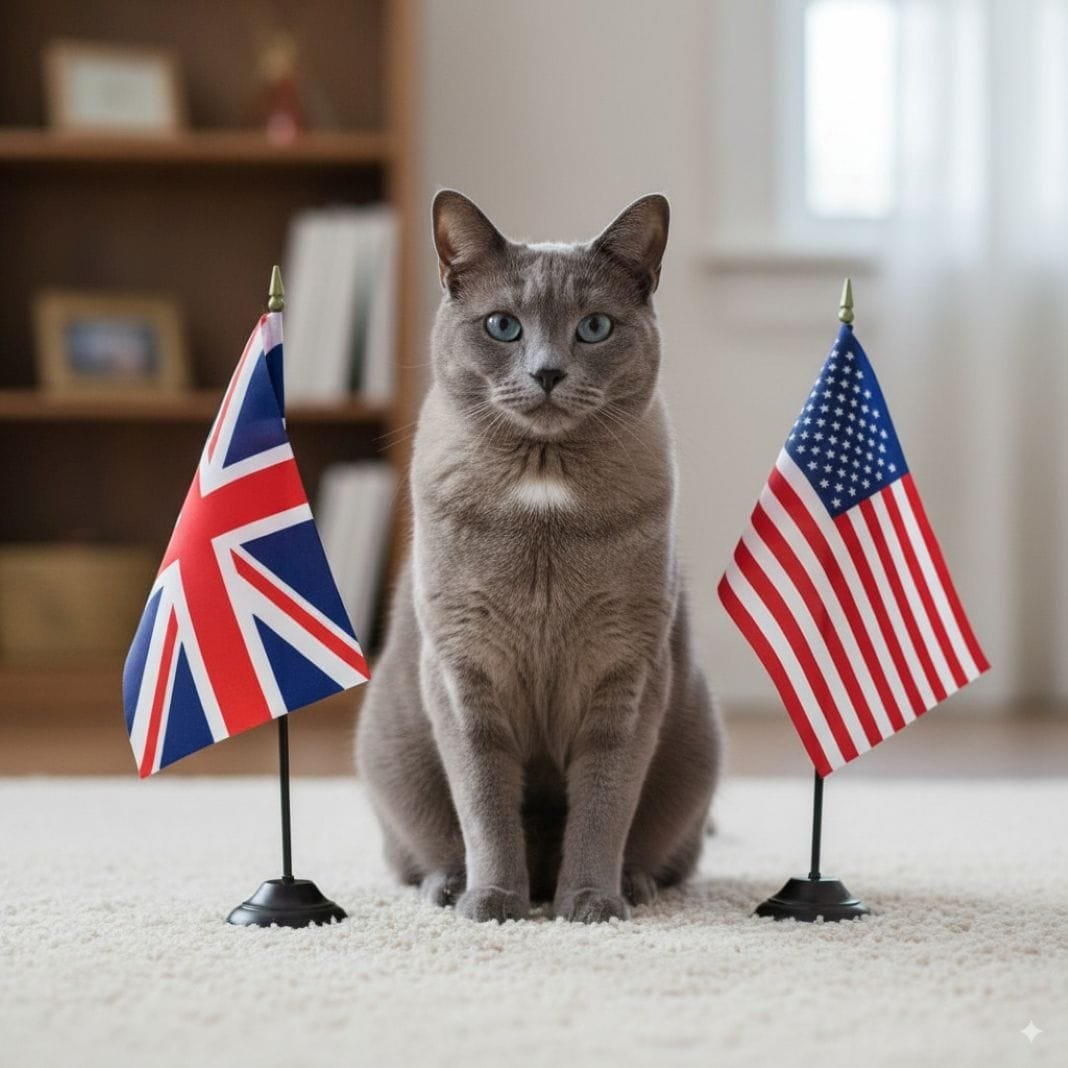
An AI photo of a cat between US and UK flags
Get a Quote for Pet Cargo Travel
Take the stress out of planning. Let us handle the route, paperwork, and logistics.
Everything You Must Prepare Before Booking a Cargo Flight for Your Pet
At Tailored Pet Travel, we provide safe, professional, and fully compliant pet transport for dogs, cats, and small animals. Whether you’re relocating abroad or booking a pet flight, our expert team supports you at every stage — from documentation to logistics.
Planning well in advance prevents unnecessary delays. Here are the essentials to get in place:
Choosing the Right Crate: Sizing and Requirements
A compliant crate is non-negotiable. If it’s too small or unsuitable, your pet’s travel could be denied.
How to size your crate correctly:
-
Measure from nose to tail base and add half the leg length for crate length.
-
Measure height from floor to the tip of the ears or head.
-
The width must allow the pet to turn around easily.
Crate compliance checklist:
-
Secure fasteners and ventilation holes on all four sides.
-
Leak-proof and absorbent flooring.
-
Food and water trays accessible from outside.
-
“Live Animal” labels on at least two visible sides.
Key Preparation Steps:
-
Microchip must be implanted before the rabies vaccination and registered.
-
Rabies vaccination administered at least 21 days before travel.
-
Crate training should start early to allow your pet time to adjust.
-
Health certificate issued by an authorised vet no more than 10 days before departure.
-
Approved travel route confirmed on DEFRA’s website.
-
Pet Passport or Animal Health Certificate secured if travelling to the EU or returning to the UK.
All preparation steps comply with DEFRA and UK border health requirements.
Pro Tip: Begin crate training at least four weeks before your pet’s departure to reduce anxiety.
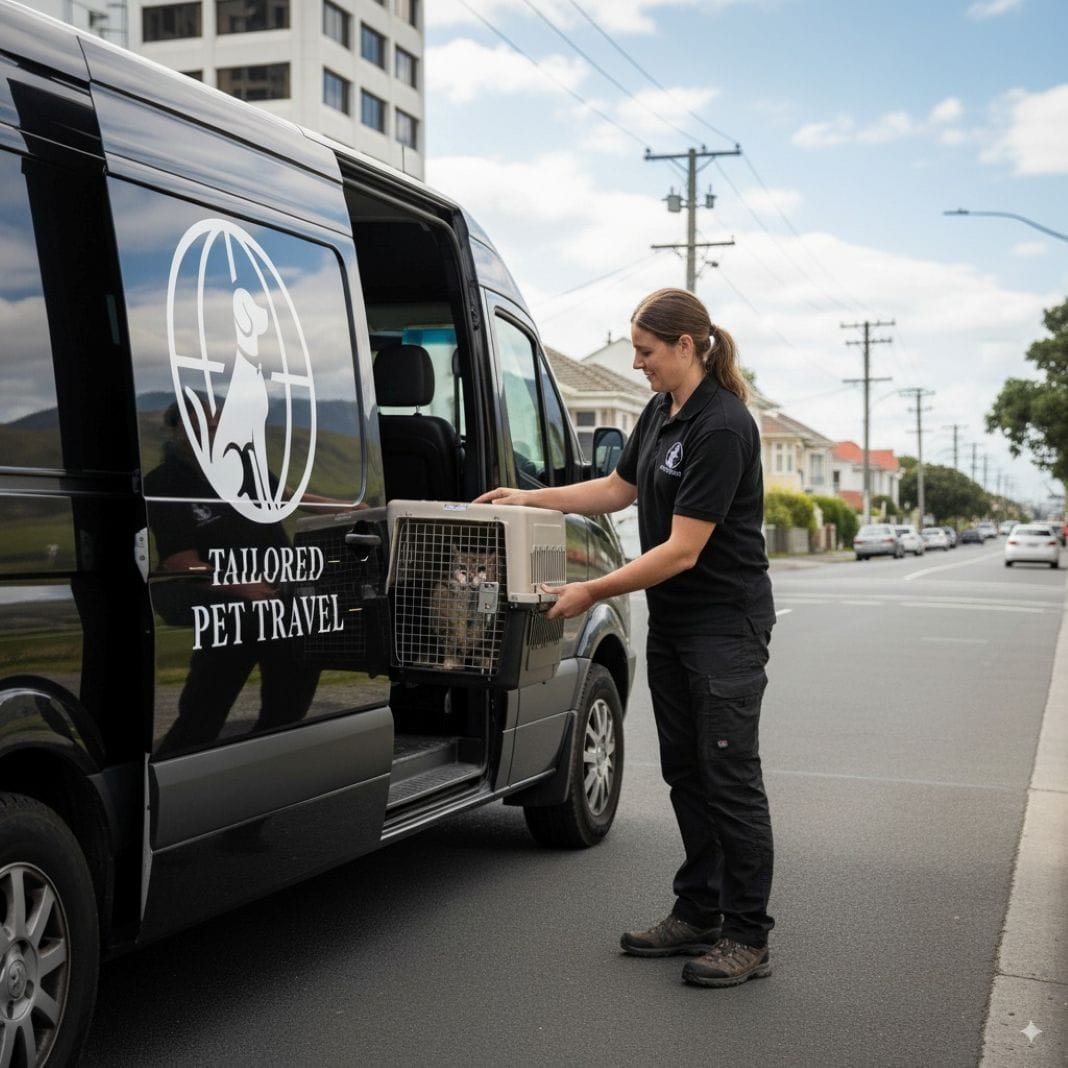
An AI photo of a cat being transported via van to Heathrow Airport
Step-by-Step: How to Book Your Pet’s Flight as Cargo from the UK
Most pet travel specialists recommend starting the booking process at least six to eight weeks in advance to avoid errors.
1. Select a Certified Pet Transport Provider
Choose a company with IPATA accreditation and DEFRA listing. They are trained in handling the process.
2. Request a Personalised Quote
Provide details like breed, weight, and crate dimensions to receive an accurate estimate.
3. Check Airline and Route Legitimacy
Ensure your airline and route meet DEFRA’s transport criteria.
4. Prepare Key Documents
You will need:
-
Air Waybill (AWB)
-
Rabies vaccination certificate
-
Microchip registration
-
Health certificate
5. Confirm Booking and Drop-Off Time
Secure the cargo space and finalise when and where your pet will be dropped off.
6. Flight Day Logistics
Arrive with your pet and all documents. Staff will inspect the crate and verify compliance.
All procedures here are in line with guidance from IPATA and major UK cargo operators.
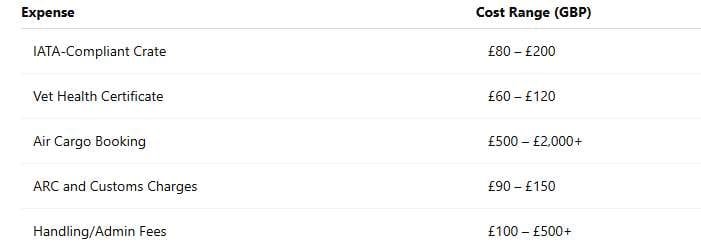
How Much Does It Really Cost? A Breakdown of Pet Cargo Flight Expenses
Costs vary depending on destination, crate size, and services included. Below is a rough guide:
Speak to a Pet Travel Specialist
Not sure where to start? Our experts guide you through every step of DEFRA compliance.
Tip: Always ask for an itemised quote. Some providers include customs or crate hire. Others list them separately.
Pricing ranges are based on typical industry quotes from UK pet transport companies and DEFRA handling fees.
What Happens on Flight Day and When Your Pet Lands
Check-In Process
Arrive early at the cargo terminal. Present all documents. Staff will inspect your pet and the crate.
During the Flight
Your pet travels in a secure, climate-controlled section of the hold. This area is monitored throughout the flight.
“Your pet must arrive at the cargo centre several hours before departure. This is non-negotiable.”
Arrival and Collection
At landing, pets are taken to the ARC for DEFRA checks. These include microchip scanning, customs clearance, and a basic health assessment. Pets are released within two to four hours if all is in order.
These steps reflect standard procedure at facilities like Heathrow ARC.
How to Choose a Trusted Pet Cargo Provider (and Spot Red Flags)
Should You Book Through an Airline or Use a Pet Travel Agent?
Working with a DEFRA-licensed pet courier or certified transport handler reduces risk. These experts manage airway bills, crate compliance, and ARC coordination.
Travel Agent Pros:
-
Full-service management
-
Ideal for first-time travellers
Booking Direct Pros:
-
Lower cost
-
Suitable for experienced travellers
Choose based on your confidence and experience.
Green Flags
-
IPATA membership and DEFRA listing
-
Transparent process and documentation support
-
Verified UK reviews
Red Flags
-
Promises of in-cabin travel
-
No visible licensing
-
Vague communication
Recommendations above are based on best practices outlined by DEFRA and IPATA for UK-based transporters.
Top Mistakes UK Pet Owners Make When Booking Pet Flights – And How to Avoid Them
Booking Too Late
Start eight to ten weeks before travel to ensure compliance and availability.
Choosing the Wrong Crate Size
Use IATA guidance. If your pet cannot stand, lie down, or turn, it will not be allowed to travel.
Forgetting Required Paperwork
Keep digital and printed copies of microchip data, vaccination certificates, and health paperwork.
Assuming Pets Can Travel in the Cabin
They cannot. UK law only allows this for assistance dogs.
All advice provided here is accurate according to current UK aviation and biosecurity regulations.
The Ultimate Checklist: Prepare Your Pet, Your Paperwork and Yourself
-
Microchip registered and functional
-
Rabies vaccination completed (21+ days before travel)
-
Health certificate issued within 10 days of travel
-
Crate measured, approved, and introduced
-
Airline and route DEFRA-approved
-
Booking confirmed with qualified provider
-
All documents printed and backed up
-
ARC details confirmed
-
Transport arranged for drop-off and pick-up
-
Emergency contacts noted
-
Insurance checked (if applicable)
Frequently Asked Questions About UK Pet Air Travel
Can I sedate my pet for the flight?
No. Sedation may harm your pet at altitude. Airlines do not allow it.
What if my pet is too large for standard crates?
You may need a custom IATA-compliant crate. Arrange this well ahead of time.
Do I need to stay at the airport?
It is not required but is often recommended in case documents need clarification.
Can pets fly with checked luggage?
Not from the UK. Only cargo travel is permitted.
What if paperwork is wrong?
The ARC may hold your pet until corrections are made. Double-check everything in advance.
All answers here are consistent with published guidance from DEFRA and leading pet travel authorities.
Conclusion: A Stress-Free Start to Your Pet’s Airborne Journey
We don’t just move pets — at Tailored Pet Travel, we manage their journeys with the care and attention they deserve. From UK road trips to international relocations, we treat your pet like family every step of the way.
International pet travel is complex. But with the right knowledge, it becomes manageable. By following official guidance, using experienced providers, and preparing early, you reduce pet travel anxiety and gain peace of mind. Your pet deserves a safe and smooth experience, and with proper planning, that is exactly what you will deliver.