

Can you clean your dog’s eyes before a flight to stop tear stains?
You can clean around your dog’s eyes before a flight to reduce damp fur, crusting and visible tear build-up, but cleaning will not reliably stop tear stains if the eyes keep watering. The aim is a cleaner, drier eye area and a clear welfare check before travel.
Tear staining is common, especially where tears overflow and sit on the fur below the eyes. VCA Animal Hospitals describes this overflow as epiphora, which is a symptom rather than a disease. Tears normally drain through tear ducts near the nose, known as nasolacrimal ducts.
Before a flight, the useful question is simple: does the eye area look normal for your dog once it has been cleaned, or has something changed? Safe cleaning with gentle PH neutral pet eye wipes gives you a better view of that answer.
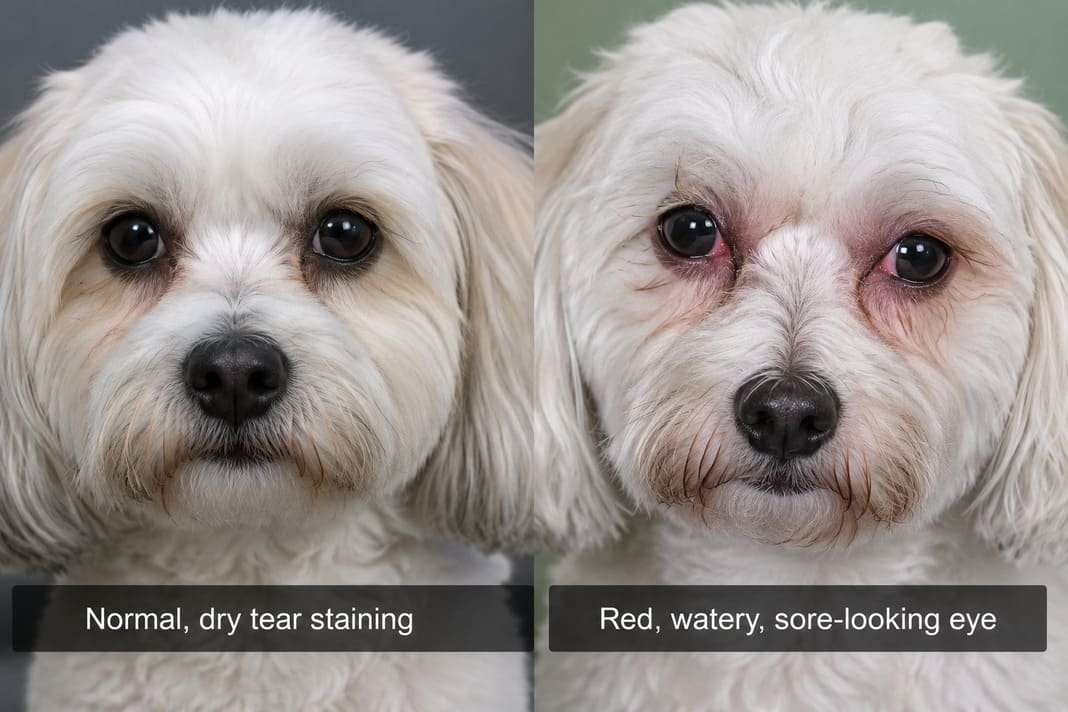
Side-by-side style photo of two dogs faces one with normal dry tear staining and one with a red watery and sore-looking eye
Here's What We Have Covered In This Article
The safest way to clean the eye area before travel
Safe dog eye cleaning before travel is gentle, external and focused on the fur and skin around the eye. You are cleaning the stained area, not treating the eye itself.
Use a calm, slow routine and stop if your dog reacts as though the eye is sore. Rubbing harder rarely removes the stain well and can make irritation worse.
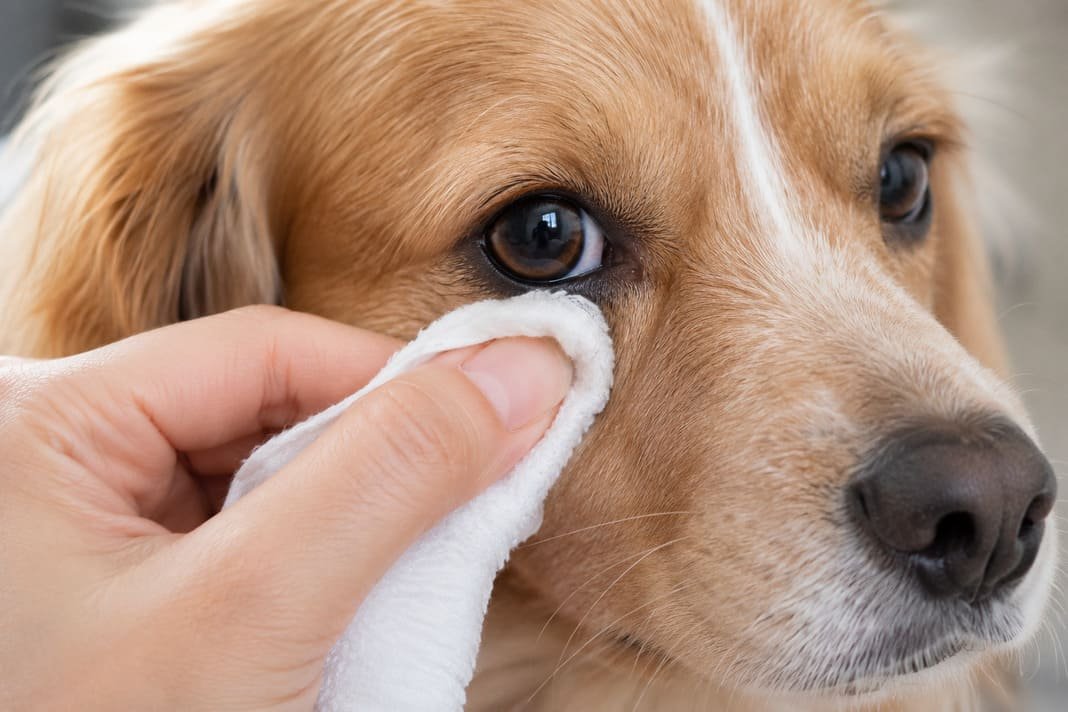
- Start with clean hands and good light. Use a clean damp cloth or sterile gauze, and keep the material soft and only lightly wet.
- Wipe the fur below the eye, moving away from the eye. Do not drag material across the eye surface or push into the corner of the eye.
- Soften crusted build-up first. Hold the damp cloth against the fur briefly, then lift the softened material away without scraping.
- Use fresh material for the second eye. This reduces the chance of moving debris from one side of the face to the other.
- Dry the fur as well as your dog will allow. Tear-stained areas stay more comfortable when the fur is kept clean and as dry as practical.
- Keep hair short around the eyes where needed. If trimming is required and your dog will not stay still, leave that to a groomer or veterinary team.
Products near the eye need care. Do not use household stain removers, human eye drops, contact lens solution, hydrogen peroxide or cosmetic whitening products around your dog’s eyes unless a veterinary surgeon has specifically advised it. Hydrogen peroxide is a particular risk near the eyes because a splash can cause severe damage.
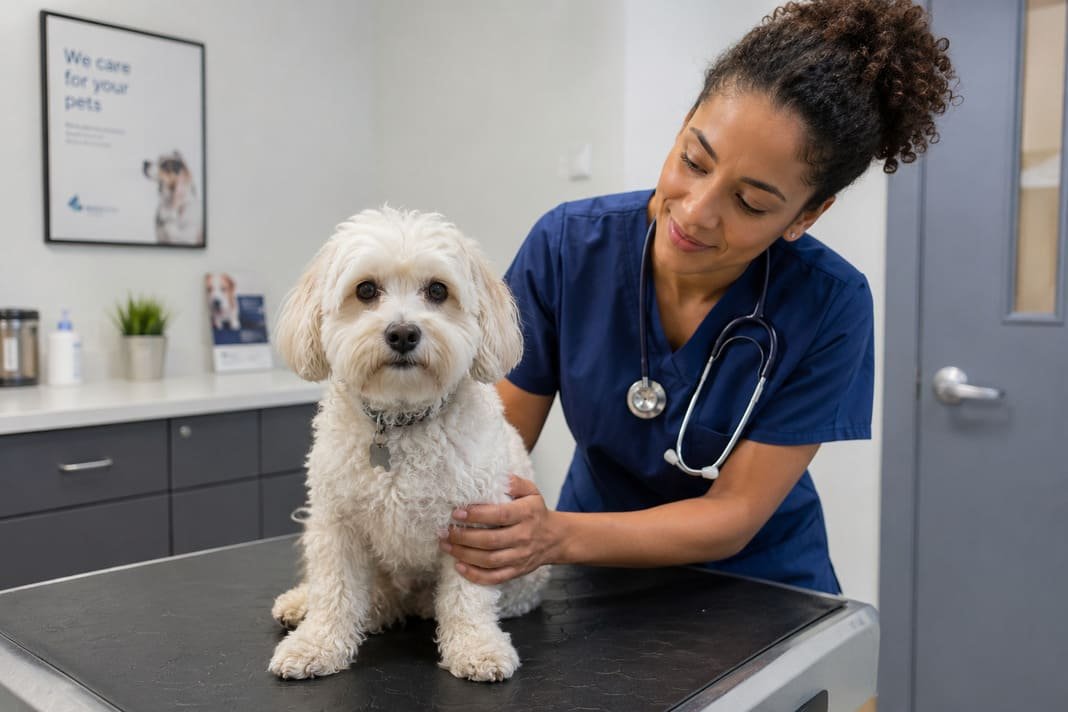
A small westie-poo dog sitting calmly in a vets
The difference between tear stains and eye trouble
Reddish-brown tear stains are not automatically a flight problem, but they are a reason to look closer. The difference lies in comfort, smell, discharge and whether the signs have changed.
A dog with long-standing staining, clear eyes and no soreness is in a different position from a dog whose eye area has suddenly become wet, smelly or painful. Through the welfare-led view we use at Tailored Pet Travel, that distinction matters because cosmetic cleaning and travel readiness are separate judgements.
Here is the sorting tool we use when owners ask whether they are looking at routine staining or something that needs veterinary advice before travel.
| Usually a cleaning and monitoring issue | Needs veterinary advice before travel |
|---|---|
| Long-standing reddish-brown marks that look normal for your dog | Sudden worsening of watery eyes or staining |
| Damp fur without redness, odour or obvious soreness | Yellow or green discharge |
| Mild crusting that softens and wipes away easily | Squinting, pawing at the eye or signs of pain |
| Staining linked with hair lying close to the eye | Redness, swelling or visible irritation |
| A comfortable dog behaving normally | Odour, sore skin or signs of skin infection |
Flat-faced dogs and dogs with hair close to the eyes can have drainage issues because facial shape and fur can interfere with tears moving away from the eye area. Causes of excess tearing can also include allergies, eye injury, infection, abnormal eyelashes or other eye conditions. You do not need to diagnose any of that before a flight, but you do need to know when cleaning is the wrong answer on its own.
Sudden change matters more than stain colour. A familiar stain that cleans up neatly is one thing; new discharge or soreness close to departure moves the issue from grooming to welfare.
Why visible eye problems can affect flying
Eye discharge before a flight matters because travel is judged through welfare as well as paperwork. Cleaning supports readiness; it does not prove fitness.
Most owners first think about crates, documents and flight timings. Those details matter, but a dog with a sore-looking eye, active discharge or irritated skin raises a different question: is the dog comfortable and fit for the intended journey?
The fit-to-travel point
IATA says most airlines require a health certificate for animals they transport, and that certificate states the animal is healthy and fit to fly. GOV.UK guidance also says animals must be fit for the intended journey and transported in conditions that will not cause unnecessary suffering.
Carrier staff are not expected to diagnose an eye condition. They can still refuse travel if an animal appears unfit, and some carrier terms require a veterinary declaration. That is why a last-minute clean is not a substitute for veterinary advice if the eye looks sore, infected or suddenly worse.
The timing point
International pet travel leaves less room for guesswork because veterinary timing, carrier checks and journey handling need to line up. If your dog’s eyes are watering more than normal just before departure, the safest question is not how to hide the staining, but whether the eye is comfortable enough for travel.
Professional oversight helps here because the welfare issue and the travel arrangements sit in the same timeline. With Tailored Pet Travel, we look at visible welfare concerns as part of the wider travel picture, so cleaning, veterinary timing and travel acceptance are not treated as separate problems.
Sedation is not the answer to a dog resisting cleaning or handling before travel. IATA continues to advise against sedating or tranquillising pets in transit solely to prevent panic or destructive behaviour, and medication for a medical reason belongs under veterinary direction.
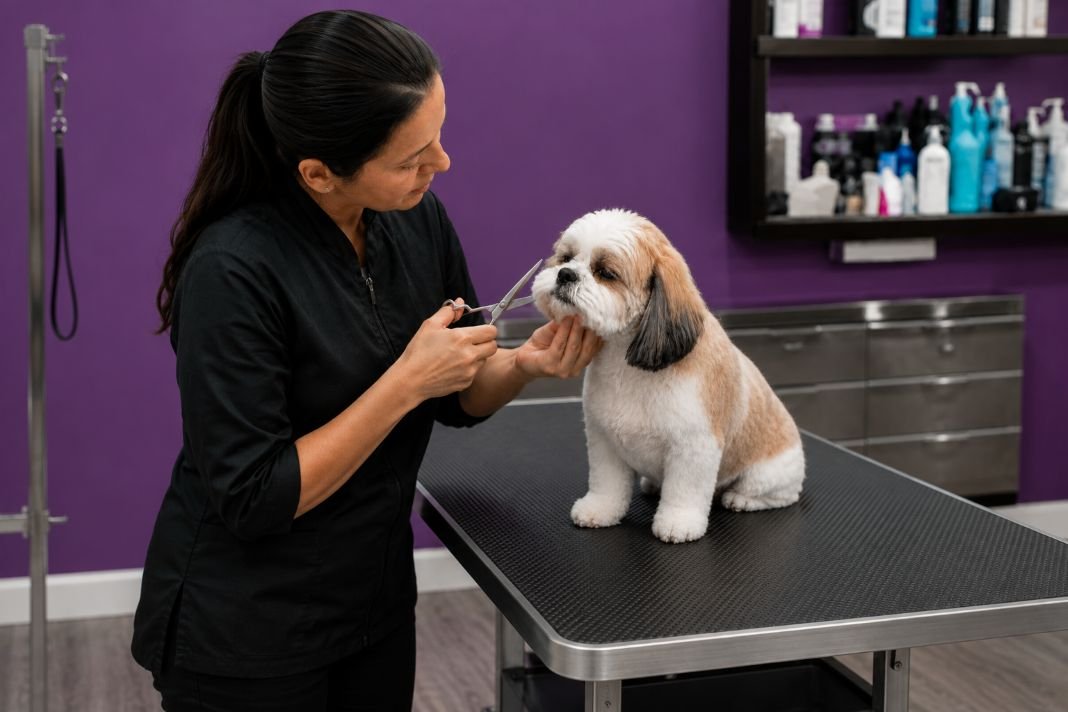
A photo of a dog groomer working
The final pre-flight judgement
A good pre-flight result is a dog whose eye area is clean, dry and normal for that dog. The decision is about stable or changing signs, and comfortable or uncomfortable eyes.
Long-standing tear marks can be managed gently before travel without harsh products or last-minute experiments. Clean the fur, dry it, and check that the eye itself looks as it normally does.
If you see sudden discharge, odour, redness, squinting or soreness, the priority changes. At that point, the issue is no longer how to clean dog tear stains before a flight; it is whether your dog needs veterinary attention before being judged fit for the journey.
Once you separate staining from warning signs, the task becomes much clearer. You know what to clean, what to avoid, and which signs need attention before the journey continues.
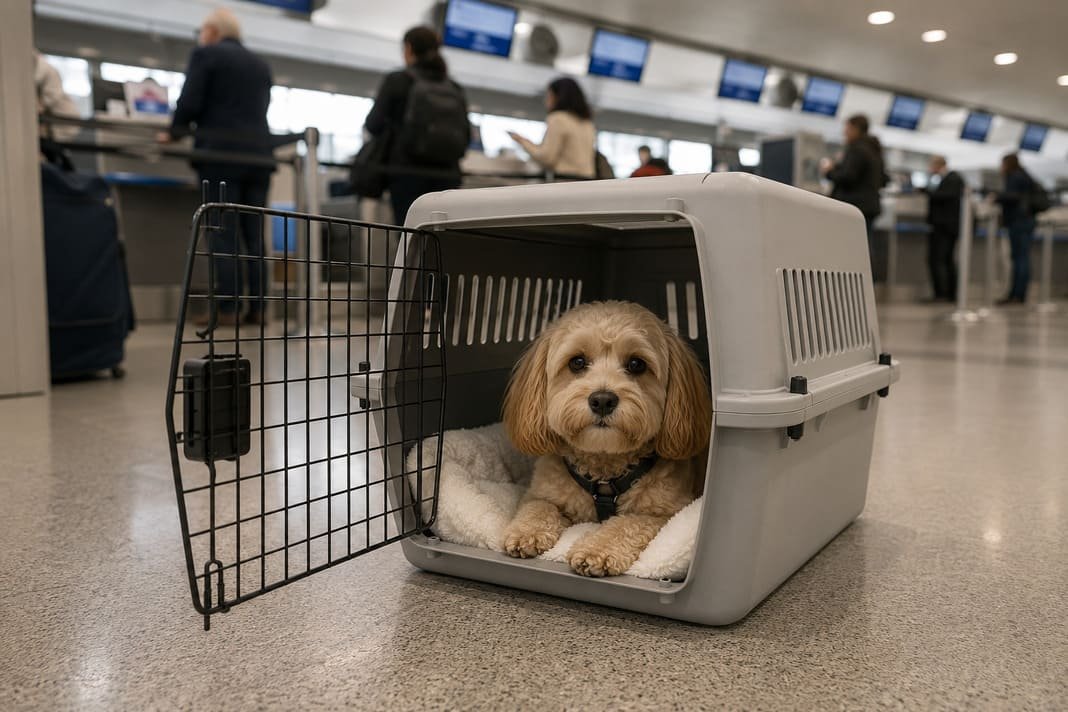
A small dog in an open travel crate at an airport check-in area
Questions we get asked about dog eye cleaning before flights
Can I use saline to clean my dog’s eyes before travel?
A veterinary eye wash or saline-style product should only be used as advised by your veterinary surgeon. For simple external cleaning, focus on the fur around the eye with clean damp material and avoid putting anything into the eye.
Are tear stains bad for dogs?
Tear stains are not always harmful, especially if they are long-standing and your dog is comfortable. Odour, sore skin, discharge or sudden worsening changes the picture and needs veterinary advice.
Why are my dog’s tear stains worse all of a sudden?
Sudden worsening can happen when tear production or drainage changes, or when the eye area becomes irritated. Before a flight, treat a sudden change as a welfare check, not a cosmetic problem.
Will eye discharge stop my dog from flying?
Cosmetic staining alone does not usually decide travel fitness, but visible discharge, soreness or infection can affect whether your dog appears fit to travel. A veterinary view is the right route if the eye looks uncomfortable.
Can I trim the stained fur around my dog’s eyes myself?
Trimming can help keep the area cleaner, but the eye area is easy to injure if your dog moves. If your dog is wriggly, sore or stressed, use a groomer or veterinary team instead of trying to cut close to the eye yourself.
This is general information, not medical advice.