What happens when your pet arrives in the UK?
Your pet is received into a managed arrival system before release for collection. We look at the approved route, the reception facility, welfare handling, document checks and customs clearance. For Great Britain, the rules cover England, Wales and Scotland, with separate guidance for Northern Ireland, so route approval comes first.
Most owners focus on the flight or crossing because that feels like the main event. Arrival is where the travel plan meets the border system. A dog, cat or ferret entering Great Britain has to arrive through the right channel, with the right document basis, before the release process can move cleanly.
An Animal Reception Centre is part of that chain for many air arrivals. It is a controlled reception point where the animal is handled, cared for and checked before collection can happen. Collection time starts to make sense only after that handover has begun because a landed aircraft does not mean an animal has been cleared.
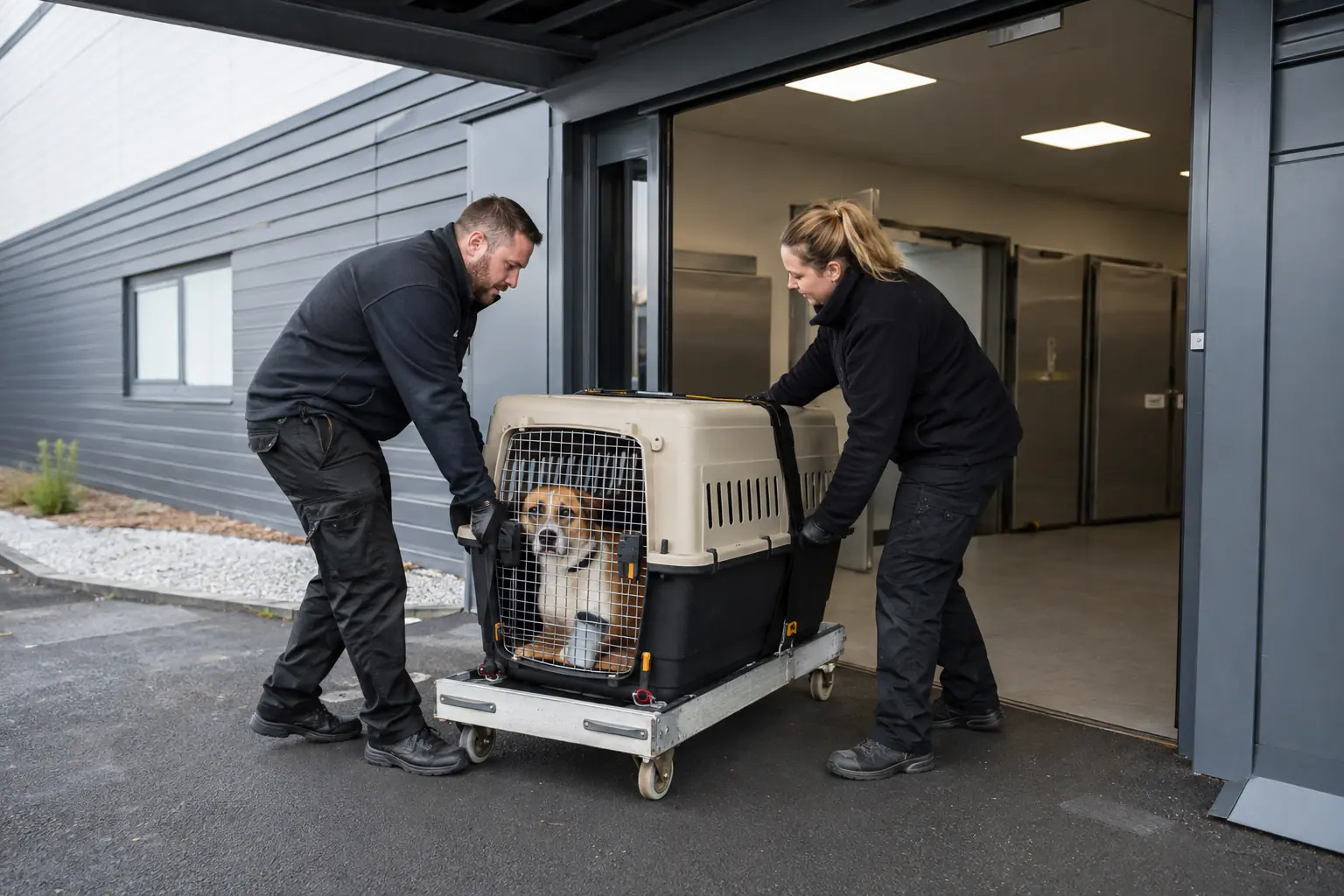
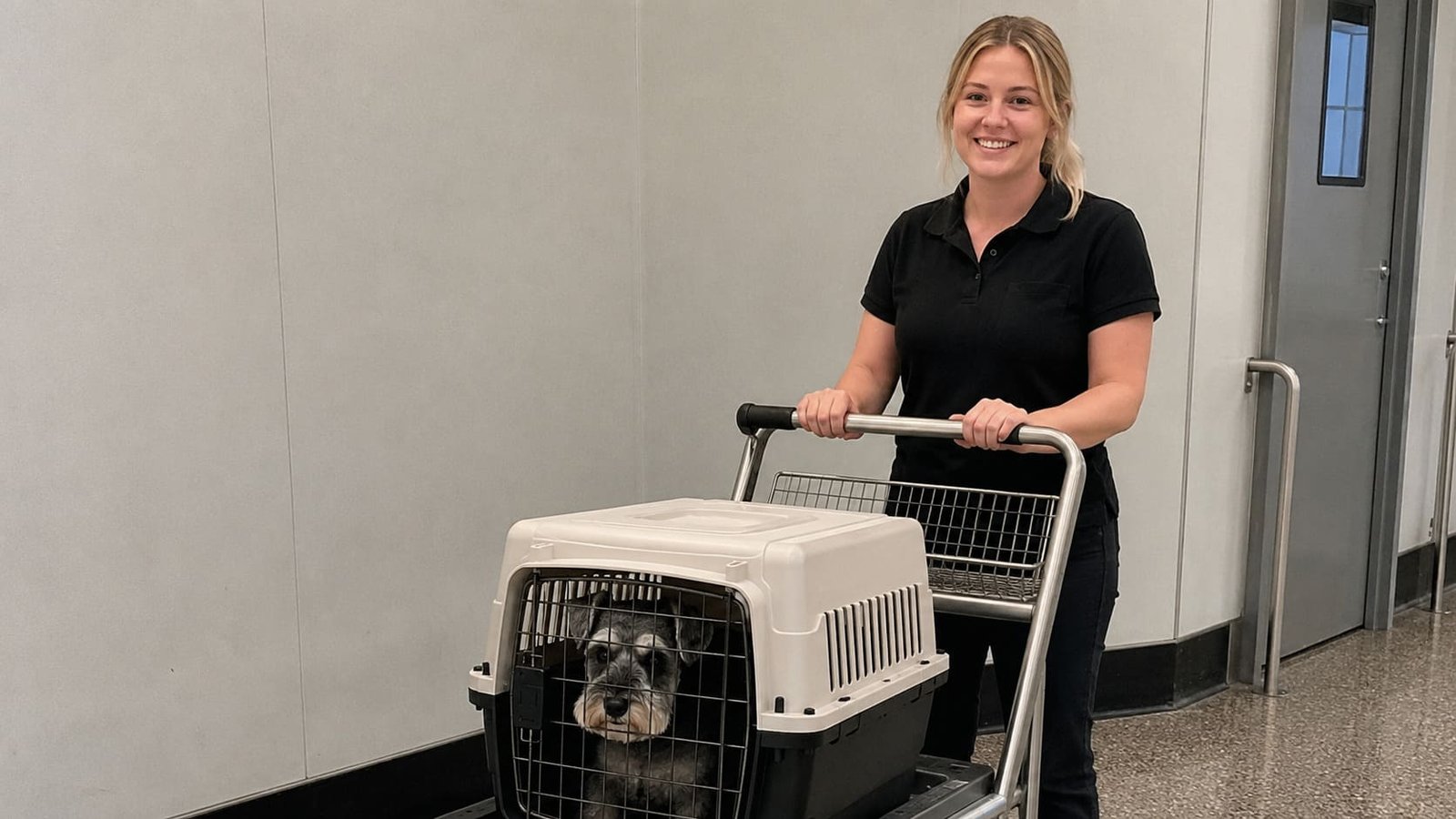
Dog arriving at UK animal reception centre in secure travel crate- Illustrative Image
Here's What We Have Covered In This Article
Approved routes decide whether arrival can proceed
An approved route is a condition of entry where it applies, not a preference about which carrier or airport feels convenient. We treat route choice as the first arrival decision because the correct documents cannot rescue a movement that has been routed through the wrong place.
For dogs, cats and ferrets entering or returning to Great Britain, GOV.UK says an approved pet travel route is required unless the pet is travelling within the UK or from Ireland. The approved air, sea and rail carriers and routes are published for England, Scotland and Wales by the Animal and Plant Health Agency, APHA, and the Department for Environment, Food and Rural Affairs, Defra. Northern Ireland has separate guidance, so “UK rules” should never be treated as one flat system.
Here is the practical difference between a common assumption and what actually matters at the border:
| Reader assumption | Arrival reality |
|---|---|
| Any airport is acceptable if the paperwork is correct | The carrier and route must be approved where approval is required |
| “UK rules” are one single system | Great Britain rules are distinct from Northern Ireland guidance |
| An old airline page is enough | Approved route information changes and should be checked close to travel |
| Wales can be treated like any other arrival point | GOV.UK currently states there are no approved routes to Wales |
Old route screenshots are a poor basis for a live movement. The approved route list changes, so we check the position close to travel and match the route to the way the pet is entering. At Tailored Pet Travel, route validity is treated as part of release planning because a route problem only becomes harder once the animal has already moved.
Once the carrier and entry point are right, the next question is how the animal is received on arrival.
Animal Reception Centres combine border checks with welfare care
An Animal Reception Centre is a controlled arrival facility where care and compliance meet. We do not treat it as a waiting room because the centre sits inside the release chain and has a role in how the animal is received before clearance.
Heathrow Animal Reception Centre, HARC, gives a useful example of the air model without making Heathrow the pattern for every entry point. For pets travelling to Heathrow, HARC says dogs, cats and ferrets must be booked as manifest cargo in the hold of the plane. After landing, pets are moved from the aircraft to the facility in climate controlled vehicles and placed in their own kennel with water, food and a bedding area. Cats have access to a litter tray, and dogs have access to an outdoor run.
That detail matters because document checks and welfare handling happen in the same arrival period. The Pet Travel Scheme, PETS, is the route by which compliant pet dogs, cats and ferrets can enter under the relevant rules. At an air reception facility, staff are looking at whether the arrival matches that compliance basis while the animal is being held in a managed setting.
For complex pet relocation to the UK, Tailored Pet Travel plans the arrival around both parts of the handover, the animal’s handling needs and the compliance route that supports release. Separating those two is where poor planning starts to show. A pet can be well booked for travel and still meet problems if the arrival facility, document basis or clearing arrangements have not been lined up.
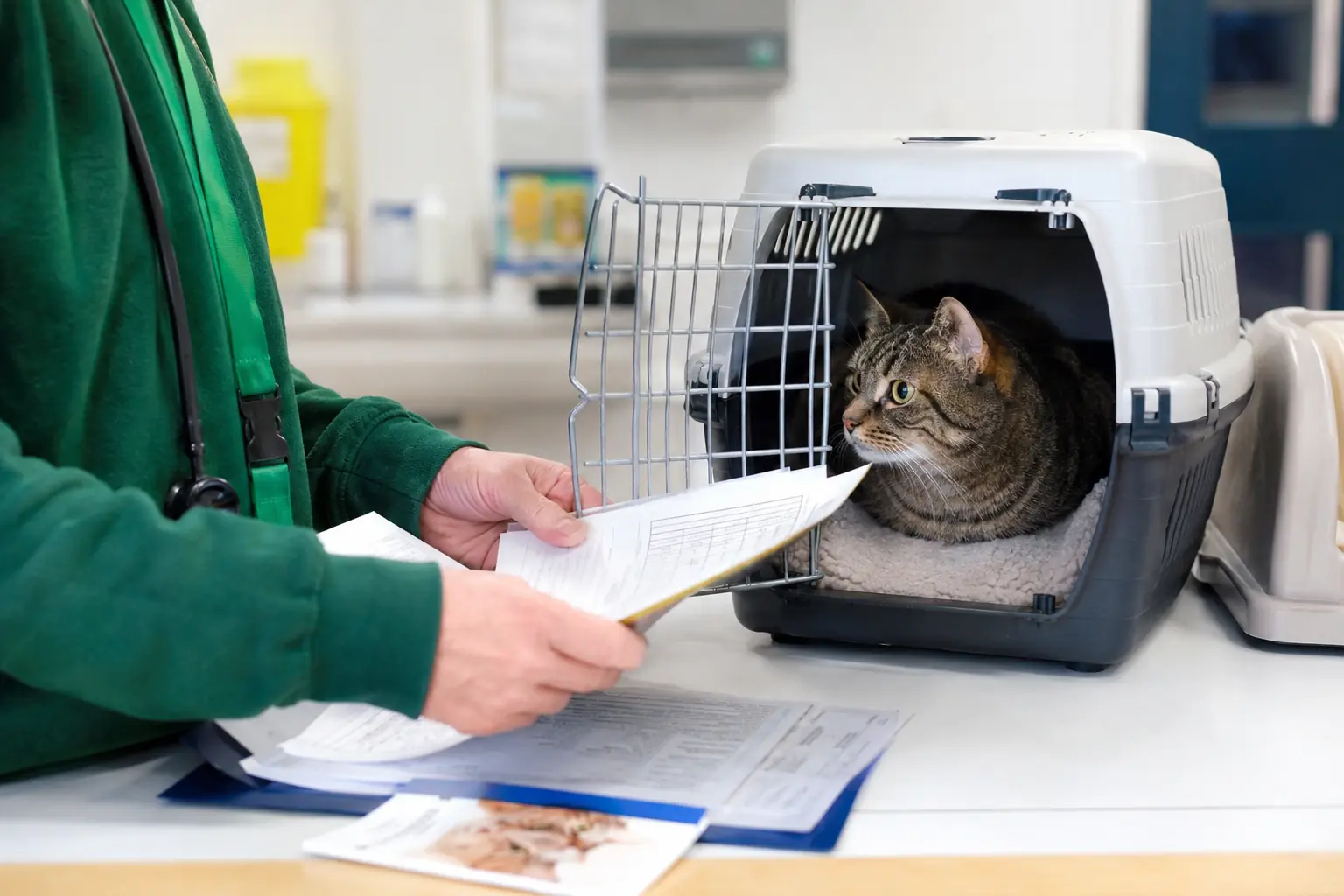
Animal reception worker checking cat travel documents beside secure carrier- Illustrative Image
Collection timing depends on clearance, not landing time
A pet can have landed safely and still be unavailable for collection because release has not yet been authorised. We look at landing time as one marker in the day, while the release decision depends on the checks that follow.
A typical air arrival sequence looks like this:
- The pet is transferred from the aircraft or arrival point into the authorised handling process.
- Welfare handling starts while the reception checks are underway.
- Documents are reviewed against PETS or the movement category that applies.
- A nominated UK agent or clearing agent deals with customs clearance where needed. Commercial movements and ordinary non-commercial movements are not always checked by the same party.
- Release for collection follows once the required checks and clearance are complete.
At Heathrow, HARC says pets are ready to collect within 2 to 4 hours from arrival on average. That is a useful guide for Heathrow arrivals, not a promise for every animal, every route or every set of documents.
A delay at this point does not automatically mean confusion. It can mean the animal is in the reception process and one part of the clearance chain is still open. Landing is an arrival time; release is a clearance decision.
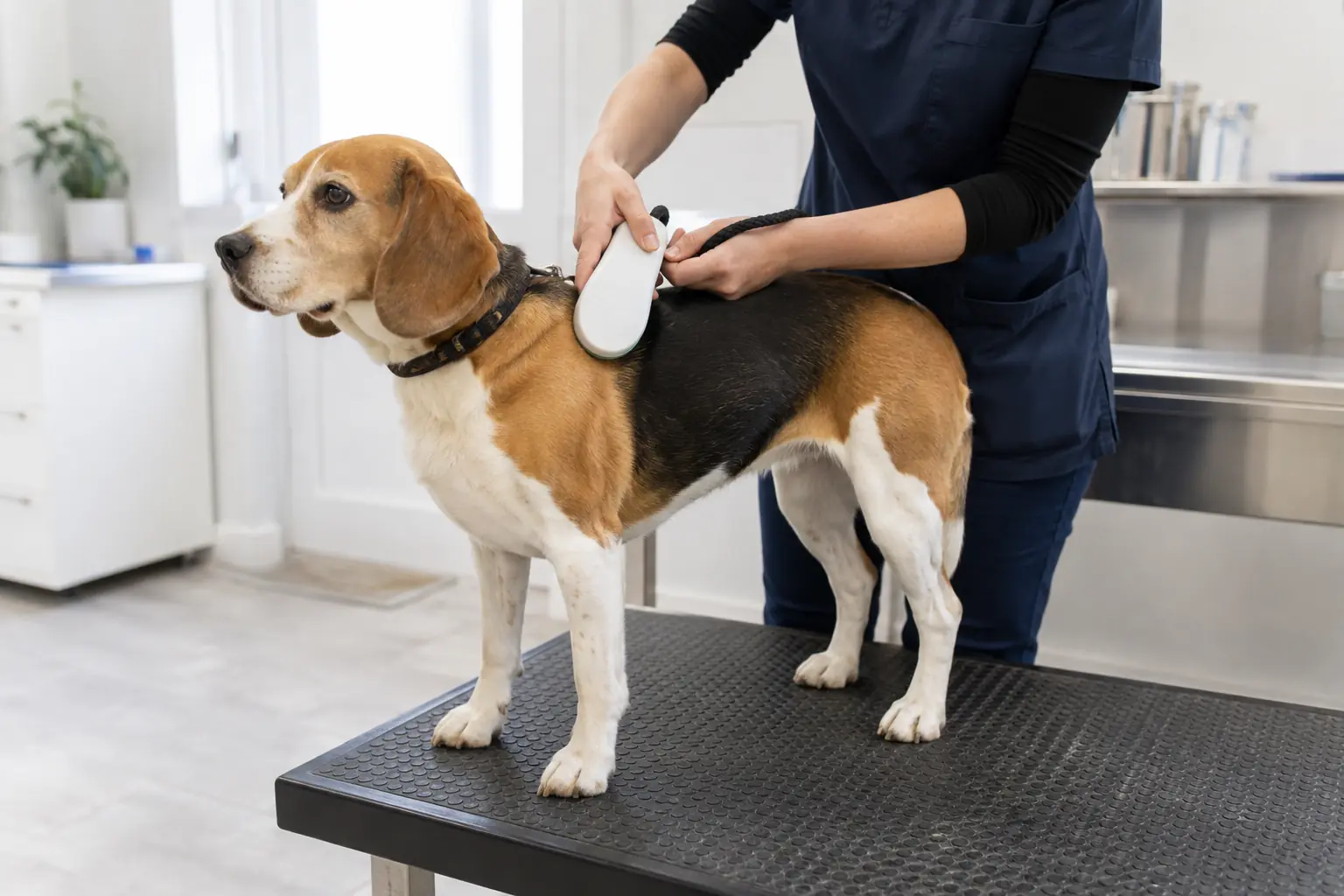
Calm beagle receiving microchip scan at UK animal reception centre- Illustrative Image
Paperwork mistakes become border delays
Arrival checks are there to confirm that the pet has entered on the right basis. A document that looks broadly complete to an owner can still cause delay if a date, sequence, treatment window or movement type does not match the rules.
Document errors hold up release
Microchip and vaccination order is one of the clearest examples. For Great Britain pet travel rules, the pet must be microchipped before its rabies vaccination. If that order is wrong, the issue is not cosmetic paperwork wording because it affects whether the vaccination can be accepted for entry.
Dogs may also need tapeworm treatment before arriving in Great Britain. Where it is required, GOV.UK gives the timing as no less than 24 hours and no more than 5 days before arrival. That kind of rule is unforgiving at the arrival stage because the animal is already in the border system.
Different documents can also apply depending on where the pet is coming from and how it is moving. An Animal Health Certificate, AHC, a Great Britain pet health certificate or a valid EU pet passport may be relevant in different circumstances. We do not treat the document name alone as the answer. The question is whether the document fits the route, timing and pet.
Route and movement errors change the process
Some movements fall outside ordinary non-commercial pet travel. Balai rules can apply where the animal is being sold, rehomed or transferred, where owner travel timing falls outside the standard window, or where the number of pets changes the category. For you, the useful point is simple: the label on the movement affects who checks it and how release is handled.
If Great Britain pet travel rules are not followed, GOV.UK says a pet may be placed in quarantine for up to 4 months, or refused entry if travelling by sea, with the owner responsible for fees or charges. That is the far end of the problem, and most sensible planning is about keeping the arrival well away from that point.
The hard part is that many mistakes become visible only after landing. Before departure, a document or route problem is a planning issue. After arrival, it becomes a release issue.
A controlled arrival starts before departure
A smooth arrival is set up before the pet travels. The right question is whether the route, reception point, document basis and clearance plan already fit together.
Straightforward moves can be simpler, especially where the route is current and the documents are clean. Complicated moves deserve closer control. Multiple pets, tight owner travel dates, changed flights, unusual document history or uncertainty over the movement category all raise the value of professional oversight.
We plan pet arrival in the UK as one connected handover. The animal’s welfare handling, the approved pet travel route, the reception facility and the release arrangement all need to support the same outcome: the pet can be received, checked and released without avoidable hold-ups.
Once you see arrival this way, the situation looks different. You stop asking only when collection will happen and start checking the points that decide release: the approved route, the Animal Reception Centre or entry process, the document basis, the clearing arrangement and the welfare plan.
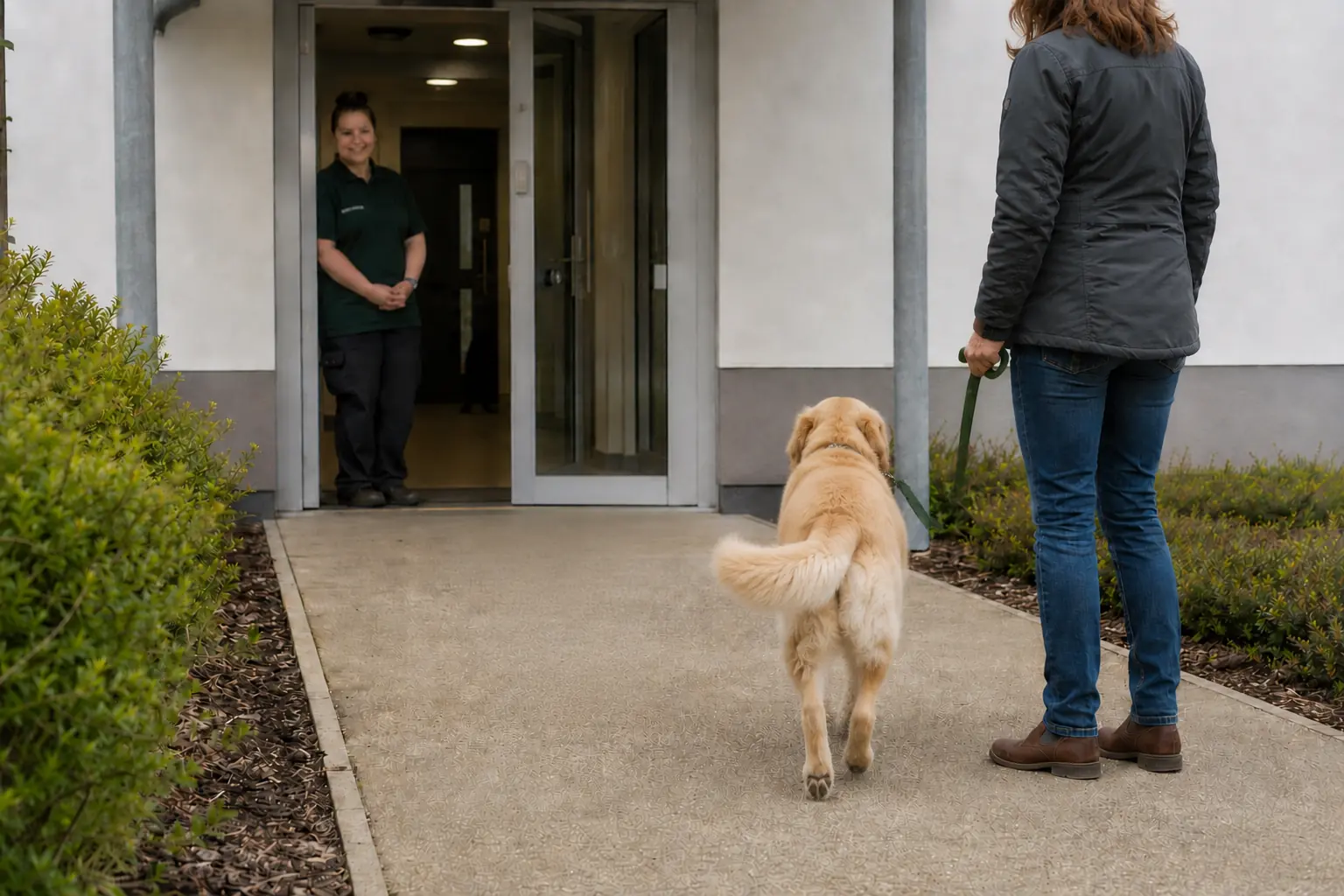
Golden retriever reunited with owner after UK pet arrival clearance – Illustrative Image
Questions we get asked about pet arrivals in the UK
Can my dog fly in the cabin to the UK?
For Heathrow arrivals, dogs, cats and ferrets travelling there must be booked as manifest cargo in the hold of the aircraft. Other routes still need to be checked against the approved carrier and route position, so cabin assumptions should not drive the plan.
Does every pet entering the UK go through an Animal Reception Centre?
No. Air arrivals commonly involve an Animal Reception Centre, but sea and rail routes have their own authorised arrival processes. The route and carrier decide what type of reception and checking process applies.
Do I need a customs agent for my pet’s UK arrival?
A nominated UK agent or clearing agent may be involved where customs clearance is needed. We treat that as part of the arrival chain because release depends on clearance as well as welfare handling and document checks.
Can my pet arrive directly into Wales from abroad?
GOV.UK currently states there are no approved routes to Wales for bringing pet cats, dogs and ferrets to Great Britain. That means Wales should not be assumed to work like any other arrival point.
What if my pet arrives before or after me?
Owner travel timing can affect whether the movement is treated as ordinary non-commercial pet travel. If the timing falls outside the standard position, the movement category needs to be checked before travel so the arrival is handled on the right basis.
This is general information, not professional advice.