What should you expect from pet transport in London?
The simplest-looking pet transport booking is not always the right comparison. We first separate a local pet taxi trip from a longer, airport-based or international move, because each puts different responsibility on the provider for welfare, timing and paperwork before you hand over your pet.
Pet transport in London can mean several different things. A pet taxi London booking for a short appointment, a pet courier London service for a longer UK move, Heathrow pet transport, and managed international pet relocation are different levels of responsibility.
Price and distance matter, but they do not tell you enough on their own. We look at who handles the animal, what records sit behind the movement, whether the route has airport or border rules, and how delays are dealt with if timings change.
A calm booking process should still produce clear answers. If the answer sounds vague before your pet has left, the risk usually sits with you later. The first useful split is between a routine local trip and a managed movement with welfare or paperwork consequences.
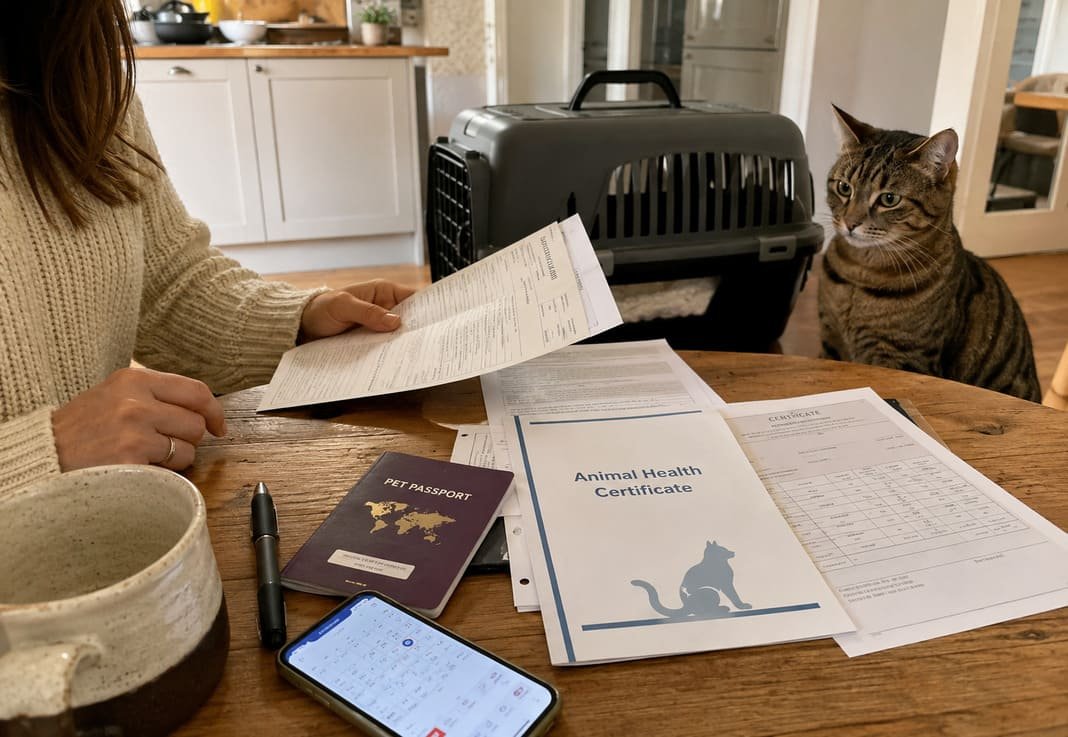
Pet travel documentation and international relocation paperwork
Here's What We Have Covered In This Article
Short London trips can become regulated moves
A short London pet taxi trip and a longer managed movement are not the same risk profile. A provider may be suitable for taking a cat across town but wrong for a route that involves longer distance, air travel, sea travel, rail travel or formal records.
Here is the comparison we use at booking stage.
| Routine local movement | Higher-risk or regulated movement |
|---|---|
| Clear pickup and drop-off details may be the main planning need. | Authorisation evidence needs to match the route and duration. |
| Handler suitability and safe handover remain important. | Written records and route accountability matter more. |
| A simple vehicle transfer may be enough. | Welfare planning, timing control and contingency arrangements carry more weight. |
| Informal reassurance is easy to give. | Evidence should be available before the pet is handed over. |
GOV.UK guidance from the Department for Environment, Food & Rural Affairs, known as DEFRA, and the Animal and Plant Health Agency, known as APHA, says a UK-issued transporter authorisation is required for animal transport over 65 km by air, road, rail or sea. Type 1 covers movements over 65 km and up to 8 hours, and Type 2 covers movements over 8 hours.
Those authorisations are not loose trust badges. They are valid for up to 5 years, must be carried, and must be made available on request. If a provider uses wording such as DEFRA pet transport or licensed pet courier London, the useful follow-up is simple: what applies to this specific route, and can we see the evidence?
For Tailored Pet Travel, authorisation and movement records are part of deciding what the trip needs, rather than decorative wording on a page. That distinction matters because the wrong level of cover is rarely obvious from the route name alone.
Calm handling matters more than friendly wording
Reassuring wording is not the same as controlled handling. Safe pet transport for dogs, cats and small animals is visible in the way the provider talks about the animal, the route, the handover and the points where timing could slip.
Handler competence matters because the person collecting your pet is making practical decisions from the start. We want clear answers about who is handling the animal and how information about age, health, temperament or multiple pets is passed on.
Crate suitability needs proper judgement. A label or claim is not enough by itself, because the crate has to fit the animal and suit the movement. For air transport, the International Air Transport Association, known as IATA, is relevant to packing requirements, but the practical question for you is whether the provider is checking fit and suitability, rather than repeating a phrase.
Updates and handover discipline reduce uncertainty without making you manage the move yourself. A provider should know what they will update you on, who receives the pet at each end, and how timing changes are handled.
Older pets, anxious pets and animals travelling in pairs do not all need the same arrangement. Good planning starts before the vehicle moves.
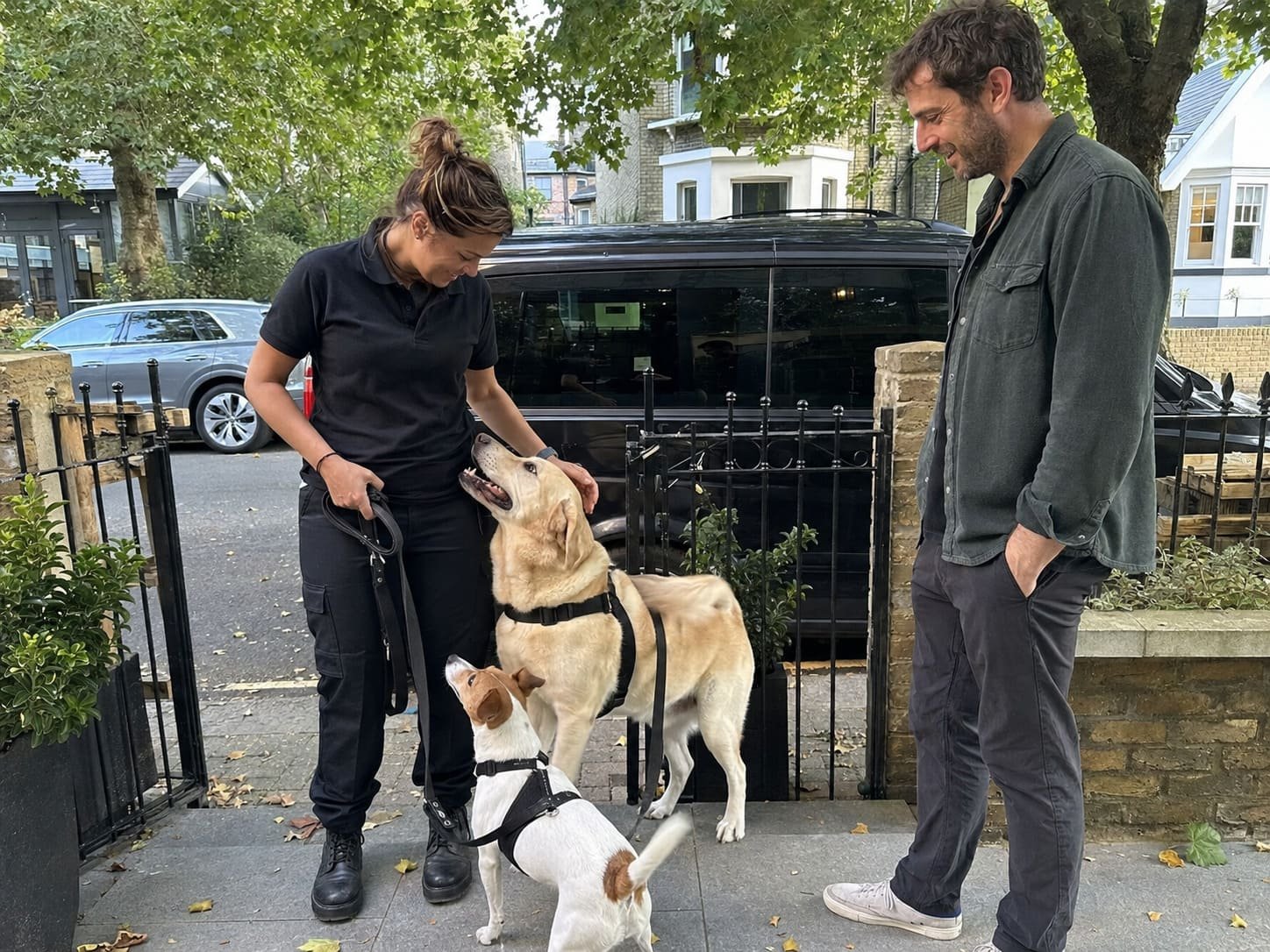
London pet transport collection for two dogs from the same household
Heathrow collection is not instant airport pickup
Heathrow pet collection is not the same as meeting a passenger at arrivals. A dog or cat flying into London goes through airport animal reception and UK clearance arrangements before onward transport can begin.
Manifest cargo changes the handover
City of London guidance says pets travelling to Heathrow must be booked as manifest cargo in the hold of the aircraft. It also says a UK customs agent needs to be appointed whether you use an International Pet and Animal Transportation Association shipper or make independent arrangements.
That changes the job from a simple airport pickup to a managed arrival. Heathrow Animal Reception Centre, known as HARC, is part of the process, and a London pet transport company handling that collection needs to plan around animal reception, customs arrangements and release.
Clearance shapes collection timing
City of London guidance says pets are ready to collect on average within 2 to 4 hours from arrival after transfer to HARC, care arrangements and Pet Travel Scheme compliance checks. The Pet Travel Scheme, often shortened to PETS, is the set of checks used for eligible pets entering Great Britain.
A driver waiting at the wrong point or planning from landing time alone is working from the wrong assumption. Heathrow pet transport needs to allow for release timing, not just the aircraft schedule.
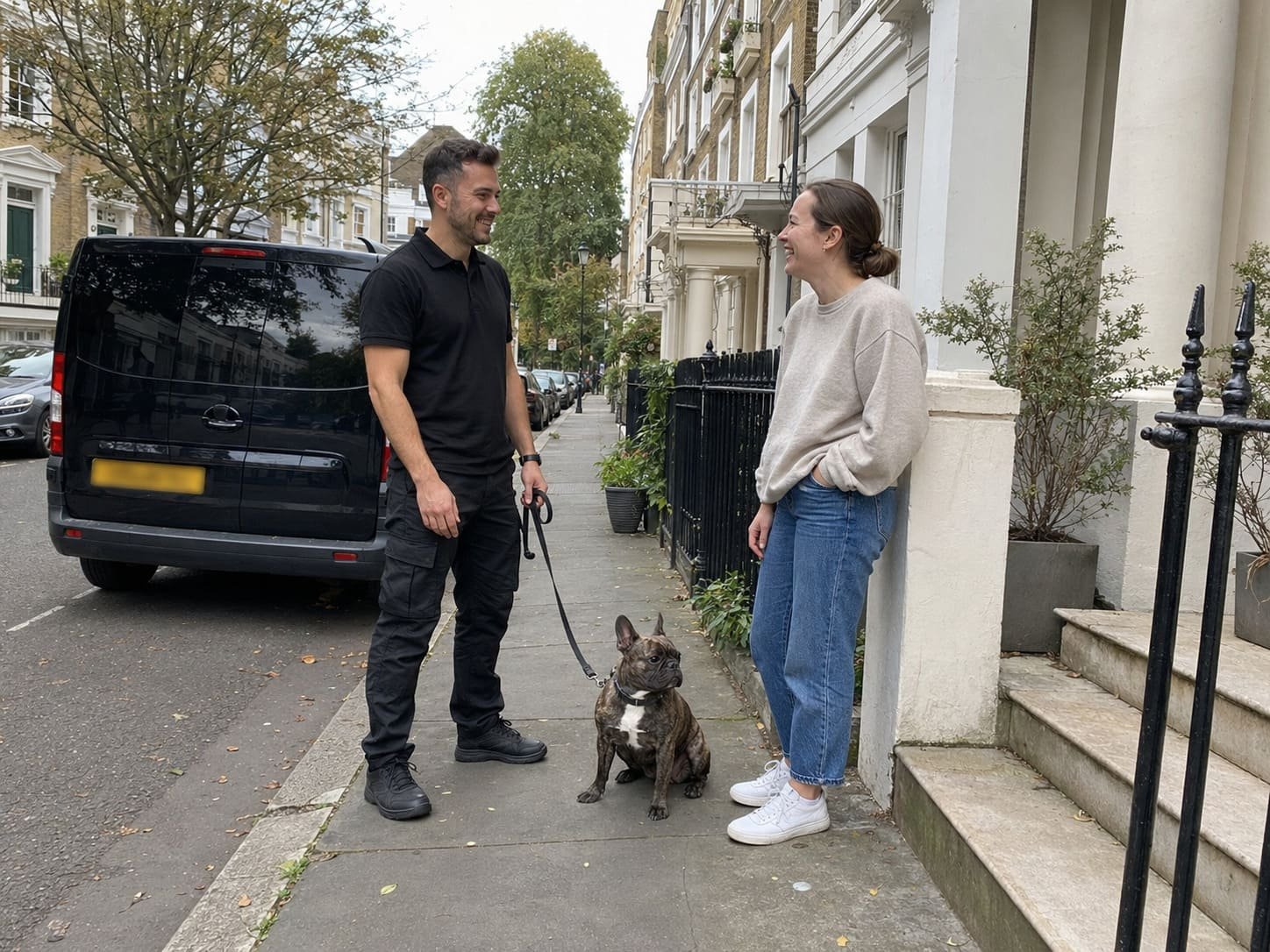
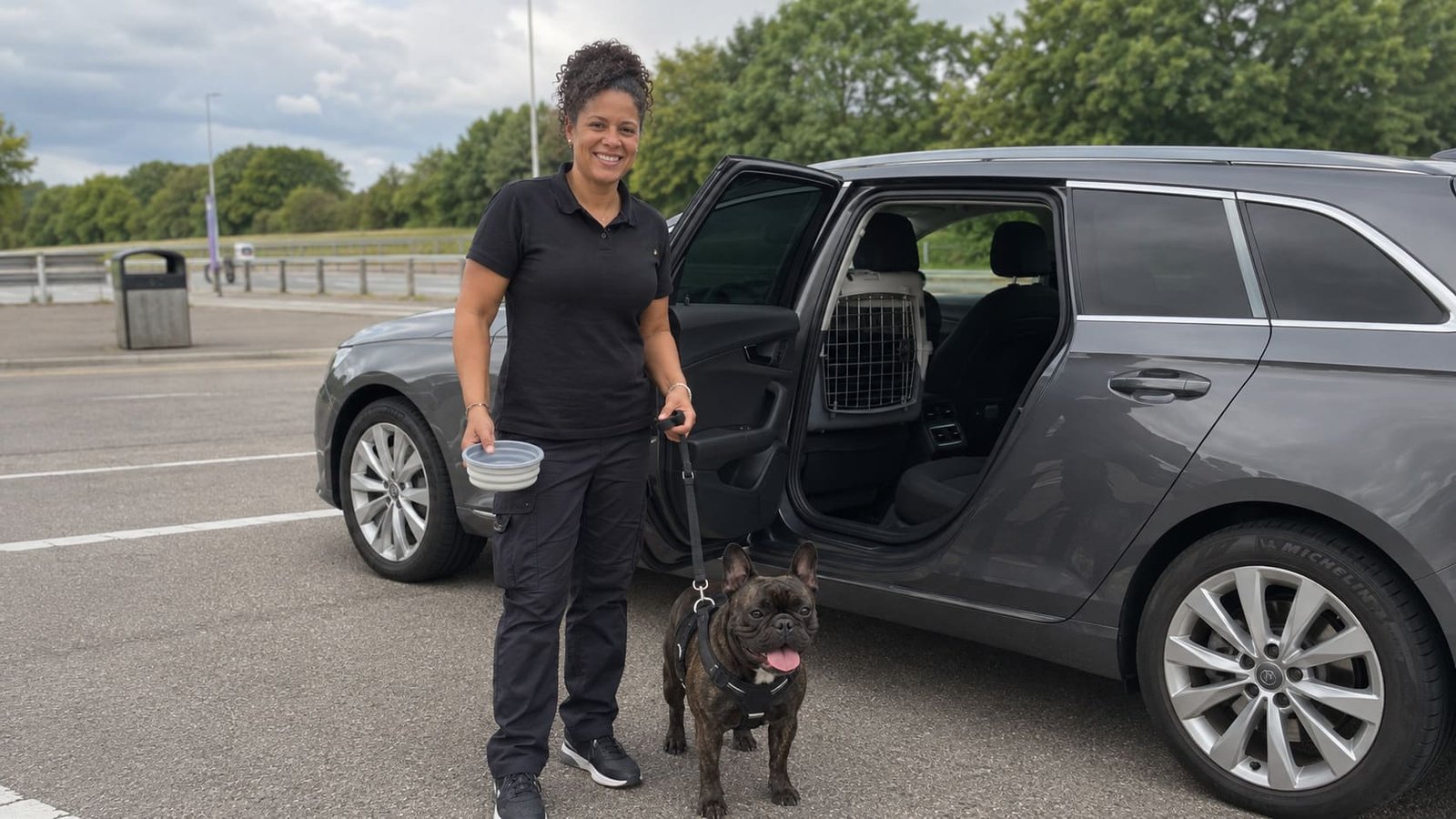
London pet transport collection with French Bulldog and owner outside home
The booking checks that expose responsibility
The useful test is simple: can the provider show who is responsible for your pet at each important point, and what evidence supports that responsibility?
Before you book, we would focus on these checks.
- Authorisation evidence. Ask what animal transport authorisation applies to the route, rather than accepting a broad licence claim.
- Movement records. A serious provider should be able to explain what is recorded for the trip and why it matters.
- Handler arrangements. You should know who is collecting your pet, how handover information is used, and who deals with timing changes.
- Crate and vehicle suitability. The answer should be specific to your pet and the route.
- Updates during transit. Live tracking or clear updates are useful only if someone is also accountable for acting when plans change.
- Heathrow, border or airline arrangements. If the move involves an airport or border, the provider should already be factoring in clearance, carrier rules and paperwork timing.
GOV.UK guidance says an animal transport certificate is a written movement record covering details such as origin, ownership, departure point, departure time, intended destination and expected duration. A copy must be kept for at least 6 months from the end of the movement.
Paperwork also needs to be current. APHA says European Union pet travel rules changed on 22 April 2026, with a new Animal Health Certificate, known as an AHC, introduced. The old template can be issued up to and including 30 September 2026, and the new template must be used from 1 October 2026.
Not every check applies to every booking. A short local trip across London does not need the same oversight as international pet transport London work, but the provider should be able to explain the difference plainly.
Managed transport outlasts the cheapest transfer
One common approach is to buy the cheapest quote that appears to cover the route. Another is to choose managed transport because the move carries consequences if welfare, timing or paperwork is wrong.
A low quote can be perfectly reasonable for a simple, low-risk local trip. Trouble starts when a route that involves Heathrow, borders, older pets, anxious animals, multiple pets or tight timing is treated like a basic transfer. Those moves need someone looking at responsibility across the whole route, as well as who drives from one point to another.
With Tailored Pet Travel, we treat complex pet moves as managed responsibility, with welfare, documentation and timing considered together. The stronger long-term choice is the level of oversight that matches the consequence of getting it wrong.
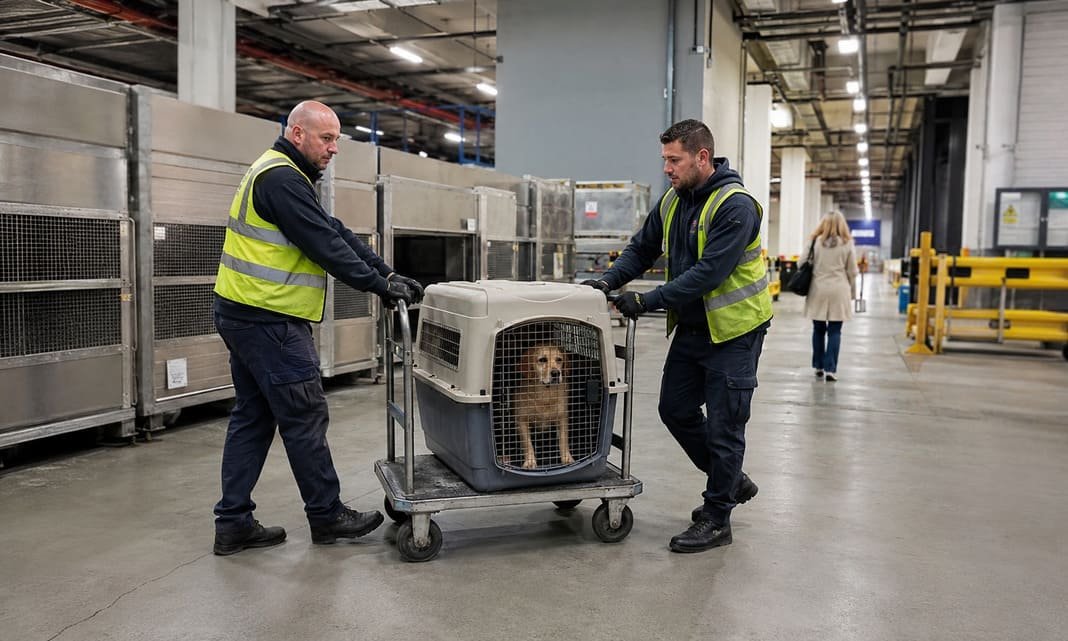
Professional pet transport with secure travel crates
Questions London pet owners ask us about pet transport
Can my pet travel into Great Britain without me?
Dogs, cats and ferrets entering Great Britain under pet travel rules must travel because their owner is travelling. They must travel at the same time as the owner or authorised person, or within 5 days of them.
Is a pet taxi enough for a cat travelling across London?
A pet taxi may be enough for a routine local trip if the handler, vehicle, handover and timings are properly controlled. The risk profile changes when the trip becomes longer, involves an airport, or needs formal paperwork.
Should price be the main way to compare pet transport companies?
Price is useful only after the scope is clear. A quote that leaves out airport handling, border responsibilities or welfare planning is not comparable with a managed pet relocation quote.
What happens if paperwork is wrong at the point of travel?
Paperwork problems can stop a pet from travelling or entering Great Britain. A responsible provider checks the documents that apply to the route before the move is treated as ready.
Do Heathrow handling charges affect the total cost?
Heathrow Animal Reception Centre handling and clearance arrangements can form part of the overall cost. A proper quote should make clear what airport-related responsibilities are included.
This is general information, not professional advice.