What will your dog or cat go through after landing in Australia?
Your dog or cat goes to the Australian Government facility at Mickleham, where officials assess import documents and monitor health before release. The smoothness of that stay is shaped before the flight by eligibility, booking timing, health needs and who has authority to collect the animal afterwards.
For owners moving from the UK or Europe, the biggest mistake is treating quarantine as the final hurdle. In practice, the stay at Mickleham reflects decisions already made: the route, the permit timing, the pet’s health position and the exact order of pre-export checks.
We look at Mickleham as part of the whole relocation plan. If the pet arrives eligible, fit to travel and booked into the right arrival window, quarantine becomes a controlled stay. If something has been missed, the same short stay can become longer, more expensive or harder to manage.
The useful question is simple: what has to be settled before the aircraft lands, so your pet can move through quarantine with as little avoidable disruption as possible?
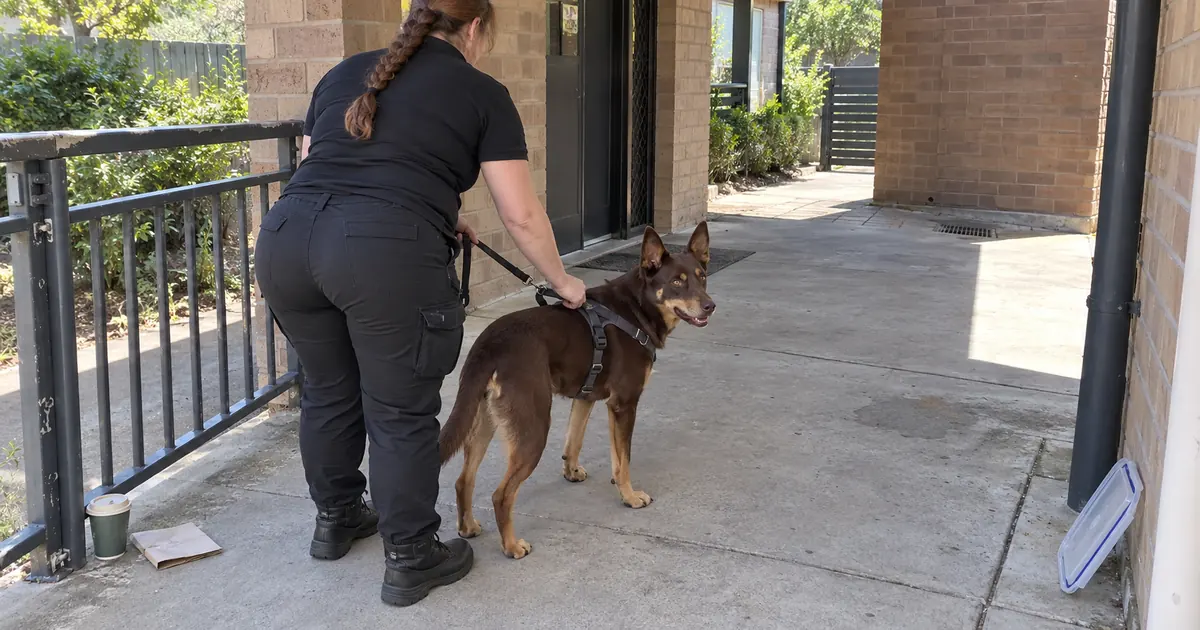
Pet Handler Walking a Dog Before Australian Quarantine – Illustrative Image
Here's What We Have Covered In This Article
Quarantine checks documents and health
Australian pet quarantine exists so required documents can be assessed and the animal’s health can be monitored for signs of biosecurity concern. The Department of Agriculture, Fisheries and Forestry, known as DAFF, operates the Mickleham Post Entry Quarantine Facility for cats and dogs that need post entry quarantine Australia.
Quarantine at this stage is a controlled biosecurity process, not a choice of boarding kennel. That point matters because it changes what you should expect. Mickleham is checking whether the import conditions have been met and whether your pet shows any health issue that matters for Australia’s biosecurity rules.
For owners, this gives the process a clearer shape. The animal is housed there for a defined government purpose, and the paperwork behind the move follows it into the facility. We plan around that link because the document position and the welfare position are connected long before the pet reaches Australia.
At Tailored Pet Travel, we treat quarantine planning as a risk control issue. The practical aim is to reduce the chance that a preventable paperwork or timing problem follows your pet into Mickleham.
After landing, the facility controls the handover
A dog arriving at the airport is collected and taken directly to the Mickleham Post Entry Quarantine Facility. The owner does not manage that airport handover, and the first contact they expect is official confirmation that the animal has arrived safely.
DAFF says owners receive an email within 24 hours confirming safe arrival, and immediate contact is made if there is an issue on arrival. That first update matters because the hours after landing are when most owners want proof that the pet has moved from the aircraft into quarantine.
Owners should expect a controlled isolation period with limited direct access:
- Arrival confirmation is sent after safe arrival, with faster contact if a problem is found.
- Visiting is closed to most animals during the short post entry quarantine period.
- Cats and dogs are housed in climate controlled individual pens.
- Food, bedding, soft toys and comfort items travelling in the crate may be destroyed on arrival for biosecurity or hygiene reasons.
Same species animals may be housed in adjacent pens where possible, which helps owners moving more than one pet understand the likely set-up without assuming the animals will share space. The safest expectation is official communication and controlled care, with no owner visiting during the stay.
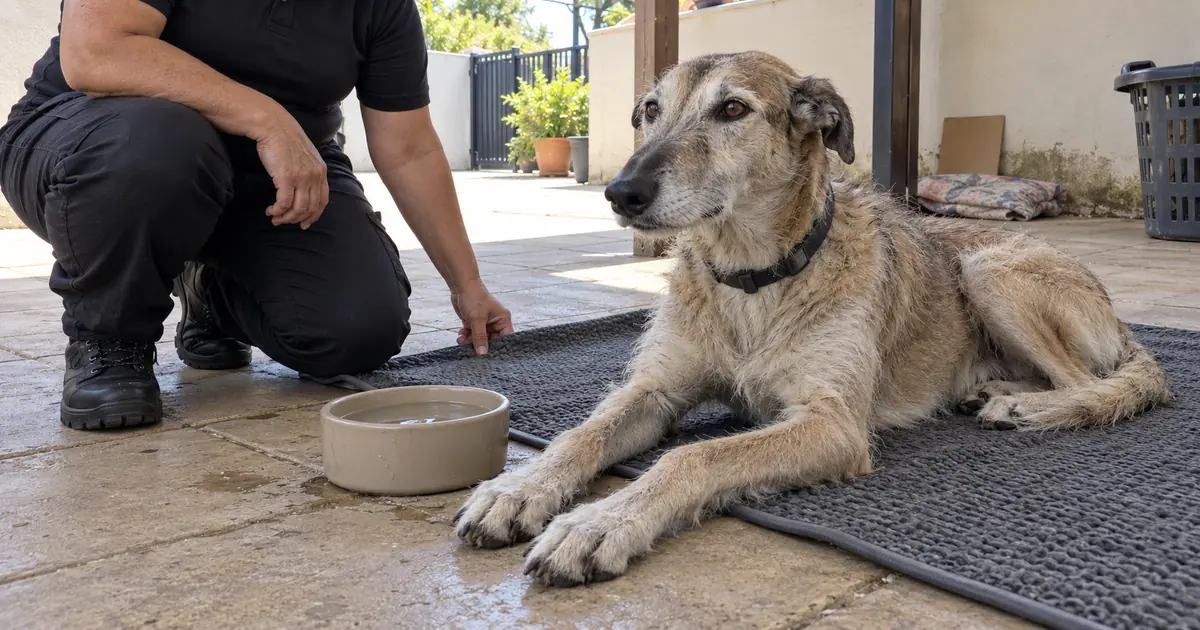
Dog Rest and Water During International Pet Travel – Illustrative Image
Eligibility decides the minimum stay
The minimum quarantine stay is set by eligibility and compliance, and DAFF gives a range of at least 10 to 30 days, with stays up to 180 days and longer where biosecurity risk increases. A short stay has to be earned before arrival.
The table below compares the minimum quarantine outcomes with the issue that commonly drives each outcome.
| Quarantine outcome | What usually drives it |
|---|---|
| 10 day minimum | The pet is eligible and the required conditions have been met, including the correct UK identity sequence where relevant |
| 30 day minimum | Eligibility for the shorter stay has not been established, including where UK identity verification was missed or done in the wrong order |
| Longer stay | A biosecurity issue, non-compliance issue or increased risk prevents release from proceeding as expected |
For UK pets, the identity check is the point many owners miss. From 4 November 2024, UK cats and dogs can use a DAFF agreed identity verification process through official veterinarians with OV66 authorisation. The Animal and Plant Health Agency sits behind the UK official veterinarian system, so this is a formal route rather than an ordinary microchip check by any vet.
A 10 day minimum comes from eligibility and sequence, not from UK departure alone. The identity verification must happen before the RNATT blood sample, which is the rabies antibody blood test used for Australian import. If that order is wrong, DAFF says the animal must complete a minimum 30 day quarantine period on arrival.
Booking also has to line up with the permit position. A valid import permit is needed before quarantine accommodation can be booked, and the permit itself does not guarantee a place at Mickleham for the requested date. BICON, the import conditions system, and the Post Entry Biosecurity System reservation both sit in the background here, but the owner-level point is simpler: the date has to work on paper and in the facility.
With Tailored Pet Travel, we watch the order of identity checks, rabies testing and booking because a small timing error can change the quarantine period by weeks.
Medicated or vulnerable pets need closer judgement
When a pet needs medication or closer monitoring, quarantine planning changes. Mickleham has no onsite veterinary facilities, so a pet with a chronic condition, age concern or close medication timing needs a clear welfare decision before travel.
Medication is given only under the direction of the treating veterinarian, and it is normally administered between 08:00 and 16:00. DAFF will not administer unlabelled medication, unclear medication, intravenous medication, subcutaneous medication, rectal medication or medication marked as needed or as required. For a diabetic, epileptic, cardiac or elderly pet, that is a planning issue rather than a minor detail.
If veterinary care is needed during quarantine, DAFF contacts the owner or authorised agent. The owner or agent must arrange and pay for private veterinary treatment or emergency hospital care, including any transport to an emergency veterinary hospital. That responsibility needs a reachable person behind it.
Summer adds another welfare layer. DAFF identifies Australian heat as a concern from December to February, when temperatures can exceed 40°C, especially for older animals, brachycephalic dogs, overweight pets, thick coated animals and pets with previous heat stress or medical conditions. A sick or very elderly animal may need a different travel timing decision before the final pre-export vet examination, which must happen within 5 days of export and certify the animal as healthy and fit to travel and undergo quarantine.
A clean release is planned before travel
Owners often focus on the flight because it is the visible part of the move. Release from Australian quarantine deserves the same attention because Mickleham cannot simply hold a pet until the owner is ready.
As of 8 September 2026, DAFF lists a reservation charge of AUD $282 per animal and an importation charge of AUD $1,132 per animal for cats and dogs completing post entry quarantine. Those charges are separate from import permit application fees. Accommodation is listed at AUD $56 per day, giving AUD $560 for 10 days and AUD $1,680 for 30 days, and the fees are reviewed annually and subject to change.
Responsibility sits with the importer named on the import permit, described by DAFF as the person in charge of the animal. That person remains responsible for meeting import conditions, paying fees and collecting the animal. Written permission can allow an authorised agent, including a pet transport agency, family member or friend, to act for them.
Collection has its own limits. Animals must be collected on the eligible release date between 10:00 and 12:00 by the importer or an authorised agent. Cats must be released in their original crate, and animals cannot stay beyond the eligible release date. Onward transport is part of the quarantine plan because release works only when authority, payment and movement after Mickleham are already aligned.
The priority above all else is control before the pet flies: eligibility, health judgement and release authority have to be settled early because quarantine runs on the record that arrives with the animal.
Questions owners ask us about Mickleham quarantine
Can your pet complete quarantine at home in Australia?
No. Cats and dogs that need Australian post entry quarantine must complete it at the Mickleham facility, apart from different conditions noted for eligible assistance dogs.
Do Mickleham administration offices deal with queries at weekends?
The Mickleham Post Entry Quarantine administration offices are closed on weekends and Australian public holidays. That matters for booking queries, payment issues and release planning around non-working days.
Can an assistance dog follow different quarantine conditions?
Eligible assistance dogs are treated separately from ordinary pet cats and dogs under DAFF’s rules. Owners moving an assistance dog need the current conditions checked for that animal’s status before travel.
Does a quarantine quote cover the full cost of moving your pet to Australia?
No. The listed Mickleham fees cover government quarantine charges only. Flights, export veterinary work, agent handling and onward transport sit outside those figures and depend on the pet and route.