Can your overseas rescue dog enter the UK legally?
Yes, but a rescue dog being adopted from abroad must enter under the correct legal category before routes or documents are chosen. Rehoming or transfer of ownership makes the movement commercial, so the dog needs the right import handling, paperwork, route approval and welfare checks before travel.
Most problems start with a simple assumption: the dog is going to become your pet, so the journey must be ordinary pet travel. For many overseas rescue adoptions, that assumption leads people down the wrong route before anyone has looked at the legal status of the movement.
A familiar pet document, a helpful rescue contact or a willing transporter cannot fix the wrong import category at the border. The first decision is whether the dog is travelling as your own pet under ordinary pet travel rules, or being imported because it is being rescued, rehomed or transferred to a new owner.
Once that category is clear, every other choice becomes easier to judge. The right question is whether the legal route, the person arranging the move, the carrier and the dog’s welfare all line up before the dog leaves.
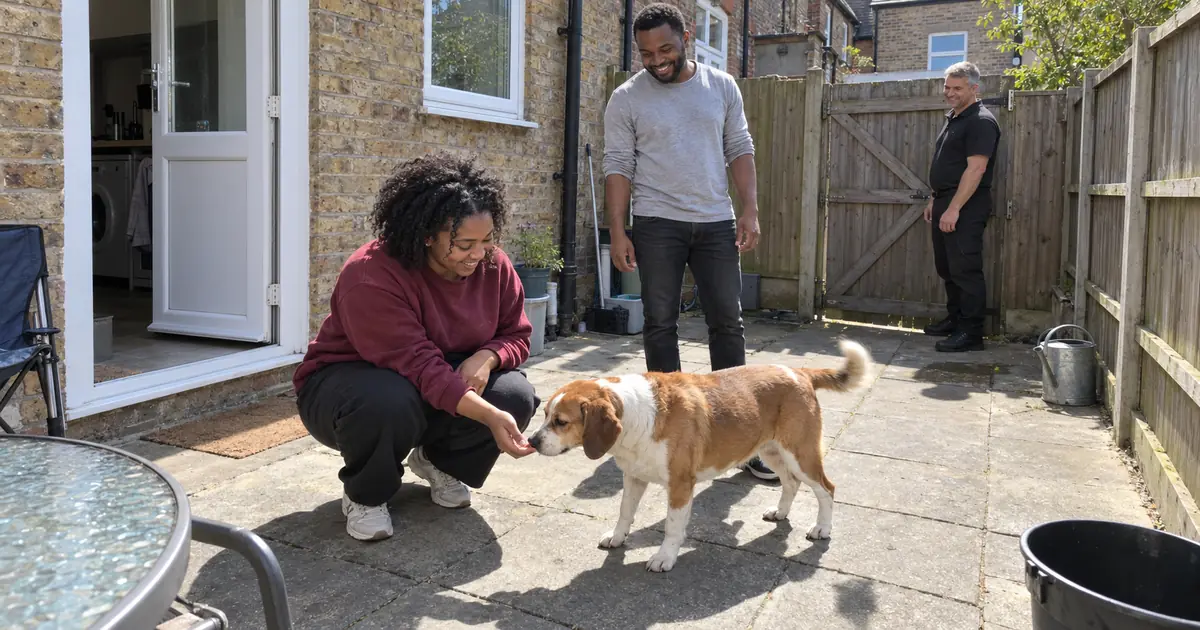
Rescue dog meeting new family after travel – Illustrative Image
Here's What We Have Covered In This Article
Rehoming changes the travel category
A rescue dog being brought to Great Britain for rehoming is treated as a commercial movement under the Balai regime. The legal category is set by rehoming and ownership transfer, not by whether money changes hands.
That point catches out careful adopters because the word commercial sounds like profit, trade or selling. In this context, it also covers rescue and rehoming movements. A charity, foster carer or overseas rescue may see the dog as a future family pet, but the travel category still follows the legal movement into Great Britain.
Ordinary pet travel applies only where the pet travel conditions are met. Those conditions include the animal travelling with, or close to, its owner or authorised person, and no sale or transfer to another owner. A rescue dog from abroad to UK homes commonly fails that test because the move itself is part of the adoption.
The clearest way to separate the two categories is to ask who owns the dog at each end of the journey, and whether that ownership changes as part of the move.
| Ordinary pet travel | Rescue or rehoming travel |
|---|---|
| Applies only where the pet travel conditions are met | Applies where rescue, rehoming or transfer of ownership is part of the movement |
| Built around an owner travelling with or close to the pet | Built around import status and legal transfer into Great Britain |
| A familiar pet document may be part of the picture | The correct commercial health certificate and import handling matter |
Balai rules for a rescue dog also affect the health certificate. A commercial import needs the GB model health certificate for commercial dogs, cats and ferrets, issued through the competent authority in the exporting country. That is why adopting a dog from abroad should start with the import category, then settle who will legally carry responsibility for the import.
Approved importer status can decide who moves the dog
Legal rescue dog transport UK arrangements depend on the person or organisation legally able to arrange the import. A willing volunteer transporter or helpful foster carer still has to fit the rules that apply to the dog’s origin and import status.
Origin country can change the level of control needed before travel. Current GOV.UK guidance from the Department for Environment, Food & Rural Affairs and the Animal and Plant Health Agency says commercial imports of dogs, cats and ferrets from Ukraine, Belarus, Poland or Romania require Approved Importer status. Rescues from those countries remain workable. The condition is that the party arranging the import holds the right status before travel is booked.
Romania shows why current checks matter. From 7 October 2025, dogs imported from Romania must have a negative Brucella canis test result before import. For an adopter, the point is simple: import rescue dog from Romania planning has to include both the commercial category and the country-specific rule before transport is arranged.
This is where Tailored Pet Travel most often sees the category mistake: people have focused on finding a route and a collection date before checking whether the party arranging the move is allowed to do it. The safer order is to settle import responsibility first, then build the journey around it.
Rescue dog reunited with adopter after travel – Illustrative Image
Paperwork timing creates the border risk
A dog can be vaccinated, examined and ready to travel in everyday terms, yet still face delay if the certificate type or border notification does not match the journey. What matters at rescue dog paperwork UK border checks is the whole import position, from the certificate type through to the arrival notification.
The GB commercial dogs, cats and ferrets health certificate must match the commercial rescue movement. The importing side also needs the right arrival notification where Balai rules apply. IPAFFS, the Import of Products, Animals, Food and Feed System, is used to notify APHA. CHEDA, the Common Health Entry Document for Animals, is the live animal import notification.
Common failure points include:
- Wrong certificate type: A pet-style document cannot carry a commercial rescue movement if the legal category is different.
- Late import notification: APHA must be notified on IPAFFS at least one working day before expected arrival for live animal imports under Balai rules.
- Timing that slips: Dogs entering Great Britain normally need tapeworm treatment no less than 24 hours and no more than 120 hours before arrival.
- Booking mismatch: A carrier can refuse travel if the paperwork and booking details point to different types of movement.
- Longer checks: A missed notification for a relevant non-EU import can mean extra cost or a longer check at the Border Control Post.
Wrong pet paperwork UK problems also carry a wider consequence. A pet that fails to meet Great Britain entry rules may be placed in quarantine for up to four months, or refused entry if it travelled by sea, with the owner responsible for fees and charges. Controlled timing reduces that risk before the dog reaches the carrier desk or border point.
Rescue dog handover after international transport – Illustrative Image
The route must be approved before transport is booked
Route choice can stop an otherwise prepared rescue journey. Eurotunnel crossing, ferry routes and pet flights all need to match the dog’s legal category, paperwork and current entry rules.
A lawful route is part of the import plan, not an afterthought once the paperwork looks ready. A convenient crossing or flight can still be unusable if the carrier or route is not approved for the way the dog is entering Great Britain. Entering through another country first does not remove the need for legal entry into Great Britain at the end of the journey.
Approved routes for dogs to UK destinations also change. As of 20 August 2026, the GOV.UK approved air, sea and rail carriers page had last been updated on 18 August 2026. That is recent enough to show why route checks belong close to travel, especially where bookings, handovers and border checks depend on the same plan.
Pets entering England or Scotland must use APHA approved carriers and routes, subject to the stated exceptions in the guidance. GOV.UK also states that there are no approved routes to Wales. For a rescue dog, that can affect the whole plan, because a route that looks simple on a map may fail at the point of legal entry.
Route planning is also a welfare decision. Tailored Pet Travel treats the carrier, entry point and handover as one controlled movement, because changing one part can affect the dog’s stress, timing and acceptance by the carrier.
Welfare checks belong in the legal plan
Rescue dogs can have unknown handling history, limited crate experience or difficulty with long journeys. Those welfare facts affect whether the chosen legal route is realistic, especially where a carrier has to accept the dog before any border check happens.
A compliant document set only helps if the animal can complete the journey safely and lawfully. For some dogs, a later travel date, a different route or extra preparation before departure is the more controlled option.
Crate and flight acceptance can stop travel
Airlines can refuse a dog if the travel container is unsuitable. IATA says a dog’s air travel container must let the animal turn normally while standing, stand and sit erect, and lie in a natural position.
Snub nosed breeds need careful handling because IATA’s 2026 CR1 guidance requires a larger container for them. Sedation is also a hard welfare point: IATA advises against sedating or tranquillising pets in transit to prevent panic attacks or destructive behaviour.
Breed type risk needs checking early
Breed type can be a legal barrier before travel is booked. GOV.UK states that a banned breed of dog cannot be brought into Great Britain unless it already has a valid Certificate of Exemption.
Rescue descriptions, mixed-breed labels and paperwork do not make this issue disappear. If the dog’s type is uncertain, that risk belongs at the start of the decision, before money is spent on documents, bookings or collection.
The one thing to prioritise is alignment before movement: category, route and welfare must all match before the dog leaves. That single decision protects the journey more than any last-minute fix at the border.

pet owner reunited with miniature schnauzer – Illustrative Image
Common questions about overseas rescue dog travel
Can travel be delayed if the dog is too young?
Yes. For relevant commercial imports, the dog must be identified before rabies vaccination, vaccinated after 12 weeks of age, and then wait at least 21 days after the primary rabies vaccination before travel. Some rabies vaccines take longer than 21 days to give protection, so ask the vet to confirm the waiting period for the vaccine actually used.
Can a rescue dog come from any country if the paperwork is right?
No. Commercially imported dogs, cats and ferrets must come from an approved country. If the origin country is outside the permitted list for that import type, paperwork alone cannot make the journey lawful.
Does an IATA approved crate mean IATA has certified that crate?
No. IATA publishes container requirements, and a crate either meets them or it does not. The label on the box carries no separate approval, so check the container against the requirements for your dog’s size and breed, and confirm acceptance with the carrier.
Can you fly out and bring the rescue dog back yourself?
Travelling with the dog does not change the import category. Where the movement involves rescue, rehoming or transfer of ownership, the commercial rules still apply, including the commercial health certificate and Approved Importer status where the origin country requires it.
What should you do if advice from the rescue and transporter conflicts?
Treat the legal import category as the anchor point. If the advice does not line up with rescue, rehoming or transfer of ownership rules, the journey needs a clearer legal plan before the dog moves.