
Is driving your pet to Europe from the UK usually cheaper than flying?
Sometimes, yes. Driving can cost less for short to mid-range European journeys, especially if you are travelling with one or more pets and can avoid extra overnight stops. Flying can look quicker on paper, but the full price often includes crate costs, airline handling fees, airport transfers, and stricter compliance requirements. The lower-cost option depends on route length, pet size, documentation, and how much risk, time, and challenge you are prepared to take on.
A lot of owners start with the obvious numbers. They compare a Channel crossing with a flight and assume the cheaper ticket wins.
Pet travel rarely works like that. UK to Europe pet transport involves documentation, welfare planning, border rules, and timing, all of which can affect the final bill.
Here's What We Have Covered In This Article
Understanding the true costs of pet travel
Headline price is only one part of pet travel costs. A road trip may seem economical until fuel, tolls, accommodation, and route changes are added in. Air travel may seem expensive from the start, yet it can reduce driving time and overnight disruption for some routes.
Several cost layers sit behind the visible booking:
- Direct travel charges, including crossings, flights, fuel, or airport fees
- Compliance costs, such as an Animal Health Certificate, vet appointments, and other documentation fees
- Practical extras, including crates, pet-friendly hotels, parking, insurance changes, and local transfers
Pet size and breed can affect both options. A smaller animal may fit more easily into certain travel arrangements, whereas a larger dog may need a bigger crate, more vehicle space, and fewer practical accommodation choices. Some journeys also become more expensive if the route is awkward, the timetable is tight, or the animal has health or welfare considerations.
Another point often missed is the price of a mistake. If paperwork does not align with DEFRA guidance, European pet travel regulations, or checks applied by UK Border Force and EU border officials, the financial impact can go well beyond the original fare. Delays, refused boarding, missed crossings, and extra overnight stays are usually far more costly than the first quote suggested.
What you pay when you drive your pet to Europe
Driving to Europe with a pet often feels more manageable because the costs are familiar. Even so, the total can spread across several smaller payments that are easy to underestimate.
A typical road budget may include:
- Fuel, which can rise sharply on longer continental routes or with a larger vehicle
- Eurotunnel or ferry charges, including the pet fee where applicable
- Tolls and low-emission zone charges in parts of Europe
- An Animal Health Certificate or other required paperwork
- Travel crate or car safety equipment if your current setup is unsuitable
- Pet-friendly accommodation for overnight stops
- Food, rest breaks, parking, and incidental travel spending
- Motor insurance adjustments for European driving, if needed
Crossing choice matters. Eurotunnel is often valued for speed and a more controlled routine for animals, but it still forms one line in a longer budget. A ferry may suit some routes better, though process time and pet access arrangements can alter the experience and the overall spend.
Documentation is another unavoidable cost. Many UK owners still assume an old pet passport will cover the trip, but that is not always the case. Current rules depend on the pet, the route, and the paperwork being used, so document costs need to be factored in early rather than treated as an afterthought.
Accommodation can be the quiet budget stretcher. One overnight stop on the outward process and another on the return can shift the economics significantly, particularly during school holidays or on popular routes through France, Belgium, or the Netherlands. A long drive with two pets and a family car may still work out well, but a solo traveller heading deep into southern Europe may see the balance change quickly.

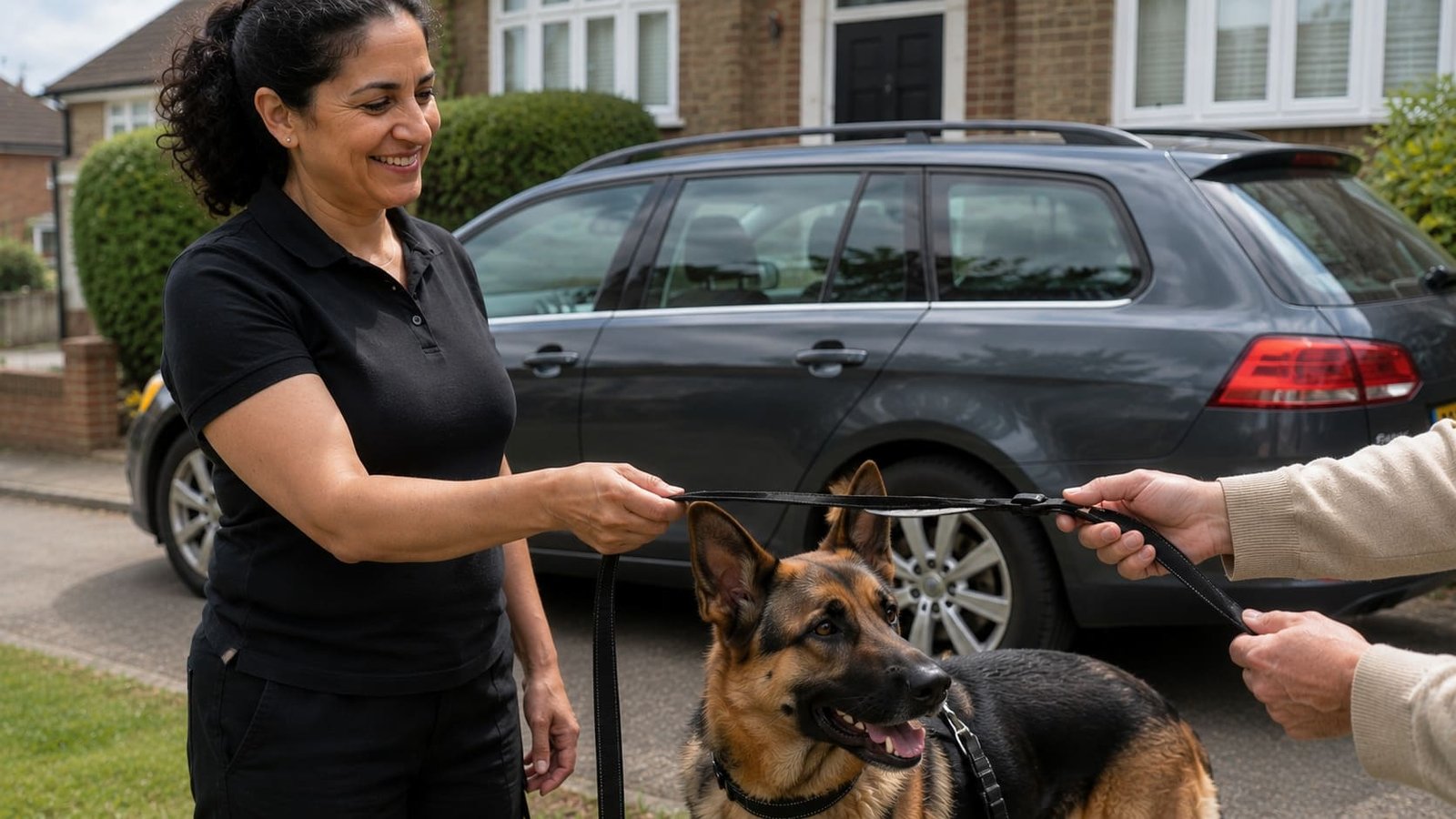
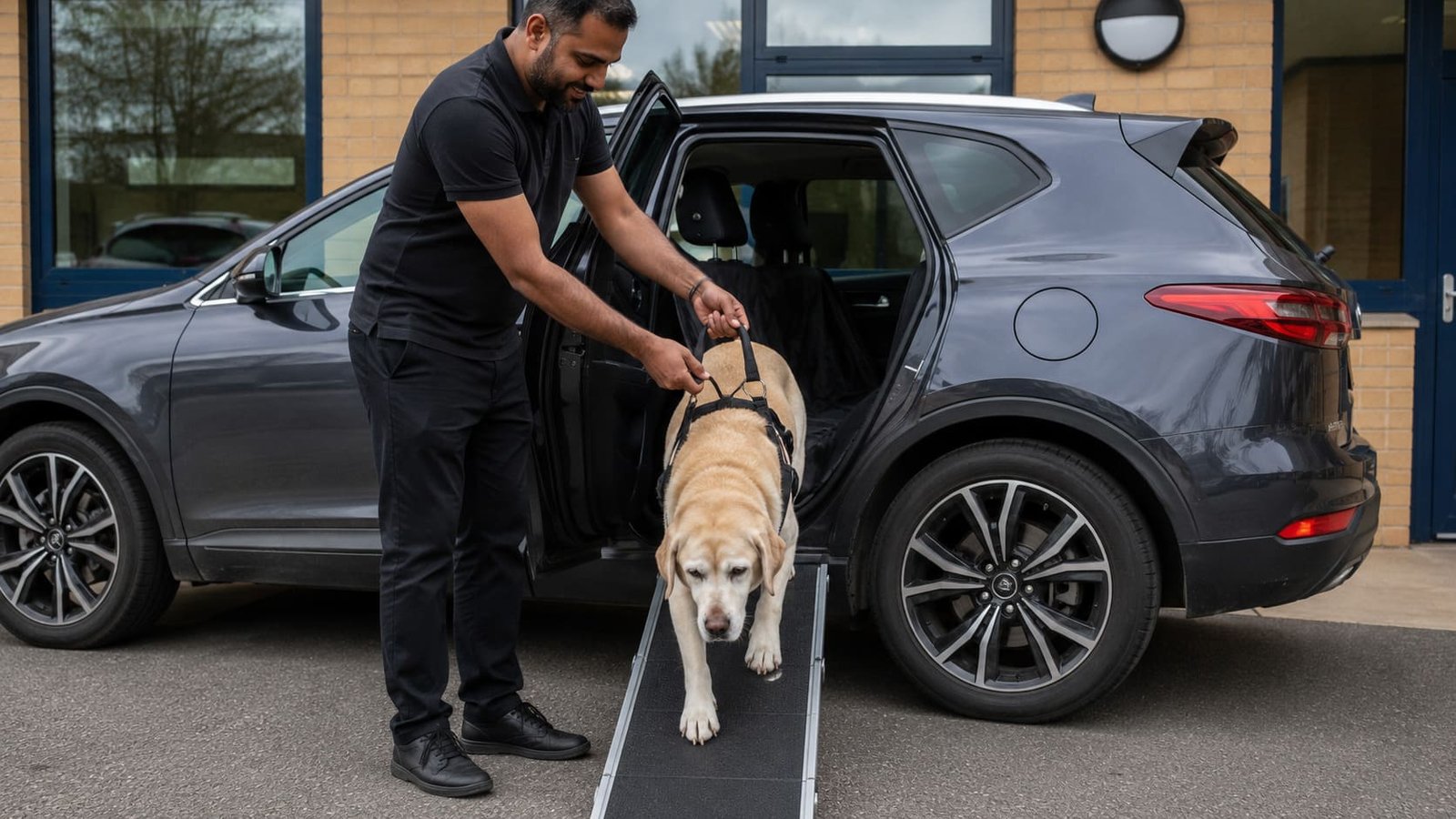
Pet handler and dog at an open car trunk – Illustrative Image
What you pay when you fly your pet to Europe
Flying pets to Europe often compresses the travel time, but the price structure is less straightforward than many owners expect. Air travel usually involves more separate charges, and some of them sit outside the ticket itself.
Common air travel costs include:
- Airline pet fees or cargo-related charges, depending on route and carrier policy
- An IATA-compliant crate, bought or hired in the correct size
- Veterinary appointments and required travel documents
- Airport collection or drop-off transport at one or both ends
- Handling, customs, or terminal-related fees where they apply
- Extra costs linked to last-minute booking changes or route limitations
Airlines and airports also work within strict welfare and compliance frameworks. IATA crate standards are there for good reason, but the crate itself can become a meaningful expense, especially for larger breeds. Ground transport to and from the airport adds another layer, particularly if the departure point is far from home or if the arrival airport is still some distance from the final destination.
Route type has a big effect on price. A short European process may still involve a complicated chain of costs if the chosen airline does not carry pets in the way the owner expects. Some pets can travel under one set of conditions, others under another, and some routes are simply less practical than they first appear. Costs can rise further where there are breed-related restrictions, seasonal heat rules, or very limited flight availability.
For that reason, pet flight costs are rarely captured by the base fare alone. The air route may still be the better fit, but it needs to be priced as a full process rather than a single booking.
Comparing the numbers: when is driving cheaper than flying?
The cheapest way to take a pet to Europe depends on the shape of the trip, not just the mode of transport. Distance, number of pets, and how much owner time is involved all matter.
One pet on a relatively short route
For a single dog travelling from southern England to northern France, Belgium, or the Netherlands, driving is often cheaper overall. Fuel, a Channel crossing, and paperwork may still come in below the combined cost of flight fees, crate requirements, and airport logistics.
That advantage can narrow if the owner needs hotel stays, takes a larger vehicle, or starts far from the crossing point.
Multiple pets travelling together
Costs often scale better by road when two or more pets are involved. One vehicle, one route, and one set of shared travel expenses can compare favourably with separate flight charges and multiple crate requirements.
In these cases, driving vs flying with pets becomes less about the individual animal and more about group logistics. A family moving with two cats and a dog may find the road option much easier to justify financially.
Longer journeys into Europe
Once the destination moves much further into Europe, the equation changes. More fuel, extra tolls, overnight stays, and fatigue-related planning can push the road budget upwards.
Flying may then become more competitive, particularly if the owner would otherwise spend several days in transit. The pet transport price difference is often narrower than expected on long routes.
Larger dogs or more complex cases
Large dogs can be expensive whichever option you choose. Road travel may avoid some airline limits, but a bigger pet can still affect vehicle choice, hotel availability, and comfort planning. Air travel may involve a larger IATA crate and fewer practical route options.
If the pet has medical needs, age-related concerns, or a history of stress in transit, the cheapest paper calculation may not reflect the real cost of the process.
A useful way to frame the comparison is simple. Driving often wins on shorter routes and multi-pet trips. Flying can make more sense where time, distance, or route challenge would make the road process much heavier in both cost and effort.

Our-Services-at-Tailored-Pet-Travel-
Beyond price: the risks and realities of each option
Cheap can become expensive very quickly if the process goes wrong.
Border checks, document errors, missed crossings, and welfare issues do not happen on every trip, but they are the factors that tend to create the largest unplanned costs. Pet travel risks are rarely dramatic at the start. They usually begin with one incorrect assumption, one outdated rule, or one booking made without checking the full route.
Some of the most common pressure points include:
- Paperwork that does not match current DEFRA or EU requirements
- Border control delays linked to timing, routing, or document errors
- Stress in transit caused by long travel days, unfamiliar settings, or poor rest planning
- Refused carriage where airline or crossing rules have been misunderstood
- Extra accommodation, transport, or veterinary costs after disruption
Welfare matters just as much as compliance. A long drive gives the owner more direct oversight, but it also places the animal in a car for many hours and may involve overnight stops in unfamiliar places. Flying reduces time on the road for certain routes, yet airport handling, crate confinement, and transfer logistics need proper thought.
Professional oversight is often most relevant when the trip is no longer straightforward. That might mean multiple pets, a time-sensitive relocation, a route with stricter import controls, or a pet whose welfare needs cannot be treated casually. In situations like these, providers such as Tailored Pet Travel are often brought in because the cost of a failed process would be higher than the cost of getting it right first time.
The hidden value of professional pet travel support
Some journeys are simple enough for owners to handle confidently. Others carry enough regulatory or welfare pressure that outside support becomes a sensible part of the cost calculation.
Professional pet travel support changes the value equation in a few specific ways:
- It reduces the chance of paying twice after a refusal, missed departure, or document issue
- It brings clarity where UK and EU pet travel regulations create uncertainty
- It protects welfare standards on journeys that would otherwise be hard to manage alone
- It lowers the burden on owners who are already dealing with house moves, family relocation, or time pressure
That value is easiest to see in complex cases. A family moving with several animals, an owner facing conflicting advice about documents, or a pet whose route has changed at short notice is not just comparing prices. They are weighing delay risk, regulatory confidence, and the practical reality of getting an animal safely from one country to another.
Companies such as Tailored Pet Travel tend to be most relevant at the point where DIY planning stops feeling reliable. That does not mean every UK to Europe pet transport booking needs professional management. It does mean the cheaper option on paper may be the weaker option if the margin for error is very small.
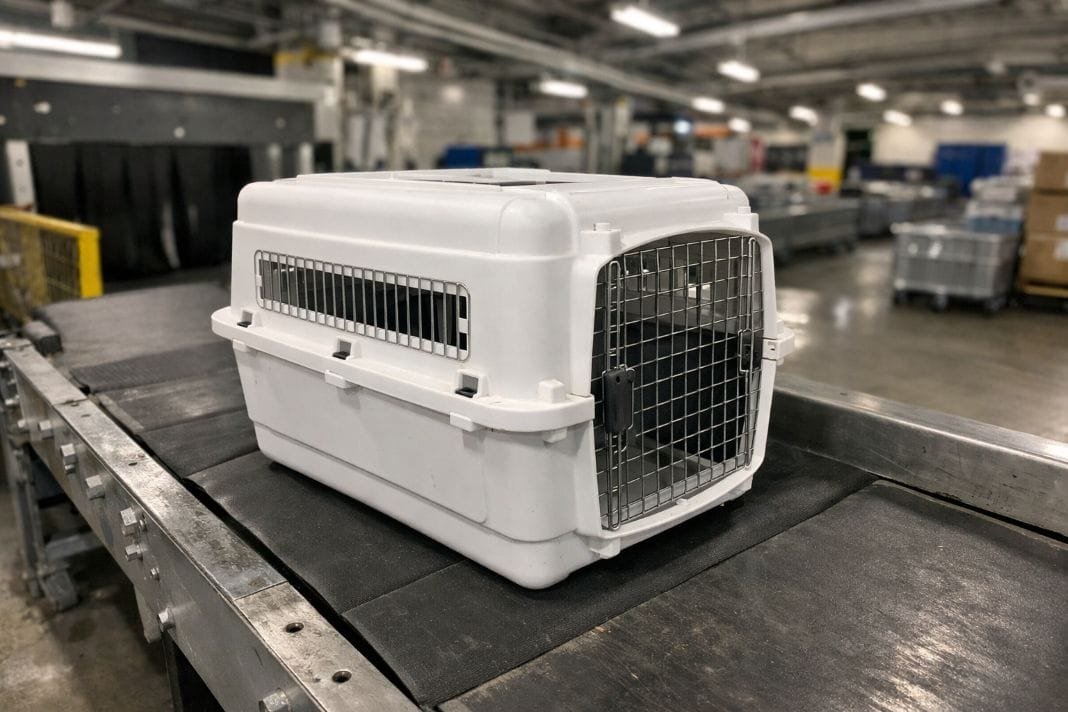
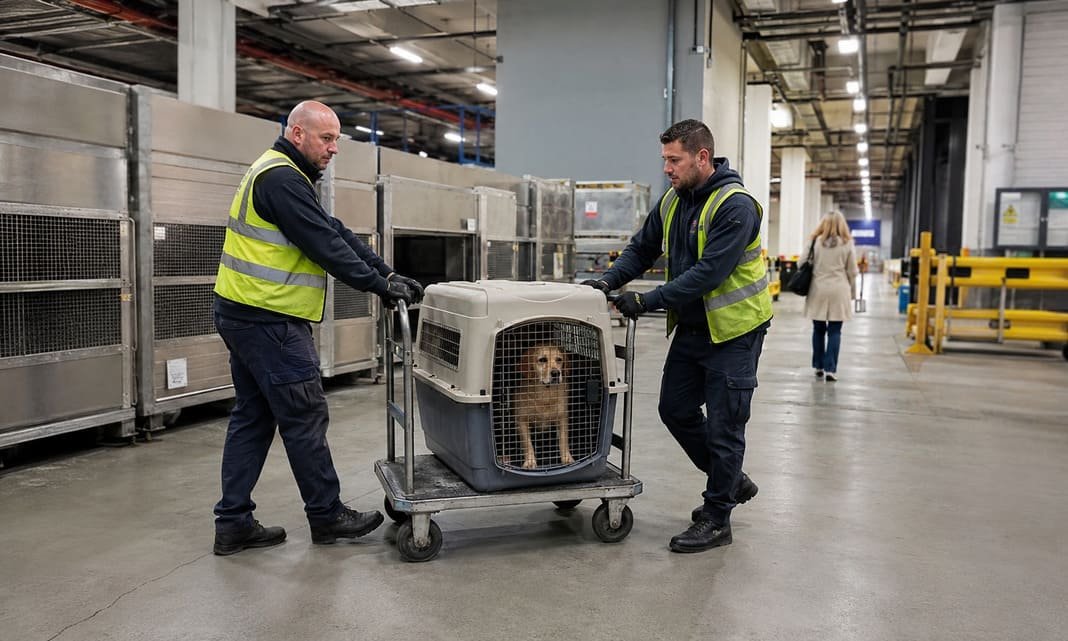
Airline pet crate on cargo handling line for professional pet relocation – Illustrative Image
Rethinking “cheaper”: what UK pet owners often overlook
Price matters, but pet travel comparison is rarely settled by the first total on a screen. Owners often focus on the fare and overlook the financial effect of one hotel night, one paperwork error, one unsuitable crate, or one route that looks manageable until the process begins.
A few common misconceptions keep coming up:
- Driving is always the budget option.
- Flying is always faster and therefore better value.
- Documentation is a small add-on instead of a core travel cost.
- Pet welfare and owner convenience have no bearing on overall expense.
The more useful question is not simply whether driving or flying is cheaper. The better question is which option remains affordable once time, compliance, welfare, and disruption risk are counted properly. For many UK owners, the right answer sits in that fuller picture rather than in the lowest starting price.