Can you take your dog or cat on Eurostar from London?
No. We treat Eurostar services to and from London as closed to ordinary pets, including dogs and cats. The practical answer is to choose an approved Channel route, such as a vehicle-based crossing or managed pet transport, then match the documents and welfare plan to that route.

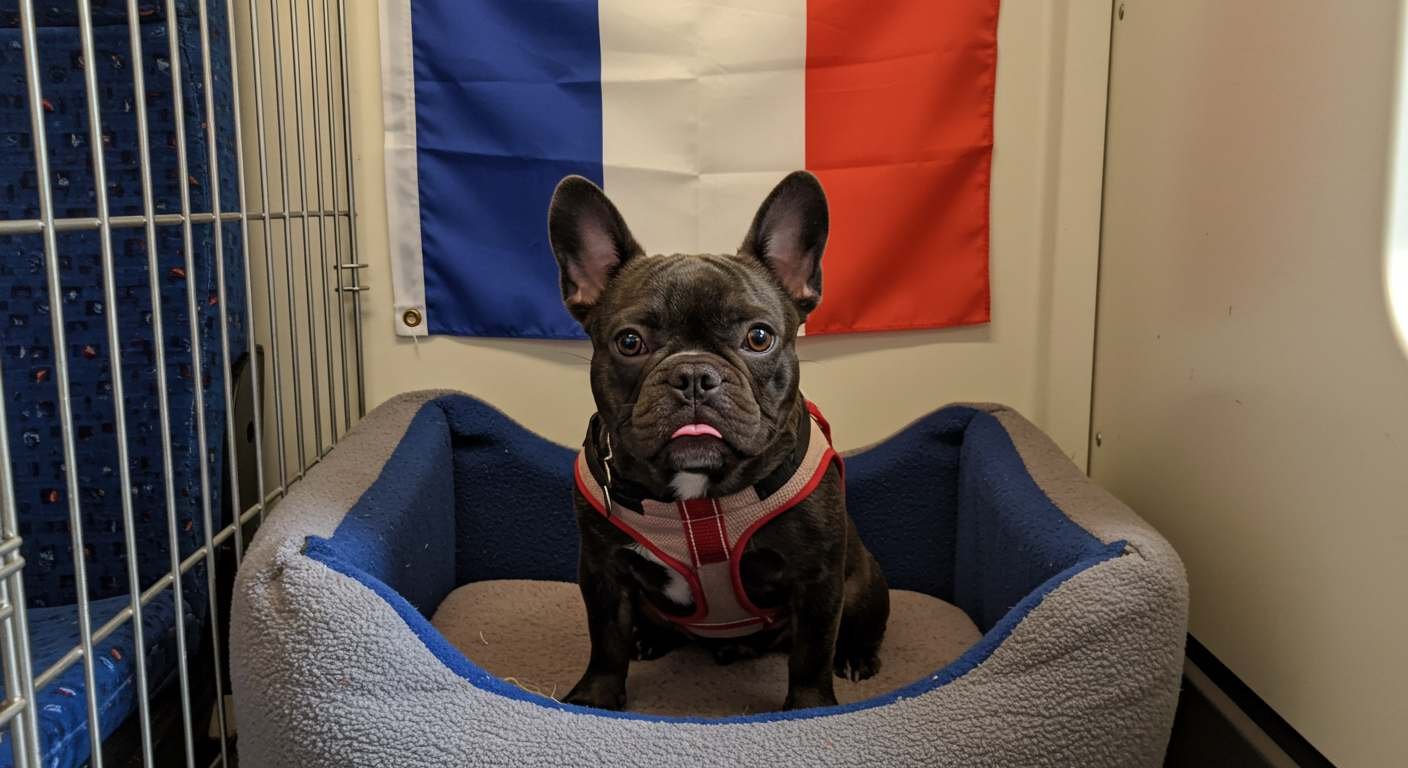
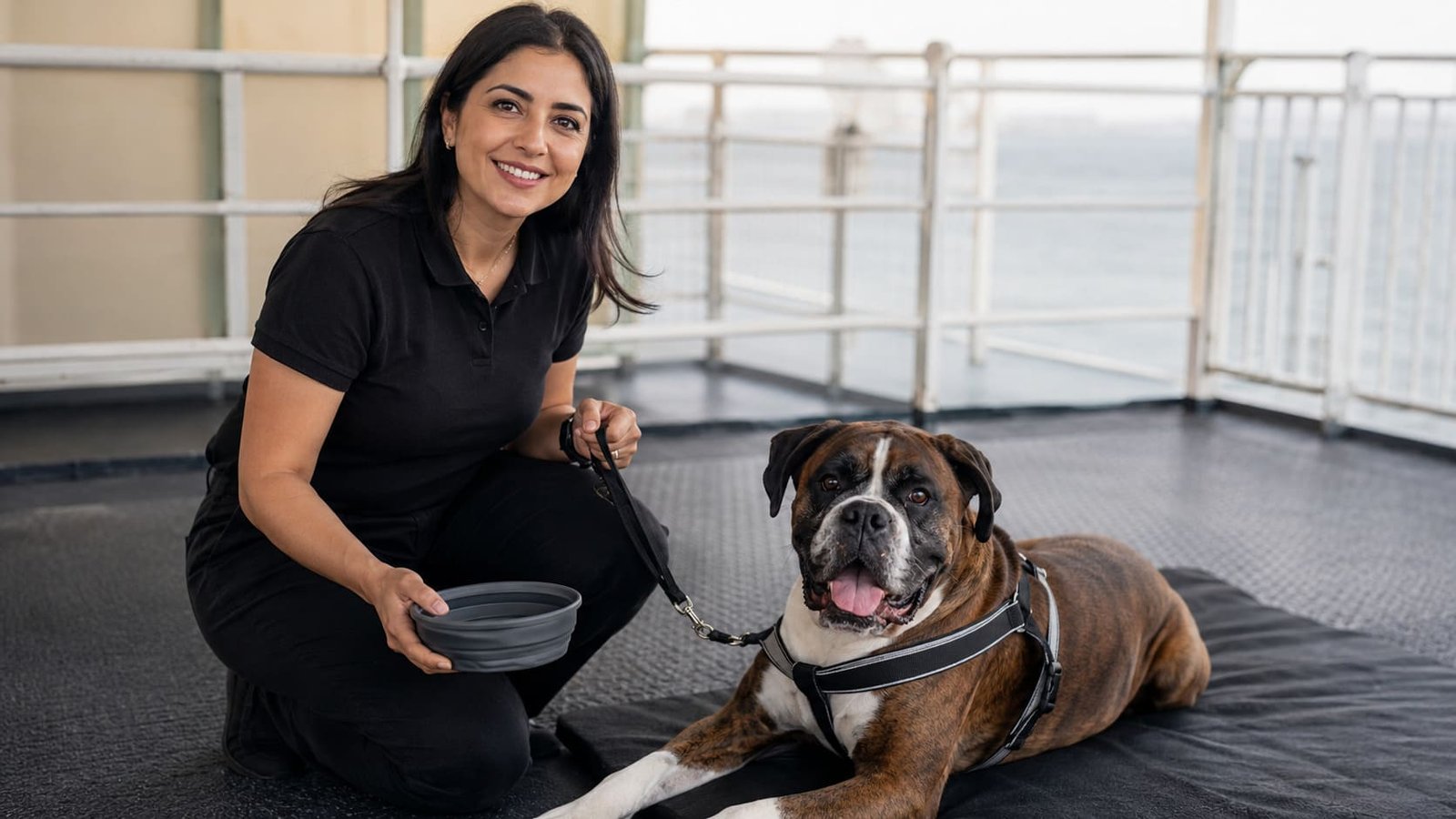
Pet travel handler reviews documents beside a calm harnessed dog indoors.
Here's What We Have Covered In This Article
The Eurostar pet rule is clear on the London route
Planning the passenger train first and trying to add your pet later is the mistake that catches people out. You can book yourself onto Eurostar, but that does not create a pet space beside you, in a carrier, or in the luggage area.
The Eurostar Help Centre states that pets are not accepted on trains departing from or travelling to London. That is the plain answer to searches such as “can I take my dog on Eurostar”, “dogs on Eurostar from London to mainland Europe”, and “cats on Eurostar to London”. For ordinary pets, the answer is no on that route.
Precision matters here. We are talking about Eurostar services to and from London, not making a blanket claim about every Eurostar-branded continental service. If your trip starts or ends on the London route, ordinary pets are outside the Eurostar pet policy for that service.
Guide dogs and assistance dogs sit in a separate category, and Eurostar has specific arrangements for them. Emotional support animals should not be treated as automatically covered unless Eurostar’s current wording expressly says so for your case. A station exception is the wrong thing to rely on.
Once that is clear, the decision changes. The pet is not blocked from travel to Europe; the passenger rail route is the wrong route for the animal. Your next decision is which approved crossing can carry the pet properly.
Why the refusal is a carrier-status issue, not a staff decision
Eurostar’s London-route refusal comes from carrier status, not from a ticket desk preference. Eurostar says it is not registered as a pet carrier on that line, so ordinary pet travel is outside what staff can waive on the day.
That point matters because it removes the false hope of persuasion. Turning up with a dog or cat and a carrier does not give station teams extra authority. It gives you a travel refusal problem at the worst possible time, with a live animal, a paid passenger booking and a border-facing plan that now needs rebuilding.
Eurostar links the rule to comfort and safety considerations for customers, teams and animals. We do not need to add speculation about why the policy exists, because the working point is simpler: if the carrier is not set up for pets on that route, the answer must be solved before travel, through the route choice.
Forum tips and old anecdotes are poor foundations for pet movement across the Channel. We would not build a pet travel plan around a discretionary Eurostar pet exception, because the safer decision is to choose a route that is built to accept the animal from the start.

Silver tabby cat sitting on sunlit bedroom windowsill looking outside
The approved alternatives keep Channel pet travel possible
Once Eurostar is ruled out, the question becomes practical: which crossing is approved for your pet, your documents and the way the animal will travel. The options below are different in risk, comfort and control.
| Option | What it solves | What to watch | Best suited to |
|---|---|---|---|
| Eurotunnel LeShuttle | Carries pets through the Channel Tunnel, with Eurotunnel LeShuttle stating a 35 minute crossing with the pet by the owner’s side | Correct documents still matter, and the crossing is built around vehicle-based travel | Owners travelling with a suitable vehicle and a pet that settles well beside them |
| Ferry routes | Creates a non-Eurostar Channel option where the operator accepts pets on the chosen route | Pet rules vary by route and operator, so the booking must match the animal and documents | Trips where timing and animal needs suit the ferry arrangement |
| Professionally managed pet transport | Puts route choice, welfare handling and border paperwork under one managed plan | Commercial movement can involve rules behind the scenes, so the provider must know what applies | Relocations, tight timings, multiple pets or cases where you do not want to carry the risk yourself |
| Pet flights | Gives an option when surface travel does not suit the destination or animal’s wider move | Flight handling, crate suitability and airline requirements need careful control | Longer international moves or cases where Europe is one part of a wider relocation |
LeShuttle is often the first Eurostar pet alternative owners think of, and it can work well when the pet travels with you in a vehicle. It does not remove document checks. Dogs, cats and ferrets still need the right pet travel paperwork, a microchip and a valid rabies vaccination, and dogs returning from Calais to Folkestone have an extra tapeworm treatment point to handle.
Ferry routes can be sensible, but we treat them as route decisions, not travel hacks. The right ferry option depends on the operator’s pet rules, the animal and the timing around your paperwork. A route that looks easy for the human passenger may be poor for the pet.
Professional pet transport becomes the safer option when the plan has moving parts. In commercial or managed movements, terms such as a Type 2 licence, a Vehicle Approval Certificate, IPAFFS, meaning the Import of Products, Animals, Food and Feed System, and a Goods Movement Reference may sit behind the work. You do not need to manage those details yourself, but the provider handling the animal must know when they apply.
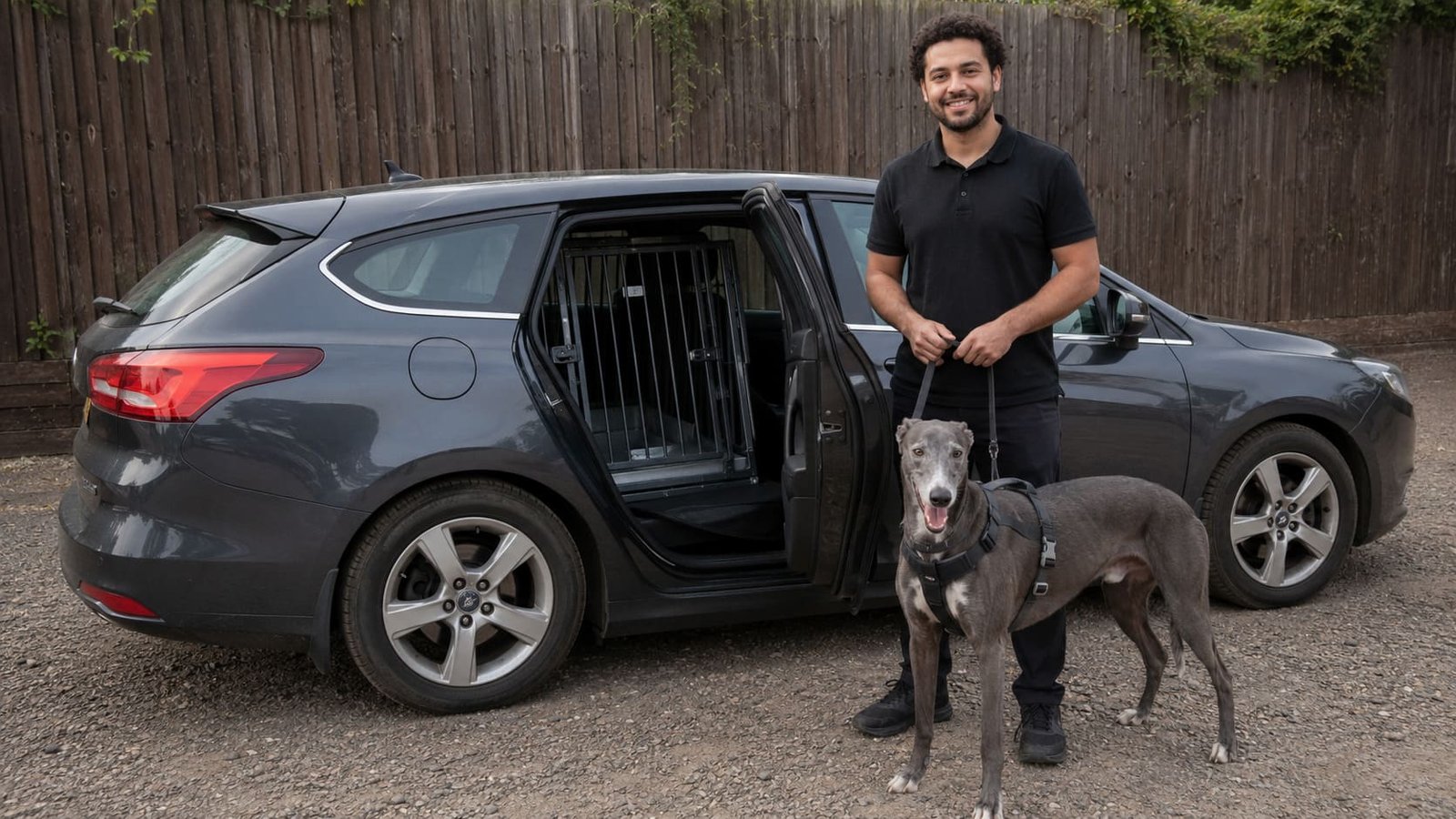
For Tailored Pet Travel, we look first at whether the route is approved, documented and suitable for the animal. Speed comes after getting the crossing accepted and the pet handled properly throughout the movement.
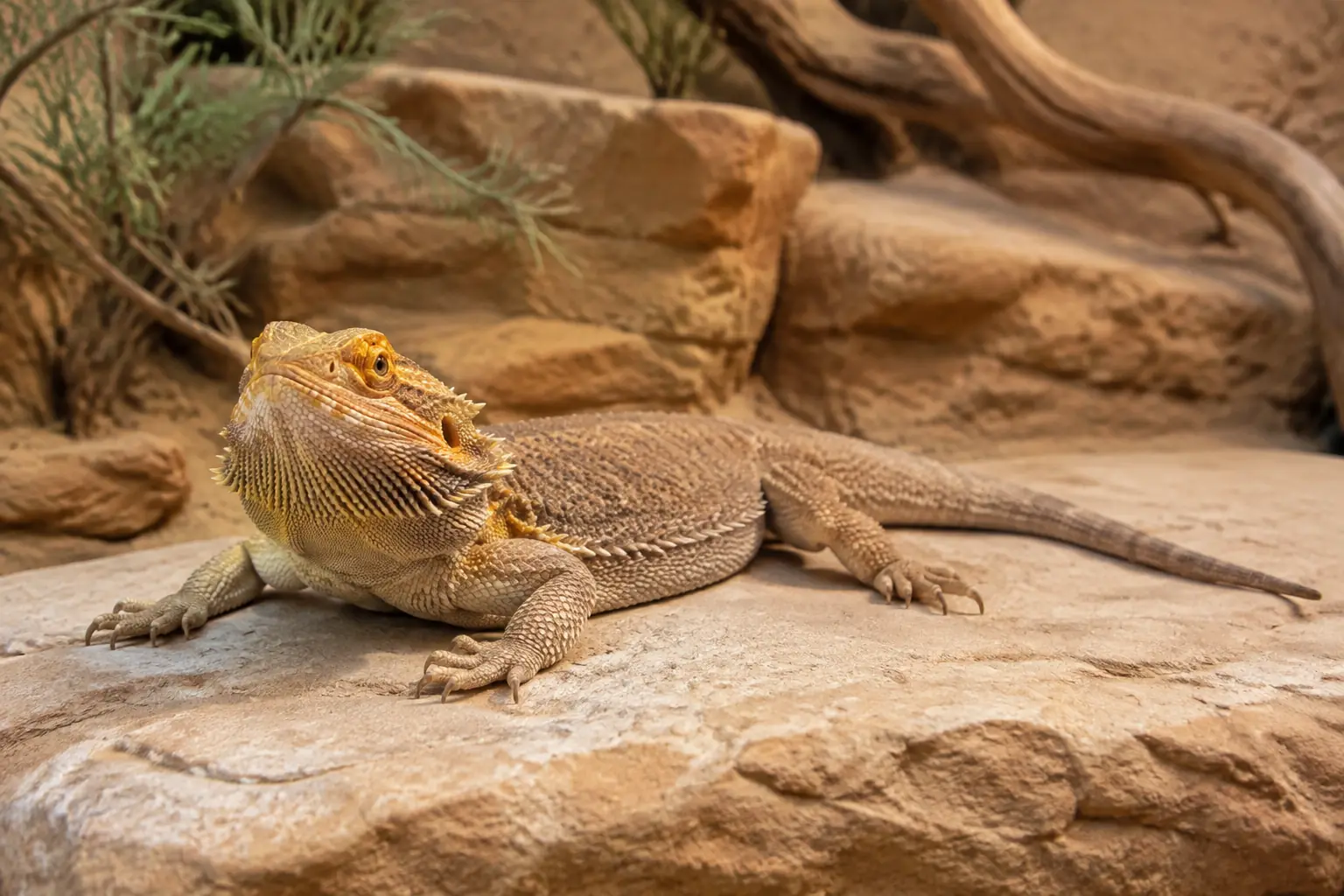
Bearded dragon basking on warm stone in natural desert vivarium
The paperwork can change the right route
A physical crossing is only one part of pet travel across the Channel. The route can look workable and still fail if the documents do not fit the direction of travel, the owner’s status or the person accompanying the pet.
The AHC point for GB residents
An Animal Health Certificate, often shortened to AHC, is the current document GB residents need to understand before taking dogs, cats or ferrets into the European Union from Great Britain. GOV.UK says that from 22 April 2026, GB residents should no longer use EU pet passports for this purpose and should get an AHC for dogs, cats or ferrets travelling from Great Britain to an EU country.
That change is exactly why old advice causes problems. A pet passport that once seemed to solve everything may no longer be the right document for a GB resident entering the EU. DEFRA, the Department for Environment, Food and Rural Affairs, and the Animal and Plant Health Agency, known as APHA, sit behind much of the official pet movement system, but you do not need to become a paperwork expert to make a safe decision.
Our view is simple: choose the route and the paperwork together. If one changes, the other may need to change as well. That is where Tailored Pet Travel keeps the focus on document fit, border acceptance and animal welfare, rather than treating the certificate as a form to sort out after the booking.
The handover point when someone else travels with the pet
Travelling with your own pet is different from asking another person or a professional handler to move the animal for you. Written owner permission, timing around your own travel and the status of the movement can matter.
We keep that distinction clear because it affects risk. If someone else accompanies the pet, the paperwork and authority to move the animal need to line up with the route. The owner-accompanied plan and the managed transport plan may look similar on a map, but border checks treat details seriously.
Dogs can also have return-entry considerations when coming back into Great Britain, including tapeworm treatment on the Calais to Folkestone direction. That detail does not make the trip unworkable. It does mean the return plan deserves the same attention as the outward crossing.
The costly misconception is expecting a travel hack
The costly misconception is this: “Eurostar says no, so I just need the right workaround.”
That idea sends owners in the wrong direction. A workaround mindset leads to loose arrangements, unclear paperwork and a higher chance of refusal when the animal is already in transit. Pet travel across the Channel works best when the crossing is approved for animals, the documents match the movement and the welfare plan suits the pet.
Eurostar refusal does not mean moving a pet to Europe is impossible. It means the passenger train is the wrong tool for the job. The safer answer is a compliant crossing, handled with enough care that nobody is trying to negotiate pet policy at the station.
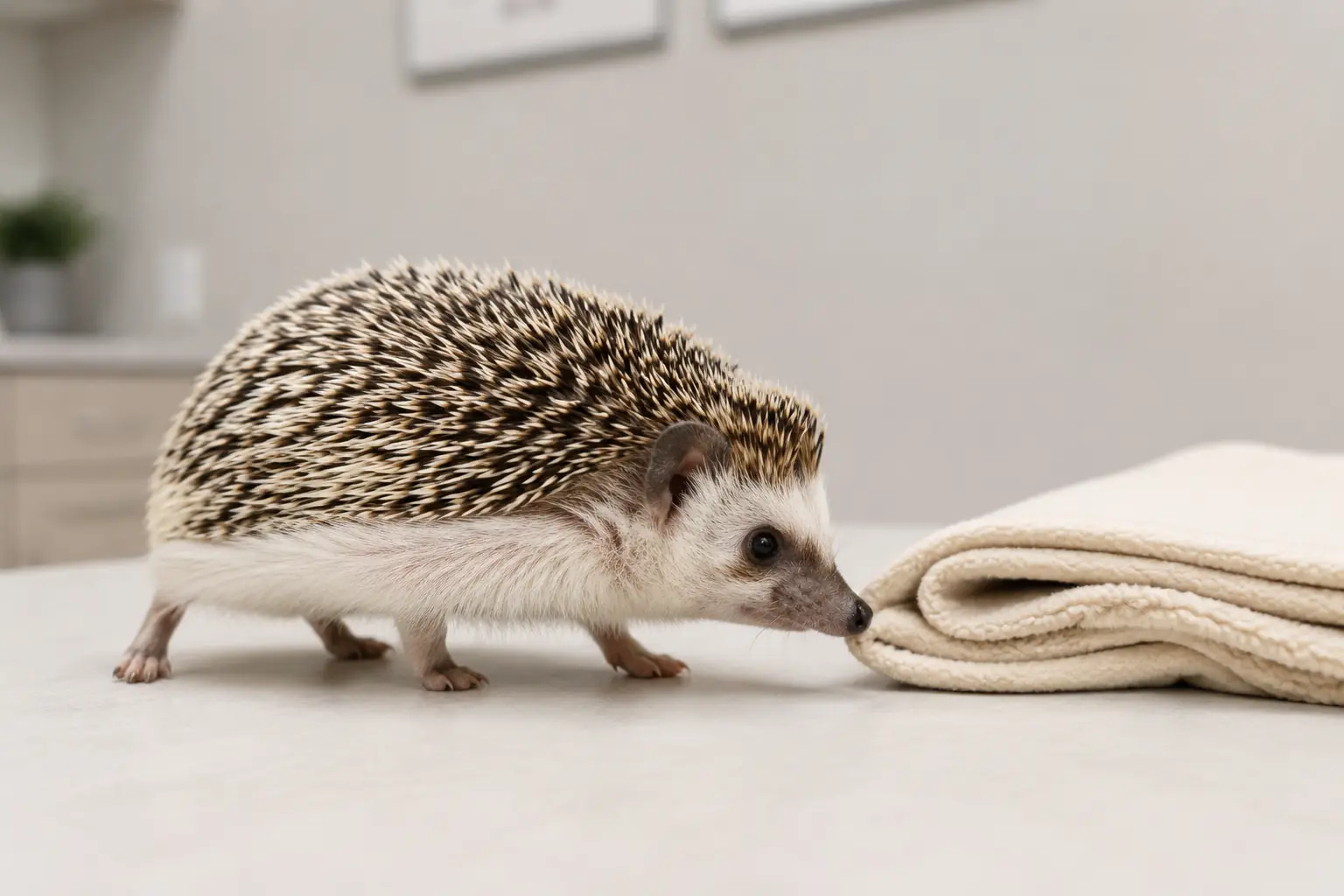
African pygmy hedgehog walking beside blanket in clean consultation room
Questions we get asked about Eurostar pet alternatives
Can my pet travel in the same vehicle as me through the Channel Tunnel?
Eurotunnel LeShuttle carries pets on its Channel Tunnel service, and that can suit owners travelling with a suitable vehicle. The documents still need to be correct before travel.
Is a ferry automatically easier than LeShuttle for pets?
No single route is automatically easier for every animal. A ferry can work well, but the pet rules, travel timing and document position must all fit the specific crossing.
Can someone else move my pet if I travel separately?
Yes, but the arrangement needs to be set up properly. Written permission, timing and the type of movement can affect how the pet is treated at border checks.
Do rabbits, birds or reptiles follow the same rules as dogs and cats?
They do not sit in the same main document category as dogs, cats and ferrets. Some routes require a veterinary certificate for domestic pets outside that group, so the animal type matters.
Is flying the pet the only option once Eurostar refuses animals?
No. LeShuttle, ferry routes and professionally managed surface transport can all be relevant alternatives, depending on the pet, the destination and the paperwork.
This is general information, not professional advice.