
Is Heathrow or Gatwick easier for flying a dog or cat?
Neither airport is automatically easier in every case. Heathrow often has broader long-haul airline coverage and a well-known animal reception set-up, while Gatwick may feel simpler for some routes and ground access. The easier choice usually depends on your pet’s destination, the airline’s rules, the timing of the process, and how much margin for delay the trip allows.
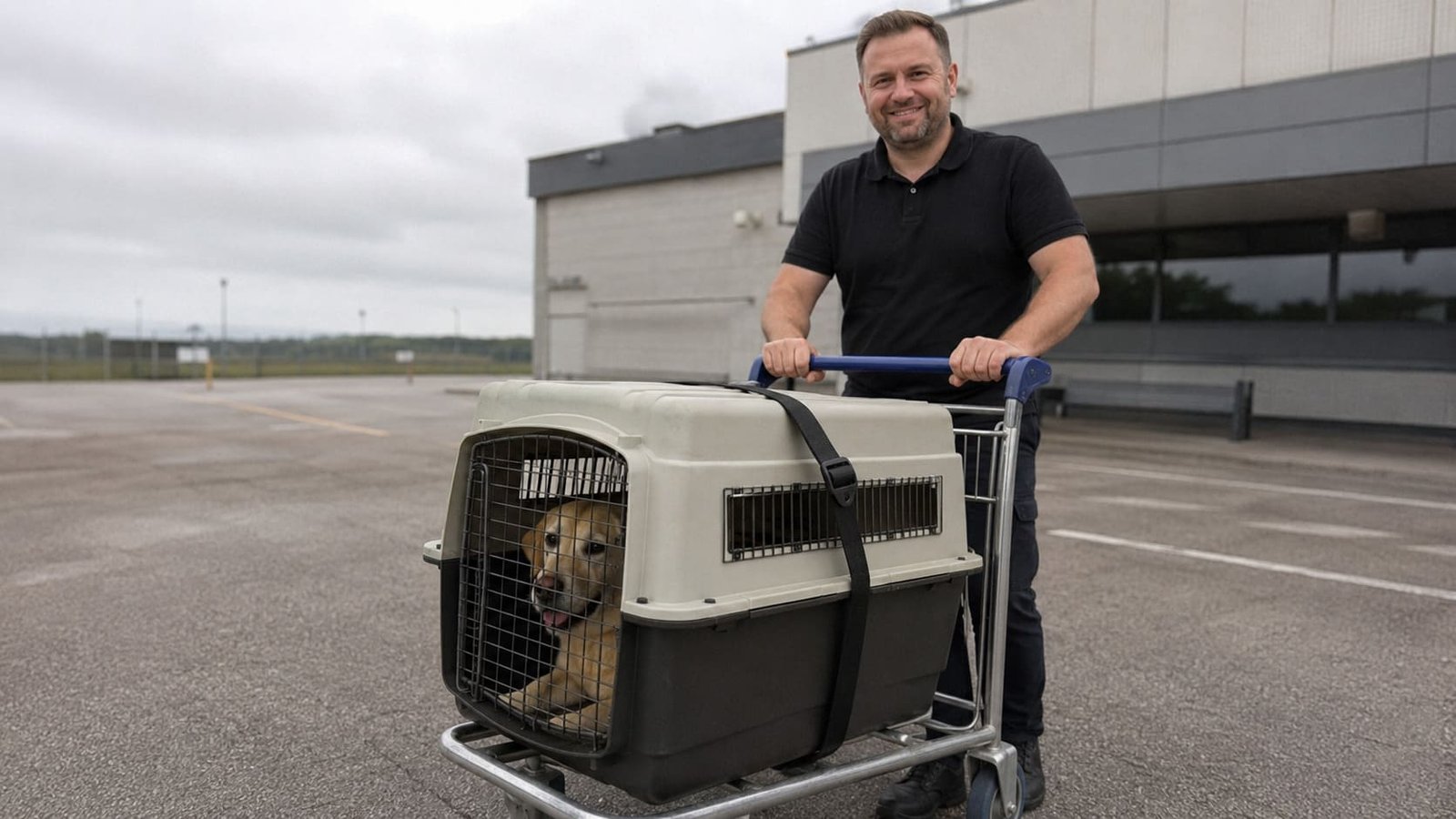
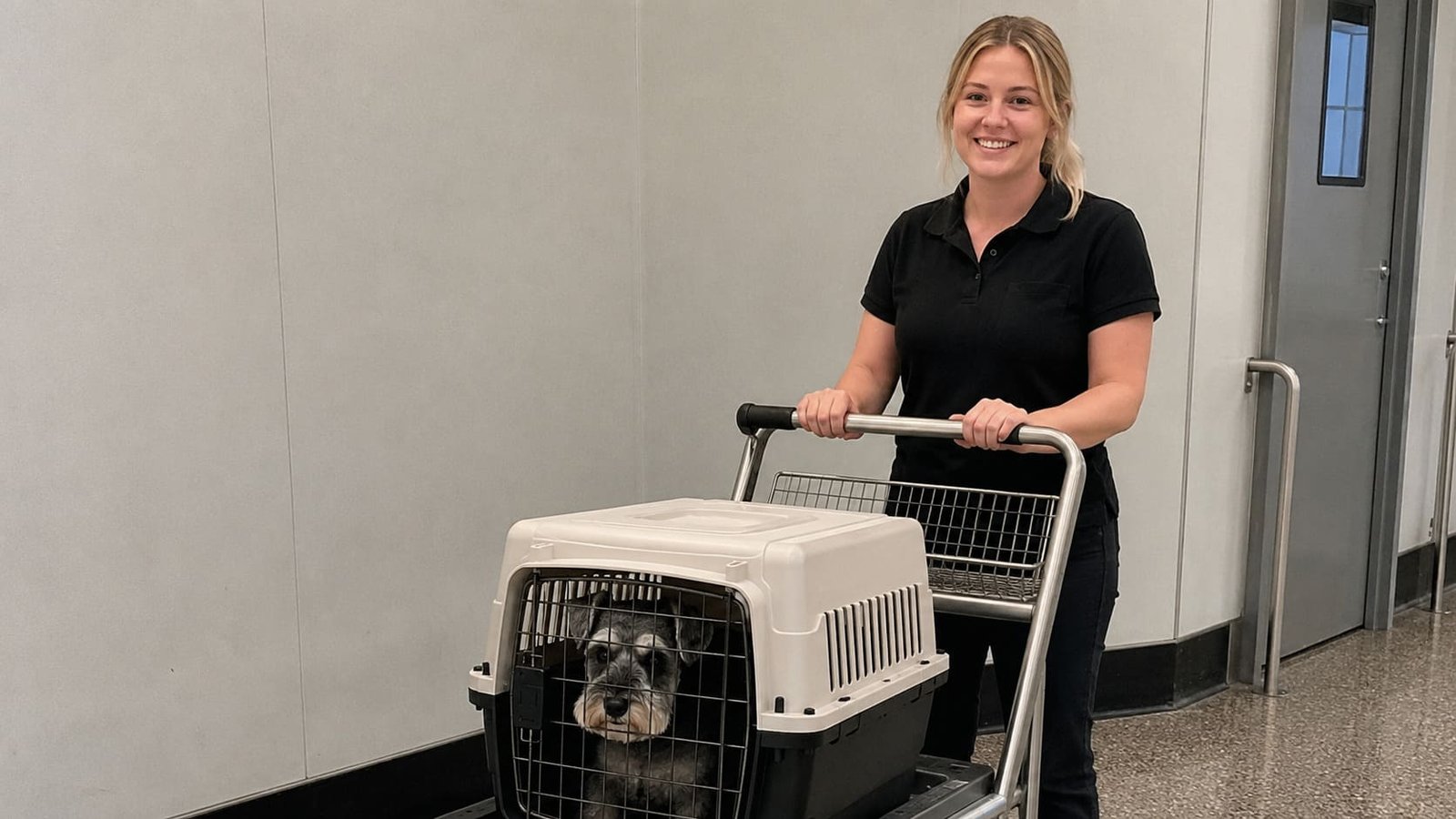
Pet travel handler pushes a secured dog crate across the airport.
Here's What We Have Covered In This Article
Understanding pet travel regulations at Heathrow and Gatwick
Pet travel through Heathrow and Gatwick sits within the same broad UK and international framework. DEFRA rules, UK Border Force checks, airline conditions, and IATA Live Animals Regulations all shape what can move, when it can move, and how animals must be handled in transit.
Many owners assume each airport has its own separate pet travel law. That is not really the issue. Airport-specific differences tend to sit in procedures, handling arrangements, available facilities, and how certain airlines apply the rules they already work under.
- DEFRA and UK import or export controls apply at both airports.
- IATA standards shape crate, welfare, and handling expectations for air travel.
- Airlines may impose extra conditions on breeds, routings, or temperature limits.
- Animal Reception Centres handle checks and animal processing in line with airport and border procedures.
A practical distinction matters here. If a cat is arriving from abroad, the airport’s reception process and border handling can affect how smooth the release feels to the owner. If a dog is departing, the airline’s acceptance rules and timing windows may have more impact than the airport name on the ticket.
Paperwork confusion is one of the most common pressure points. Pet travel documentation, health certification, and any entry requirements for the destination country still need to line up exactly, whether the process passes through Heathrow or Gatwick. An airport does not usually remove documentary risk. It simply becomes the place where any mismatch is noticed.
Facilities and Animal Reception Centres: Heathrow vs Gatwick
Facilities matter because the airport experience for a pet is largely defined by what happens before boarding and after landing. Owners rarely see every stage, yet holding conditions, intake routines, and staff oversight can shape the calmness of the process.
Heathrow is widely associated with the Heathrow Animal Reception Centre, often referred to as HARC. Gatwick also has animal handling arrangements and reception processes for pets moving through the airport. The main point for owners is less about branding and more about how animals are received, monitored, and moved between transport stages.
At a practical level, welfare-led handling usually involves controlled holding areas, trained staff, and procedures that reduce unnecessary waiting in unsuitable conditions. Temperature management, secure intake, and orderly transfer arrangements are often more important than a polished passenger-facing experience, because pets travel through a specialist pathway rather than a typical check-in routine.
Key welfare features often include:
- secure holding areas
- temperature-aware environments
- trained animal handling staff
- structured intake and release procedures
Heathrow’s scale can be an advantage for some international movements because the surrounding infrastructure is built around large volumes of global air freight and specialist arrivals. Gatwick may feel less sprawling from an owner’s point of view, which can reduce some of the confusion around access and timing on the day itself.
For a nervous dog, the most relevant question is often whether the handover and waiting period are calm, supervised, and predictable. A smaller-feeling airport does not always mean a better animal experience, and a larger one does not always mean a harder day.
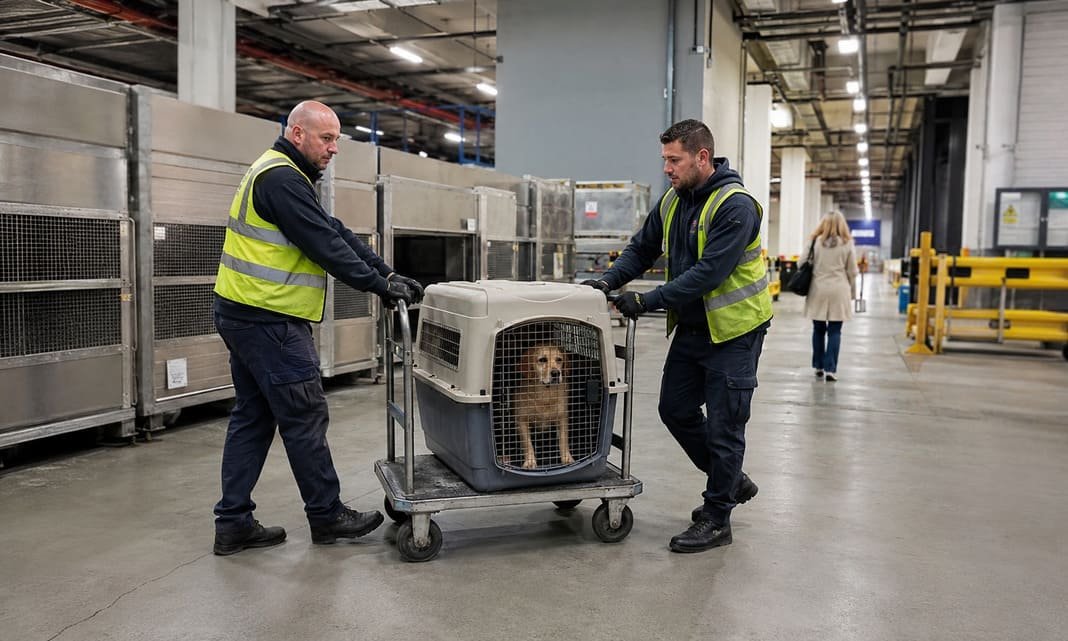
Professional pet transport with secure travel crates
Flight availability and airline options for pets
Flight choice can change the whole calculation. A route that works neatly from Heathrow may involve fewer connections, better timing, or an airline with clearer animal carriage rules. A process from Gatwick may suit a different destination better, particularly if the schedule avoids long layovers or awkward transfer windows.
Heathrow often offers a wider spread of long-haul options, which can matter for pets travelling internationally. More routes can mean more chances to secure a direct service or a timetable that avoids extreme temperatures and overnight disruption. Gatwick still works well for many pet journeys, but the airline mix can narrow the field depending on where the animal is going.
Three issues often decide the airport more than the airport itself:
- whether the airline accepts pets on that route
- whether the route is direct or involves a transfer
- whether the pet meets breed and crate rules under IATA guidance and airline policy
A brachycephalic breed, for example, may face tighter airline restrictions the departure is Heathrow or Gatwick. A large dog may also require a route where the aircraft type, cargo acceptance rules, and crate dimensions all align properly. In those cases, the airport becomes one part of a larger operational fit.
Connecting flights introduce extra pressure. Every additional handover increases the chance of delay, rechecking, or timetable disruption, which means that a direct service from one airport may be easier in practice even if the drive there is longer.
Logistics, access, and owner experience
Ground logistics can feel secondary until the day of travel becomes tight. A smooth airport process for a pet often begins long before arrival, with realistic road timing, enough allowance for traffic, and a clear understanding of where the animal is meant to be handed over.
Heathrow is often easier for some owners because of its west London position and major motorway links. Gatwick can be more straightforward for those travelling from the south coast, Sussex, Kent, or parts of south London. Rail access may help the owner personally, but it is rarely the deciding factor for the animal if a crate, vehicle transfer, or specialist handling arrangement is involved.
Arrival and handover tend to create the most stress. Passenger terminal habits do not always translate well to pet departures, because pets moving in cargo or through specialist handling channels follow a different process. Turning up at the wrong place, underestimating transfer time, or assuming the standard terminal map tells the whole story can all create avoidable pressure.
A typical day often turns on these moments:
- Leaving enough margin for traffic, security delays, and airport navigation.
- Reaching the correct drop-off or handling point rather than the most obvious terminal entrance.
- Allowing time for document review and animal acceptance without rushing the pet.
Owners also need to think about the pet’s comfort before airport arrival. A long car process followed by a late handover can be harder on an older cat or an anxious dog than the flight itself. For some families, Gatwick may be easier simply because the road process is shorter and calmer. For others, Heathrow’s broader route options justify the extra drive because they reduce airborne travel time later on.
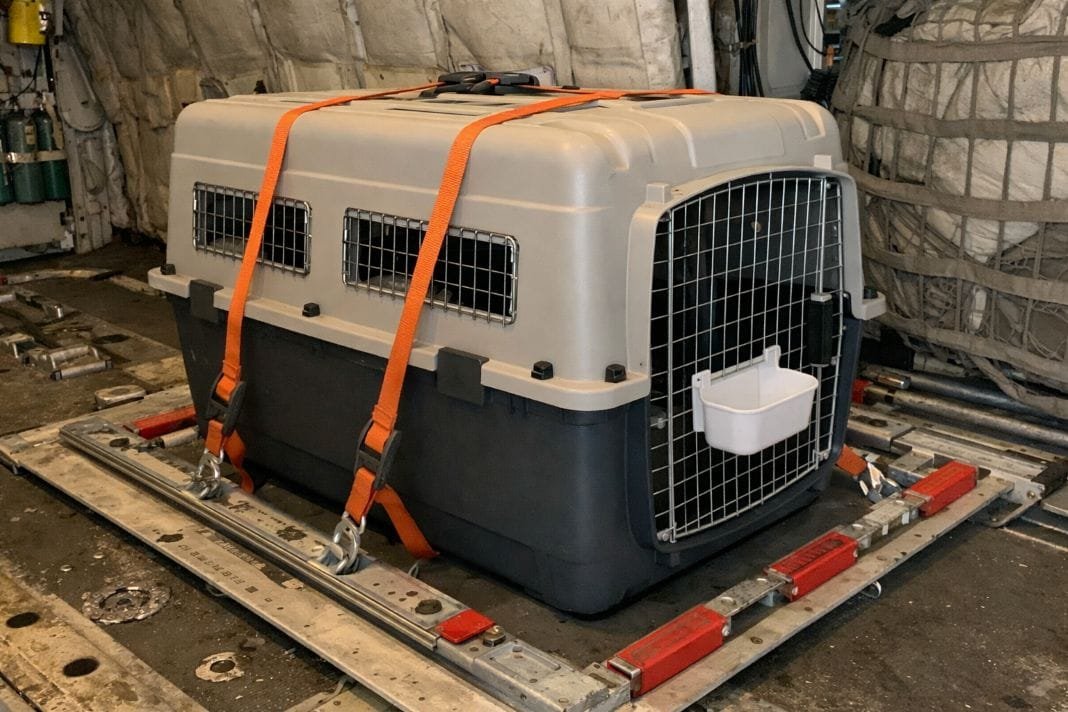
Secured pet travel crate on transport dolly for airport pet shipping service – Illustrative Image
Handling complex or high-risk pet journeys
Some journeys stop being routine long before the airport is chosen. Medical conditions, unusual breed rules, tight relocation deadlines, and documentary problems can all turn a standard booking into a case where small errors have serious consequences.
Airports do not solve challenge on their own. What matters is whether the route, airline acceptance, animal welfare requirements, and regulatory checks can all be aligned without leaving weak points. Heathrow’s larger international network can help in some non-standard cases because there may be more airline and routing options. Gatwick may still be suitable, but the available combinations can be narrower.
Medical clearances are one example. An older dog with a known condition may need particularly careful timing, a suitable route, and a realistic plan if travel is delayed. Breed-specific restrictions create another layer, especially where airlines apply their own rules more tightly than the legal baseline. Documentary pressure can be just as difficult, particularly if an owner is working against a relocation date that cannot easily move.
In situations like these, professional oversight shifts from convenience to risk control. Companies such as Tailored Pet Travel are often brought in where compliance, welfare, and timing have to be managed together, particularly if the process involves international movement, non-routine documentation, or a pet that cannot be treated as standard cargo.
Urgent changes can also expose differences between a simple booking and a managed movement. A missed connection, a late document issue, or an unexpected airline refusal needs calm coordination with handlers, veterinary authorities, and carriers. That kind of problem is rarely about Heathrow versus Gatwick in isolation. It is about how well the whole process can be stabilised when pressure rises.
Costs, timing, and hidden consequences
Airport choice affects cost, but not always in the obvious way. Handling charges, airline conditions, transport to the airport, and timing-related knock-on effects can all alter the real price of moving a dog or cat by air.
Heathrow may involve different cost structures from Gatwick because of airline availability, handling arrangements, and route type. A longer drive to one airport might still work out better overall if it secures a direct flight. By contrast, a cheaper-looking route can become expensive if it adds a transfer, extra waiting time, or a rebooking risk.
The clearest comparison points are usually these:
- airport and handling fees can differ by route and provider
- flight timing affects welfare and the chance of delay
- missed acceptance windows may trigger rebooking or overnight costs
Hidden consequences often come from timing rather than headline charges. A flight that departs very early may require overnight positioning near the airport, especially for pets travelling from far outside London. A late-running vehicle can cause a missed acceptance slot even if the aircraft itself has not departed. Once a booking slips, extra boarding, amended paperwork, and revised travel dates can follow.
An owner who chooses an airport purely on convenience may later find that the route adds stress in more costly ways. A shorter drive to Gatwick could be the right call for one pet and a false economy for another. Heathrow’s broader schedule may reduce risk in one case and create unnecessary road time in the next.

Dog near aircraft during premium pet travel and private flight transport – Illustrative Image
Common misconceptions and forward-looking considerations
The biggest myth is that one airport is always easier. Real outcomes usually depend on fit, not reputation.
Common misconceptions include:
- Heathrow is always better because it is bigger.
- Gatwick is always simpler because it feels less complex.
- Airport choice matters more than airline pet policy.
- Paperwork problems can be fixed easily once you arrive.
- Welfare risks begin in the air rather than during the full travel chain.
Size can help, especially where route choice is limited or import handling is specialist. Simplicity can help too, particularly where access, road time, and a cleaner handover reduce strain on the animal. Neither point works as a universal rule.
Regulations and airport procedures can also shift over time. DEFRA guidance, airline interpretation of IATA standards, and airport investment in animal handling all influence what feels easier from one year to the next. Industry expectations around welfare continue to sharpen as well, which means that timing, handling quality, and route suitability are likely to matter even more than before.
For owners comparing Heathrow and Gatwick, the most reliable approach is to treat the airport as one part of a wider chain. The better choice is usually the one that gives the pet the safest, calmest, and least fragile route from home to destination.