What UK Pet Owners Must Know About Airline Crate Rules Before Booking International Travel?
Crate rules shape every stage of international pet travel from the UK because they determine legal acceptance, aircraft handling procedures and compliance with welfare standards. Understanding these requirements before booking reduces the risk of rejected flights, unexpected costs and delays. Early preparation supports welfare, aligns with UK pet export rules and meets airline acceptance criteria.
Here's What We Have Covered In This Article
Why Crate Rules Matter Before You Even Book a Flight
Crate requirements form the technical basis for safe and lawful transport. Airlines, regulators and UK airports must verify crate suitability before a booking can progress because internal space, ventilation and hardware strength influence airflow, stability and posture throughout transit. These checks form part of the cargo acceptance process and contribute to risk mitigation.
Why do airlines check crates so early?
Airlines examine crate dimensions, hardware and ventilation at the earliest stage of booking acceptance. If the crate fails to meet airline pet crate rules UK, staff cannot load it. This may result in immediate refusal to fly. Strong metal bolts, correct ventilation patterns and adequate internal clearance help safeguard structural integrity during handling and flight.
Why are labels misleading?
Crates sold as airline approved often use broad marketing terms rather than referencing airline specific criteria. Airlines follow their own rules covering bolt type, mesh strength and maximum crate dimensions. UK airports such as Heathrow and Gatwick must also consider equipment capacity and hold door size. Tailored Pet Travel helps owners who want reassurance before booking.
Pro Tip: Always confirm crate height limits with your chosen airline because aircraft models vary widely in door size.
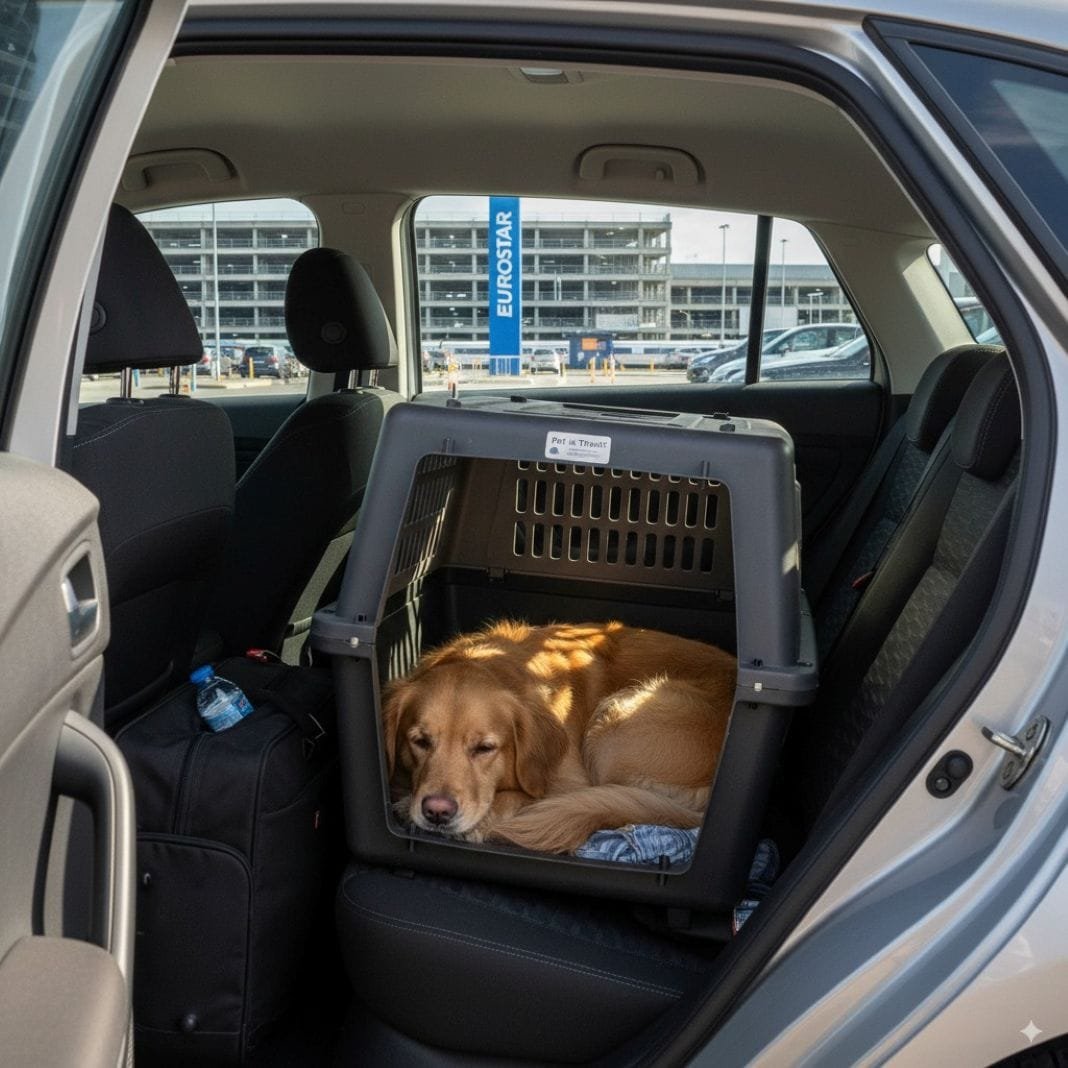
An AI photo of a dog in a travel crate.
Book Your UK Pet Export Support
Get expert help confirming crate compliance and airline acceptance before you book flights.
The Difference Between Airline Rules and IATA Standards
IATA’s Live Animals Regulations act as the global benchmark for safe animal transport. They outline measurement methods, ventilation expectations and structural requirements. Airlines apply these standards yet adapt them to their own aircraft, internal procedures and route based needs.
What does IATA compliant crate meaning actually cover?
The phrase indicates compatibility with the baseline IATA Live Animals Regulations framework, yet it does not guarantee acceptance by a particular airline. Airline vs IATA crate rules vary by carrier and reflect internal safety assessments.
Why do airlines add extra rules?
Carriers may impose stricter expectations for mesh thickness, bolt configuration, height limits or ventilation. Some require reinforced doors for larger breeds. These differences regularly create confusion, particularly when owners assume that IATA compliant crates guarantee acceptance.
The UK Civil Aviation Authority oversees aviation safety, yet each airline controls its own acceptance criteria. Understanding how IATA Live Animals Regulations interact with carrier policies helps owners avoid buying crates that later fail checks.
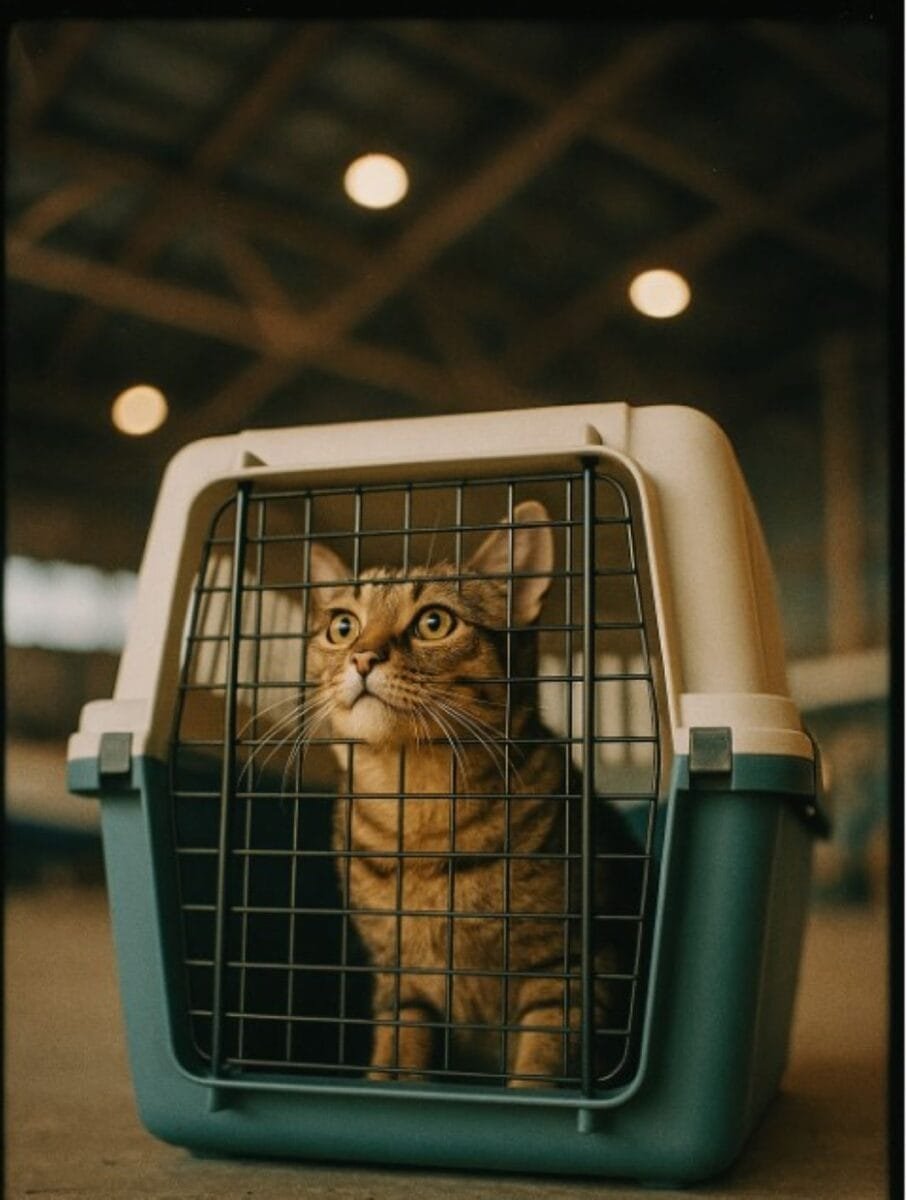
An AI photo of a cat in a travel crate.
How to Measure Your Pet Correctly for an Airline Approved Crate
Accurate measurement ensures that the crate supports natural movement throughout the journey. Airlines base their size checks on four key dimensions: nose to tail length, foreleg height, standing height and body width.
The IATA measurement system uses four values to determine minimum crate size. Measurement A reflects nose to tail length. Measurement B records foreleg height. Measurement C captures standing height. Measurement D shows the body’s widest point. These values determine the internal space required for safe posture.
How do I measure my dog for flight?
Place a tape measure on a flat surface and encourage your pet to stand naturally. Record the nose to tail length, then measure the height from floor to the tallest point of the head or ears. Owners of fluffy breeds may need to smooth the coat to reveal the true outline. Owners of short haired breeds often find measurement more straightforward.
Growing pets may need a larger crate than expected because of changes between purchase and flight day. UK vets can help owners confirm measurements.
Speak With a Pet Travel Specialist
Discuss your pet’s crate size, airline rules and airport requirements with a trained consultant.
What Your Pet’s Crate Must Be Made Of: Materials, Hardware and Ventilation Rules
Crates must meet the structural expectations outlined in the IATA Live Animals Regulations. Airlines and UK cargo handlers inspect wall rigidity, bolt security and door construction to confirm that the crate can withstand handling.
What materials does an airline approved crate require?
Rigid walls, secure metal bolts and strong mesh doors provide stability. These features prevent separation during movement or lifting. Ventilation on at least three sides is common on many routes, and four sided ventilation is frequently required for international travel. A leak proof base protects the pet and maintains hygiene.
Soft carriers do not meet the strength required for hold travel.
Pro Tip: Double check destination and transit country rules because they can override airline standards and require extra ventilation or structural features.
Flying Out of the UK: What Is Different for Your Pet’s Crate?
UK airports enforce detailed welfare based checks before export. At Heathrow, the Animal Reception Centre works with APHA and cargo services to assess crate structure, ventilation, labelling and stability. Gatwick and other airports follow similar systems.
Giant crates create logistical challenges because airport equipment has fixed size limits. Cargo lifts, trolleys and aircraft hold doors operate within specific height and width constraints. When a crate exceeds these limits, airport teams may be unable to move it safely. This is why certain routes restrict very large crates.
What happens during UK export checks?
Cargo teams inspect bolt security, door strength and crate condition. Several airports apply restrictions to large crates based on available handling machinery. Cabin travel for pets is rare on outbound UK flights, which makes hold crate compliance essential.
Why Airline Policies Differ and How They Affect Your Crate Choice
Airline pet policies UK differ because aircraft vary in design. Cargo hold dimensions, door width and weight limits influence crate acceptance. Some aircraft models restrict height, while others impose weight thresholds.
How do aircraft types affect crate acceptance?
Boeing and Airbus models have different cargo hold layouts, which influence maximum crate size. Airlines may also revise policies annually based on operational changes. Selecting an airline early helps owners match crate structure to aircraft and policy.
Destination and Transit Country Crate Rules That May Override Airline Guidelines
Destination and transit countries may apply stricter crate rules than airlines. Hot climates may require increased ventilation or reinforced doors. Some authorities restrict bedding materials.
Do destination rules override airline policies?
Yes, countries can set higher welfare requirements that airlines must follow. Transit country pet travel UK rules may influence crate setup during long transfers. Customs teams can inspect crates on arrival. Planning the full route ensures compliance with international pet crate requirements.
Crate Requirements for Large Breeds, Brachycephalic Breeds and Higher Risk Pets
Large breeds often need taller and wider crates with reinforced structures. Airlines may apply restrictions to certain breeds in hotter months. Brachycephalic pets require enhanced ventilation to support airflow.
Why do some pets need specialised crates?
These pets face higher airflow and heat management needs. Crates designed with increased ventilation and stronger materials maintain welfare. Airlines use IATA special category rules and their own criteria.
Rules on Multi Pet Crates, Young Animals and Fitness to Fly
Most airlines restrict multi pet crates for adult animals because limited space can increase stress. Some carriers allow small littermates to share.
What health checks apply?
Minimum age rules apply, and pets must pass fitness to fly assessments. Veterinary certificates confirm health status, and handlers inspect behaviour during acceptance. These checks form part of the welfare inspection process.
How to Prepare Your Pet’s Crate Before Flight Day
Preparation involves crate acclimatisation and careful setup. Pets benefit from time spent inside the crate before travel. Bedding with familiar scents helps them settle, and water bowls must be secured.
What must owners check before flight day?
Labels must follow IATA marking requirements. Cleaning the crate, tightening bolts and confirming bedding rules reduces acceptance delays. These steps support risk mitigation and consistent welfare standards.
Common Crate Rejection Reasons and How UK Owners Can Avoid Them
Crates may be rejected for incorrect sizing, weak fastenings, poor ventilation or damage. Bent mesh, loose bolts and cracked panels compromise structural integrity.
Airline inspection teams and UK cargo handlers follow strict technical criteria. Owners can reduce problems by checking ventilation, fittings and structure before travel. Ensuring the crate meets airline pet crate rules UK helps avoid last minute rejection.
Your Final Pre Booking Crate Checklist
A final review confirms readiness before booking. The checklist should follow a clear numerical sequence that owners can complete step by step.
-
Measure your pet accurately using the IATA measurement method.
-
Confirm airline rules for crate size, materials and ventilation.
-
Check destination and transit country requirements for crate compliance.
-
Inspect the crate for structural integrity, including bolts, doors and ventilation.
-
Plan logistics for airport arrival, handling and pre flight documentation.
Completing this checklist supports predictable and safe travel for both the pet and the owner.