


Is your pet actually fit to fly, or does age and health change the safest option?
Age and health can change a pet’s travel options in a very real way. A pet may meet one rule and still be refused because an airline applies a stricter policy, a vet cannot sign a health certificate, or the process itself would place too much strain on the animal. Safe pet travel starts with travel eligibility, welfare, and route choice, not with the flight booking.

Handler pushes a secured cat carrier outside the animal reception centre.
Here's What We Have Covered In This Article
Understanding Airline and Regulatory Restrictions on Pet Age and Health
Air travel for pets is governed by overlapping rules. Airlines set their own pet policies, destination countries apply entry conditions, and veterinary certification sits alongside both. DEFRA guidance may shape the wider framework for UK movements, yet an individual carrier can still decline a booking that appears acceptable on paper.
A common problem appears at the airport, where an owner arrives with a young animal, an older pet with an unmanaged condition, or paperwork that does not fully support fitness to travel. Check-in staff are not making a casual judgement. They are applying pet flight regulations that can lead to flight refusal if age limits, vaccination status, health screening, or documentation do not line up.
Key restrictions usually centre on:
- Minimum age for travel, often linked to vaccination timing and entry rules
- Veterinary health certificates confirming travel eligibility
- Airline pet age limits or condition-based restrictions
- Signs of illness, injury, breathing difficulty, or recent treatment
Country rules and airline rules do not always match neatly. One destination may permit entry once certain vaccinations and documents are in place, but the airline may still refuse transport for a brachycephalic breed, a frail senior pet, or an animal judged unfit on the day. IATA guidance also influences how carriers assess welfare and crate suitability, although it does not replace airline-specific policies.
Fit to fly is often misunderstood. It does not simply mean that a pet is alive, vaccinated, and able to stand. Veterinary health certificates are generally based on an animal’s present condition, likely tolerance of the process, and any known factors that raise risk in transit. A pet with recent vomiting, breathing concerns, post-operative recovery, or uncontrolled anxiety may fall outside health requirements for pet travel even if the booking itself was accepted earlier.
Risks and Realities of Flying with Very Young Pets
Very young pets are rarely good candidates for air travel.
Minimum age rules exist for practical welfare reasons. Puppies and kittens are still developing physically, their stress tolerance is lower, and their vaccination schedules may not yet support travel under flying with pets rules. A process that looks short on a booking screen can still involve handling, waiting, noise, confinement, and temperature changes.
Why early travel causes problems
Immune protection is one of the first barriers. A young animal may be too early in its vaccination schedule to meet pet age travel rules for the route, particularly if timing between vaccination and travel matters. Even where entry is technically possible, a vet may be reluctant to confirm travel readiness if the animal is still at a sensitive stage of development.
Stress is another concern. Young animals can struggle with feeding patterns, hydration, toileting, and unfamiliar environments. Separation from familiar routines can affect them more sharply than owners expect, especially during longer airport or border delays.
Documentation timing can also catch people out. A puppy may reach what seems like a safe age in ordinary conversation, but not the minimum age for pet travel under the relevant regulatory timetable. In practice, the issue is often not one single rule but the way age, vaccination dates, and certification windows interact.
Popular assumptions about flying with puppies or kitten travel requirements can be misleading. A pet being small enough to carry does not make it ready to travel. Readiness depends on health, maturity, and the route’s legal and welfare demands, which can leave little room for improvisation.

Handler keeps a greyhound secure during an airport transfer.
Considerations for Senior Pets: When Is Flying Too Much?
An older pet is not automatically too old to fly. Age alone is rarely the whole story.
Daily comfort gives a better picture than a birth date. A senior dog who still moves well, eats normally, and copes calmly with change may tolerate travel better than a younger animal with breathing issues or chronic pain. By contrast, a cat with arthritis, kidney disease, or marked anxiety may find even a carefully managed process difficult.
Veterinary advice for elderly pet travel usually focuses on how age-related conditions interact with transport stress. Heart disease, reduced mobility, sensory decline, respiratory weakness, and cognitive changes can all alter the risk profile. A standard health check matters, but so does a fuller view of the animal’s normal routine, resilience, and recent stability.
Where senior pet health is in question, it helps to weigh the likely experience of the process itself:
- Time in a crate or carrier
- Handling during loading and transit
- Noise, temperature variation, and disruption
- Recovery after arrival
Shorter flights can still be demanding if the overall process includes long transfers or waiting periods. An old dog with joint pain may cope poorly with extended crate time. A senior cat that stops eating under stress can become harder to manage once travel begins. In those cases, the kindest option may be a route that allows more observation and adjustment along the way.
Alternatives deserve serious attention here. Road travel, ferry routes, or Eurotunnel crossings may suit some elderly animals better because they can reduce handling and create more room for monitored breaks. The right choice depends on the pet’s condition, the distance involved, and whether the animal remains comfortable outside familiar surroundings.
Managing Chronic Illness and Special Medical Needs During Pet Travel
A pet with a long-term medical condition may still be able to travel, but the margin for error is smaller.
Diabetes, epilepsy, respiratory disease, heart conditions, severe anxiety, and mobility problems all raise practical questions about timing, medication schedules, symptom control, and monitoring in transit. Airline acceptance does not remove those concerns. A booking can be confirmed and later declined if the pet’s condition changes or the veterinary health certificate cannot support the process close to departure.
Medication creates one layer of challenge. Some treatments must be given at consistent times, some conditions need observation after dosing, and some animals deteriorate quickly if routine is disrupted. A long travel day can interfere with feeding windows, rest, and symptom management in ways that are hard to predict from the timetable alone.
Respiratory issues require particular care. Even mild breathing difficulty can become more serious under stress, especially during handling or temperature changes. Seizure disorders raise a different concern, because missed medication, fatigue, or overstimulation may affect stability.
The practical assessment usually turns on a few points:
- Whether the condition is stable and well managed
- Whether a vet is willing to certify the pet for travel
- Whether the route allows for the animal’s physical limits
- Whether non-air transport would reduce strain
For some pets with special needs, ground transport is simply easier to supervise and adapt. A dog with arthritis may benefit from a route with planned rest stops. A cat with diabetes may cope better when timing can be controlled more closely. Under the IATA Live Animals Regulations and related airline policies, the core issue is not diagnosis alone but whether the animal can travel without unreasonable risk or distress.
Where medical history is complicated, professional judgement often matters because the problem is rarely just one illness. It is the combination of route, duration, welfare, documents, and what happens if the pet has a difficult day.

Pet travel handler reviews documents beside a calm harnessed dog indoors.
Alternative Travel Options When Flying Isn’t Suitable
Sometimes the safest answer is not to fly at all.
Ground transport, ferry travel, and Eurotunnel routes can be appropriate alternatives to flying with pets, particularly for animals who are very young, elderly, anxious, or living with ongoing medical needs. These routes still involve compliance and planning, but they may offer a gentler pace and more flexibility than air transport.
Road travel can suit pets that need closer observation, more predictable routines, or fewer handling points. Ferry operators and Eurotunnel crossings may also fit better where the animal’s comfort depends on a calmer transfer pattern. In some cases, the route is longer in hours but easier on the pet overall because there is less disruption packed into a single period.
That does not mean non-air pet transport is always preferable. A very long road process may be tiring for some animals, and cross-border movements still need proper documentation and welfare planning. The value lies in matching the mode of travel to the pet in front of you, rather than treating flying as the default.
Professional pet transport providers can be relevant where the route is legally complex, welfare-sensitive, or time-dependent. In those situations, a company such as Tailored Pet Travel may be involved because the issue is not convenience but the safe coordination of documents, timing, and animal care across borders.
The Role of Professional Oversight in Complex Pet Journeys
Complex pet journeys tend to go wrong in predictable places. Health certification may not match the route, timing may slip between appointments and departure, or a pet’s condition may make the original plan unrealistic once reviewed properly.
Professional oversight becomes most useful where age or illness turns an ordinary booking into a high-risk movement. That can include a senior pet with several health issues, a young animal approaching a narrow travel window, or a pet with chronic medication needs crossing borders under tight timing. In those cases, compliance management and welfare oversight are closely linked.
The distinction between a general courier approach and an animal welfare-led service matters here. Transporting a healthy adult pet on a straightforward route is one thing. Managing a process where travel eligibility could change at short notice is different, because decisions have to account for DEFRA requirements, IATA-informed constraints, veterinary input, and the animal’s condition on the day.
A specialist such as Tailored Pet Travel may be brought in where the stakes are high and a mistake could mean refusal, delay, or unnecessary distress for the pet. The value in that kind of support lies in judgement and control, especially where a route needs to be adjusted because the animal should not be flown after all.
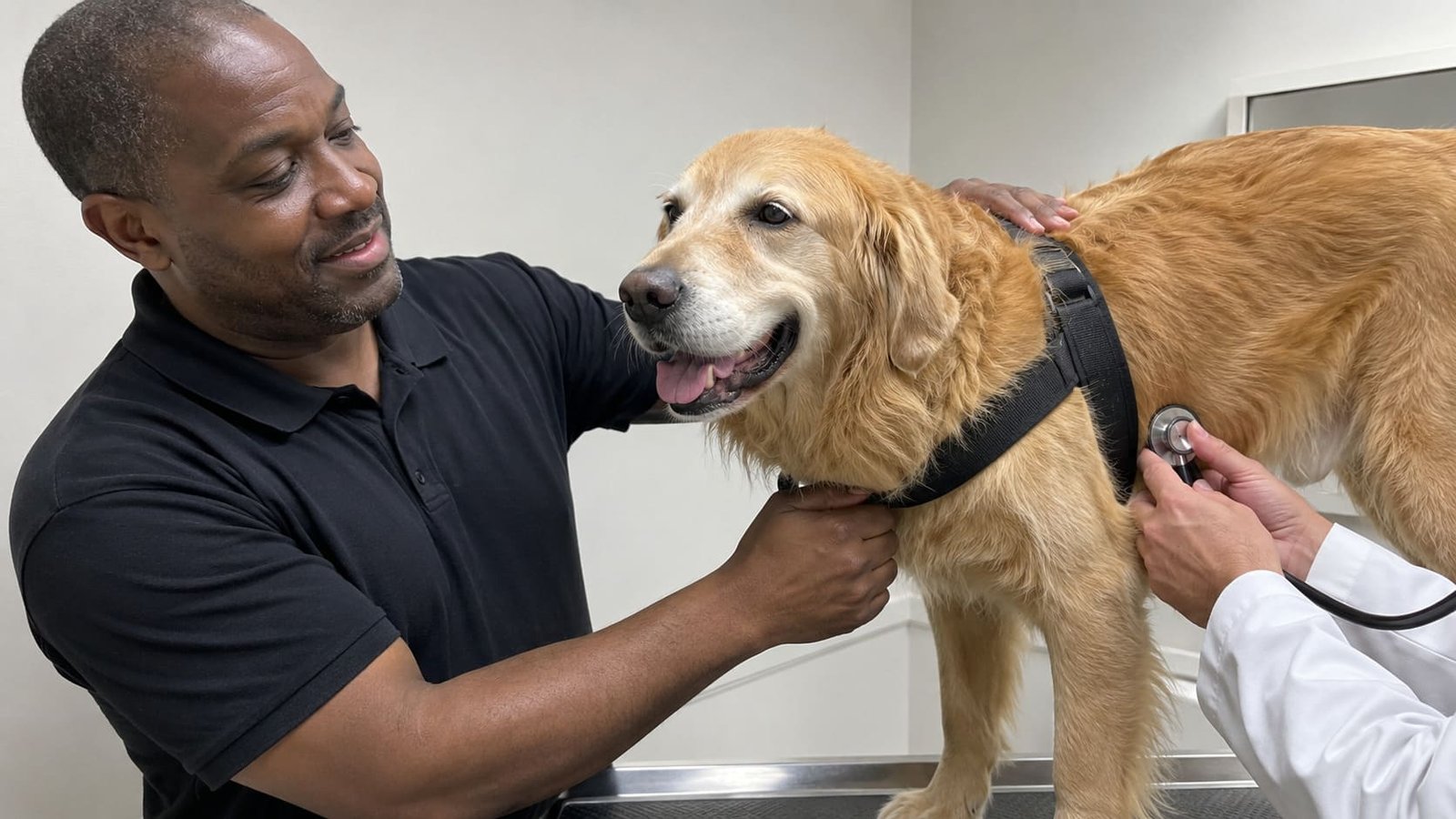
Handler supports a senior retriever during a veterinary travel check.
Looking Beyond the Rules: Rethinking What’s Best for Your Pet
A pet can be allowed to travel and still be poorly suited to the process.
Rules set a minimum threshold. They do not guarantee comfort, resilience, or good welfare in every case. An animal may satisfy pet travel restrictions on paper and yet struggle badly with confinement, noise, pain, fatigue, or disruption once the trip begins.
Owners often focus on whether travel is possible because the move itself feels urgent. That is understandable. Even so, the better question is usually whether the planned route respects the pet’s age, health, and normal ability to cope with stress.
Good decisions often come from ordinary observations. A dog who finds short car journeys exhausting, a cat who stops eating after minor changes at home, or an elderly pet who needs help settling at night is already telling you something useful about travel readiness. Veterinary advice and welfare guidance matter most when they are read alongside those daily realities.
The best way to transport pets is not always the fastest route or the one that looks simplest at first glance. Responsible pet travel means accepting that a different date, a different mode of transport, or a different level of oversight may be the kinder choice.