
How long can a cat travel in a car safely in the UK?
Most healthy cats can cope with a car process for a few hours if the process is well managed, the carrier is secure, and the cat is monitored closely for stress, heat, sickness, and dehydration. Longer trips are possible in some cases, but there is no single safe time limit that suits every cat. Age, health, temperament, previous travel experience, and the risk of delays all affect what is reasonable.
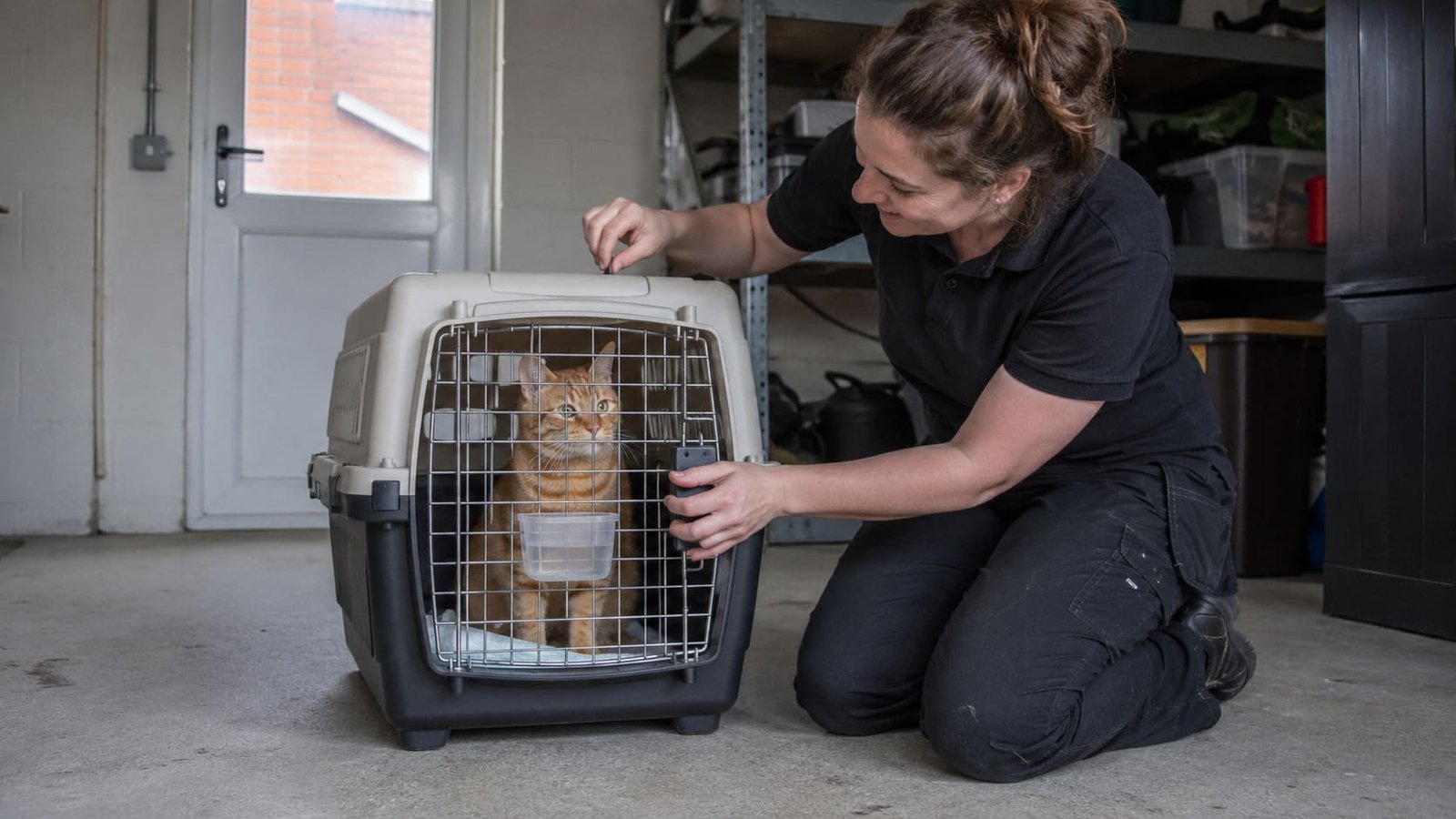
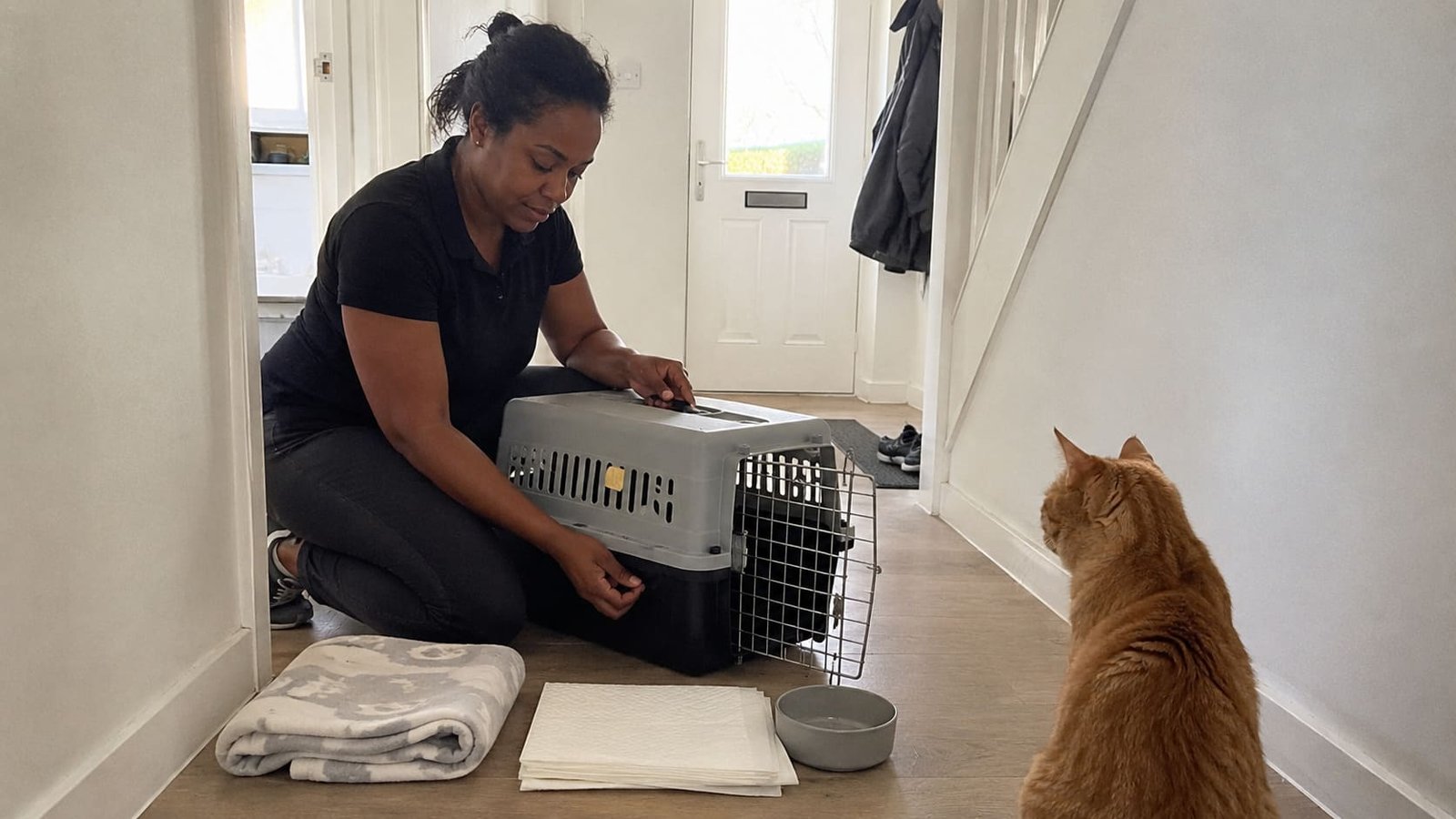
Handler checks a closed cat carrier before a veterinary journey.
Here's What We Have Covered In This Article
Understanding Feline Travel Tolerance: How Long Is Too Long?
Cats rarely experience road travel in the same way people do. A one hour drive to a vet appointment may be unpleasant but manageable, whereas a full day on the road can place very different demands on the animal’s body and behaviour. That is why cat car process duration should never be judged by distance alone.
Some cats stay quiet in a carrier and appear calm, but silence does not always mean comfort. A frightened cat may freeze, crouch low, pant, drool, or stop responding normally to its surroundings. Stress behaviours can be subtle, which means that owners may underestimate how hard the process feels from the cat’s point of view.
UK veterinary guidance and advice from welfare bodies such as the RSPCA generally support a cautious, welfare-led approach. DEFRA and wider animal welfare codes also point owners back to the same basic duty of care. The cat must be transported in a way that protects safety, comfort, and health throughout the trip.
Travel tolerance varies widely. A young, healthy cat that has been gently acclimatised to its carrier may cope better than an elderly cat with arthritis, a nervous rescue cat, or an animal with a history of motion sickness. Equally, a cat that manages one route well may struggle badly with a longer drive, hot weather, road noise, or repeated stops.
Common signs of cat travel stress include:
- vocalising more than usual, or becoming unusually quiet
- panting, drooling, vomiting, or signs of motion sickness
- frantic scratching at the carrier, rigid posture, or attempts to hide within it
- loss of bladder or bowel control, or refusal to settle after the car has stopped
Hydration needs and rest breaks also matter, although breaks are not as simple for cats as they are for dogs. Opening a carrier in an unfamiliar place can create an escape risk, so the idea of a relaxed roadside pause often does not match feline reality. On a long distance cat transport process, the safer option may depend less on frequent handling and more on planning a route that limits time in transit, avoids heat, and reduces unnecessary disruption.
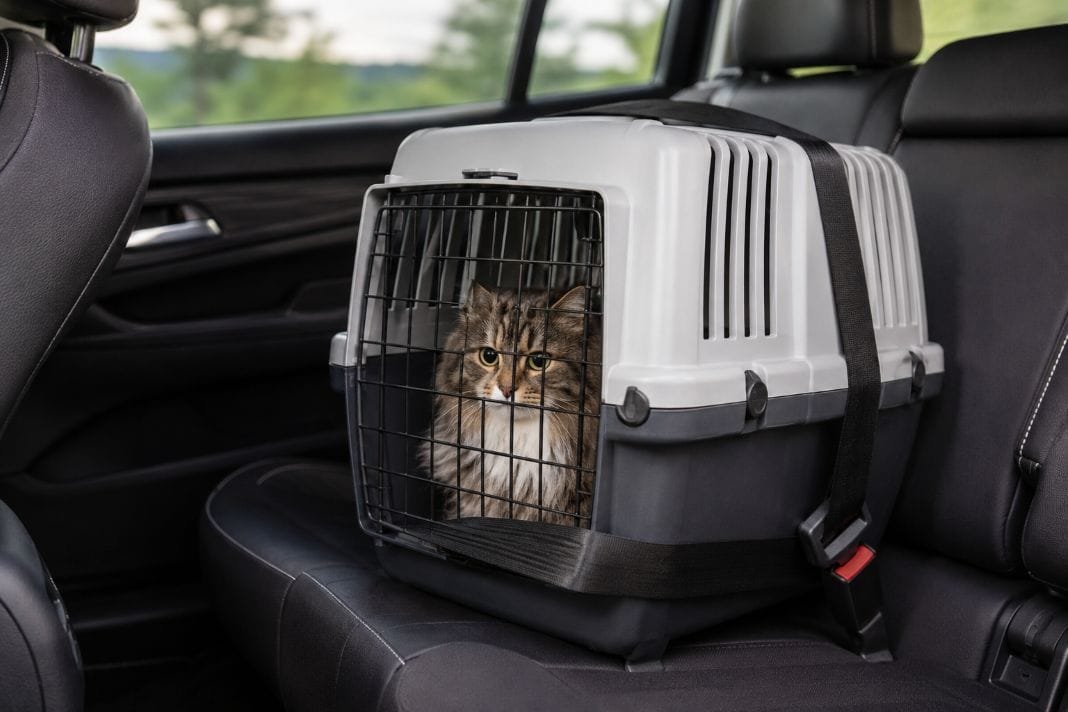
A photo of a cat being transported in a car
Legal and Welfare Considerations for Cat Travel in the UK
UK owners have a legal duty to protect an animal’s welfare during transport. The Animal Welfare Act 2006 sets the broad framework, and government guidance reinforces the expectation that pets must be carried safely and without avoidable suffering.
Secure transport matters
A cat should travel in a suitable carrier that prevents escape and limits injury if the driver brakes sharply or swerves. Loose animals in a vehicle create a welfare problem and a road safety problem at the same time. Carrier choice, positioning in the car, ventilation, and temperature control all fall within that basic duty of care.
Welfare does not stop once the car starts moving
Long drives can become welfare issues if the animal is left in a hot vehicle, exposed to prolonged distress, or carried without proper regard for age or health. Heat build-up inside cars can happen quickly, even in weather that feels moderate outside. An anxious or unwell cat may also deteriorate during travel without obvious warning.
Documentation may become relevant if the trip forms part of a wider relocation, border crossing, or onward transport arrangement. In those situations, pet transport regulations and UK cat travel rules can extend beyond the drive itself and into health certification, identification, and timing.
Practical legal points owners should keep in mind
- The cat should be transported securely in a carrier or other safe restraint.
- The driver must remain able to control the vehicle without distraction.
- Welfare needs, including temperature, ventilation, and protection from distress, remain the owner’s responsibility throughout the process.
Enforcement is usually tied to the condition of the animal and the circumstances of the process, not to a single fixed number of hours. A short trip handled badly can breach that duty more easily than a longer process that has been planned with proper care.
Preparing Your Cat for a Long Car Process: What Matters Most
Preparation has a strong effect on how far a cat can travel by car without the experience becoming unmanageable. The biggest gains usually come before the engine is switched on.
Carrier acclimatisation often makes more difference than owners expect. A cat that only sees the carrier before stressful events may start the process in a heightened state before the car even moves. By contrast, a familiar carrier used at home as a normal resting space can reduce the sense of threat.
Feeding, hydration, and litter needs also need realistic thought. Some cats travel better if feeding times are adjusted around the drive, especially if motion sickness is a concern, but any changes should be sensible and consistent with veterinary advice. Very young, elderly, diabetic, or medically treated cats may need more careful planning than a healthy adult pet on a moderate trip.
Health status matters just as much as temperament. An arthritic cat may find vibration and confinement painful. A brachycephalic cat may be less tolerant of stress and heat. A recently unwell animal, or one with a known anxiety pattern, may need a veterinary view before any long process is considered.
In more involved cases, outside input becomes less of a convenience and more of a sensible safeguard. Veterinary practices can advise on fitness to travel, and behaviour professionals may help with severe travel anxiety. For journeys linked to relocation or wider transport coordination, companies such as Tailored Pet Travel are generally brought in because the planning burden, compliance demands, or welfare risks have already moved beyond a straightforward family drive.
One useful way to judge readiness is to think in terms of suitability, not optimism. A cat that cannot tolerate short practice drives, remains highly distressed in the carrier, or has unstable health may be telling you that the process itself needs rethinking.
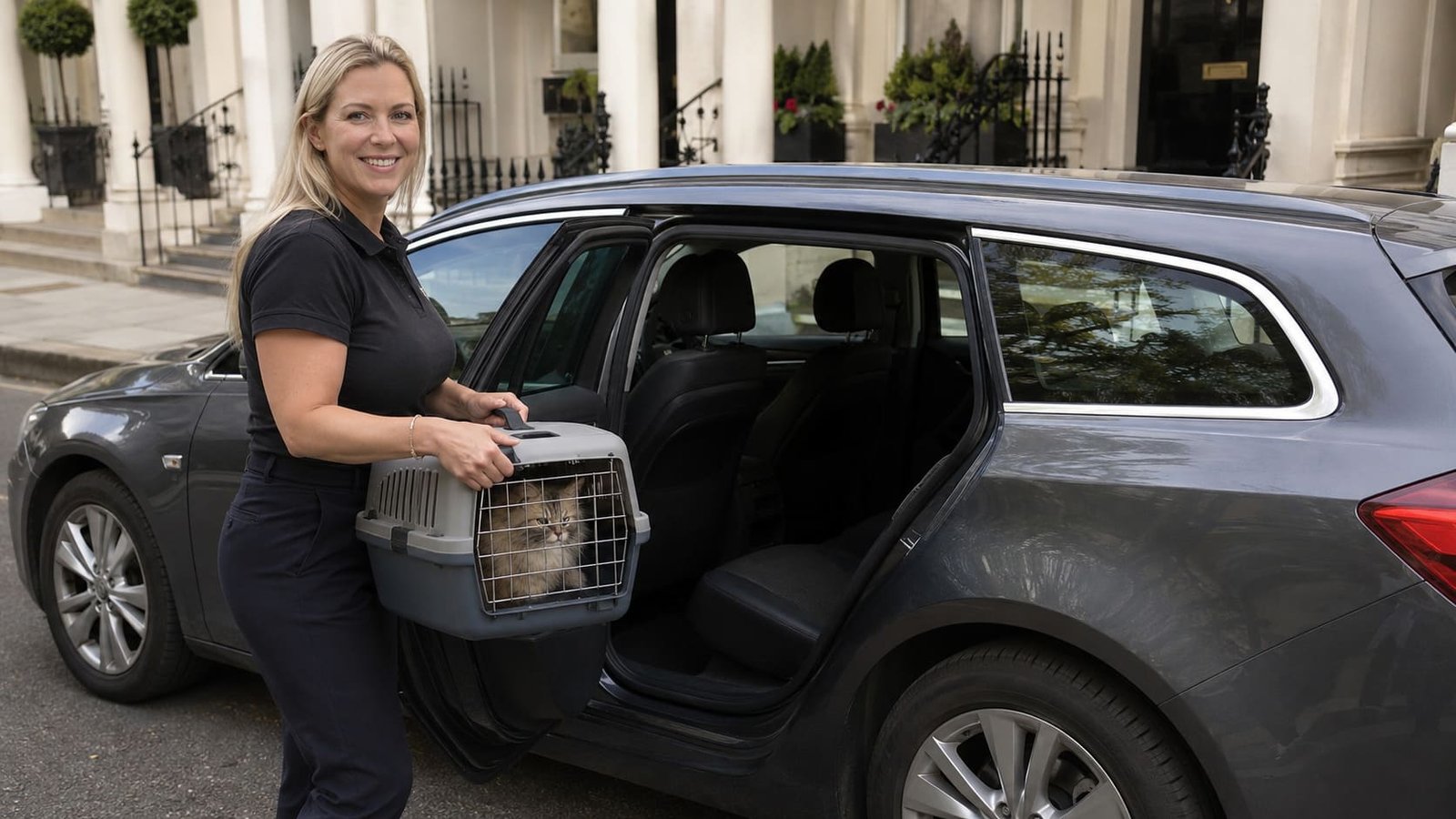
Pet travel handler lifts a cat carrier beside an open car.
Risks and Consequences of Extended Car Travel for Cats
Extended car travel can create problems that build gradually and then become hard to manage on the road. Physical discomfort, stress, heat, dehydration, and escape risk rarely arrive as one dramatic event. More often, they develop through a chain of small pressures such as traffic delays, poor ventilation, a distressed cat, and an owner who has limited safe options once the trip is underway.
Overheating deserves particular attention. Cars can warm up quickly, and a covered carrier, direct sunlight, or poor airflow can make conditions worse even during routine travel. A cat that is already stressed may also pant or drool more, which can be mistaken for motion sickness alone.
Delay is another overlooked factor. A process planned for three hours can become six because of congestion, breakdowns, diversions, or missed timings. Once that happens, hydration, toileting, medication schedules, and the cat’s emotional state can all shift at once.
Vulnerability rises further in certain groups. Elderly cats, kittens, medically treated pets, and animals with known anxiety often have less margin for error. A healthy, settled adult cat may recover from a demanding drive with a quiet evening at home. A frailer animal may still be unsettled the next day, with reduced appetite, altered behaviour, or signs of exhaustion.
The difference between a managed and unmanaged process is often visible in the details. A carefully planned trip takes account of weather, route length, health status, and what happens if the day stops going to plan. An unmanaged trip often relies on the assumption that the cat will cope somehow, right up until the point it becomes clear that the assumptions were wrong.
That is one reason professional oversight can be appropriate in higher risk situations. In cross-border moves, medically sensitive cases, or journeys with little room for error, firms including Tailored Pet Travel tend to be used for control and welfare monitoring, incidentally, because the cost of a mistake may be far higher than the cost of extra planning.

Beyond the Process: Reframing Cat Travel Decisions for UK Owners
Many owners still assume that if a cat can be placed in a carrier, the main task is simply getting from one address to another. That view misses the part that matters most, namely whether the process is fair, manageable, and proportionate for that individual animal.
Responsible cat transport starts with necessity. Some trips are unavoidable, including moves home, urgent family changes, or veterinary referral. Others deserve a pause before the date is fixed, especially if the route is long, the cat is vulnerable, or the plan depends on the animal tolerating conditions it has never handled well before.
Timing can change the whole picture. A cooler day, a shorter route, an overnight break in a safe setting, or a delay until a health issue is stabilised may turn a poor plan into a reasonable one. Post-travel recovery matters too, since cats often need quiet, routine, and time to reset after a demanding drive.
Seen through that lens, the better question is often less about the maximum number of hours and more about the total burden placed on the cat. A long drive may be possible, but a welfare-first decision asks whether it is the right process, at the right time, for the right animal.