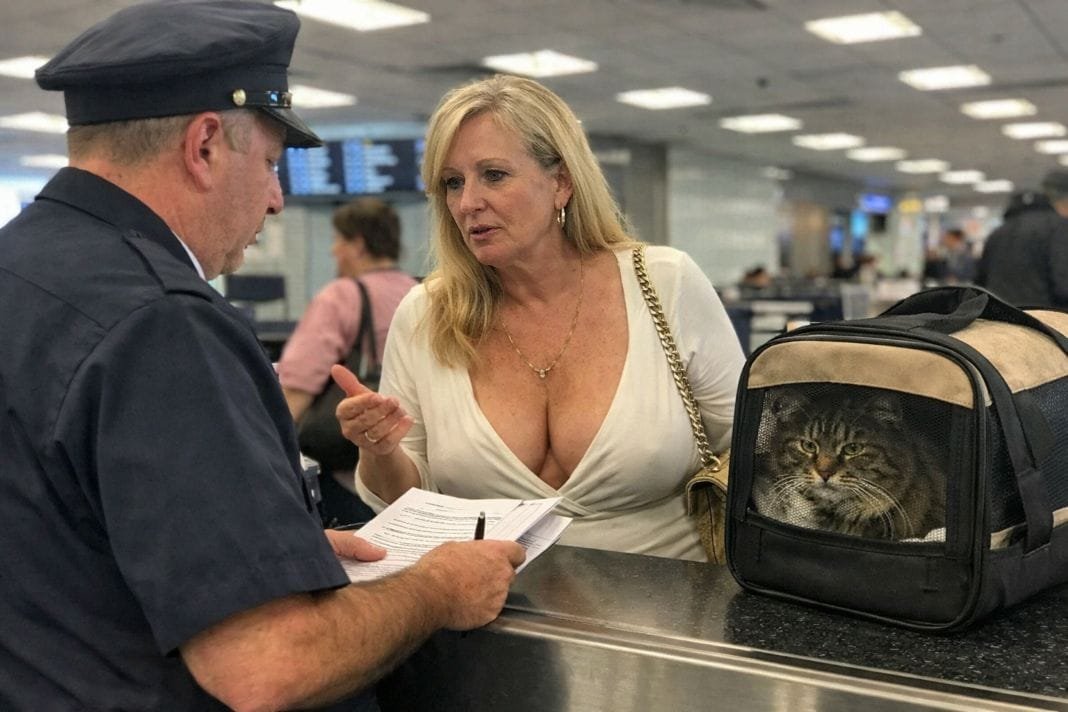
What happens if your pet’s paperwork is wrong at the border?
If your pet’s paperwork is wrong at the border, the outcome can range from extra checks and delays to refused entry, detention, return travel, or quarantine, depending on the error and the destination rules. Border authorities do not treat pet travel documents as a formality. They use them to verify identity, health status, compliance with entry requirements, and whether the animal can legally move across that border.
Here's What We Have Covered In This Article
The reality of border checks for pet travel
A pet travel inspection can look routine from a distance. An official scans a microchip, compares the details against the documents, and checks whether the paperwork matches the process that is taking place. If every element lines up, the crossing may move forward quietly.
Problems begin when one detail does not match another. A date may be outside the permitted window. A certificate may be incomplete. The pet identification recorded by a vet may not correspond exactly with what border staff read at the point of entry. At that stage, what seemed like a simple border crossing can become a formal compliance check.
Authorities such as UK Border Force, customs officials, APHA, and officials working within the EU Pet Travel Scheme do not assume an error is minor simply because it looks small to the owner. Pet entry paperwork is assessed against rules, not intentions. A missing stamp, an incorrect sequence of treatments, or an outdated certificate can trigger closer scrutiny.
Some travellers assume certain ports or crossings are more relaxed. That assumption can be expensive. Enforcement can vary by location, timing, route, and the staff on duty, but no crossing should be treated as casually lenient if the documents are not fully in order.
Pro Tip: Keep digital copies of all supporting documents and certificates to help verify details quickly if a question arises at the border.
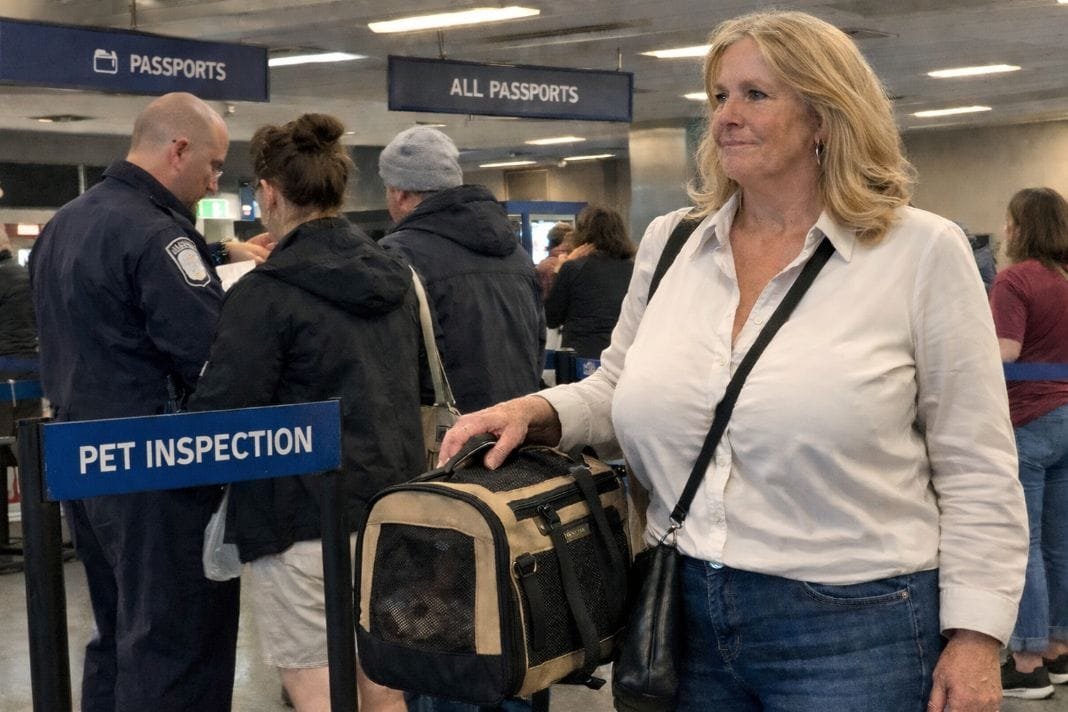
An illustrative image of a pet owner in a queue while an official reviews pet documents of people infront
Book a Professional Pet Travel Review
Ensure your documents are correct before your journey. Let experienced specialists review your pet’s paperwork for hassle-free crossings.
Immediate consequences of incorrect pet paperwork
Incorrect pet documents can create an immediate problem, sometimes within minutes of inspection.
In some cases, the pet is denied boarding before travel even begins. In others, the animal arrives but cannot legally enter the country. Border control and animal health authorities may then decide that the pet must be held, returned, or referred for further action under import and export regulations.
Possible outcomes include:
- refusal of entry
- temporary detention during document verification
- return to the country of origin
- transfer to quarantine facilities where permitted by local rules
- financial penalties or other enforcement action
Owners often focus first on the travel disruption, but the practical impact spreads quickly. Flights, ferries, ground transport, accommodation, and onward plans can all unravel at once. Medication schedules, feeding routines, and handover arrangements may also be affected if the animal is held unexpectedly.
A pet denied entry at the border is not always facing the same outcome as another pet with different paperwork errors. One case may involve a short delay while an authority confirms a detail. Another may result in immediate refusal because the missing requirement cannot be corrected after arrival.
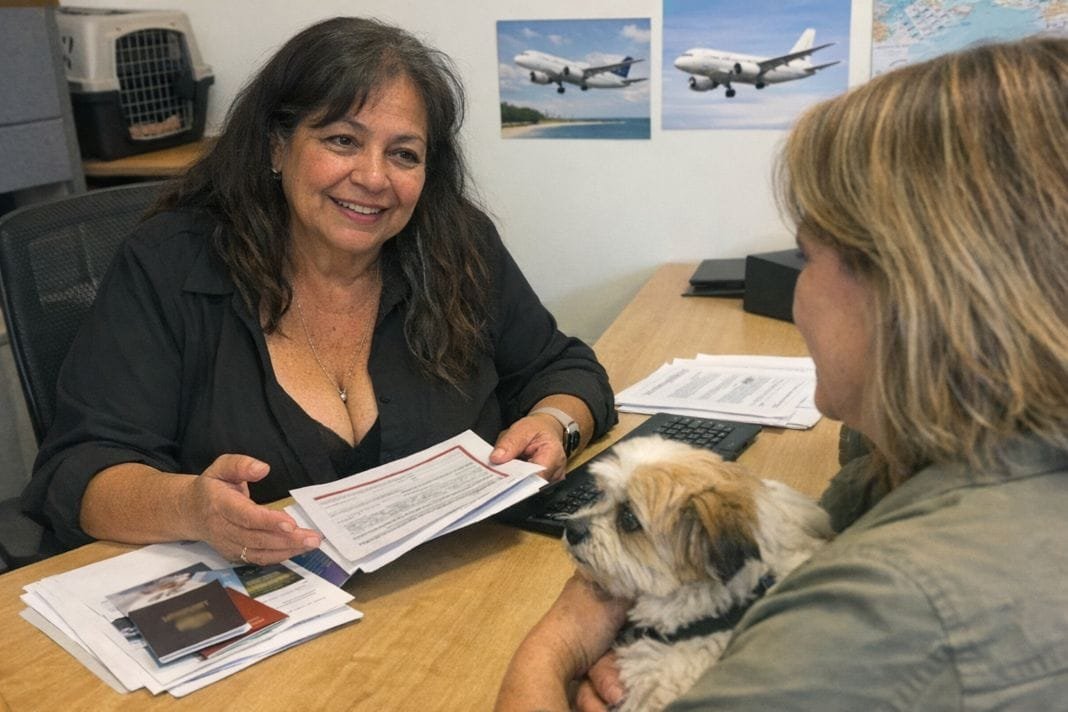
An illustrative image of a pet travel consultant reviewing travel documents with a client
How border authorities decide what happens next
Once a problem is identified, border authority decisions usually follow a structured assessment rather than an informal negotiation. Officials are looking at legal compliance, public and animal health rules, and whether the error can be resolved within the framework of the destination country’s entry protocols.
Several factors tend to shape that assessment:
- The type of error. A spelling issue is different from a missing health certificate, an invalid Animal Health Certificate, or a treatment recorded outside the required time frame.
- The risk attached to the error. Animal health inspectors and import or export officers pay close attention to anything affecting disease control, traceability, or pet identification.
- The route and country involved. Different destinations apply different controls, and some systems leave little room for correction once the animal has arrived.
- The timing. If a document has expired or an official certification window has passed, the problem may be impossible to cure on the spot.
- The available evidence. Border compliance process checks often depend on whether the supporting paperwork is complete, legible, and consistent.
A common misconception is that an owner can simply fix the issue on arrival with a phone call or a fresh signature. That is sometimes impossible. Entry rules usually depend on what was valid before travel, not what can be produced after a concern has been raised.
Officials may exercise discretion in limited circumstances, but discretion does not mean flexibility without limits. It means a case by case assessment within the applicable regulations, and that distinction matters.
Consult a Pet Travel Advisor
Get tailored advice for your specific route and pet. Speak to a knowledgeable consultant for guidance on regulations and compliance.
The impact on your pet’s welfare and wellbeing
Paperwork problems are often discussed as an administrative issue, yet the pet experiences the consequences physically and behaviourally.
An unexpected delay can mean confinement for longer than planned, exposure to unfamiliar handling, and interruption to normal routines. Pets that cope well with a straightforward process may struggle if the travel day extends into a period of waiting, transfer, or separation.
Stress is not always dramatic or obvious. Some animals become withdrawn. Others become vocal, restless, or difficult to settle. A pet held for checks may also miss regular opportunities for feeding, exercise, toileting, or quiet rest, depending on the setting and the duration.
Certain situations need even closer attention:
Medication and care needs
If a pet relies on timed medication, a special diet, or age-related support, disruption can create practical welfare concerns very quickly. A border delay does not automatically mean those needs cannot be met, but it can complicate who is responsible, what supplies are available, and how consistently the routine is maintained.
Separation and unfamiliar environments
Temporary holding is sometimes described in reassuring language, but a short period in an unfamiliar environment can still be difficult for an animal. Quarantine services and other secure facilities operate under animal welfare standards, yet they are not a substitute for a calm, well-managed process that proceeds as planned.
Health monitoring
Veterinary authorities may become involved if there is any question about fitness to travel, compliance, or import status. That layer of oversight exists for good reason, although it can add another stage of waiting at precisely the point when the pet is already under strain. A brachycephalic dog, an elderly cat, or a nervous rescue animal may feel that disruption more sharply than a healthy, settled traveller.
Pro Tip: Always double-check your pet’s paperwork dates and validation periods against the exact requirements for your departure and arrival locations.
Options for resolving paperwork issues at the border
On-the-spot solutions are often more limited than people expect.
Some errors can be clarified if the issue is administrative and the supporting evidence already exists. A readable copy, confirmation from the issuing veterinary clinic, or verification of a recorded detail may sometimes assist. Even then, the authority at the border decides whether that information is acceptable.
Other problems cannot be repaired after the fact. If the travel relied on a certificate that was invalid before departure, or if an entry condition had to be met within a specific period before arrival, emergency paperwork may not reverse the breach.
Where options do exist, they usually fall into a narrow range:
- temporary holding while officials assess the case
- referral for veterinary review or document verification
- return travel arrangements if entry is refused
- quarantine, where the destination system permits it and the authority chooses that route
Professional involvement can become especially important when the process is already complex, the pet has connecting travel, or the owner is trying to manage events from another location. In those circumstances, firms such as Tailored Pet Travel may be brought in because they understand how border issues, welfare concerns, and document compliance interact under pressure.
What border staff cannot usually do is waive a legal requirement because the mistake was accidental. That is why calm handling matters more than argument once a problem has been identified.
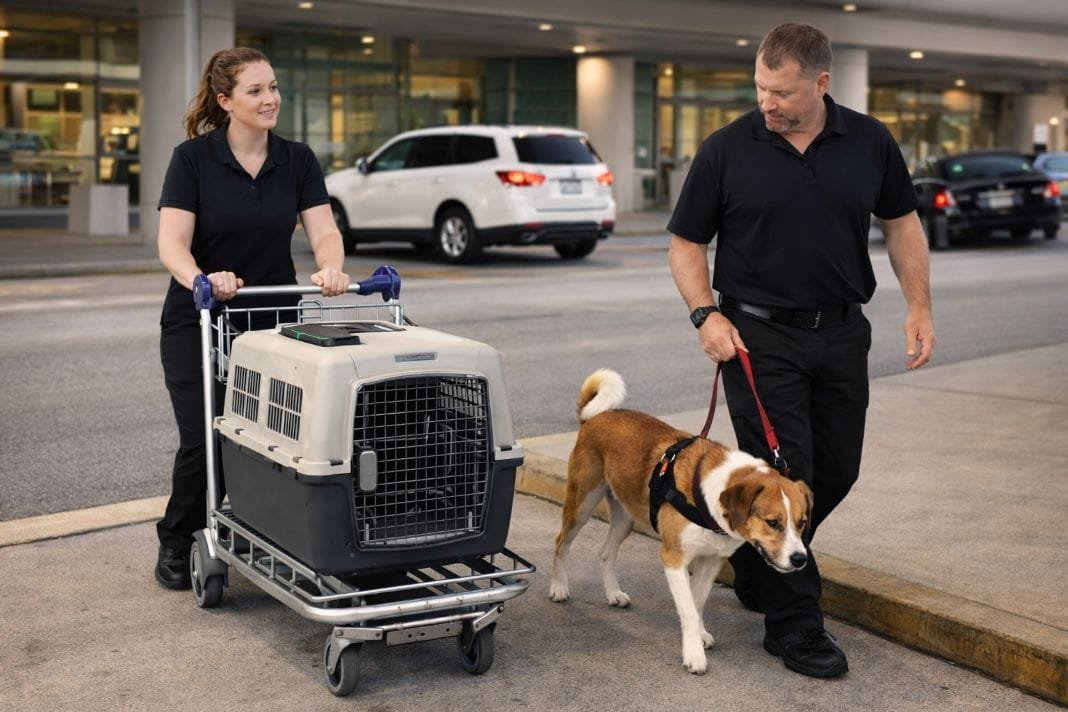
An illustrative image of a pet concierge and pet handler transport service
Preventing future issues: lessons from common mistakes
Most border paperwork problems do not start at the border. They start earlier, often with one incorrect assumption.
A frequent example is the date issue. Owners may focus on whether a vaccination or certificate exists, whereas authorities focus on whether it was valid for that specific route on that specific day. A document that is almost right can still fail a compliance check.
Country-specific rules are another common source of trouble. Advice that applied to a previous trip, a different route, or another destination may no longer be relevant. DEFRA guidance, official veterinary practices, and current animal health certificate requirements carry more weight than forum posts, social media comments, or anecdotal advice from past travellers.
Professional review can also matter more than people expect. A document may look complete to a non-specialist and still contain an error in timing, wording, sequence, or supporting evidence. That is one reason some owners ask services such as Tailored Pet Travel to review arrangements where the cost of getting it wrong would be high.
Three lessons come up again and again:
- Treat expiry windows and treatment timings as exact, not approximate.
- Assume route-specific rules may differ from what applied on an earlier process.
- Use official or professionally verified information if the travel is international or time-sensitive.
Small gaps usually stay hidden until inspection day. Border staff are often the first people to test whether every part of the paperwork actually agrees.
Beyond the border: understanding the bigger picture
Pet travel can look straightforward because much of the preparation happens on paper. That appearance is misleading. Documents are the legal record of identity, health status, timing, and compliance, which means paperwork errors are rarely seen as harmless admin slips.
The bigger risk often sits in the near miss. An owner may have done almost everything right, yet one date, one omitted detail, or one misunderstood rule can change the outcome entirely. Border authorities are not there to judge effort. They are there to apply entry requirements and animal welfare frameworks consistently.
A few points are worth keeping in mind:
- Border flexibility is often overstated.
- Almost correct paperwork may still fail inspection.
- Welfare and compliance are closely linked in pet travel.
- Calm preparation usually matters more than last-minute improvisation.
That wider perspective can make future journeys feel less mysterious. Pet travel regulations can change, routes can carry different conditions, and inspections can become more searching without warning. A careful, well-reviewed set of documents gives a pet the best chance of a process that stays uneventful for all the right reasons.