Can your XL Bully travel in Britain or overseas?
Yes, an exempt XL Bully can sometimes be transported in the UK and taken abroad, but the journey only works if the exemption, public handling controls, route and destination rules all line up. If the dog is not exempt, transport becomes a legal risk before logistics are even discussed.
Most weak plans start with the wrong question: can someone drive the dog? For an XL Bully, the better question is whether the whole journey can be kept lawful from collection to handover.
That means looking past the vehicle. A legal journey can fail at a service stop, a ferry terminal, a border wait or a country crossed on the way. We treat those points as part of the transport decision, because they decide whether the journey is workable in practice.
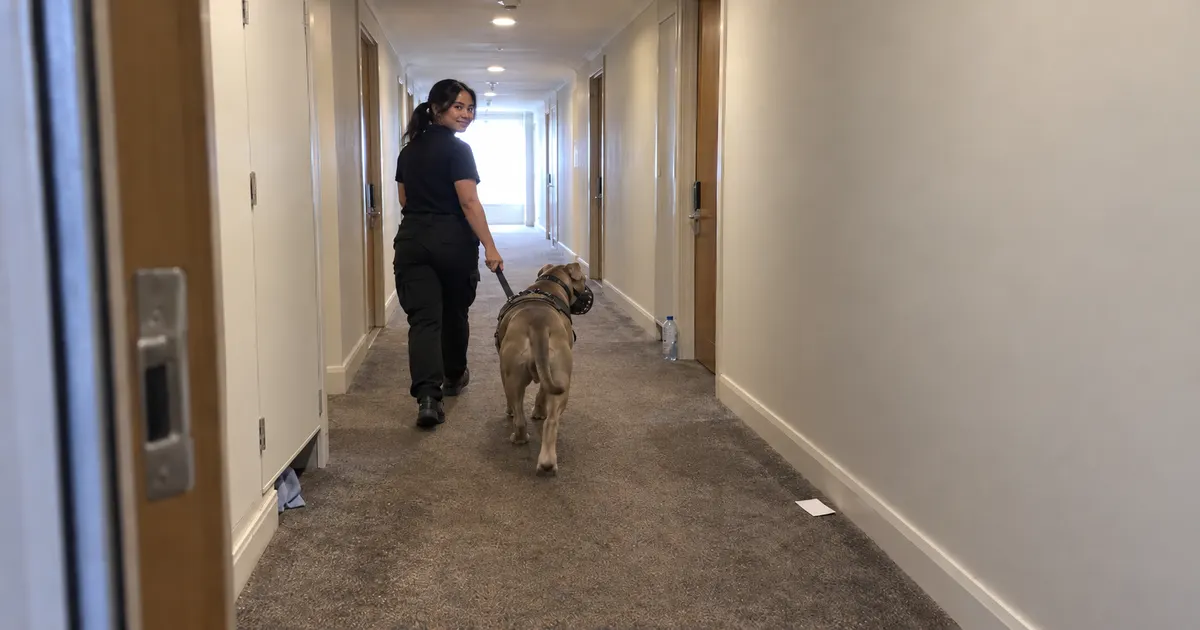
XL Bully walking through pet friendly hotel – Illustrative Image
Here's What We Have Covered In This Article
The UK journey starts with exemption
An XL Bully journey starts with the dog’s legal status under the relevant UK scheme. The first test is whether the dog is legally exempt where the journey starts, not whether a vehicle is available.
The Dangerous Dogs Act 1991 is the main framework behind banned dog type controls, but the detail now differs across England and Wales, Scotland, and Northern Ireland. That matters if you need to transport an XL Bully in the UK, move house with an XL Bully, or plan a journey across a border within the UK.
England and Wales
In England and Wales, GOV.UK says it is a criminal offence to own or possess an XL Bully without a valid Certificate of Exemption. Standard applications have closed, and new exemptions can only be authorised by a court order.
For exempt XL Bully travel, we would want the certificate position confirmed before any route planning starts. If the dog is being moved permanently, Defra must be told about the address change or export, so a house move is part of the legal picture as well as the travel plan.
Scotland
Scotland has its own XL Bully rules and exemption regime. The Scottish Government says it is a criminal offence to keep an XL Bully without a Certificate of Exemption, and the standard application route has closed there too.
A journey into, within or through Scotland needs to be checked against Scottish rules. Treating UK XL Bully rules as one single scheme is a common mistake, especially where a family move crosses a national border.
Northern Ireland
Northern Ireland also runs its own administration. Since 1 January 2025, owning an XL Bully type dog there without an exemption certificate has been an offence, and the standard exemption application window has closed.
Local council administration matters in Northern Ireland, including death and export reporting. If a dog could be mistaken for an XL Bully, classification has to be considered before travel is treated as routine.
Public handling controls shape the risk
An exempt XL Bully can travel in a car, provided the public parts of the journey are controlled properly. Collection from a private address can still be followed by a service stop, a terminal wait or a handover point where public place rules apply.
In England and Wales, Scotland, and Northern Ireland, an exempt XL Bully has to be muzzled and on a lead in public places. In England and Wales, the lead must be securely held by someone at least 16 years old. Those rules matter during travel because a journey is rarely one sealed block of time inside a vehicle.
At Tailored Pet Travel, we look at the whole movement before we treat a restricted breed journey as viable. The sensitive points are usually the short, ordinary-looking parts of the day:
- The dog is moved from the home to the vehicle.
- A service stop puts the dog in a public place.
- A ferry or terminal check requires the dog to be under visible control.
- A border wait lengthens the time the handler must manage the dog safely.
A pet handler‘s job is to keep those moments controlled, recorded and calm, so the legal conditions hold during the parts of the journey most owners overlook.
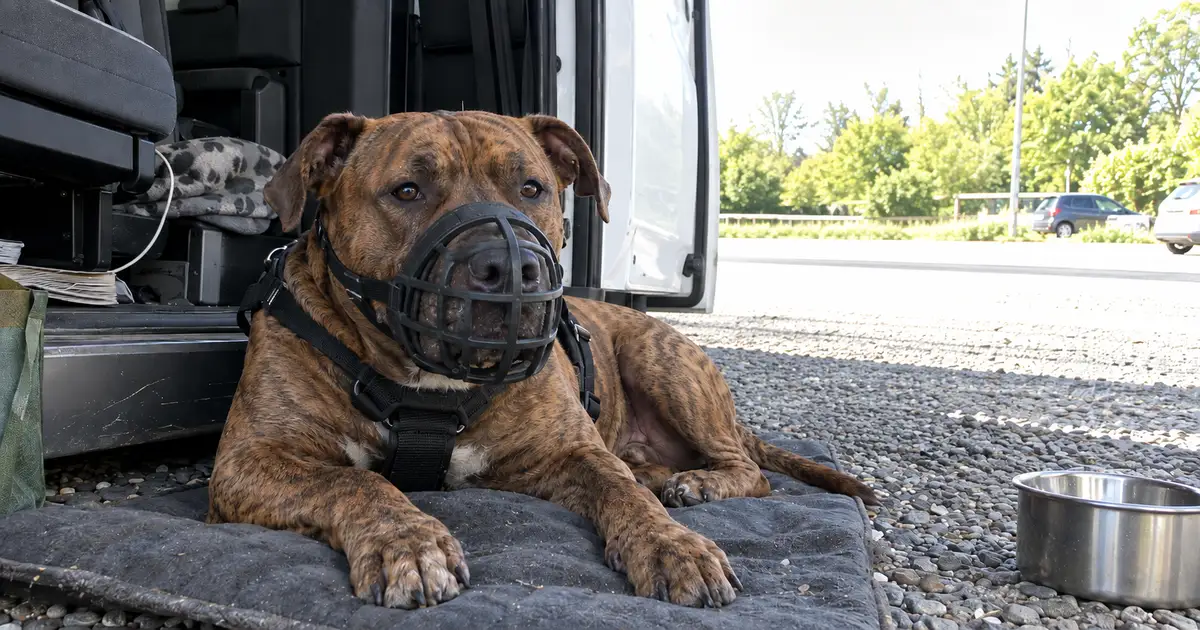
Muzzled XL Bully resting during pet journey – Illustrative Image
France can block a Europe road route
A UK owner planning a Europe relocation by road may expect the route to be a map problem. For an XL Bully or a dog that looks close to one, France can turn the route into a legal problem before the final destination is reached.
The French Ministry of Agriculture says category 1 dogs are prohibited from importation and introduction into France, including transit. That point matters because many UK to Europe road routes use a Eurotunnel crossing, ferry travel or onward driving through France.
A Europe route can be blocked by transit rules, not just by the country where the dog will live. If a dog without a pedigree may look like a French category 1 dog, French guidance says the keeper should get a signed veterinary certificate, translated into French if needed, stating that the dog is outside the dangerous dog categories.
That certificate has limits. French authorities can still challenge it, and a contradictory expert assessment can expose the keeper to penalties including confiscation of the dog. For that reason, XL Bully France transit has to be assessed before any crossing or road route is treated as safe.
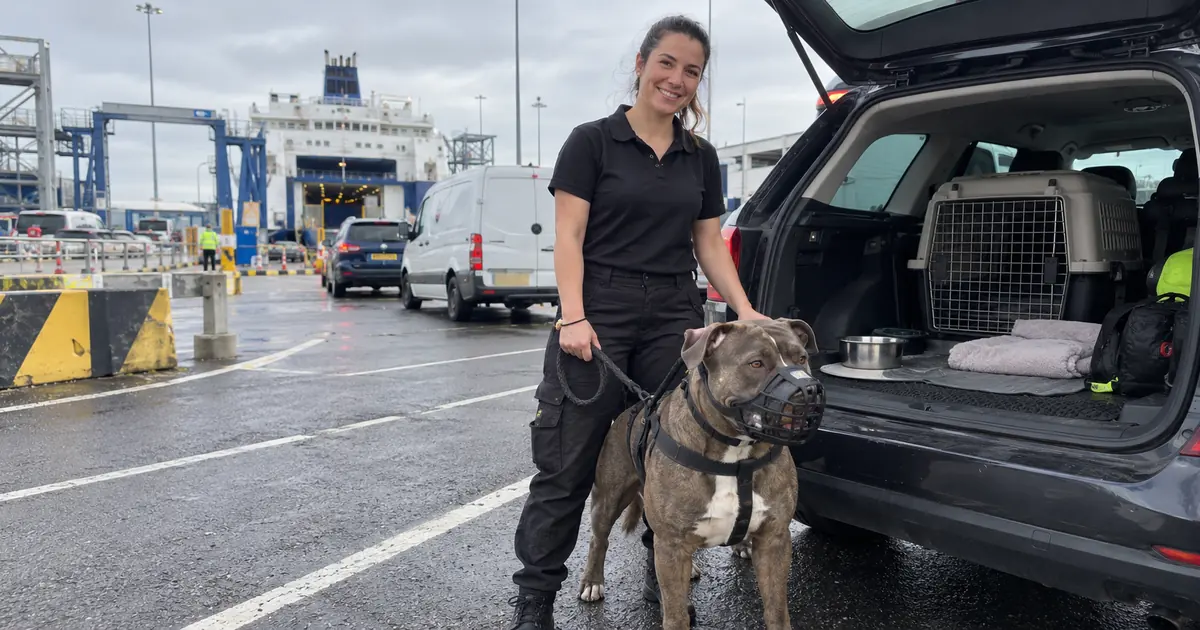
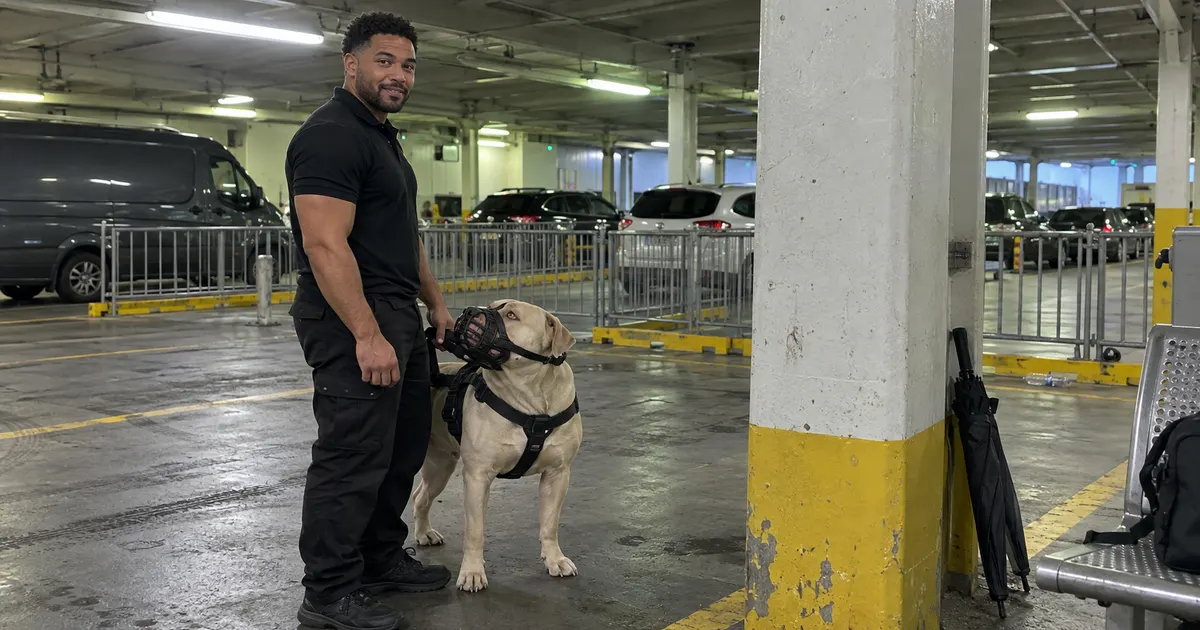
XL Bully at ferry terminal with pet handler – Illustrative Image
Overseas travel depends on the whole route
Once the dog leaves the UK, the travel decision widens. UK exemption status covers the UK side, while the destination country, transit countries and normal pet travel paperwork each decide a different part of the journey.
Four separate gates decide whether the journey works, and each one controls a different part of it.
| Journey issue | What it decides |
|---|---|
| UK exemption status | Whether the dog can lawfully be kept and moved from the UK side |
| Transit country rules | Whether the route can be used without refusal or seizure risk |
| Destination rules | Whether the dog can enter and remain in the country |
| Pet travel paperwork | Whether the dog can travel under the normal animal movement rules |
For EU travel, a dog needs an Animal Health Certificate, the document signed by an Official Veterinarian for travel from Great Britain or Northern Ireland to an EU country. GOV.UK says the certificate is valid for 10 days for entry into the EU, then for 6 months of onward travel within the EU and 6 months for re-entry to Great Britain.
Vaccination timing can stop a last-minute plan as well. If a pet needs a first rabies vaccination before EU travel, the owner must wait at least 21 full days after the vaccination before getting an Animal Health Certificate.
Pet flights add another layer, because airline acceptance and live animal transport rules have to fit the dog and the route. We assess those points as route feasibility, because an XL Bully international relocation only works when the travel method and the legal route fit the same plan.
Route viability decides whether transport is sensible
The safest decision is a route viability decision. An XL Bully journey is workable when the dog is legally exempt at origin, the public handling conditions can be maintained, and every country on the route accepts the dog’s movement.
At Tailored Pet Travel, we treat XL Bully movement as controlled relocation work because the vehicle is only one part of the risk. The same journey can look simple on paper and fail because a transit country, terminal process or paperwork window has been misread.
Welfare also belongs in the decision. If the route is uncertain, long or exposed to repeated checks, the question becomes whether the journey can be kept stable enough for the dog as well as lawful for the owner.
The point to prioritise is route acceptance from start to finish. Once that holds, transport becomes a managed journey. Without it, even good handling cannot rescue a route that was never viable.
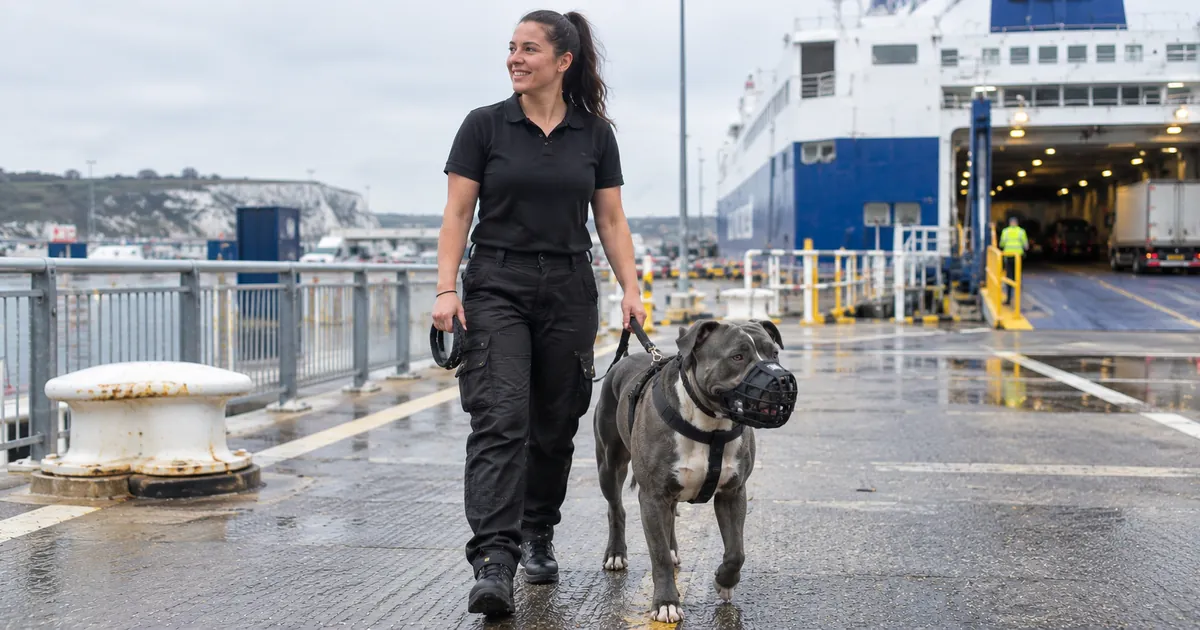
XL Bully walking at ferry port with pet handler – Illustrative Image
Questions we get asked about XL Bully transport
Can an exempt XL Bully stay at another address before travel?
In England and Wales, an exempt XL Bully must normally stay at the same address as the certificate holder, with temporary keeping at another address allowed for a maximum of 30 days in a 12 month period. Northern Ireland has a similar temporary keeping limit.
Is third party public liability insurance still required in England and Wales?
GOV.UK says third party public liability insurance is no longer required for banned breed dogs, including XL Bullies, in England and Wales. That change took effect from 1 July 2026.
Could a dog that is not registered as an XL Bully still be treated as one during travel?
Yes, appearance can matter if a dog may be mistaken for a restricted type. Settle that question in writing before the journey is booked. A terminal or border check gives you no time to resolve a breed type query, and the dog is standing with you while it happens.
Can children travel with an XL Bully during relocation?
Adult control matters during any public part of the journey. In England and Wales, GOV.UK also says that from 1 November 2026 a child under 12 must not be left in close contact with an XL Bully in a private place without adult supervision.
Who needs to be told if an exempt XL Bully is exported?
In England and Wales, Defra must be told if an exempt XL Bully is exported. In Northern Ireland, the owner must tell the local council if the dog is exported.