Can your dog travel from GB to Ireland without being delayed?
Yes, your dog can travel from GB to the Republic of Ireland, but the trip has to line up with EU paperwork, rabies timing, tapeworm treatment and an approved entry route. Most GB resident dogs need an Animal Health Certificate (AHC), the main EU document for this route, before they travel.
What catches owners is the handover between the travel booking and the entry rules. A ferry space, a pet cabin or a pet handler booking does not settle whether the dog can enter Ireland. The document and treatment dates still have to match the route.
We look at this as a timing and responsibility problem. Who checks the certificate, who travels with the dog, and which entry point is used all matter because a small mismatch can cause a delay at the point where you have least room to fix it.
For a simple owner-accompanied trip, the rules are manageable if the dates are right. For a relocation, a young dog, several pets, or a dog travelling with a handler, the risk moves from basic paperwork to control of the whole movement.
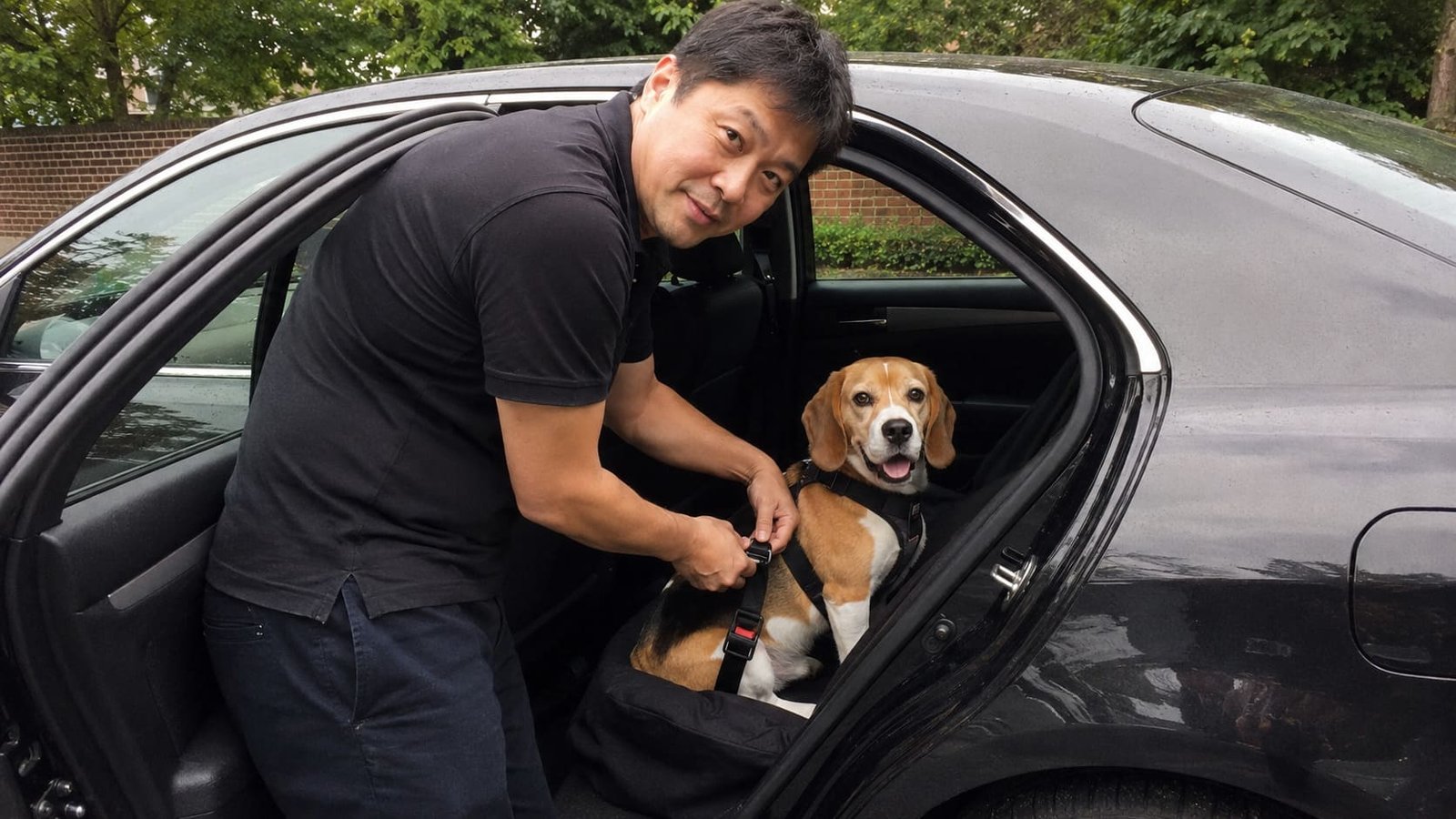
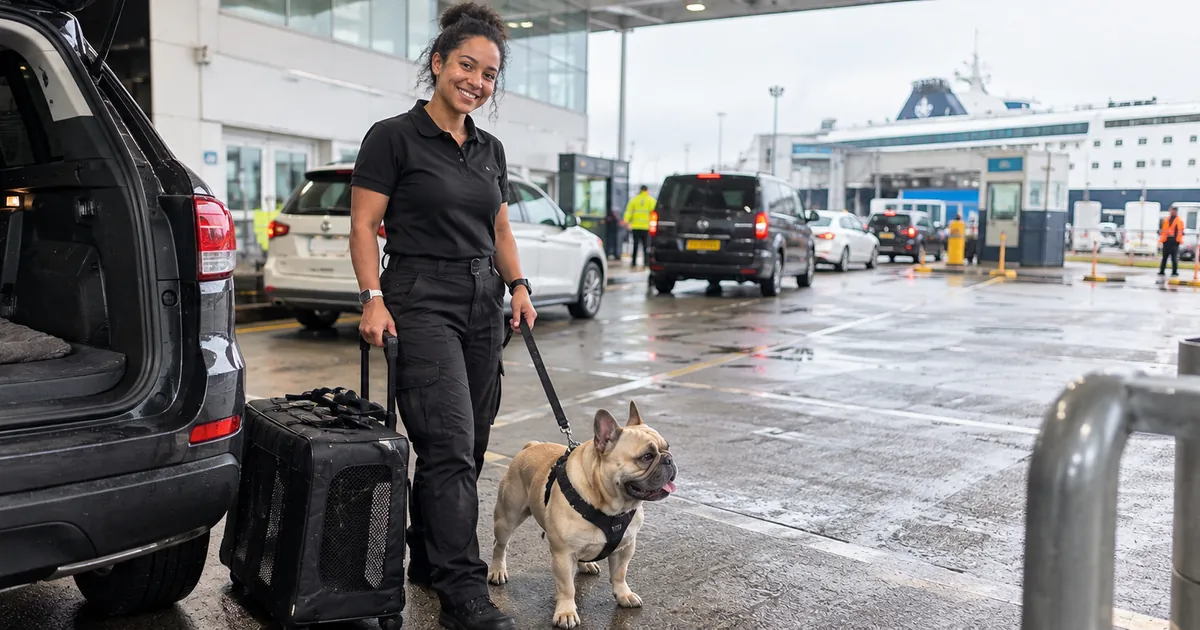
Pet travel handler checks a dog secured inside the vehicle.
Here's What We Have Covered In This Article
Ireland means EU entry rules
Most of the confusion about this trip comes down to one point. Your dog is entering the Republic of Ireland under EU pet travel rules, not under the old Great Britain routine that many owners remember.
Great Britain means England, Scotland and Wales. Northern Ireland has its own position. The Republic of Ireland is the EU destination for this trip, so the rules for taking a dog to Ireland are the rules for entry into the EU.
As of August 2026, DAERA records that EU pet travel rules changed on 22 April 2026, with Regulation (EU) 2016/429 and Commission Delegated Regulation (EU) 2026/131 now forming the current framework for non-commercial pet movement. That matters because older articles and old habits can point you at the wrong document or the wrong validity period.
A pet passport to Ireland from GB is one of the common traps. GOV.UK says that if you live in England, Scotland or Wales, you should not use a pet passport to travel to the EU, even if it was issued in the EU, because the pet may be refused entry. For most GB residents, the AHC is the document to plan around.
AHC timing carries the journey
An Animal Health Certificate is the official document most GB resident dogs need for Ireland, issued by an Official Veterinarian and tied to a specific travel window.
GOV.UK says an AHC is valid for 10 days for entry into the EU, 6 months for onward travel within the EU and 6 months for re-entry to Great Britain. Those dates make the AHC a live border document. A certificate issued at the wrong point in the plan can leave a dog with a booking that looks fine and paperwork that does not fit the trip.
The timing pressure points are:
- The microchip has to be fitted before the rabies vaccination, or at the same time as it, because the dog’s identity and vaccine record have to connect.
- A first or primary rabies vaccination has a waiting period before EU travel. GOV.UK sets that wait at at least 21 full days after the first vaccination, or the last of the first course.
- Young dogs and dogs with a lapsed rabies status need careful planning, since Ireland does not accept dogs that have not yet met the rabies coverage rules.
- Certificate wording and templates changed in 2026, so old assumptions about the AHC can be wrong even when the wider route looks familiar.
At Tailored Pet Travel, we check document timing before treating the route as settled, because the travel plan only works when the certificate, vaccination status and handover all agree with each other. That is where the paperwork stops being a form and starts being a route risk.
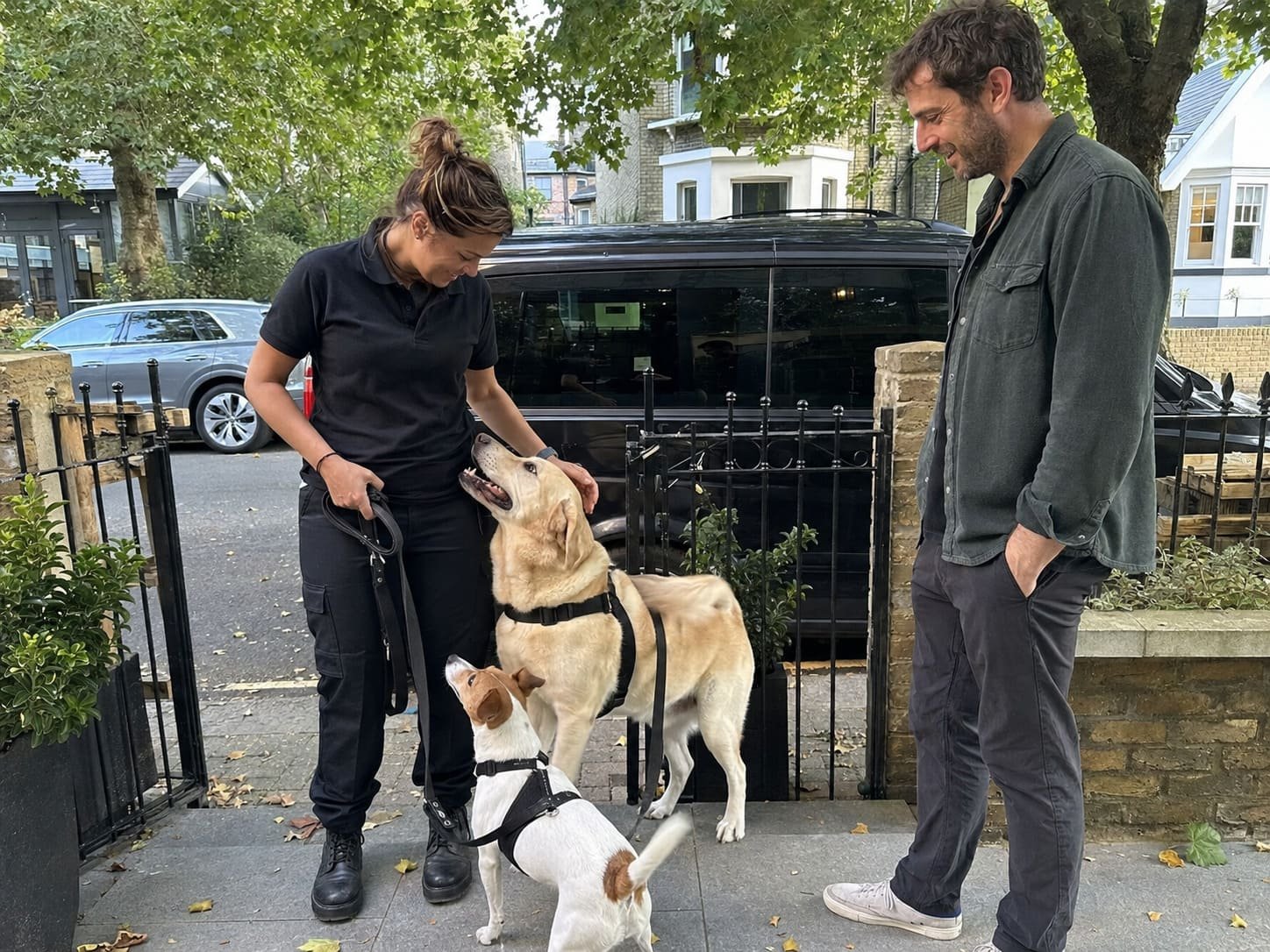
London pet transport collection for two dogs from the same household
Tapeworm treatment has a narrow window
A short trip can fail because the tapeworm treatment date sits outside the accepted window for arrival in Ireland. The dog may have been treated, the vet record may exist, and the ferry may be booked, yet the timing can still be wrong for entry.
For dogs going to Ireland, GOV.UK says the tapeworm treatment must be recorded in the AHC or a valid pet passport. The treatment must contain praziquantel, or an equivalent effective against Echinococcus multilocularis, which is the tapeworm risk behind the rule. It must be given no less than 24 hours and no more than 120 hours before arrival.
That window is tight enough to catch owners on weekend departures, ferry changes and short notice travel. Most owners know the rule perfectly well. The difficulty is lining up the treatment, the certificate record and the arrival time.
Dogs returning to Great Britain from Ireland do not need tapeworm treatment for the return leg. That point is often confused online, so we separate the outbound rule from the return position before any plan is treated as ready.
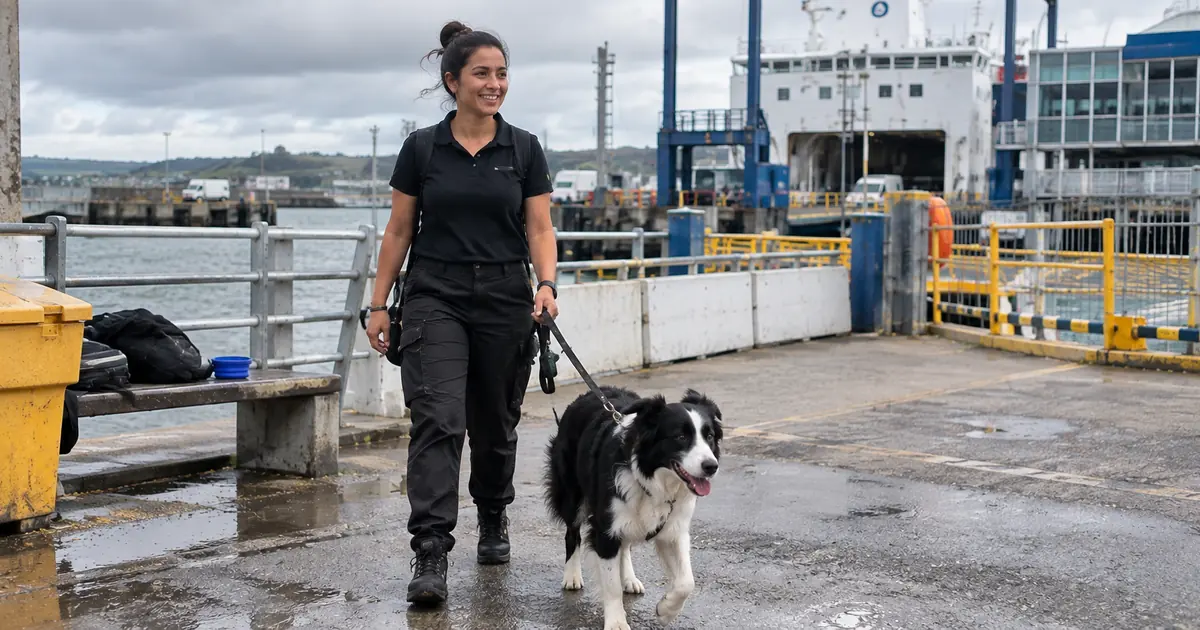
Dog and pet handler at Ireland ferry port – Illustrative Image
Route choice affects compliance checks
When a crossing looks convenient, the route still has to fit the entry status for a dog arriving from outside the EU. A useful route is one that works with the official checks, the dog’s document and the person responsible for the handover.
Direct entry to Ireland
Dogs entering Ireland from outside the EU must use a designated Travellers Point of Entry and undergo compliance checks on arrival. The Irish Pet Travel Portal lists Cork Airport, Dublin Airport, Dublin Port, Shannon Airport, the Port of Cork at Ringaskiddy and Rosslare Europort for pet dogs, cats and ferrets.
Small or private airports, ports, marinas and yacht clubs do not serve that entry role. For dog to Ireland by ferry plans, that makes Dublin Port dog checks and Rosslare dog paperwork part of route suitability, which is worth settling early in the booking.
Compliance checks are document and identity checks. Some trips move through quickly, but the legal position does not disappear because another traveller had a light check. We treat the arrival point as part of the plan from the start.
Travel through Northern Ireland
A dog through Northern Ireland to Ireland needs separate thought. The Northern Ireland Pet Travel Scheme applies to eligible GB to Northern Ireland movements, but DAERA is clear that onward travel into the EU, including the Republic of Ireland, remains subject to EU requirements.
A Northern Ireland Pet Travel Document is therefore no shortcut into the Republic of Ireland. If a pet enters Northern Ireland from GB on an AHC and then travels onward to the EU, DAERA says the AHC must be endorsed on arrival in Northern Ireland. Without that endorsement, the AHC is not valid for onward EU travel.
That route can still be planned properly. It just needs to be treated as a GB to Northern Ireland movement followed by an EU movement, with the document control to match.
Managed handover reduces border risk
Once the owner, dog and handover are split across different people or different travel dates, the rule category starts to matter. A pet handler can travel with a dog under non-commercial pet travel rules only where the owner’s own movement stays close enough to the dog’s movement and the paperwork supports that position.
Ireland’s rules allow an authorised person to travel directly with the pet if the owner’s journey is within 5 days of the pet or authorised person’s journey. The same route also has to stay within the ordinary pet travel limits. Five animals is the maximum under those rules unless a narrow event exception applies.
Sale, gifting, rehoming, shipping without the owner, or a change of ownership can move the dog outside ordinary pet travel rules. That is where a pet transport company to Ireland has to look beyond transport alone and check whether the movement still fits the correct category.
Owner managed trips and managed pet travel services divide the same work differently, mostly around who holds the timing, the route and the handover.
| Owner managed trip | Managed pet travel service |
|---|---|
| You hold the timing, route and document responsibility | We hold timing, route and handover responsibility together |
| Works best where the trip is simple and you travel with the dog | Works best where timing, route choice or owner absence adds difficulty |
| Gaps are usually found late, often at the port or check point | Gaps are checked before the trip is treated as ready |
Failed checks have real consequences. EU rules allow a pet that fails checks to be returned to the country of departure, placed in quarantine until it complies, or, where neither option is possible, euthanised. That is a severe outcome, so we say it once and focus on the part that reduces the risk: control before travel.
The safer journey is built around document control and handover responsibility, not around finding the quickest crossing. Tailored Pet Travel is involved where those pieces need to be held together, which is most often on moves where the owner cannot travel, several pets are going at once, or the dates leave very little room.
A loose owner-led plan can work for a simple trip where every date is clear and the owner is travelling with the dog. A controlled handover works better for complicated movements, because one person is then not left carrying the route, the document and the border risk alone.
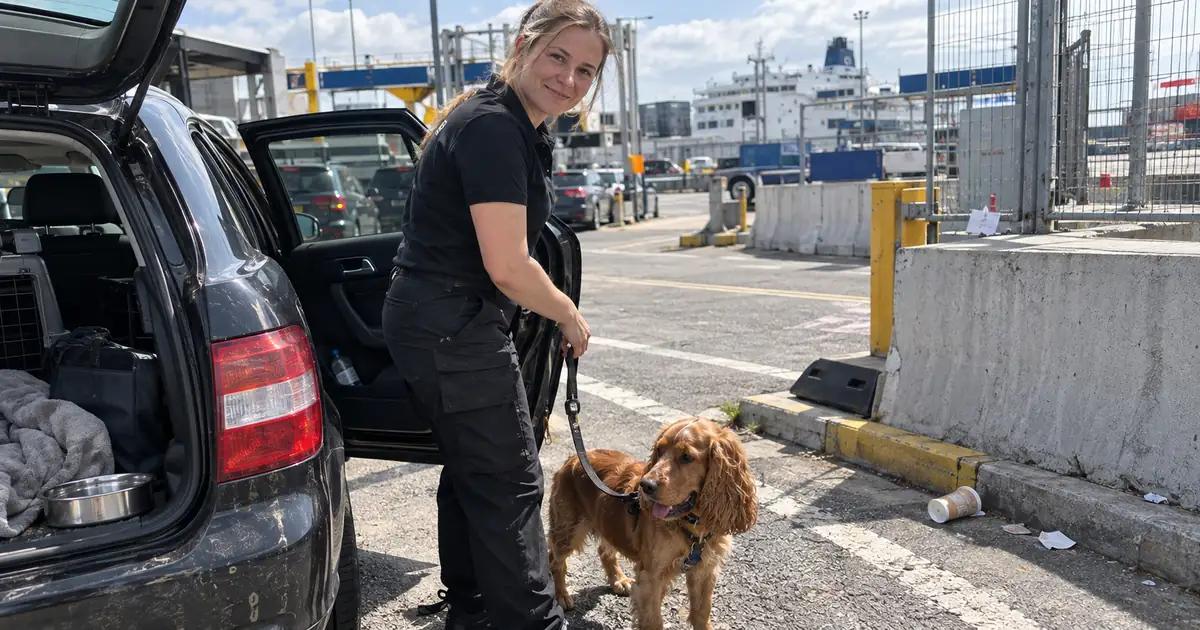
Pet handler preparing dog for Ireland ferry travel – Illustrative Image
Questions we get asked about taking dogs to Ireland
Does an assistance dog follow the same pet travel health rules for Ireland?
Yes. Assistance dogs still have to meet the pet travel health rules for Ireland, including the right document, rabies position and any dog-specific treatment rule that applies to the route.
Is there a charge for the checks when the dog arrives in Ireland?
The Irish Pet Travel Portal says there is no charge for compliance checks on pets entering Ireland from Great Britain. The costs to plan for sit earlier in the process, with the vet appointment and the certificate itself.
Has the Animal Health Certificate changed recently?
Yes, twice over. DAERA records that the 2026 update extended AHC validity for onward EU travel from 4 months to 6 months. GOV.UK carrier guidance also says a new AHC template was introduced on 22 April 2026, with old templates allowed to be issued by GB Official Veterinarians up to and including 30 September 2026. That is why guidance written before last spring can look convincing and still be out of date.
How young can a puppy be for a trip to Ireland?
GOV.UK says a vet needs proof that a pet is at least 12 weeks old before giving the rabies vaccination, and the wait afterwards is at least 21 full days. Those two rules together mean a puppy vaccinated at the earliest permitted point cannot travel until it is roughly 15 weeks old.
Can the same certificate be used for the next trip to Ireland?
The 10 day entry window means a certificate issued for one trip will not cover a separate trip weeks later. The 6 month periods apply to onward travel inside the EU and to re-entry to Great Britain, so one certificate can carry a single journey out and home without covering a fresh departure.