Does moving more than five pets from the UK become commercial?
Yes, it can. A genuine family relocation with six or more dogs, cats or ferrets can fall outside non-commercial pet travel rules if the move fails the number, timing or documentation conditions. “Commercial” describes the travel category, not proof that you are selling your pets.
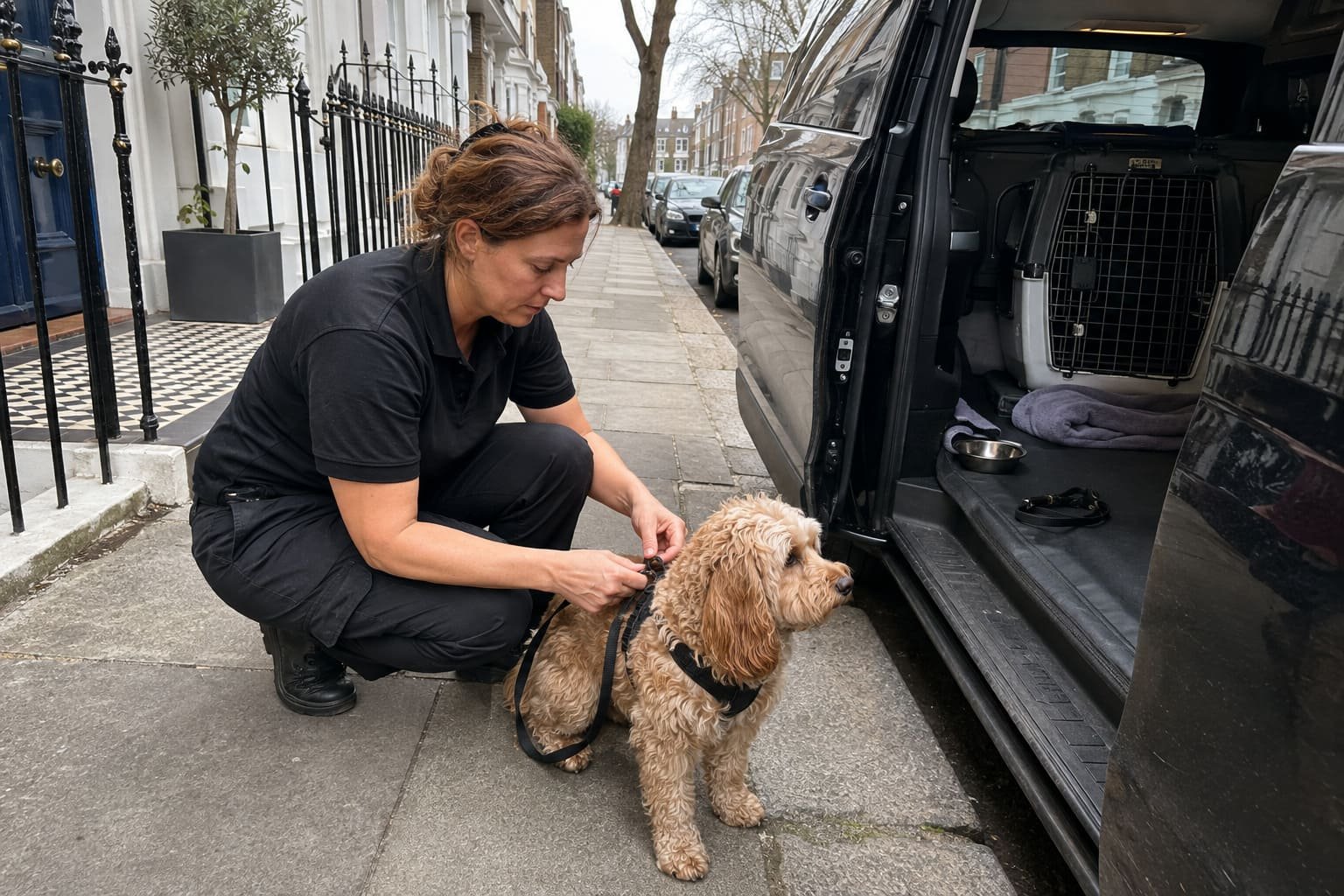
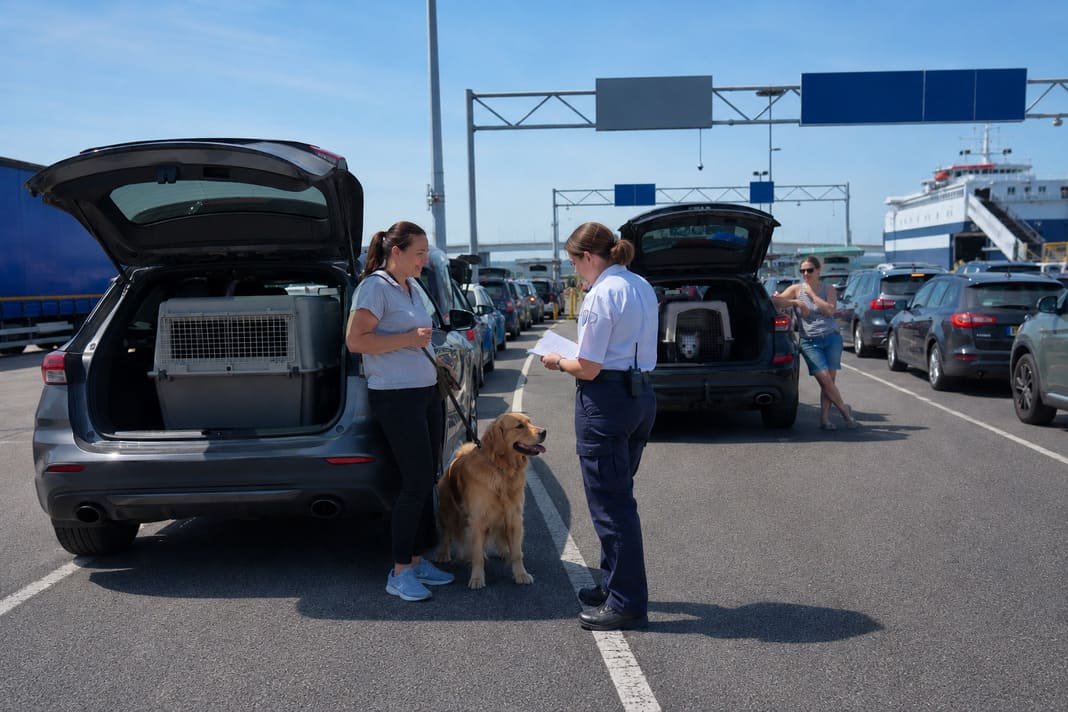
London pet transport professional preparing a dog beside the travel vehicle
Here's What We Have Covered In This Article
The first boundary is the travel category
From 22 April 2026, GOV.UK says new EU rules apply to Great Britain residents travelling to the EU with dogs, cats and ferrets for non-commercial movements. For a private vehicle, non-commercial travel from Great Britain into the EU is limited to a maximum of five pets.
That boundary matters because the document route must match the movement. An Animal Health Certificate, usually shortened to AHC, is the familiar document for many personal pet trips from Great Britain to the EU. Once the movement no longer fits the non-commercial conditions, an Export Health Certificate, usually shortened to EHC, can become the relevant route instead.
Here is the practical split we look at first:
| Ordinary non-commercial pet travel | Movement that may need a commercial route |
|---|---|
| The pets fit within the non-commercial limit and travel category. | The number of pets or travel arrangement falls outside that category. |
| The owner’s travel and pet travel align with the rules. | The owner travels separately outside the permitted timing, or another person handles the pet without the right authority. |
| The AHC route matches the facts of the trip. | The EHC route may be needed because the movement is treated under animal health rules for import or trade. |
| Border and carrier checks see one consistent story. | A mismatch between booking, documents and movement category creates refusal or delay risk. |
Personal intention still matters to you, of course. Authorities and carriers look at the facts of the movement, so the right first decision is the category before you commit to transport, vet documents or crossings.
Six pets changes how the whole move is assessed
Take a household relocating with six animals, all privately owned and all moving as part of the same family move. The owner’s instinct is simple: they are family pets, so the move feels personal. Family ownership matters emotionally, but category conditions matter operationally.
Once the number moves beyond the ordinary boundary, the booking can be looked at differently. A carrier may ask for a different compliance route, border staff may expect documents that match a commercial-purpose movement, and timing becomes harder to manage because several animals have to move through the same plan without gaps between paperwork and transport.
Splitting pets between people or vehicles is a common thought, but it is the wrong place to start. The current Great Britain to EU rule for a private vehicle is framed around a maximum number of pets per private vehicle for non-commercial travel, and the wider movement still has to make sense on paper. If the story created by the documents does not match what is happening, the risk has simply moved further down the line.
For a multi-pet relocation, welfare sits in the same conversation as compliance. Several animals travelling together need the route, handover points and timing to be controlled so the paperwork supports the actual transport plan. Before anything is booked, the move needs a category assessment.
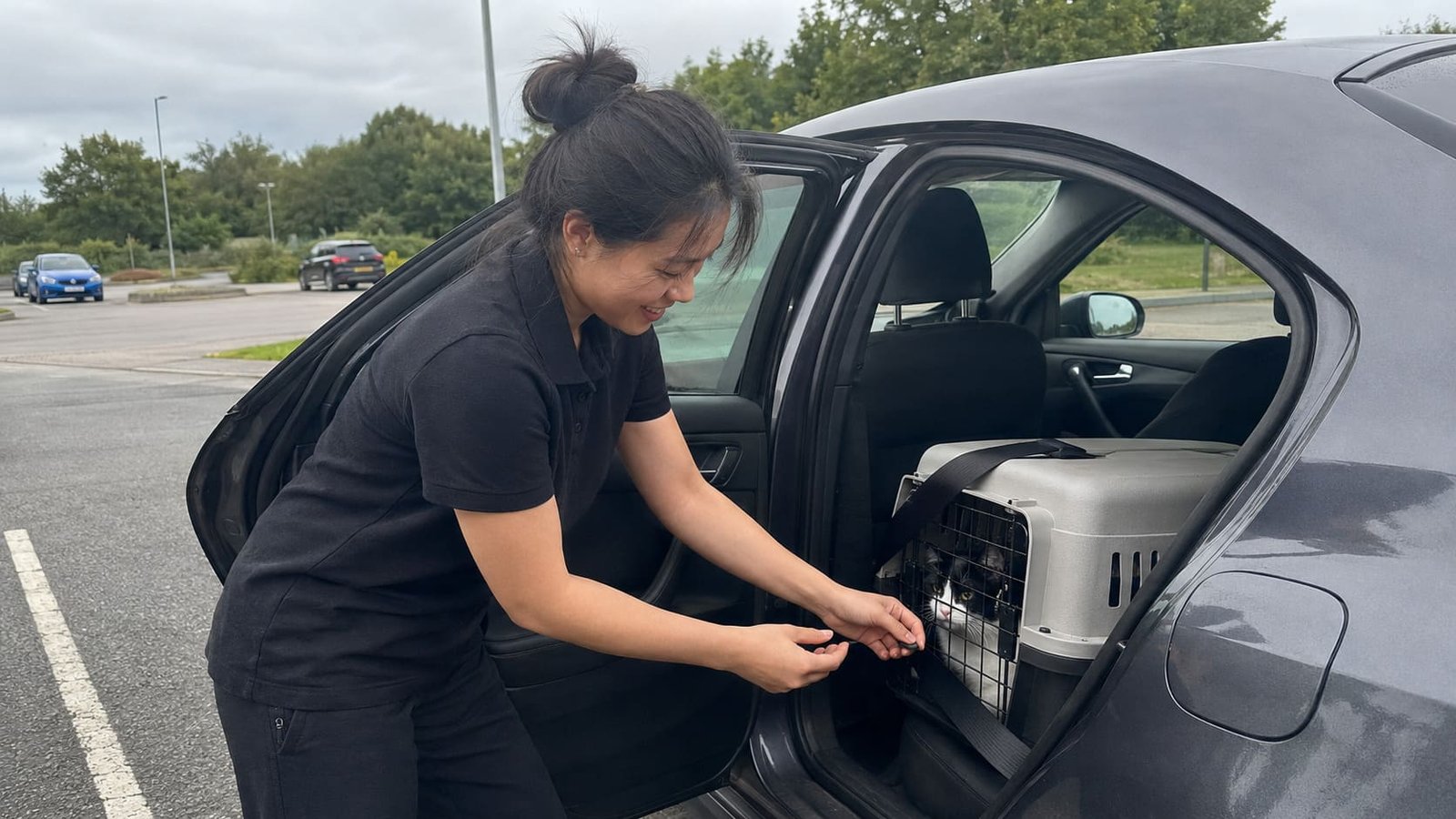
Pet travel handler secures a carrier with the vehicle seat belt.
The real exceptions and timing details are narrow
Which details actually change the answer? Only the ones the rules recognise, such as event proof, owner timing, authorised travel and whether ownership is changing. Reassuring facts, such as “they are all mine” or “this is for a house move”, do not replace the correct route.
Event exemptions need proof
The EU allows more than five dogs, cats or ferrets under non-commercial travel only where the owner can prove the animals are taking part in a competition, exhibition or sporting event, and the animals are more than six months old.
That is a narrow exception. A casual explanation at a crossing is not the same as proof linked to the event, and the exemption does not convert every large household move into ordinary pet travel. For relocation planning, we treat the event route as a specific category with evidence attached.
Authorised travel depends on timing
A pet can travel with an authorised person, but timing controls the category. GOV.UK says that if someone else travels with the owner’s pet, the pet must travel within five days of the owner and written permission must accompany the pet’s travel document.
That detail catches out owners who move first for work, housing or family reasons, then send pets later. A few days’ difference can change the compliance position, especially when several pets are travelling and one delay affects the rest of the plan. Tailored Pet Travel treats these timing points as category issues, because a signed note does not fix a movement that sits outside the allowed window.
Ownership changes alter the category
A change of ownership is different from a private relocation. If the animal is being sold, rehomed or transferred to someone else, the move can be assessed under a different route even when the animal is healthy, microchipped and vaccinated.
Destination rules add another layer. A plan that looks simple from the UK side can still need a different document or entry approach once the receiving country’s rules are applied. For that reason, the category check has to include where the pet is going, who owns the animal at the end, and who is travelling with it.
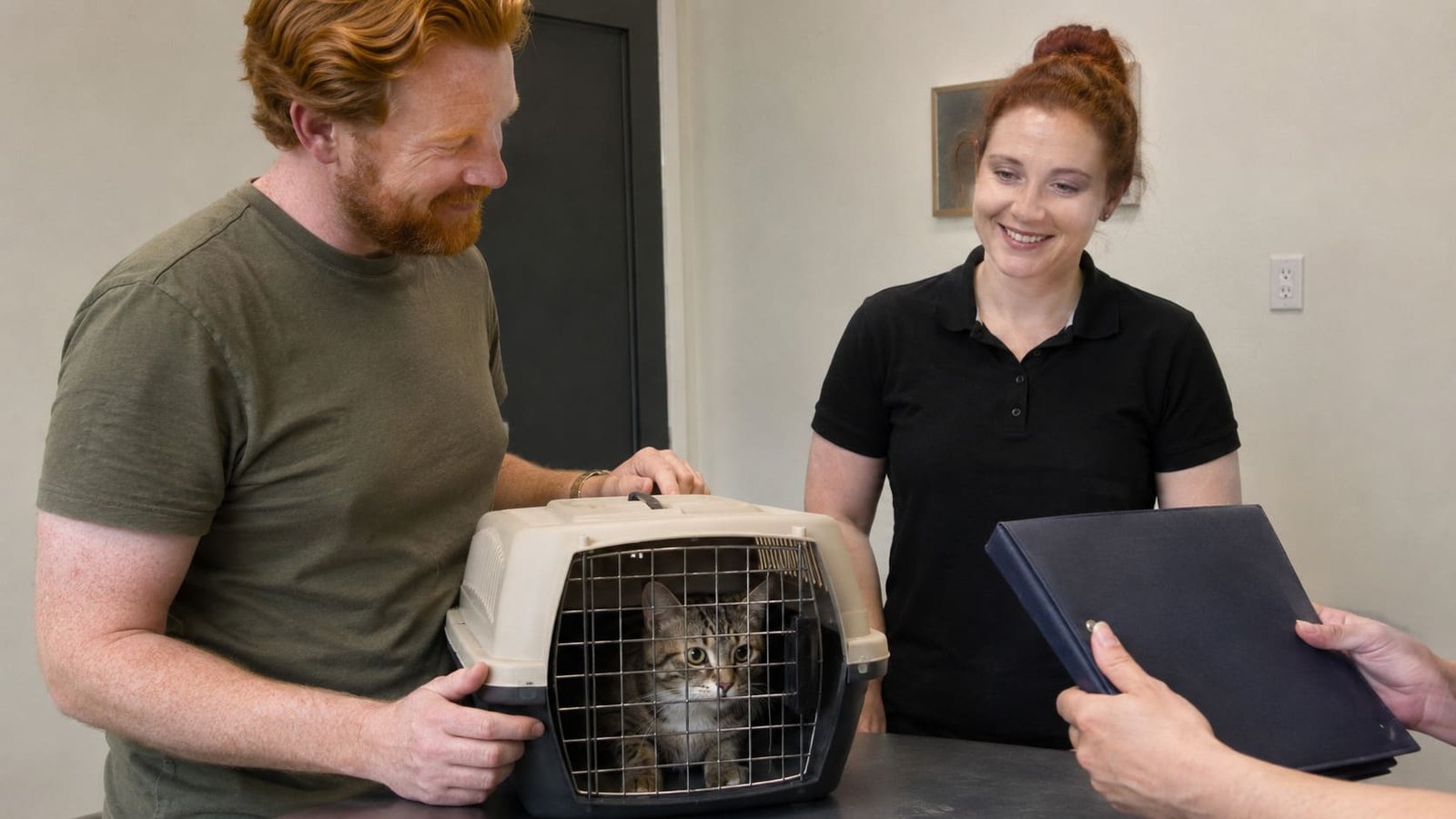
Owner and pet travel handler prepare a cat carrier together.
A commercial route changes the whole compliance plan
A commercial route is not a different form placed on top of an ordinary booking. Once the move is commercial-purpose, the documents, veterinary certification, transport plan and welfare arrangements need to line up as one controlled movement.
For dogs, cats and ferrets travelling from Great Britain to the EU or Northern Ireland for commercial purposes, GOV.UK and the Animal and Plant Health Agency list Export Health Certificate 8454 as active. The Animal and Plant Health Agency, usually shortened to APHA, is the body involved in animal health certification, and the certificate must be completed through the proper official route with an Official Veterinarian, meaning a vet authorised to certify export documents.
An AHC-led trip is built around non-commercial pet travel; an EHC-led movement is built around export conditions. That difference affects how we judge dates, crossings, vet input and animal handling, especially when the relocation involves several pets.
For complex multi-pet moves, Tailored Pet Travel focuses on keeping the category, documents and transport plan aligned. The value is control: the crossing, paperwork and welfare arrangements need to describe the same movement from start to finish.
The safest category is the one that matches the facts
A personal move can still need commercial-level oversight, so the safest label is the one that matches what authorities and carriers will see. Intention helps explain the move, but the category is set by the conditions around it.
Use this decision lens before you commit to a route:
- Start with the number of dogs, cats or ferrets travelling together.
- Check the travel arrangement, including whether the pets are in a private vehicle, travelling on foot, flying or using a managed transport service.
- Match pet travel to owner travel, especially if another person is accompanying the animals.
- Treat event exemptions as evidence-based, not assumption-based.
- Confirm that ownership is staying the same throughout the move.
- Check the destination rules before relying on the UK-side document route.
Once you see “commercial” as a category rather than an accusation, the problem becomes easier to judge. You are no longer trying to prove that your pets are family animals; you are checking whether the movement fits the route you plan to use. If those facts point to an EHC-led move, the task becomes controlled relocation planning, with documents, timing and welfare handled together.
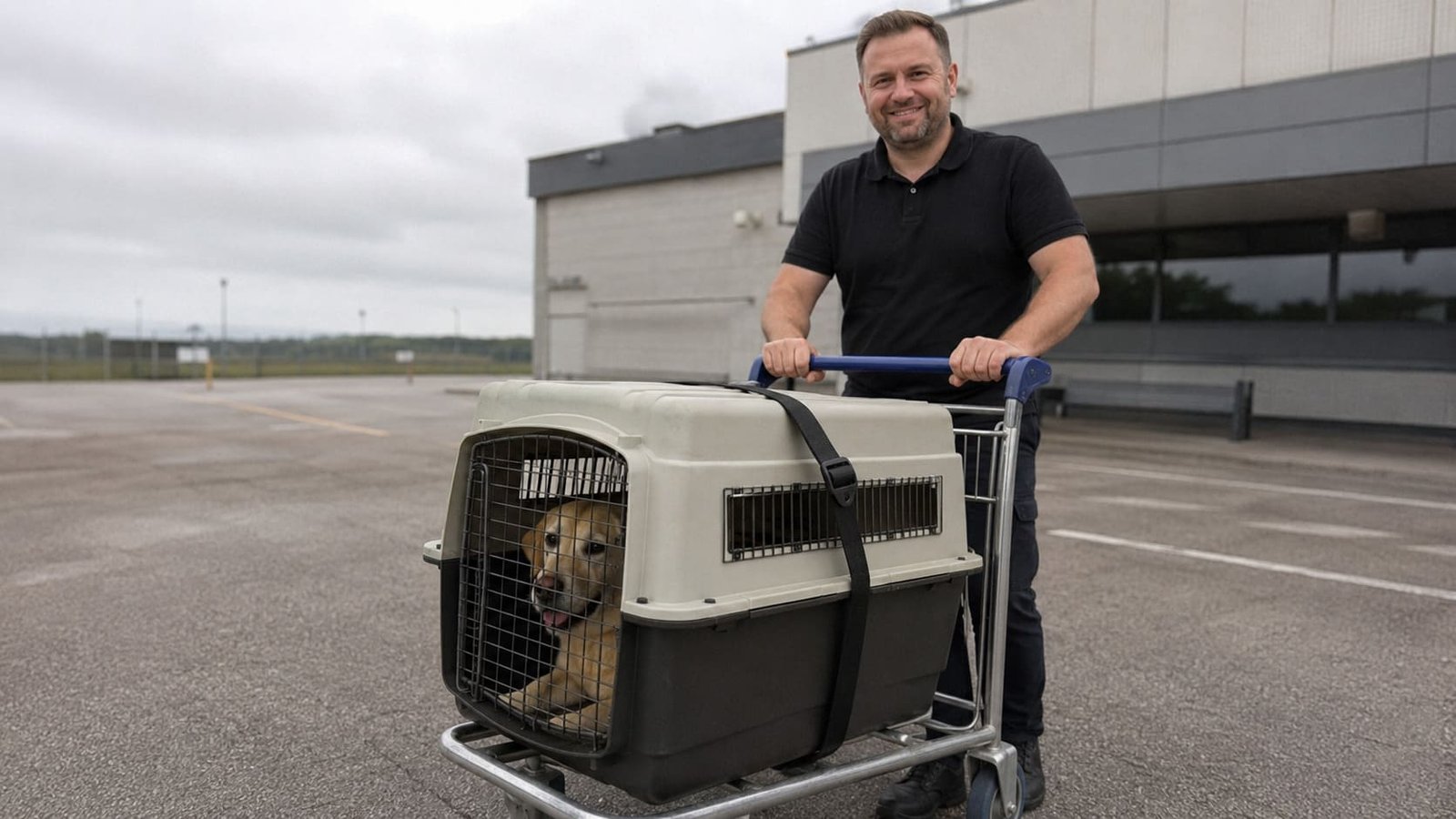
Pet travel handler pushes a secured dog crate across the airport.
Questions we get asked about multi-pet moves from the UK
Can I use an EU pet passport if I live in Great Britain?
GB residents should use an Animal Health Certificate when travelling from Great Britain to an EU country with a dog, cat or ferret. EU pet passports may now only be issued to people whose main home is in the EU.
Does one Animal Health Certificate cover onward travel after arrival in the EU?
An AHC is still single-use for travel from Great Britain to the EU. After arrival, it can be used for up to six months for onward EU travel and re-entry to Great Britain, provided the rabies vaccination remains valid.
What can happen if the documents do not match at EU entry?
If a pet fails EU compliance checks, the possible outcomes include return to the country of departure or quarantine until the pet complies with EU health rules. If neither option is possible, EU guidance also lists euthanasia as a possible last outcome.
Is Northern Ireland treated the same as an EU destination for commercial-purpose pet movements from Great Britain?
Commercial-purpose movements of dogs, cats and ferrets from Great Britain to Northern Ireland use the EHC route listed by APHA. The category still needs checking against the facts of the move, especially where several pets are travelling together.
This is general information, not professional advice.