

Could your dog or cat be held after arriving abroad?
Yes, your dog or cat could be held after arrival abroad if the destination country requires it or the import check fails. UK export paperwork only proves that your pet is prepared for entry elsewhere. The main risk sits in destination rules, timing, identity checks and paperwork.
Owners often search for UK pet export quarantine and end up reading the wrong thing. A pet leaving Great Britain is being exported, but quarantine happens under the importing country’s rules after arrival.
That matters because pet quarantine after moving abroad can mean several different things. Your pet might have a booked facility stay, a home quarantine condition, a short inspection, or a much longer hold because something did not match the entry rules.
We also need to separate dogs and cats from other animals. The clearest current rules in this area are for dogs and cats, so small animals need their own destination check.
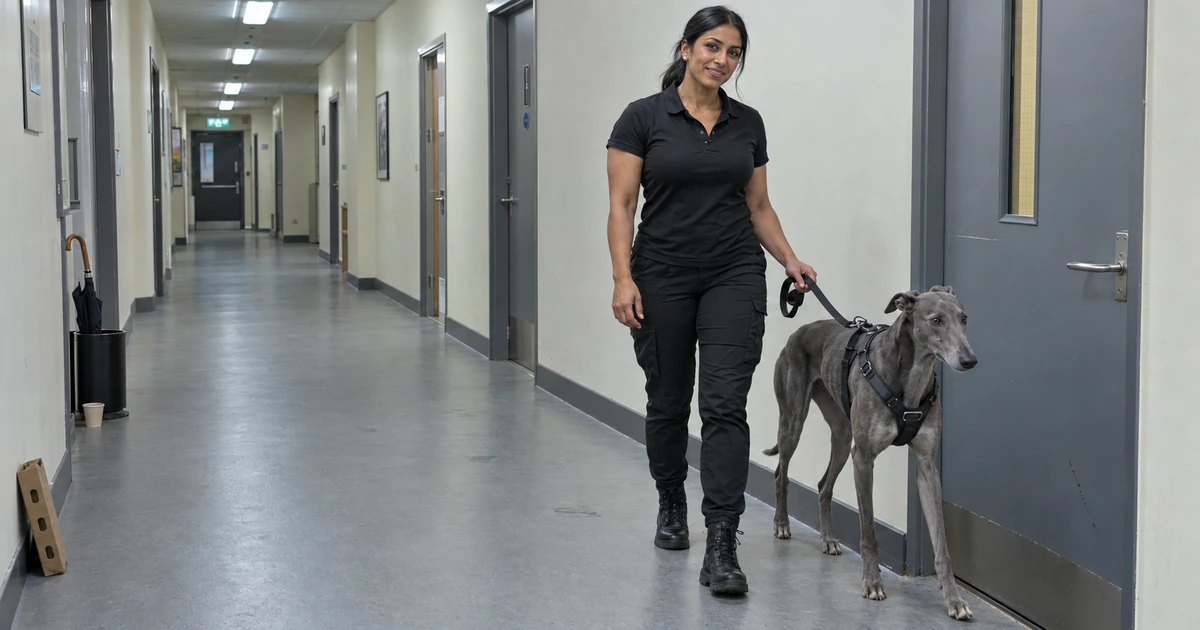
Pet handler walking a greyhound through an indoor corridor – Illustrative Image
Here's What We Have Covered In This Article
The destination decides the quarantine risk
Many owners start with “pets leaving the UK quarantine” and expect the UK process to answer everything. The destination authority decides quarantine, not the UK departure process.
For non-EU pet travel from Great Britain, an Export Health Certificate, usually called an EHC, confirms that your pet meets the health requirements of the country being travelled to. An OV, an authorised vet who can sign official export paperwork, completes that document under the UK export system, with APHA involved in the official process.
That document matters, but it does not take control away from the country your pet enters. A compliant UK departure can still lead to inspection, facility quarantine or border problems abroad if the destination rules are stricter.
We always start with two checks: where the pet is entering and which import category applies there. That gives a clearer answer than a broad search for pet import rules by country.
Why quarantine has several meanings
The word quarantine causes avoidable confusion because owners use it to describe any hold at the border. Quarantine can mean a booked facility stay, home isolation, short inspection or detention after a failed arrival, not one single outcome.
A planned post-entry stay is the version that changes your move most. It affects the date your pet can be released, the welfare planning around separation, and the cost of the relocation. Home quarantine is different because the animal stays under restrictions away from a state facility, where that system applies.
Facility quarantine is a post-entry stay
Facility quarantine is arranged around the destination’s rules before the pet travels. Australia and New Zealand are the obvious examples in this article because their dog and cat rules include official post-entry quarantine in named facility systems.
For you, the practical issue is space and timing. If a facility stay is part of the route, the travel date has to line up with quarantine availability and the documents have to match the arrival window.
Inspection and detention are different outcomes
Some countries use the word quarantine for an import inspection. Japan is the key example because a compliant dog or cat may clear the official import quarantine inspection quickly.
Detention is the serious outcome. It usually follows a compliance problem, such as an identity, timing or document issue. That is why the word quarantine is too blunt on its own. We look at what the destination actually does with the pet after landing.

Pet handler beside a secure cat carrier ready for travel – Illustrative Image
The country list is shorter than most owners expect
The countries that quarantine dogs from the UK are fewer than many owners assume, but the high-risk destinations need proper planning. For cats, the same point applies: the outcome depends on the destination’s current dog and cat import rules, the pet’s origin status, and whether every arrival requirement is met.
The table below compares destinations with planned quarantine and destinations where inspection or conditional quarantine is the main issue.
| Country or destination | Quarantine position for UK dogs and cats | Reader takeaway |
|---|---|---|
| Australia | Cats and dogs must complete post-entry quarantine at Mickleham. Current DAFF wording allows at least 10 to 30 days and up to 180 days where risk issues arise. Home quarantine does not apply to ordinary pets. | Treat Australia pet quarantine from UK as part of the move from the start. |
| New Zealand | Most cats and dogs need at least 10 days at an MPI-approved quarantine facility. The main exceptions stated in the current process are cats and dogs from Australia and assistance dogs. | Build New Zealand pet quarantine from UK into the first timing decision. |
| Singapore | Direct compliant UK dogs and cats are Schedule I and have no quarantine on arrival. Schedule II and Schedule III cases can involve home quarantine or the Animal Quarantine Centre, known as AQC. | Check origin, route and import type before assuming the result. |
| Japan | Compliant dogs and cats may clear import quarantine inspection within 12 hours. Non-compliant arrivals may be detained for a necessary period up to 180 days, and entry may be refused. | Treat paperwork accuracy as the main quarantine risk. |
This is not a full global list. It covers the destinations where current verified rules most often cause confusion for UK owners looking at moving pets abroad quarantine risk.
Small animals need extra care here. Rules for rabbits, rodents, birds, reptiles and other pets cannot be copied from dog and cat import rules.

Ginger cat in a travel carrier beside a pet handler – Illustrative Image
Why small timing errors change the outcome
A pet can have the right vaccine history and still face a worse quarantine result if the official identity check or paperwork timing fails to match the destination’s rule. That is where a routine pet relocation becomes a regulated move.
At Tailored Pet Travel, we treat quarantine destinations as regulated relocations because timing, identity checks and route handling all affect the outcome.
The risk points are usually practical:
- Official identity checks: Australia’s shorter quarantine route is tied to competent authority identity verification before rabies neutralising antibody titre testing, known as RNAT testing. Without the right order, the quarantine period can be longer.
- EHC timing: An EHC has to match the destination’s entry conditions. A certificate that is correct for export but out of line with the arrival rule still creates a problem.
- Import permit alignment: Where a permit is part of the import system, the permit, flight or route plan, and quarantine booking need to fit together.
- Route and origin history: Singapore shows why direct UK origin can matter. A change in route history or category can change the quarantine position.
- Quarantine space at arrival: Facility quarantine is a fixed part of some moves, so the pet’s arrival has to match an available place.
New Zealand also shows how arrival compliance affects release. If a cat or dog is not compliant, or if ticks or fleas are found, the pet may be held until requirements are met and quarantine is likely to be extended.
That is the point owners often underestimate. The rule on the page is only useful if the timing, identity record and arrival documents all point to the same answer.
The safest move is checked against current rules
Old pet travel advice can sit online long after the rule has changed. That creates a real problem for owners because international pet travel rules are date-sensitive, especially where quarantine, identity checks and import health standards are involved.
New Zealand is a good example. Its 2026 import health standard for cats and dogs came into force on 1 July 2026, with a transition from the older 2021 process. MPI also states that from 1 April 2027 all cats and dogs entering New Zealand must meet the new standard, including an official ID check at least 6 months before export.
For Tailored Pet Travel, the useful work is joining the rule check to the route, documents and welfare plan before travel is fixed. A quarantine move is manageable when current destination authority rules lead the planning, and weaker old guidance is left out of the decision.
The next pressure point for UK owners is already clear: current rule checks carry more weight than country labels, especially where new import health standards add earlier identity checks before travel dates are set.
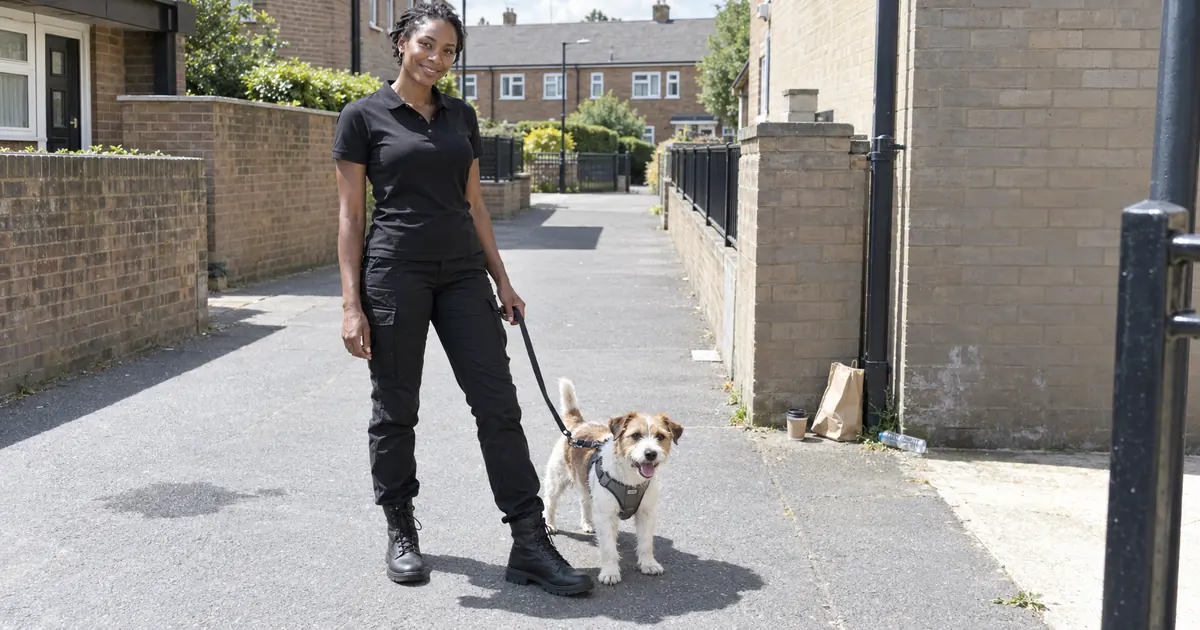
Pet handler walking a harnessed terrier along a residential street – Illustrative Image
Questions we get asked about pet quarantine abroad
Can I visit my dog or cat during quarantine abroad?
Visit rules depend on the destination and the quarantine facility. Some systems are strict about owner access, so we treat this as part of welfare planning before travel is booked.
Does a rabies blood test remove quarantine?
A rabies blood test can be part of the entry route for some countries, but it does not remove every quarantine risk by itself. The result has to fit the destination’s identity, timing and document rules.
Can small animals face quarantine after leaving the UK?
Small animals can face destination-specific import controls, but dog and cat rules should not be copied across to them. Rabbits, birds, rodents and reptiles need their own rule check for the country they are entering.
Can quarantine costs change after arrival?
Yes, costs can change if the quarantine stay is extended after a compliance problem. Australia is a clear example of cost pressure because DAFF estimates AUD 3,114 for one cat or dog undergoing minimum 10 days quarantine and AUD 4,234 for minimum 30 days quarantine.
What happens if a pet is refused entry after arrival?
The destination authority decides the outcome. Depending on the country and the issue, the pet may be detained, held until requirements are met, returned, or refused entry.