
1. Check your cat’s microchip is ISO 11784 or ISO 11785 compliant
Before making any travel plans, check that your cat’s microchip is readable by US border scanners. It must meet ISO 11784 or ISO 11785 standards. These are the formats accepted by US veterinary authorities at entry points.
Ask your vet to scan the chip using a microchip reader and confirm it’s working and linked to your current contact details. If it isn’t ISO compliant, they can advise on fitting a new one. DEFRA also recommends double checking your records and ensuring your pet’s ID tag matches the microchip number. This helps ensure entry scan compliance and avoids delays.

Here's What We Have Covered In This Article
2. Schedule your cat’s rabies vaccination at least 21 days before travel
Your cat must have a valid rabies vaccination at least 21 days before arriving in the USA. Booking this too close to your departure could result in complications or denial of entry.
It’s a good idea to arrange the jab 6 to 8 weeks before travel. This allows enough time for antibody development and paperwork. If your cat hasn’t been vaccinated before, ask your vet about titre testing or boosters. Check that your cat’s vaccine is one of those recognised under rabies vaccine for travel requirements. This ensures your cat meets vaccination rules for relocation.
3. Get a veterinary health certificate approved by APHA
Your cat needs an export health certificate signed by a qualified vet and approved by APHA. This confirms your cat is healthy and complies with US import requirements.
Book an appointment with an official veterinarian. Bring your cat’s rabies vaccination records, ISO microchip number, and any other travel documents. The vet will submit the veterinary certificate to APHA. Check how long the certificate stays valid and allow time for approval. Keeping all travel documentation in order helps avoid last minute issues and supports successful pet passport verification.
Pro Tip: Ask your vet to scan your cat’s microchip and confirm ISO compliance before applying for certificates.
Booking Flights for Your Cat?
Get advice on the best airlines and crate options for pet-safe journeys to the USA.
4. Book an airline that allows cat travel from the UK to the USA
Some airlines only allow pets as cargo while others may offer in cabin travel with a stopover. British Airways does not allow cats in the cabin. Airlines like Lufthansa or KLM allow in cabin travel but usually require a European layover.
Before booking, read the airline’s pet policy and confirm your cat’s eligibility. Ask the airline for written pet travel confirmation. Contact them again 72 hours before departure to recheck the animal booking confirmation. Heathrow Animal Reception Centre often handles checks for cats flying out of the UK. Understanding cat in cabin rules ensures you choose a flight with the right support for your pet.
5. Choose an IATA compliant crate that fits airline specifications
Your cat’s crate must meet IATA standards for international travel. It should be well ventilated, strong and the correct size.
Choose a crate with:
- Secure bolts
- Absorbent bedding
- Attached water bowl
- Labels with your contact details and the pet’s name
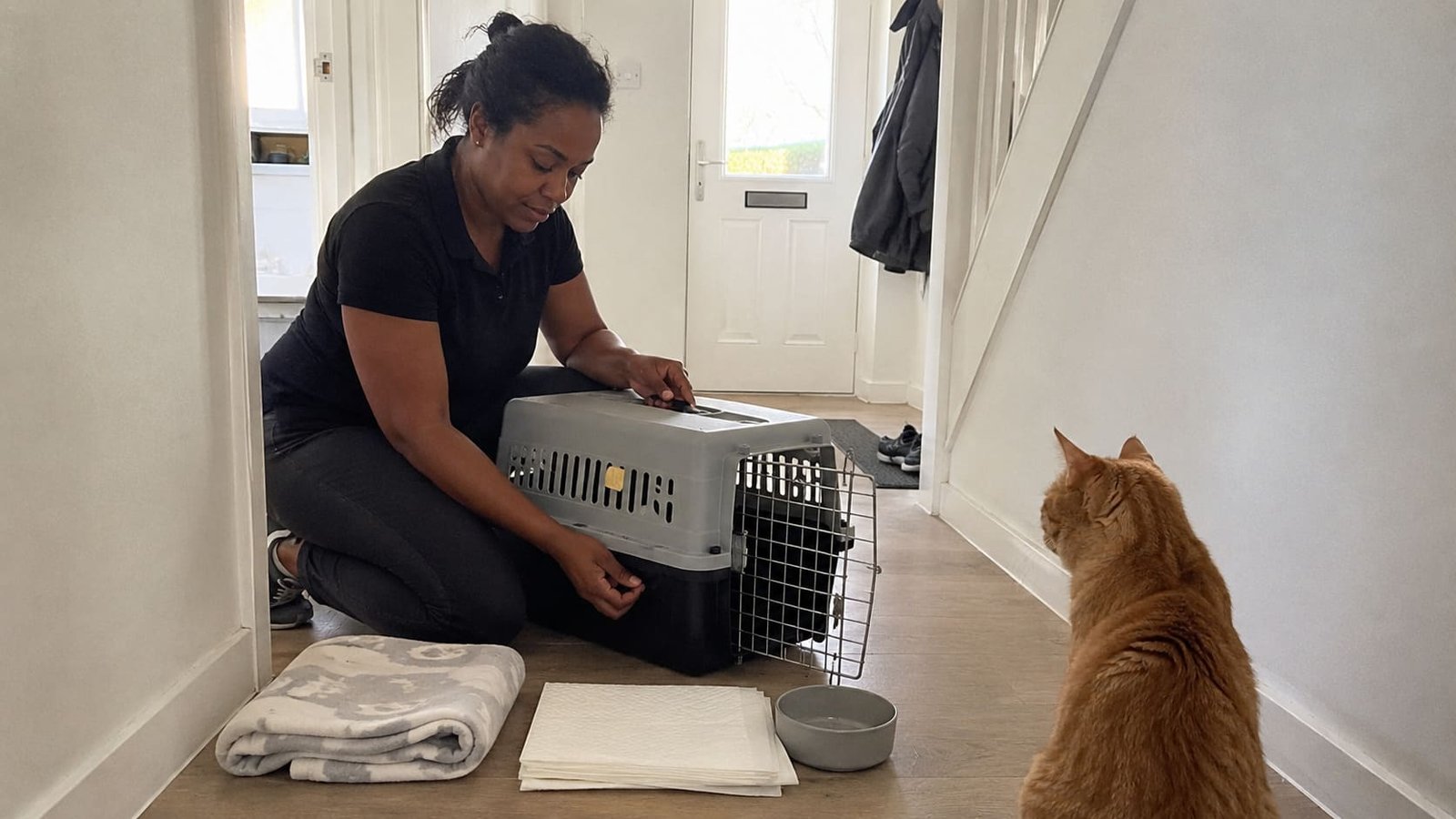
For in cabin flights, a Sherpa travel crate is often accepted. For cargo, select a crash tested carrier that protects your cat throughout the flight. Label the crate clearly to support airline approved carrier requirements. If unsure about sizing or options, check international cat crate guidelines through your airline.
Pro Tip: Print two copies of every pet document and keep one with your carry-on in a waterproof pouch..
6. Train your cat to feel comfortable in the travel crate
Crate training your cat helps reduce stress during long travel. Begin crate desensitisation at least 2 to 4 weeks before departure.
Try the following:
- Leave the crate open in a quiet spot with bedding inside
- Add familiar scents with your cat’s toys or blanket
- Feed meals inside the crate to create positive associations
- Use a pheromone spray if needed to encourage calmness
This gives your cat time to adjust naturally, making the crate feel more familiar and less threatening. These calm cat travel tips will support a smoother flight experience and reduce anxiety. For extra support, search guides on how to crate train your cat.
7. Confirm your cat’s space with the airline and print booking documents
After booking your own flight, confirm your cat’s pet booking separately. Pet cargo or cabin spaces are limited.
Ask for a pet travel reference or airway bill and ensure your cat’s details appear on the flight manifest. Confirm cargo slot availability for pets in the hold. Print two copies of the cat travel booking confirmation. One will be needed for check in, the other at collection.
Need Help with Pet Travel Paperwork?
Our pet relocation experts can handle everything from microchip checks to certificates.
8. Pack everything your cat needs for a safe and calm travel day
Prepare a cat travel kit ahead of time. It helps keep things calm and organised.
Your flying with pets checklist should include:
- Measured food portions
- Collapsible water bowl
- Copies of all required documents
- Comfort items like a blanket or toy
- Litter tray liner or pads
- Sedative free calming treats
Add hydration gel if the journey is long. Keep all paperwork in a sealed document pouch. Packing right reduces stress and ensures your pet’s safety.
9. Know where to collect your cat at the airport cargo terminal
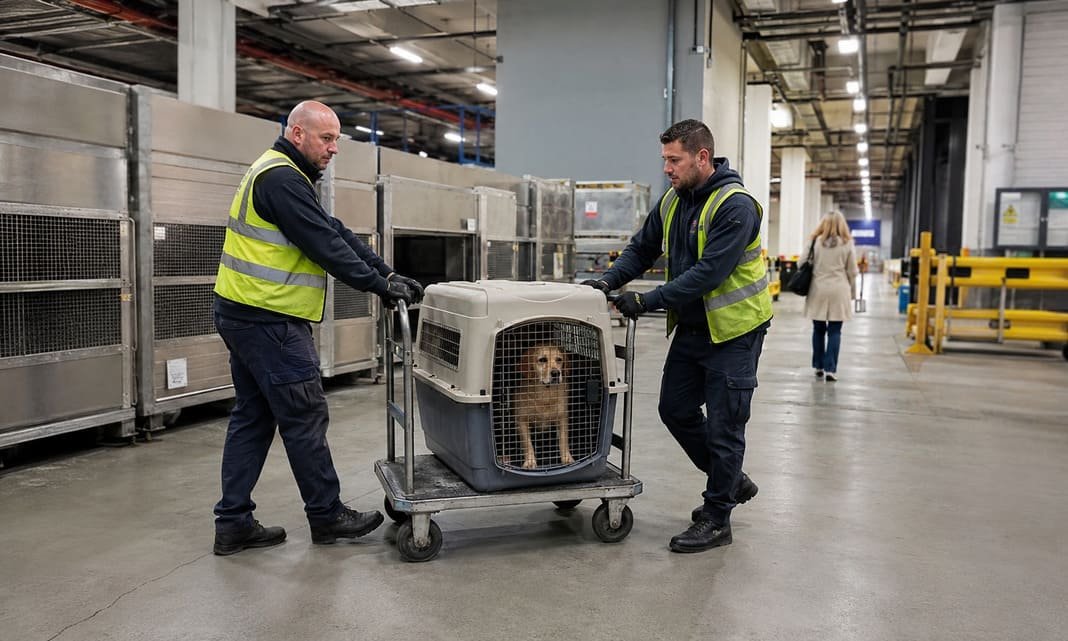
Cats arriving by air usually go through a cargo terminal. They don’t come out on the luggage belt or at passenger pick up.
At major airports like JFK or LAX, follow signage to the cargo gate. Bring your ID, pet documents and the airway bill. You may be asked to deal with a customs broker or pay a clearance fee. Be ready for an animal clearance check by CBP. Knowing the cargo gate address ahead of time avoids delays and smooths your pet cargo arrival process.
10. Help your cat settle into your new home with familiar routines
After a long flight, your cat may feel disoriented or stressed. Creating a quiet space helps them adjust.
To support post flight behaviour:
- Set up the litter box, food and bed in a quiet room
- Use the same blanket or toys from the crate
- Keep feeding times consistent
- Avoid new stimuli or loud noise
Let them explore slowly and at their own pace. Scent reassurance through familiar bedding helps them relax. Most cats settle within a few days, especially with a predictable environment.