Will your dog need documents for travel into Northern Ireland?
Yes, if you are a Great Britain resident taking your dog into Northern Ireland, you need a Northern Ireland Pet Travel Document. For Northern Ireland residents travelling to and from Great Britain, the core requirement is a microchip. Onward travel into Ireland or the EU changes the paperwork again.
The common mistake is treating Northern Ireland as one paperwork answer. It is safer to treat the route as a whole: who owns the dog, where the dog starts, where the dog finishes, and who travels with it.
Old travel habits also cause problems. A comment from someone who crossed before a rule change tells you very little about the document your dog needs now.
We look at the route first because the paperwork follows the route. Once that is clear, the rest becomes much easier to judge.
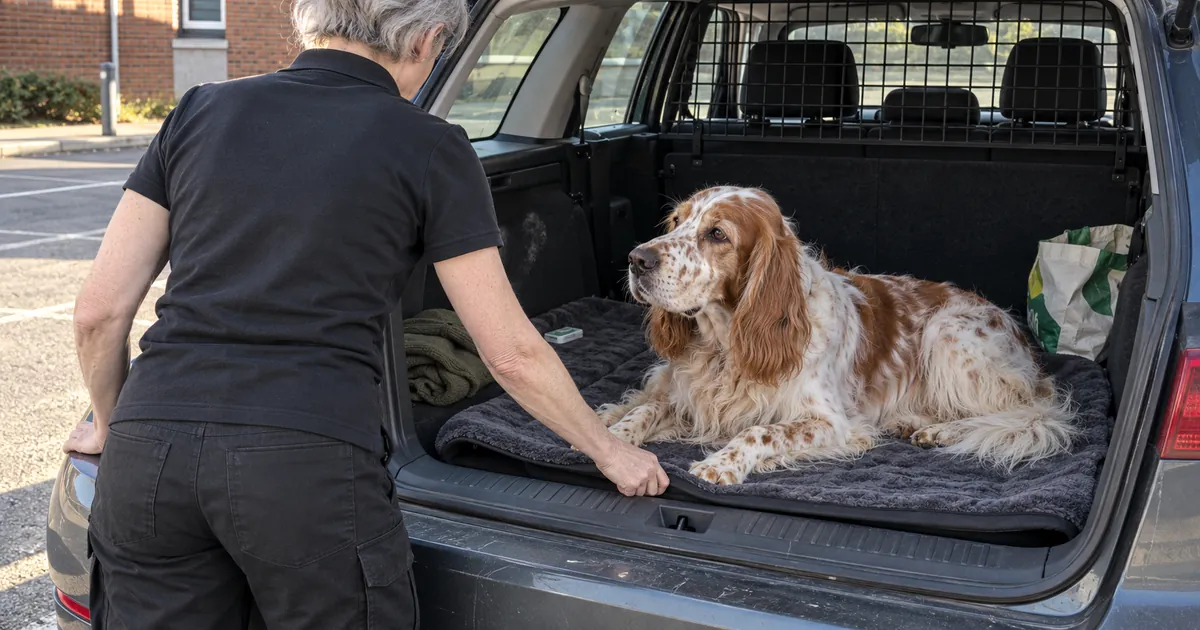
English Setter in Estate Car for Pet Transport – Illustrative Image
Here's What We Have Covered In This Article
The paperwork answer depends on residency and route
The same destination can create different paperwork answers. As of 8 September 2026, a Great Britain resident taking a dog, cat, ferret or assistance dog from England, Scotland or Wales to Northern Ireland needs a Northern Ireland Pet Travel Document, shortened here to PTD.
The table below compares the travel situation with the paperwork position.
| Travel situation | Paperwork position |
|---|---|
| Great Britain resident entering directly | Northern Ireland Pet Travel Document applies |
| Northern Ireland resident travelling to and from Great Britain | PTD sits outside that resident scenario. The pet must be microchipped |
| Travel continuing beyond Northern Ireland | Direct route paperwork covers too little for the full route |
| Someone else travels with the dog | Authorisation and movement category matter |
For a Northern Ireland resident travelling to and from Great Britain, the dog still needs a microchip. Travel from Northern Ireland to Great Britain has no checks under the current GOV.UK pet travel guidance.
Direct travel and onward travel also need separating. A dog going straight into Northern Ireland is in one category. A dog continuing into Ireland or another EU country has a different paperwork question, even if the first ferry or flight looks the same on your booking.
The safest starting point is simple: decide the whole route before you decide the document.
Direct journeys from Great Britain use the PTD
For a direct Great Britain to Northern Ireland journey, the paperwork is usually a Northern Ireland Pet Travel Document, not an Animal Health Certificate. That matters because many owners still use old language about pet passports, health certificates and generic pet paperwork for Northern Ireland.
A PTD is free to apply for and lasts as long as the applicant owns the pet. Each pet needs its own PTD, so one document does not cover a household of several dogs.
For that direct PTD route, the dog must be microchipped. Rabies vaccination and tapeworm treatment sit outside the PTD requirement for that direct Great Britain to Northern Ireland trip.
The document still has to match the animal in front of the scanner. That is why Tailored Pet Travel starts by checking whether the route is truly direct or part of wider travel before treating the PTD as the right answer.
The Animal and Plant Health Agency is the public body named for PTD application help. We keep that separate from route planning, because getting the right form is only useful when the form matches the route.
West Highland Terrier on Lead Before UK Pet Travel – Illustrative Image
Why onward travel changes the document
A route can look like Great Britain to Northern Ireland on the first booking and still end somewhere else. Once the dog continues from Northern Ireland into Ireland or another EU country, the paperwork question changes.
A PTD covers the direct Great Britain to Northern Ireland case. For onward travel into Ireland or another EU country, an Animal Health Certificate becomes relevant under DAERA guidance. DAERA means the Department of Agriculture, Environment and Rural Affairs.
That difference is easy to miss because the dog may pass through Northern Ireland first. We would still plan from the final destination backwards, because the last border point can decide whether the first document was enough.
EU pet passport assumptions also need care. GOV.UK says EU pet passport rules changed on 22 April 2026 for some Great Britain residents using EU pet passports, so old advice can lead you to the wrong document.
Treat Northern Ireland and onward EU travel as separate paperwork questions from the start.
Basset Hound Collection for Northern Ireland Pet Travel – Illustrative Image
Ferry, flight and microchip checks can still decide the travel
Arriving for a ferry or flight with the right document is only useful if the dog’s microchip matches that document. The check turns paperwork into a practical pass or problem at the travel point.
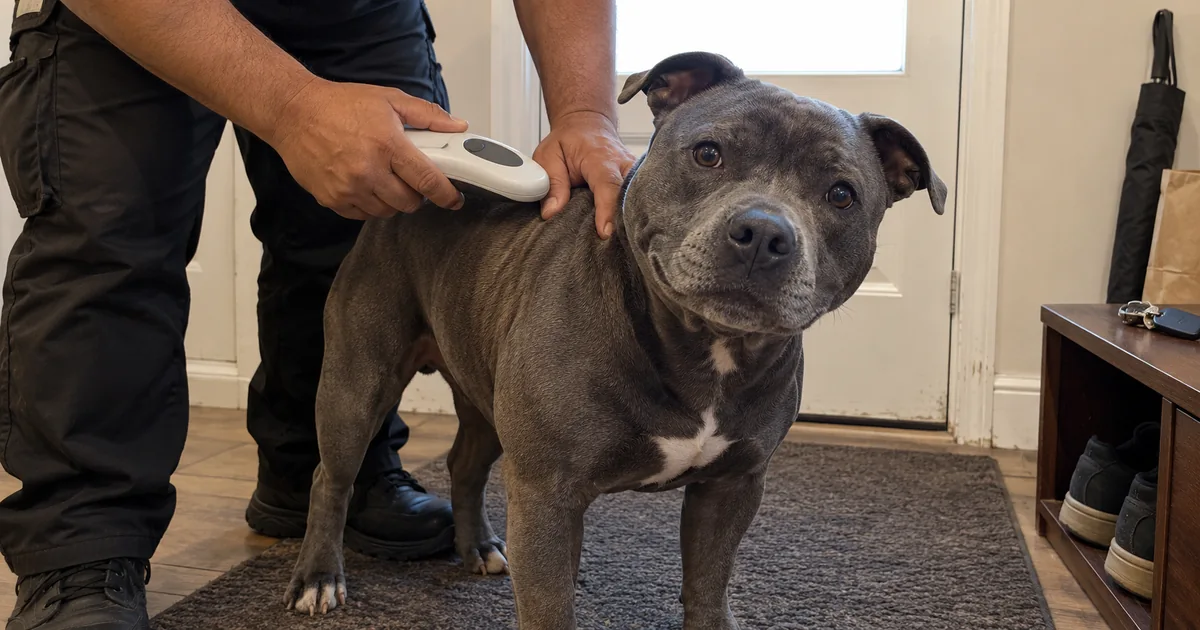
For ferry travel from Great Britain, the dog’s microchip must be scanned at the port before departure using the scanner provided. At an airport, the microchip is checked against the PTD there.
Key friction points are simple to name:
- Microchip match. The number on the dog and the number on the PTD need to line up.
- Ferry issue on arrival. If there is a microchip problem on a ferry route, the owner must go to a Sanitary and Phytosanitary Inspection Facility at Belfast or Larne.
- Air notification. For a flight from Great Britain to Northern Ireland, the traveller must tell DAERA at least 10 working days before travel.
Forum comments about whether checks happened on someone else’s crossing should not shape your plan. The official position includes document and microchip checks, so we work from that position.
For Tailored Pet Travel, the document and the dog are treated as one check. A correct document with the wrong microchip detail still creates a preventable problem.
The right help keeps the travel in the right category
Someone else can take your dog to Northern Ireland where the authority is set up correctly. The question then becomes who is travelling with the dog and whether the movement still fits the right category.
Authorised people
An authorised person can travel with the dog after the owner has the PTD. That person needs the PTD, written approval from the owner, and a signed declaration at the ferry port or airport.
GOV.UK gives examples of an authorised person, including a family member or pet courier. In normal language, that means the dog does not always have to travel with you personally, provided the authority and document position are right.
This is where owner responsibility still matters. Handing the dog to someone else does not make the paperwork disappear.
Commercial classification
Using a pet handler can still sit within non-commercial travel. It does not automatically turn the journey into a commercial movement. DAERA says non-commercial travel can include an authorised agent, including a friend or pet travel company, where ownership stays the same and the pet travels no more than five days before or after the owner.
Classification changes when the facts change. A movement can be treated as commercial where there is a change of ownership, where pets travel more than five days before or after their owners, or where more than five pets move at one time. A change of ownership can count even where no money changes hands, such as free rehoming.
The common misconception is that “a pet handler is involved” makes the travel commercial. The real test is ownership, timing and how many pets move, so assuming the category from the person holding the lead is the mistake to avoid.
Shetland Sheepdog at Ferry Terminal for Pet Travel – Illustrative Image
Questions we get asked about dog paperwork for Northern Ireland
Who answers PTD application questions?
The Animal and Plant Health Agency is the body named in public guidance for PTD application help. We treat that as application support, separate from planning the route and checking whether the PTD is the right document.
Does the rule change date matter if your dog travelled this route before?
Yes. The Northern Ireland Pet Travel Scheme applies from 4 June 2025, so an older trip does not prove the same paperwork answer applies now. Current route direction and residency matter.
Can one PTD cover two dogs owned by the same person?
No. Each pet needs its own PTD, even when the same owner is travelling with more than one dog.
Does an assistance dog follow the same Northern Ireland paperwork route?
Yes, the PTD rule for Great Britain residents entering Northern Ireland applies to assistance dogs as well as pet dogs, cats and ferrets. The document still needs to match the animal’s microchip.
Should you decide the paperwork before booking transport?
Yes. Transport choice can affect checks, timing and responsibility, especially for flights or handled travel. Booking first can leave you trying to fit the paperwork around a route that needed a different plan.