
How can you crate train a puppy in a calm, gentle and effective way?
Crate training can be a positive and reassuring experience for both you and your puppy. With patience and a kind approach, your puppy will begin to see their crate not as a cage but as a comforting place they choose to rest. Think of it like a child’s bedroom. It is a space of peace and predictability that supports day-to-day calm and prepares them for vet visits, journeys and overnight stays.
Here's What We Have Covered In This Article
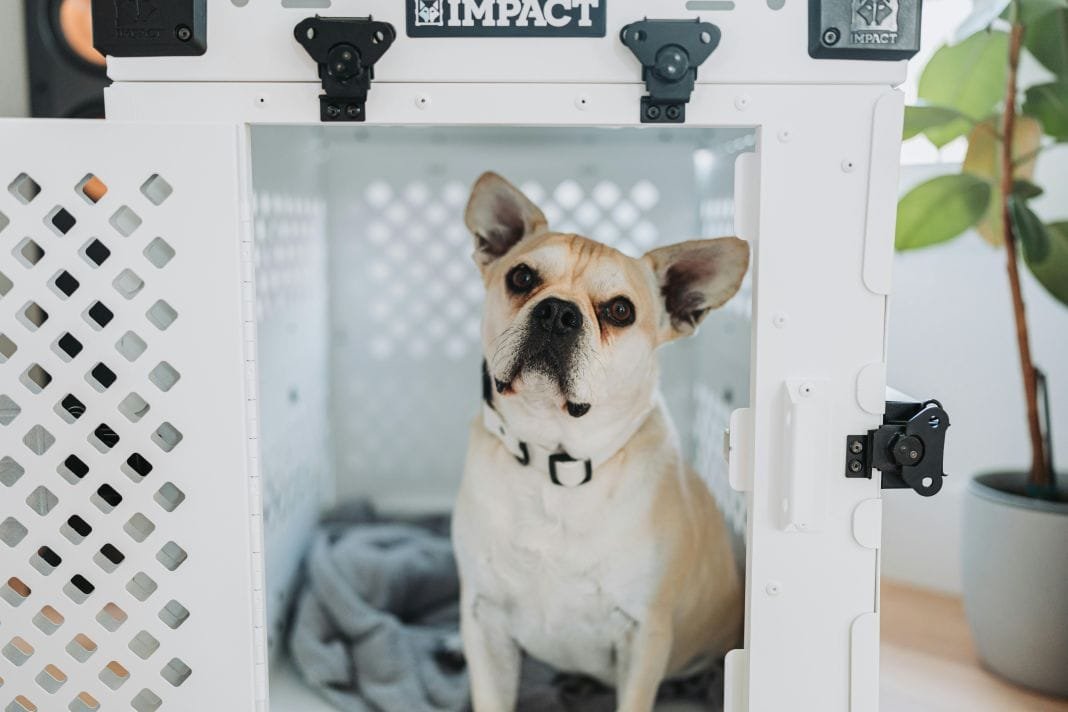
Why Gentle Crate Training Builds a Calm, Confident Puppy
A crate introduced with care becomes a secure little base camp. Puppies learn to self-soothe, rest when overstimulated and find calm in familiar surroundings.
Using harsh methods that involve leaving a puppy to cry teaches fear. In contrast, calm crate training builds trust. The crate becomes a safe, predictable space, and the puppy learns to trust their owner too.
Crate comfort introduced early on supports travel, vet visits and changes to routine. A puppy that feels calm in their crate will be more confident wherever they go. This is one of the main benefits of crate training a puppy.
How Puppies Experience Crates: Stress, Comfort and Early Learning
To a young puppy, a crate is something new. Without help, it may seem strange or unsettling. That is why gentle introductions matter.
Puppies make sense of the world through scent, sound and routine. Their body language can reveal over-arousal: yawning, lip-licking or pacing. These signals tell you when to slow down.
Learning to spot the difference between mild protest and genuine distress helps. A tired pup may grumble before dozing off. A panicked pup may cry sharply, salivate or scratch. Knowing the signs keeps the process kind and on track. This is how stress-free crate training becomes possible.
Pro Tip: If your travel dates fall in summer or winter, ask the airline about temperature embargoes early.
Speak to a Pet Transport Expert
Unsure where to start? Talk to someone who’s helped hundreds of pets travel safely.
Setting Up the Crate for Success: Home Comforts and Travel-Ready Choices
Pick a crate that gives your puppy space to stand, lie down and turn comfortably. If travel is likely, start with one that meets International Air Transport Association (IATA) standards or those set by DEFRA.
To make it feel familiar, line it with soft bedding and add a blanket that smells of home. Include a safe chew item. Some puppies relax more with a light cover. Just be sure there is enough ventilation.
Place the crate in a quiet, steady area near household sounds but away from heavy footfall. A calm environment supports comfort now and builds confidence for future travel. Proper crate ventilation, location and size all matter, especially when preparing for journeys.
First Stage: Teaching Happy, Door-Open Crate Confidence
Begin with the door open and no expectations. Drop a few treats inside and let your puppy explore at their own pace.
You can feed them near or in the crate. Turn it into a game. When your puppy chooses to step inside, praise them gently.
Signs of calm include soft eyes, floppy ears and lingering inside without prompting. All of these mean they are starting to see it as their space. That is your green light to continue. This phase is key for calm crate training for puppies.
Second Stage: Closing the Crate Door Without Causing Distress
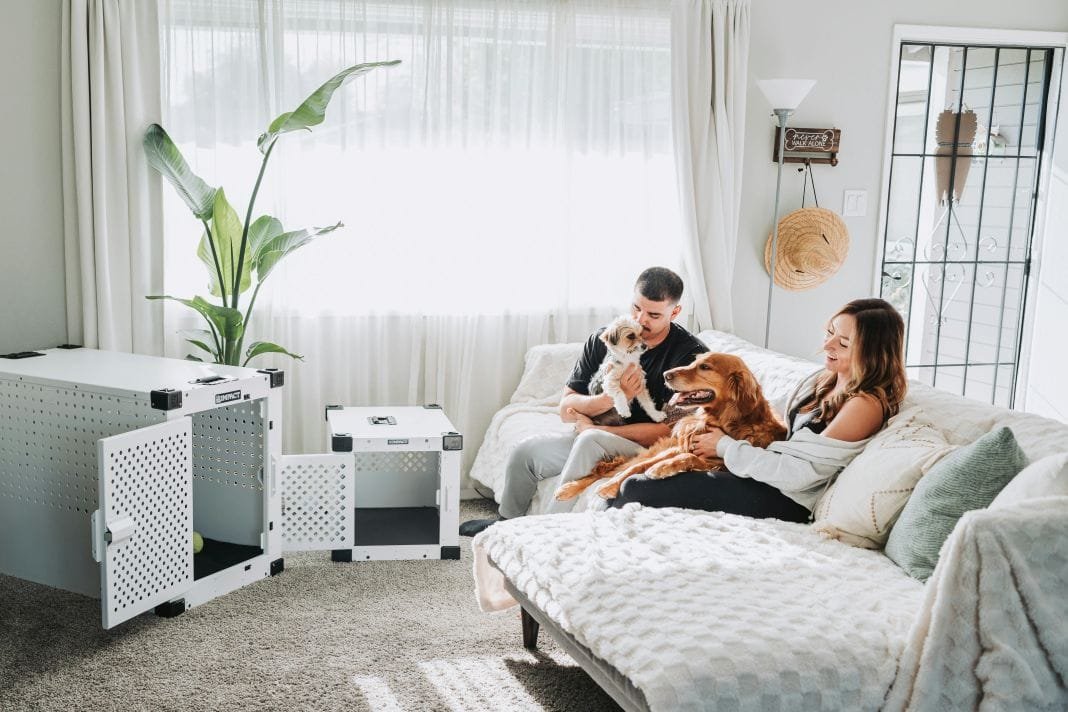
Once your puppy enjoys spending time inside, gently begin to close the door. Only do this for a few seconds at first, ideally while they are busy with a favourite chew or treat.
Stay close by. Count slowly, then open the door before they fuss. This helps them learn the door is not a trap and they have not been left alone.
With time, start moving about while they remain relaxed. Reinforcing the crate as a calm space, even with the door closed, helps prevent panic later. This avoids the stress many associate with crate training.
Third Stage: Building Duration, Independence and Settled Crate Behaviour
As confidence builds, use natural nap windows to extend crate time. Begin stepping out of sight for a few minutes and return before they worry.
Stick to a loose routine such as play, toilet, crate with a chew, then rest. This rhythm builds predictability and helps puppies settle without needing you nearby.
Over time, many puppies nap soundly in the crate even with background noise or mild activity nearby. This skill will support future independence and ease of travel. Gradually increasing how long a puppy stays in a crate helps avoid resistance and supports crate confidence.
Get a Custom Pet Travel Quote
Tell us your route and pet details, and we’ll break down exactly what it will cost.
Night-Time Crate Training: Soothing Routines That Help Puppies Sleep
Evenings often feel more emotional for both puppy and owner. A gentle night-time routine makes a real difference.
Let them toilet, then help them wind down with dim lights and quiet surroundings. Keep the crate nearby, especially in the early days.
If your puppy wakes, take them out calmly and guide them back to the crate without interaction. As nights get easier, you can gradually shift the crate’s location.
Should I cover my puppy’s crate at night?
You can lightly cover the crate with a breathable blanket if it helps your puppy settle. Just make sure it does not trap heat or block airflow. Some puppies sleep more soundly with less visual stimulation.
Understanding Crying and Whining: What’s Normal and What Needs Adjusting
Puppies make noise, but not all noise signals distress. A short grumble can mean “I am not tired yet.” Constant, high-pitched crying with other signs of stress means something is wrong.
Watch for salivating, frantic movement or scratching. These cues often mean your puppy needs a break, more reassurance or a different training pace.
Always respond calmly. Whether you shorten crate time or adjust the environment, your puppy learns more from your patience than your silence. If you are unsure, consulting a qualified canine behaviourist can help you fine-tune your approach.
Pro Tip: Double check your pet’s measurements before ordering a crate. Guessing can lead to costly last-minute upgrades.
Crate Training for Busy Families: Routines That Work With Real Life
Real life is full of school runs, work calls and errands. You do not need perfect timing. You just need flexibility and consistency.
Use short sessions throughout the day, such as after breakfast or before you leave the house. Puppy-proofed rooms or playpens can help when crate time is not practical.
If you need help, lean on support from family, neighbours or professional pet sitters. Crate training can still work, even with a busy schedule. Start building up crate duration weeks ahead of any planned travel for best results.
When Crate Training Goes Backwards: Resetting Without Starting Over
Progress is not always straightforward. Maybe something spooked your puppy, or crate time went on too long. It happens.
Go back to basics. Open the door, sprinkle treats inside and sit nearby while your puppy rebuilds comfort. Trust often returns more quickly the second time.
If you are seeing resistance that lasts, speak to a vet or behaviourist. Small changes and kind timing can make a big impact. Look for help from professionals who follow RSPCA or APBC-endorsed guidance.
Preparing for Future Travel: Why Crate Familiarity Reduces Stress
Each calm crate moment now is a step towards a smoother travel experience later. Dogs that feel safe in their crates tend to handle motion, noise and new environments better.
Practise early. Let your puppy rest in the crate inside the car with the engine off. Later, take short drives followed by praise and downtime.
Help your puppy get used to gentle handling, changes in movement and unfamiliar people in safe ways. This is especially important before using any professional pet travel service.
How Professional Pet Travel Teams Use Crates to Keep Dogs Calm in Transit
On travel day, your dog’s crate is not just transport. It is comfort. Smells from home, a familiar routine and positive crate habits help them stay relaxed.
Teams like Tailored Pet Travel use this foundation to make long journeys feel manageable. Their role is practical, but your early work makes it possible.
By the time your dog is in transit, that crate is a space they know and trust. The calm you build today travels with them.
Final Reassurance: When to Seek Extra Help for Crate or Travel Worries
You care. That is clear. And sometimes, even with the best effort, you hit a wall. If your puppy still panics or avoids the crate, you do not have to figure it out alone.
A good behaviourist or vet can help. Look for those who use reward-based methods and focus on emotional wellbeing. If needed, ask whether they follow ABTC, RSPCA or APBC welfare guidelines.
And if you are planning a future journey, teams like Tailored Pet Travel can help with the logistics so you can focus on your dog’s comfort.
Crate training is not about rules. It is about respect, patience and a puppy who knows they are safe, no matter where they are.