How do you measure your pet for an airline-approved travel crate?
To measure your pet for airline travel, you need to take four specific dimensions while your pet is standing in a natural position. These measurements are the length from nose to tail base, height from the floor to the top of the head or ears, width across the shoulders, and leg height from the ground to the elbow. Once recorded, these are used with IATA’s formulas to determine the correct crate size that ensures comfort and airline compliance. Check out our crate hire page here.
Traveling with your dog or cat requires planning, especially when flying. One of the most overlooked yet critical tasks is making sure your pet fits comfortably in an airline-approved travel crate. A correctly sized crate is not just a travel requirement. It is vital for your pet’s physical comfort, mental well-being, and safety throughout the journey.
At Tailored Pet Travel, we guide UK-based pet owners through the exact steps to measure their dog or cat, select the appropriate crate type, and comply with both international (IATA) and airline-specific regulations.

Here's What We Have Covered In This Article
Why correct measurement is important
Crates that are too small can cause discomfort, increase stress levels, and be rejected at check-in. A crate that is too large compromises stability and may not be allowed onboard. Airlines require that your pet be able to stand, lie down, and turn around naturally. Additionally, snub-nosed breeds have unique requirements for crate sizing and ventilation.
What you need before you begin
To measure your pet accurately, gather:
- A flexible measuring tape or string
- A flat wall or vertical surface for reference
- Paper and pen or a digital device for recording measurements
- A calm, standing pet positioned in a natural posture
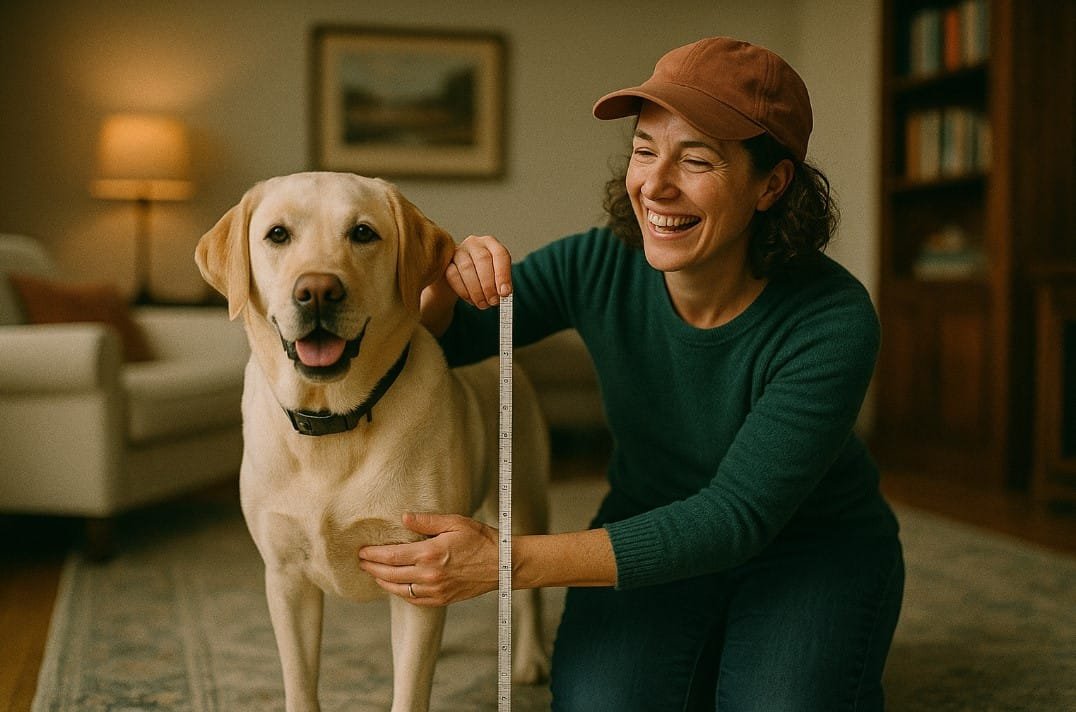
Step-by-Step Pet Measuring Guide
Step 1: Length (A) – Nose to Tail Base
Measure from the tip of your pet’s nose to the base of the tail. Do not include the tail length. Ensure the pet is standing straight.
Step 2: Leg Height (B) – Elbow to Ground
Measure from the floor to the elbow joint. This accounts for front leg clearance and is used to calculate crate length.
Step 3: Width (C) – Across the Shoulders
Measure across the widest point of the shoulders or chest. This ensures your pet has enough lateral space inside the crate.
Step 4: Height (D) – Top of Head or Ears to Floor
While your pet stands naturally, measure from the ground to the top of the head or ear tip, whichever is higher. Include the thickness of any bedding if you intend to use pads inside the crate.
Pro Tip: Always include the thickness of the bedding when measuring crate height. This small detail often causes rejections at airport check-ins.
Check Your Crate Size Compliance
Use our checklist to make sure your crate meets airline and IATA standards before travel.
Crate Sizing Formula (IATA Standard)
Use the measurements A, B, C, and D to determine the minimum internal dimensions of the travel crate:
- Length = A + 0.5B
- Width = C x 2
- Height = D + 7.5 cm (3 inches)
This formula aligns with IATA guidelines. For brachycephalic (snub-nosed) breeds such as Bulldogs, Pugs, or Persians, it is recommended to increase each dimension by a minimum of 10 percent to allow for adequate airflow.
Crate Size by Breed Chart
Choosing a crate based on breed averages is helpful when measuring is difficult. Below are general guidelines:
Small Dogs and Cats
- Breeds: Dachshund, Shih Tzu, Siamese
- Suggested Crate Size: 48 x 33 x 33 cm (Small – IATA Type 100)
Medium Dogs
- Breeds: Cocker Spaniel, Beagle
- Suggested Crate Size: 68 x 50 x 48 cm (Medium – IATA Type 200)
Large Dogs
- Breeds: Labrador Retriever, Boxer
- Suggested Crate Size: 81 x 56 x 59 cm (Large – IATA Type 400)
Extra Large and Giant Dogs
- Breeds: German Shepherd, Great Dane
- Suggested Crate Size: 102 x 69 x 76 cm (Giant – IATA Type 700)
Exact crate sizes must always be confirmed against your pet’s own dimensions.
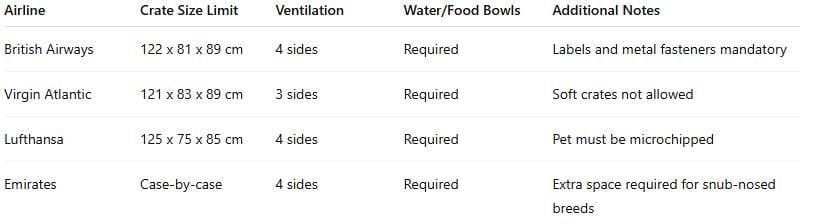
Airline Crate Requirements Comparison Table
UK and international airlines follow IATA guidance with slight variations. Here’s a general overview.
Always confirm directly with your airline before booking.
Book a Crate Fitting Consultation
Not sure which crate is right? Our experts will help you choose the safest size for your pet’s next flight.
Airline-Approved Crate Construction Guidelines
A compliant pet crate must:
- Be made of rigid plastic, fibreglass, metal, or wood
- Have ventilation on at least three sides (four for international travel)
- Contain no sharp edges or projections inside
- Use bolts and metal nuts for closure (no clips only)
- Include bowls secured to the inside but accessible from the outside
- Be clearly marked with LIVE ANIMAL stickers and your contact details
Ensure the crate is fully assembled, clean, and familiar to your pet before departure.
Crate Type Comparison (Hard, Soft, Wheeled, Custom)
There are a few types of pet travel crates, and each serves a slightly different purpose. If your pet is flying in the cargo hold, the crate must be IATA-compliant and made from solid material like plastic or metal. These hard-sided crates are more secure, especially for larger dogs.
Soft-sided carriers are only accepted in the cabin on some flights and only for small pets that meet cabin size restrictions. They are flexible, easy to carry, and often have zip openings, but they cannot be used for hold travel.
Wheeled crates are convenient for owners, but most airlines will require that the wheels are removed or locked during the flight. Always check whether the crate’s construction allows for safe immobilisation.
Some pets may need custom-built crates, particularly giant breeds or animals with unusual shapes or medical conditions. A made-to-measure option may also be required if your pet doesn’t comfortably fit within standard crate sizes.
Common Measuring Mistakes to Avoid
It’s easy to make small errors that can lead to big problems at check-in. Here are the most common things people miss:
- Measuring while the pet is sitting or lying down instead of standing naturally
- Forgetting to include the ear height in breeds with erect ears
- Not including the bedding height in crate height calculations
- Using old measurements from a younger or smaller version of the pet
- Relying on rough guesses rather than taking actual measurements
Even a couple of centimetres can make the difference between a crate being accepted or rejected, so double-check everything. If in doubt, measure again.
Breed-Specific Crate Recommendations
Some breeds need more space than others or have special needs when flying. For example, snub-nosed breeds like Boxers, Bulldogs, Pugs, and Persians are more prone to breathing issues in confined spaces. These breeds benefit from larger crates with more ventilation than the minimum.
Large working dogs like Malinois, German Shepherds, and Huskies often need reinforced crates, especially if they are high-energy or nervous in new environments. It’s also worth checking if your airline has additional rules for these breeds.
Cats often prefer snug crates but still need to meet the space rules. A nervous cat may benefit from a top-loading crate or one with an added privacy cover. Remember to include absorbent pads, especially for longer flights.
Pro Tip: Introduce the crate into your pet’s daily space at least two weeks before flying. Familiarity helps reduce travel anxiety and increases comfort during transit.
How should you prepare a pet travel crate before flying?
Preparing your pet’s crate properly can make a real difference on the day of travel. A crate that smells familiar, feels comfortable, and meets airline regulations reduces your pet’s anxiety and helps avoid any delays at the airport.
Clean and check the crate structure
Ensure the crate is clean, structurally sound, and free from damage. Bolts must be tight, the door must close securely, and the crate must have no loose fittings or internal protrusions.
Label the crate clearly
All airline-compliant crates must display ‘LIVE ANIMAL’ stickers in block letters at least 2.5 centimetres high. Stickers should be visible on at least two sides and the top. You should also attach your name, contact number, flight number, and destination on a secure label.
Add familiar bedding and absorbent material
Use an absorbent training pad or a veterinary-approved liner at the bottom. Adding a blanket or item that smells like home helps many pets stay calm during the journey.
Secure the water and food bowls
Airlines require that water bowls are fixed inside the crate and can be filled from the outside. For longer flights, include a second bowl for food. Make sure both are securely attached and positioned at a comfortable height for your pet.
If your pet is travelling internationally, check whether the airline or destination country has additional paperwork or microchipping requirements. You can find more information on that on our pet travel documentation page.
Can you use a checklist to prepare your pet’s travel crate?
Yes, a checklist is a simple and effective way to make sure nothing important gets left out. Preparing a pet travel crate involves a few specific steps and forgetting even one can delay your travel or cause discomfort for your pet. Using a clear list helps you stay organised and confident.
Pet Travel Crate Preparation Checklist
- Crate fully cleaned and inspected for any cracks or wear
- All bolts tightened and structurally secure
- Water bowl fixed inside and refillable from the outside
- Absorbent pad or liner placed on the base
- Familiar bedding or blanket added for comfort
- Label attached with your name, phone number, flight number and destination
- LIVE ANIMAL stickers placed on the top and two sides
- Copy of required travel documents attached if needed
- Ventilation areas clear and unobstructed
- Crate tested at home so your pet is used to it before travel
Allowing your pet to spend time inside the crate before the travel date will help reduce anxiety. You can place their usual toys or treats inside so they associate it with comfort and safety.
Is the crate trial important before the travel date?
Yes, getting your pet used to the crate in advance can make a big difference. If your pet only sees the crate on the day of travel, it might feel unfamiliar and stressful. A few short sessions at home can make the crate feel like a normal, safe space.
Place the crate in a quiet area of your home with the door open. Let your pet explore it on their own terms, adding familiar bedding, toys or treats. Start with a few minutes and gradually increase the time. Try to create positive associations by feeding or rewarding them while they are inside.
By the time you travel, your pet will be more relaxed and cooperative. Familiarity with the crate often leads to a smoother check-in and a calmer flight for both of you.
Final thoughts
Measuring your pet accurately, choosing the right crate, and making proper preparations can make flying with your pet much more manageable. A comfortable crate that follows airline and IATA rules is key to a safe journey. At Tailored Pet Travel, we support you at every step, from picking the correct crate size to helping you understand airline-specific rules and documentation.
To explore more about pet passports and airline pet policies, visit our pet travel resources page. Contact us today for airline-approved pet crates and more.
Frequently Asked Questions
What if my pet’s measurements fall between two crate sizes?
Always go for the larger crate. Your pet will have more space to move, and airlines are less likely to reject a crate that exceeds the minimum size.
Do I need to measure the ears if my pet has upright ears?
Yes. The height of the crate must account for the tallest point, which includes the ears if they are upright when the pet is standing.
Can I use the same crate for two pets?
Only in very specific cases. If both animals are under six months old, similar in size, and used to being together, some airlines may allow it. Always confirm this with your airline.
How often should I remeasure my pet?
Measure again before every new flight if there has been any weight change or growth. Young pets should be measured again a few weeks before departure if in doubt check with worldwide pet relocation experts.
Can I use a soft-sided carrier for cabin travel?
Yes, but only if it fits under the seat and meets the airline’s dimensions for in-cabin pet travel. This is usually only allowed for very small pets.