
Can I travel with my pet by ferry from the UK to Europe, and what rules should I know?
Yes, pets can travel with you by ferry from the UK to several countries in Europe. But the requirements differ depending on the ferry route, the company, and the destination. You’ll need to get specific documents ready and decide where your pet will stay during the trip. This guide explains everything you need to know so you can prepare with confidence.

Here's What We Have Covered In This Article
What Travel Documents Does Your Pet Need for a Ferry from the UK to Europe?
Many pet owners are caught out by paperwork errors, especially since Brexit. Knowing what you need in advance helps prevent problems at check-in.
Key Documents:
-
Microchip: Must be inserted before your pet gets their rabies vaccination.
-
Rabies vaccination: Needs to be given at least 21 days before travel and certified by a vet.
-
Animal Health Certificate (AHC): Issued by an official vet, valid for 10 days from the date of issue.
-
Tapeworm treatment: Needed for dogs coming back into the UK from certain EU countries.
Brexit Changes:
-
EU pet passports issued in the UK are no longer valid.
-
Because the UK is now a third country, your pet needs an AHC for each trip.
Allow at least six weeks to get everything sorted. Some ferry operators also have age or breed restrictions, so check early.
Pro Tip: Book ferry kennel space early in summer as they’re often the first to sell out.
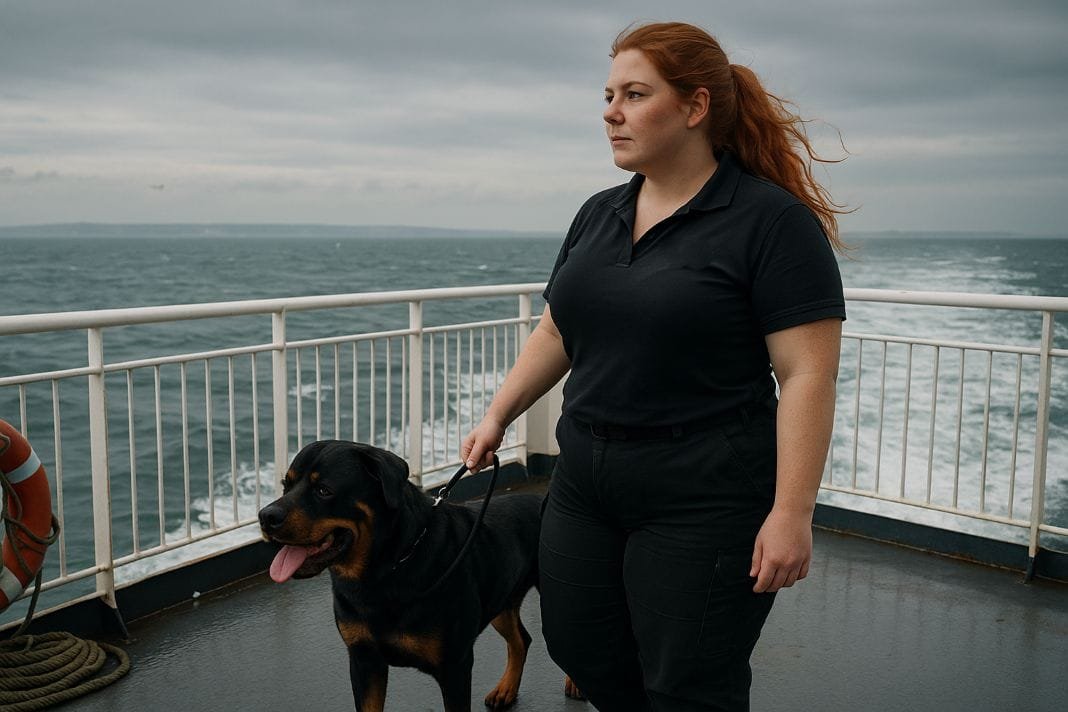
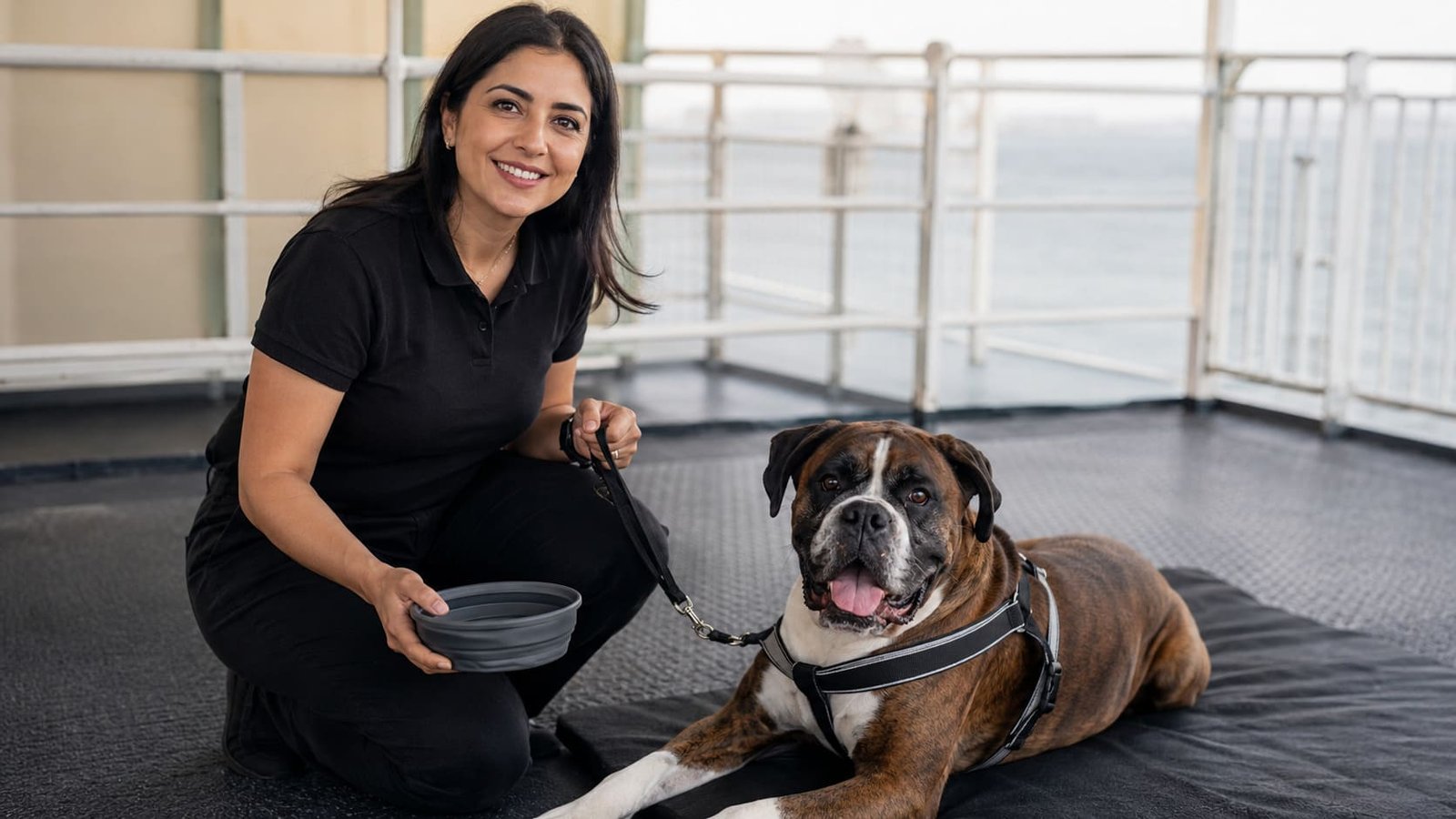
An AI photo of a pet being transported by Ferry
Let Us Handle the Paperwork
Skip the stress of vet visits and government forms. We sort out every detail for you.
Which Ferry Routes and Operators Allow Pets and Can You Travel Without a Car?
Not all ferry services welcome pets, and some require a vehicle booking. Check the route before you book to avoid surprises.
Operators That Allow Pets:
-
Brittany Ferries: Allows pets with foot passengers on some routes.
-
DFDS: Offers pet-friendly travel from Dover and Newhaven.
-
P&O Ferries: Pets usually need to be in a car.
-
Stena Line: Some European routes offer kennels.
Route Differences:
-
UK to France: Most flexible.
-
UK to Spain: Better suited to long crossings and pet-friendly cabins.
-
UK to Netherlands: Often stricter for foot passengers.
Check DEFRA’s list of approved sea routes and ask the operator directly about pet rules – especially if you don’t have a car. Some readers also search for dog-friendly ferry UK options, so use that term when researching specific routes.
Pro Tip: Ask your vet to double-check all dates and details on the AHC to avoid border delays..
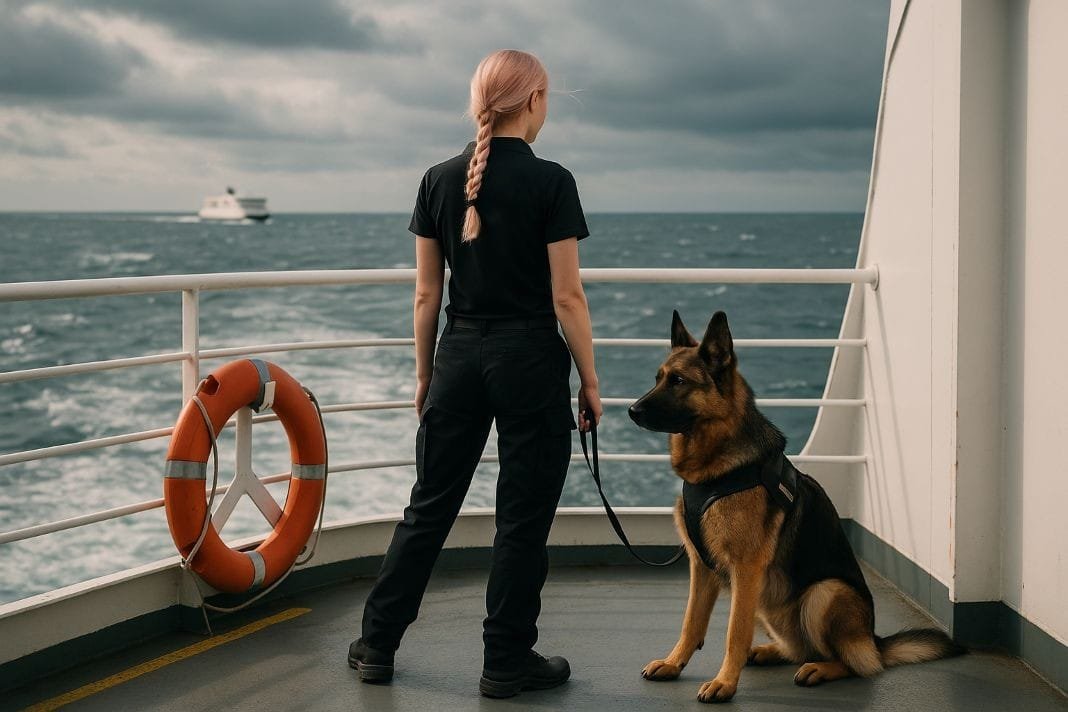
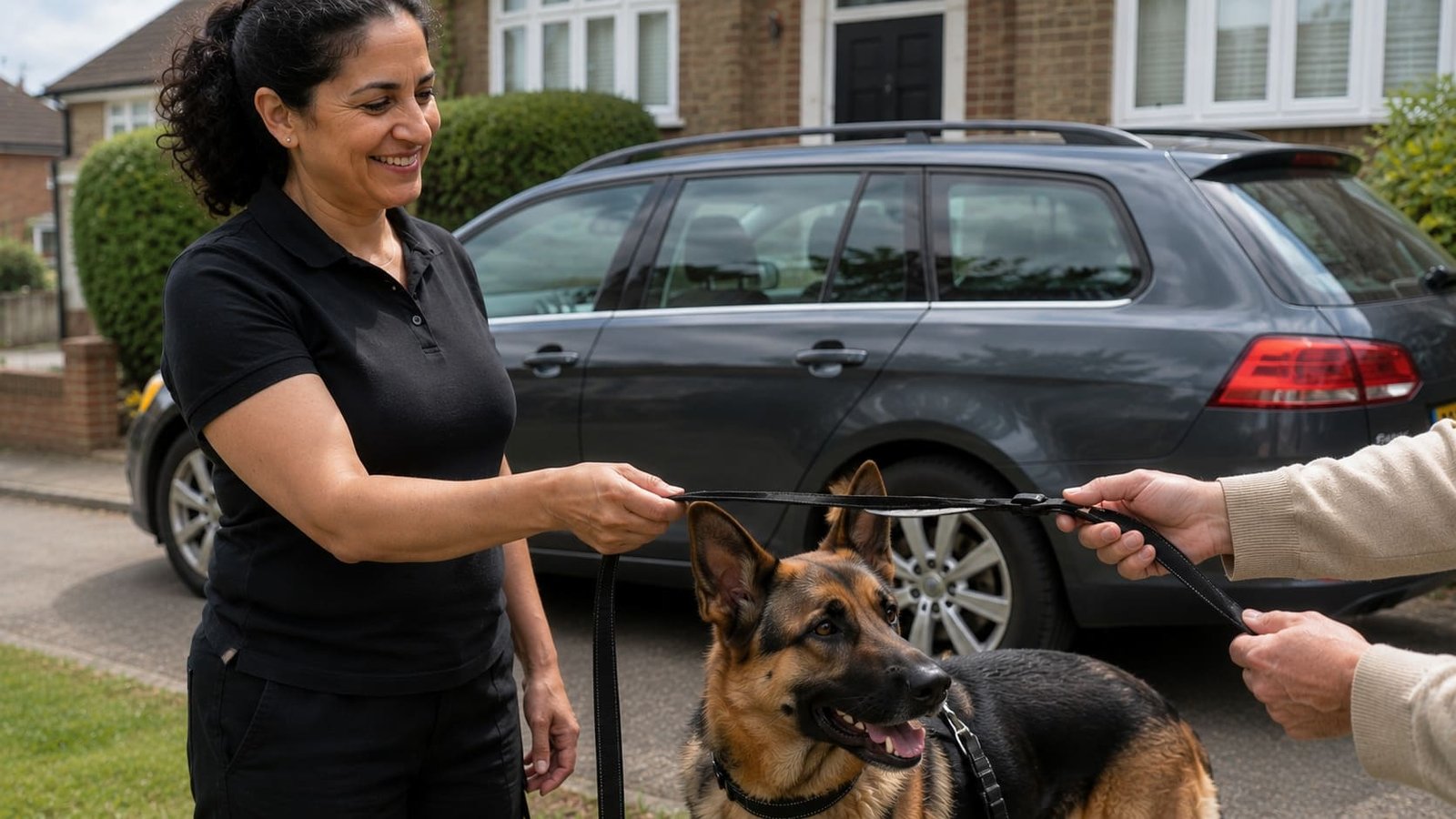
An AI photo of a German Shepherd being transported by ferry by a dog handler
Where Will Your Pet Stay Onboard? Car Deck, Kennel or Pet-Friendly Cabin Explained
Ferry operators offer different options for travelling pets. Each has its own pros and cons.
Onboard Choices:
-
In your car: Allowed on some ferries. Make sure it’s ventilated and your pet is secure.
-
Kennels: Often found on longer crossings. These can book up fast.
-
Pet-friendly cabins: Let you stay with your pet during the journey.
-
Pet lounges: Short-stay areas on certain routes for limited time with your pet.
Choose the setup that suits your pet’s age, size, and temperament. Older or anxious animals usually do better if they’re with you in a quiet space.
How to Book a Pet-Friendly Ferry: Costs, Timing and What to Expect
Pet bookings need a bit more planning than regular tickets.
Booking Advice:
-
Book early: Pet spaces – especially cabins or kennels – are limited.
-
Expect extra fees: These can range from £20 to over £100 depending on your choice.
-
Check-in times: Most require you to arrive at least 90 minutes before departure.
Ways to Book:
-
Online: Some operators allow it, others require a call.
-
By phone: Useful if you need advice or are unsure about your options.
Tailored Pet Travel can take care of the full process, including documents, bookings, and transport. If you’re short on time or unsure about the steps, it’s often easier to book pet transport UK to Europe through a trusted service.
Worried About Your Pet’s Comfort at Sea?
From cabins to crate tips, we make ferry travel relaxing for pets and people alike.
What’s Changed Since Brexit? Pet Travel Rules You Must Know
Travel rules have changed since the UK left the EU.
Key Rule Changes:
-
UK-issued EU pet passports no longer work for entry into the EU.
-
An Animal Health Certificate (AHC) is now needed for each EU trip.
-
Dogs must have tapeworm treatment before returning to the UK, depending on the country visited.
Speak to a DEFRA-registered vet before you travel and double-check the latest rules.
Keeping Your Pet Safe and Calm During the Ferry Journey
Travelling by ferry is a new experience for many pets. Comfort is just as important as paperwork.
Tips to Help Your Pet Stay Comfortable:
-
Bring familiar items: Their blanket, toys and water bowl help settle them.
-
Get used to the crate: Let your pet spend time in it well before the trip.
-
Feed early: Try not to feed just before departure to avoid sickness.
-
Talk to your vet: Calming sprays or travel tablets may help nervous pets.
This type of stress-free pet transport is easier when pets are prepared and supported. If your pet stays in the car, check with the operator about temperature control and ventilation.
Let Experts Handle It: How Tailored Pet Travel Makes Ferry Crossings Easier
Handling every part of your pet’s ferry journey can be a lot. A trusted transport service can help.
What We Take Care Of:
-
Vets and paperwork, including AHCs
-
Booking kennels or cabins suited to your pet
-
Road transport to and from ports
-
GPS tracking so you know your pet’s location
-
Emergency planning if delays or issues arise
We’re more than a booking service – we’re a full pet relocation company UK residents trust to manage travel end-to-end.
Clients often say having help gives them peace of mind – especially on their first pet trip abroad.
Return to the UK: What You Need Before Coming Home
Travelling back to the UK with your pet has its own set of requirements. Missing a step could lead to delays or refusal at border checks.
Return Travel Checklist:
-
Tapeworm treatment for dogs: Must be given by a vet 24 to 120 hours before re-entry (not required for cats or ferrets).
-
Valid Animal Health Certificate (AHC): If returning within its 4-month validity period.
-
Pet’s microchip must still be readable.
-
Original rabies vaccination certificate if not included in the AHC.
-
Entry through an approved port that handles pet arrivals.
-
DEFRA-approved transport carrier if using a professional pet service.
Check that all documents are ready and easy to access. If anything seems unclear, speak to a professional before you travel.
Final Thoughts: Make Your Pet’s UK–Europe Journey Simple and Safe
With good preparation, travelling by ferry with your pet is perfectly manageable.
Key Reminders:
-
Begin early with pet travel documents.
-
Choose the best route and travel option.
-
Think carefully about what’s most comfortable for your pet.
-
Stay up to date on travel rules, especially post-Brexit.
-
Speak to a pet travel expert or request a consultation if you’d like personalised help as you don’t have to do it alone.