How do you plan pet transport if your moving date isn’t confirmed?
Begin by focusing on readiness instead of bookings. When timelines are fluid, pet travel becomes about reducing exposure to risk by preparing the essentials early, rather than waiting until everything is confirmed.
When moving dates are uncertain, pet travel becomes less about scheduling and more about keeping the path open. Unlike other parts of a move that can wait for confirmation, pet relocation involves fixed processes, time-sensitive documentation, and welfare considerations that don’t adapt easily to last-minute change.
A flexible move requires a shift in mindset. Rather than thinking of your pet’s transport as the last box to tick, it must move closer to the beginning of your planning sequence. The welfare requirements set by IATA, health certification lead times from DEFRA-approved vets, and regulations tied to the EU Pet Travel Scheme often mean that waiting until dates are confirmed introduces unnecessary risk.
Key factors that change with flexible timelines:
- Booking delays impact availability: Transport options may reduce in number the longer you wait, especially for regulated pet carriers or during peak seasons.
- Documentation has validity windows: Many pet travel documents are only valid for specific timeframes, which makes their timing harder to get right when dates move.
- Regulatory steps take time: Pre-travel requirements often include wait periods that cannot be rushed, such as the 21-day wait after a rabies vaccination.
By the time dates are fixed, it may already be too late to avoid delays, rejections, or rushed decisions. Beginning early allows room for contingencies and puts you in control rather than responding to problems as they arise.
Here's What We Have Covered In This Article
What can be prepared in advance, even without dates?
Several key aspects of pet relocation carry long-term value and can be completed well before a travel window is confirmed. Early preparation strengthens your flexibility and protects against disruptions.
Actions that create readiness:
- Health checks and vaccinations: Many vaccines, including rabies, have long validity periods. Getting these done early opens more route and destination options.
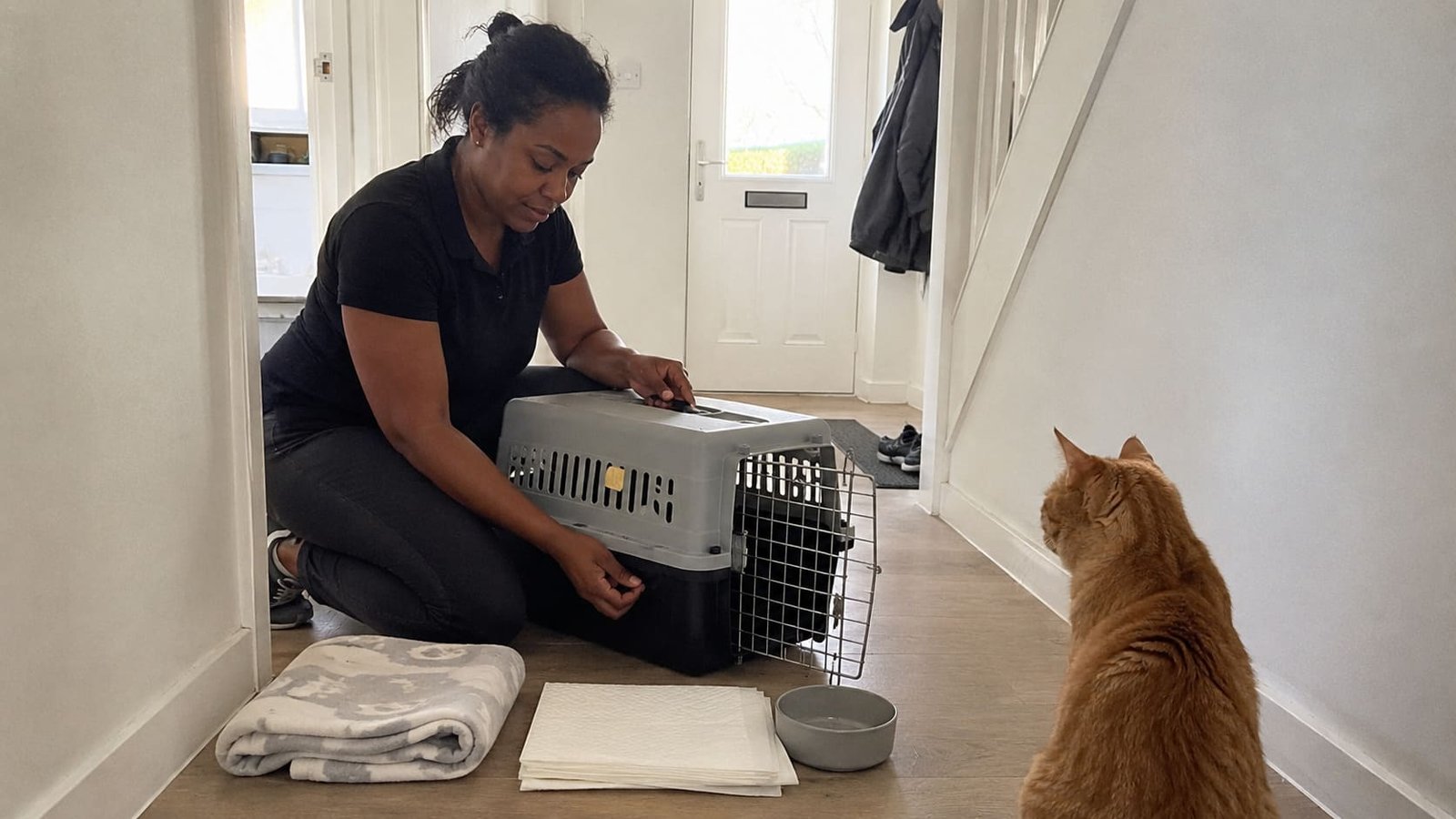
- Crate acclimatisation: Pets unfamiliar with IATA-compliant crates may need several weeks to adjust. Early exposure reduces stress during the process.
- Microchipping and identification: DEFRA requires animals to be microchipped before certain documents can be issued, making this a priority task.
- Initial regulatory steps: For international travel, tasks such as blood titre testing (for countries outside of the EU) can be time-consuming. Completing them early protects your timing options.
- Engaging a pet transport professional early: An experienced provider can create a readiness plan that tracks document windows while holding off on bookings until the right moment.
Taking these steps does not commit you to a date. Instead, it gives you the ability to move quickly and compliantly when your circumstances become more definite.
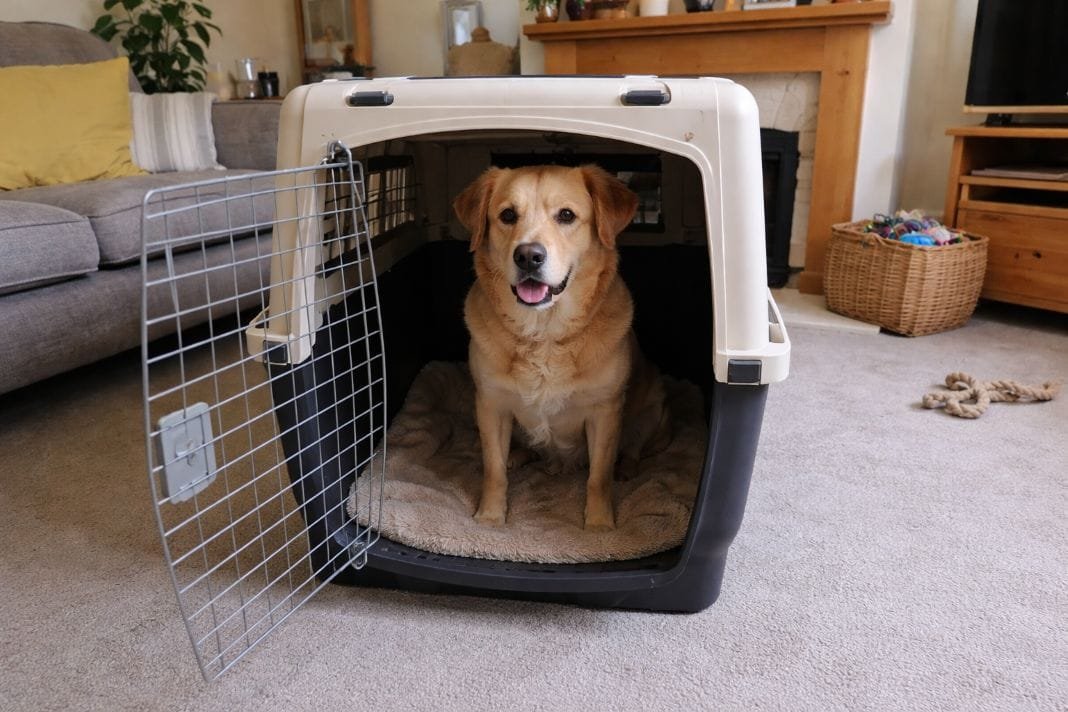
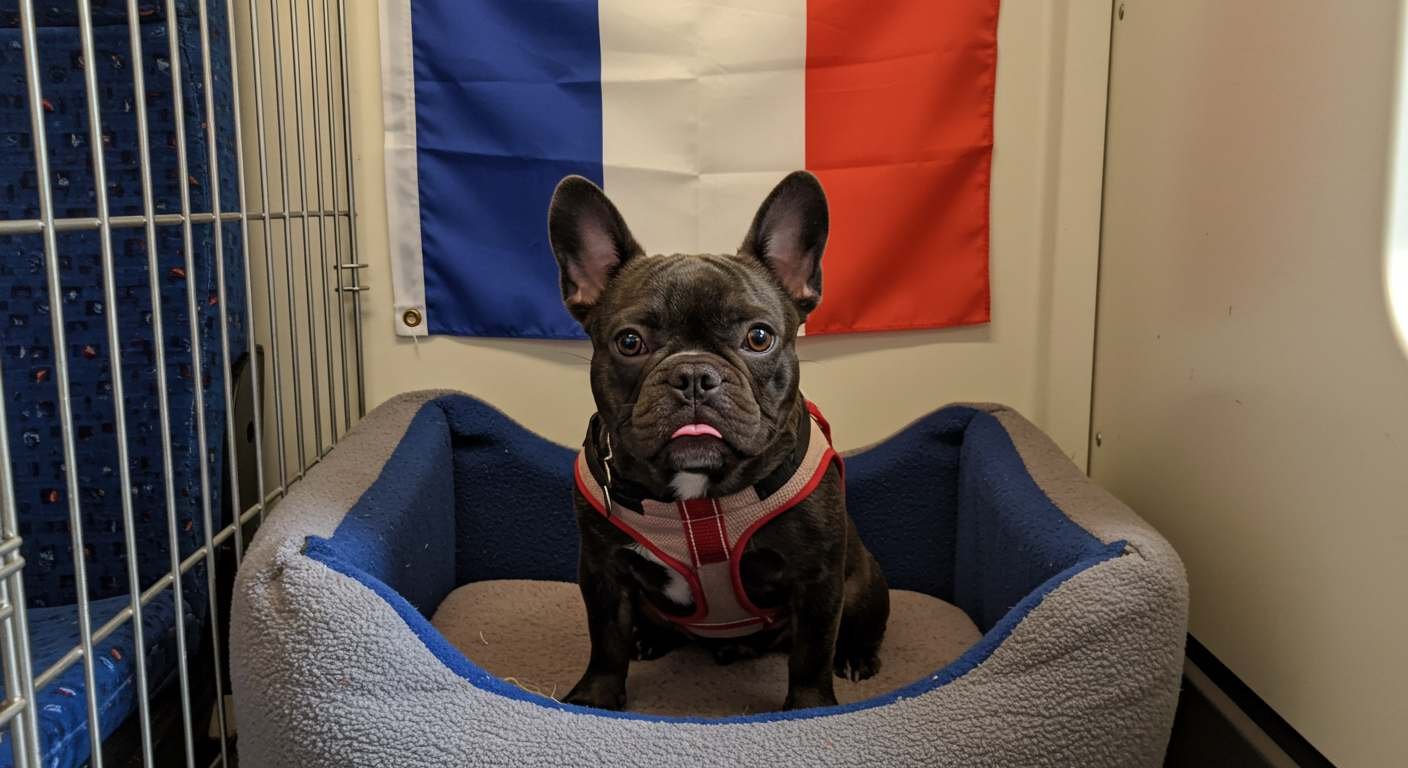
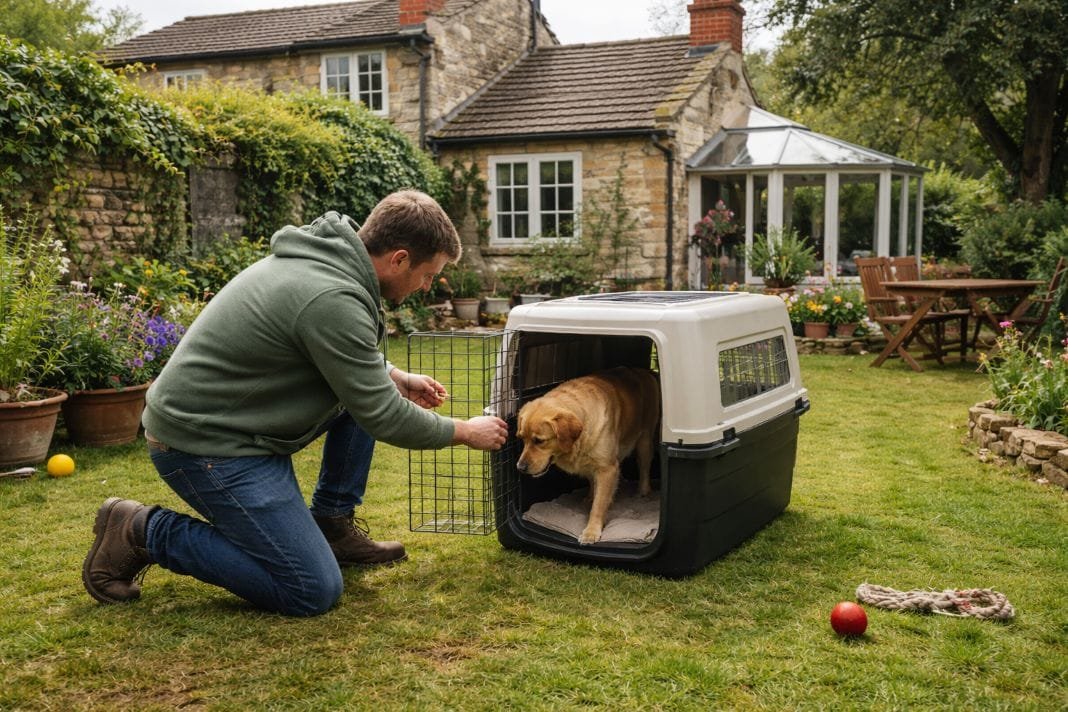
An illustrative image of a dog sitting calmly inside an open pet travel crate in the living room of a typical UK home
Plan Your Pet’s Journey with Confidence
How do transport routes and availability shift over time?
Unlike personal travel, pet transport does not run on consistent schedules. Availability depends on seasonal policies, airline restrictions, and regulatory permissions. Waiting for a fixed date can mean missing the most viable routes.
Consider a pet owner planning to move between the UK and southern Europe. During certain months, some airlines reduce or suspend their pet transport services due to heat restrictions. Other carriers restrict crate sizes or breeds without notice. Ferry routes can fill quickly before holidays, limiting vehicular transport options.
What makes routes unpredictable:
- Seasonal availability: Summer and winter policies often affect whether pets can travel in-cabin, in-hold, or at all.
- Carrier restrictions: Specific breeds, crate dimensions, or weight limits may change without advance warning.
- External disruptions: Weather conditions, industrial action, or changes in entry policies can alter what’s possible within days.
Because route decisions affect which documents, crate types, and transfer points are required, early awareness protects against cascading changes later. Even without booking, knowing what is viable helps guide the overall plan.
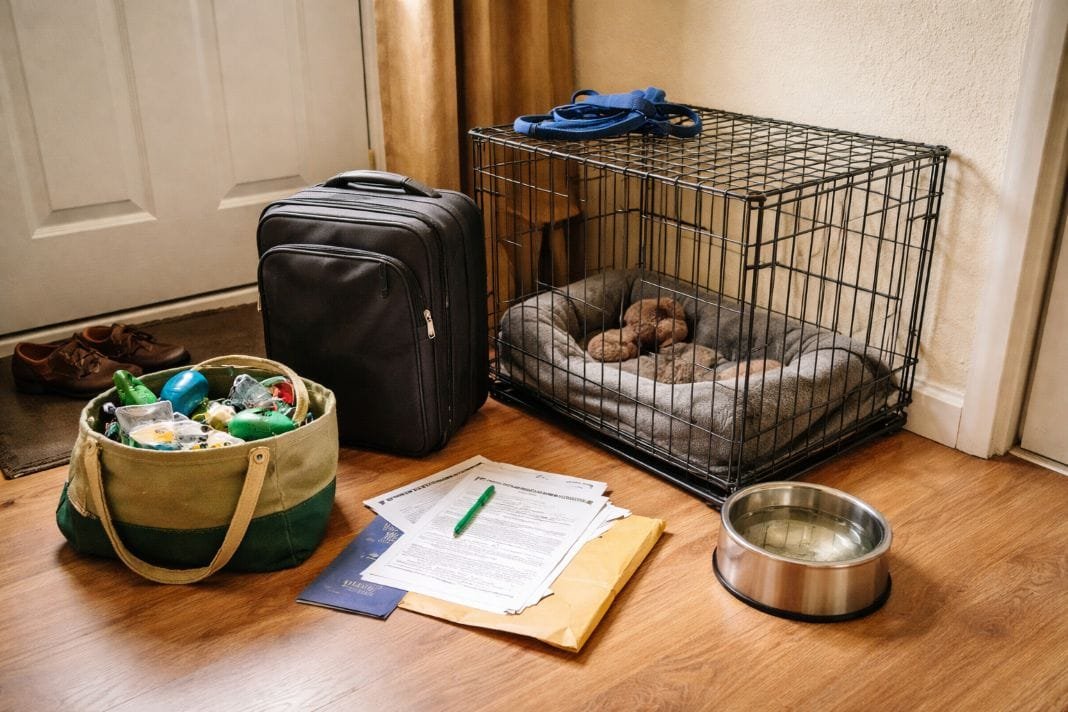
An illustrative image of a suitcase and pet supplies ready by the door in a modest UK flat
Why does document timing matter more without a fixed move date?
Pet travel documents come with strict validity rules. Without firm dates, the risk becomes not just delay, but expiry, forcing you to repeat steps and pay avoidable fees.
The Animal Health Certificate (AHC), required for travel from Great Britain to the EU, is only valid for ten days from issue for entry, and four months for onward travel. A timing mismatch between AHC issue and transport date can invalidate the document. Similarly, rabies vaccinations must often be administered at least 21 days before travel to non-UK destinations, but their validity aligns with the expiry date on the certificate, not travel intention.
Timing pitfalls to avoid:
- Issuing certificates too early: This can lead to expiry before travel occurs, especially if delays are introduced late in the planning process.
- Leaving vaccinations too late: The built-in wait period cannot be shortened, even in urgent circumstances.
- Not sequencing correctly: Some documents depend on others being in place already, such as microchipping before rabies vaccination.
Timelines that shift require documentation plans that account for each validity window and its interaction with transport routes. Professionals like Tailored Pet Travel that manage these details can time certificate preparation to align with multiple potential travel windows, preventing the need for re-issuance.
Need Help for a Solo Pet Flight?
How can you stay prepared without overcommitting?
When dates are loose, the challenge is often psychological, balancing the desire to get ahead with the fear of making decisions too early. Fortunately, there is a middle ground that protects readiness without locking you into non-refundable arrangements.
What not to do:
- Wait for confirmation before doing anything
- Book flights or services that penalise changes
- Assume a short window will be sufficient for paperwork
What to do instead:
- Build a staged plan: Prioritise long-term steps early, such as vaccinations and crate training, and keep short-term steps flexible.
- Work with adaptable providers: Choose partners who understand shifting timelines and can hold space for adjustments without penalty.
- Reserve, don’t commit: Requests for provisional transport plans can be made without final purchase, preserving optionality without exposure.
Customised Pet Travel regularly works with move timelines that remain open for weeks. Their approach uses staged coordination and practical readiness to protect welfare while avoiding rushed commitments or avoidable fees.
When does professional support become necessary?
Making the decision to involve expert help often stems from recognising that too many moving parts are at risk of falling out of sequence. For international pet moves in particular, the timing, documentation, and carrier coordination rarely stay simple.
Signs it’s time to hand over planning:
- You have multiple destinations or transfers
- Your dates remain uncertain but paperwork must begin
- The route options feel unclear or overly limited
- Your pet has special needs, age-related considerations, or breed restrictions
- You’re unsure how different country rules interact
Professional support does more than offer advice. It provides a clear plan, accountability for compliance, and the ability to keep adapting as your situation evolves. Once involved, experts can manage multi-country timing regulations, contact vets directly, and align each step with available transport windows.
For complex or emotionally significant moves, the difference lies in who carries the risk. A provider such as Customised Pet Travel takes responsibility for oversight, not just guidance.

Who needs to know what, and when?
Even without dates, clear and early communication helps reduce stress by preventing silent drift. Keeping those involved informed gives you more control over last-minute surprises.
Who to inform early:
- Veterinary practice: Give your vet a rough window so they can advise on certificate timing and required vaccinations.
- Pet travel planner or handler: Let them know early so they can monitor route shifts and carrier policies on your behalf.
- Housing or relocation contacts: If you’re moving into rented accommodation or across borders, clarify pet-related requirements well in advance.
- Destinations contacts: If someone is receiving the pet abroad, begin aligning on dates, arrival windows, or paperwork they may need to prepare.
Good coordination is not about having all the answers. It’s about sharing uncertainty in a structured way, so those involved can help protect the outcome. Professional providers often serve as communication bridges, linking vets, carriers, brokers, and you, all while maintaining alignment with regulatory timeframes.
Planning pet travel without a confirmed move date is entirely manageable, as long as preparation happens early and flexibly. With the right structures in place, uncertainty becomes something to manage rather than fear.