Can you take your dog on a UK train, and do the rules change between National Rail, Avanti and GWR?
Yes, dogs are generally allowed on many UK train services, but access is subject to conditions set by the operator and enforced by staff on the day. National Rail gives a broad framework, yet individual companies such as Avanti West Coast and Great Western Railway can apply their own carriage conditions, limits and behaviour expectations, which means that travellers should look at both the general rule and the operator-specific policy.
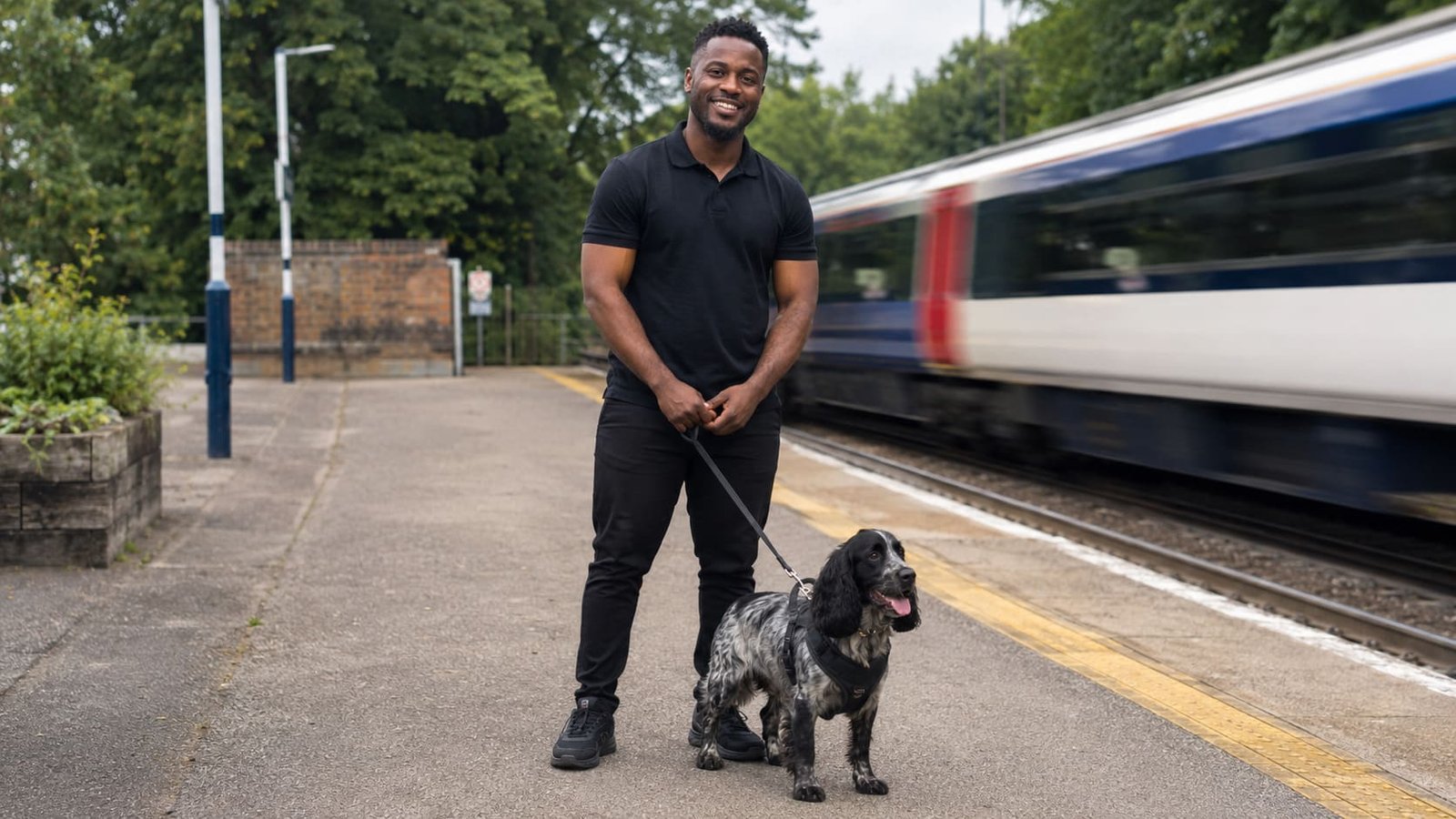
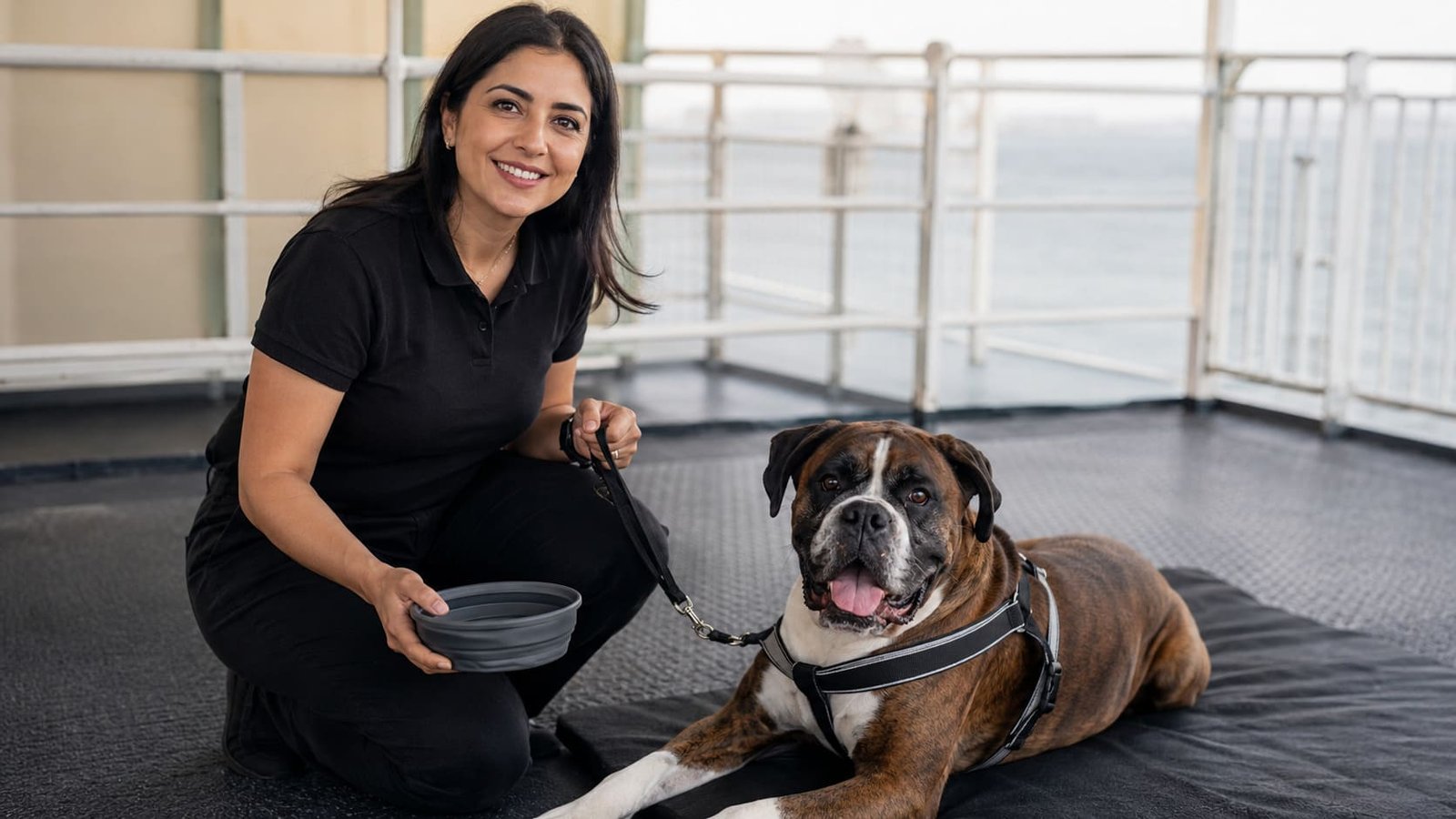
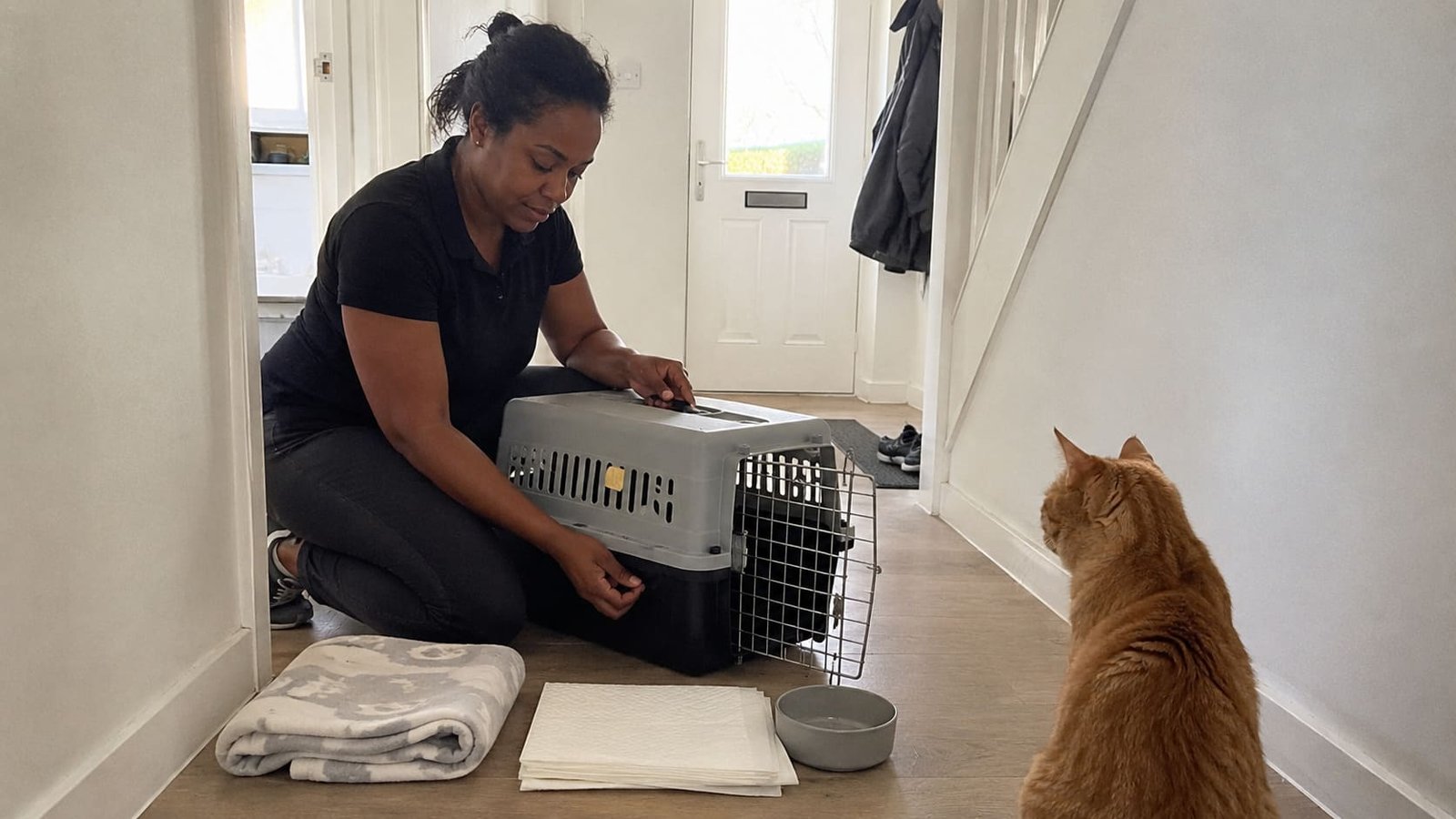
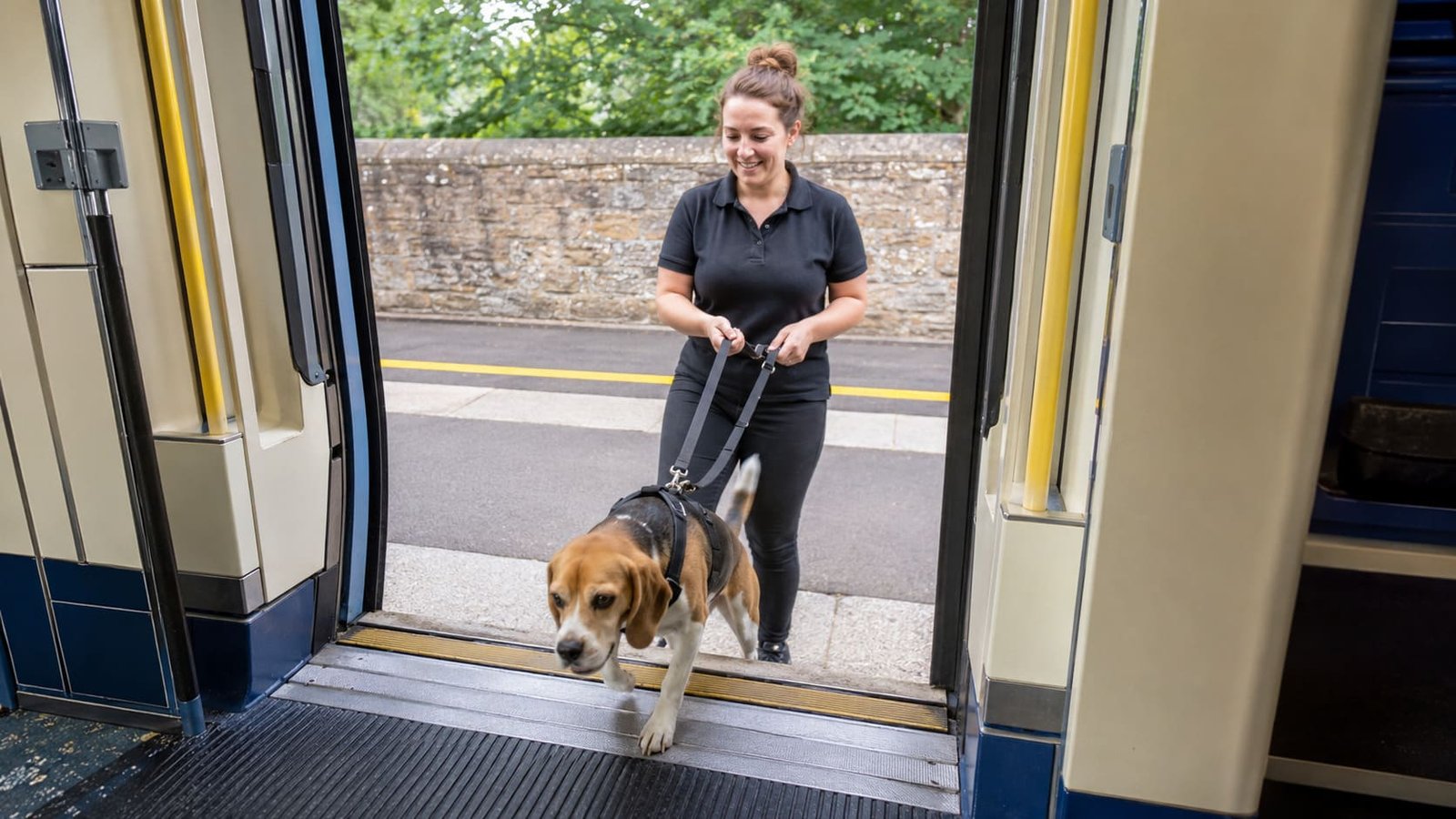
Handler waits with a harnessed dog beside a departing train.
Here's What We Have Covered In This Article
Understanding UK train pet policies: the basics
Across the UK rail network, the starting point is usually permissive rather than prohibitive. Companion dogs are often allowed to travel if they are under control, do not disturb other passengers and do not create a safety or hygiene issue. Confusion tends to start when people assume that one operator’s rule applies everywhere.
A few core points sit behind most pet policies:
- Assistance dogs are treated differently from companion pets and are generally exempt from standard pet restrictions.
- Companion dogs usually need to stay on a lead or in a suitable carrier.
- Staff retain discretion if an animal is disruptive, unsafe or causing a nuisance.
- Operator rules can vary by service, route and practical onboard conditions.
Many misunderstandings come from the phrase “National Rail policy”, as though it were one single rulebook for every train in the country. In practice, National Rail information often sits alongside the terms of individual UK rail operators, so a dog that is accepted on one service may still be challenged on another if space, safety or behaviour becomes an issue.
National Rail: what dog owners need to know
National Rail guidance usually allows passengers to take a limited number of dogs without a separate fare, provided the animals are controlled properly throughout the process. Staff can refuse carriage if those conditions are not met.
The main expectations commonly associated with National Rail services include:
- Up to two dogs per passenger, unless specific permission is given for more
- Dogs kept on a lead, or other pets kept in an enclosed carrier
- Animals kept off seats
- Behaviour that does not interfere with staff duties or other passengers
- Possible action if extra cleaning is needed because of the animal
UK rail byelaws and carriage conditions matter here because staff are not expected to tolerate unsafe or disruptive situations. A nervous dog that remains close to its owner is one thing. A dog lunging into the aisle, blocking doors or barking persistently can lead to intervention from train guards or station staff.
Charges are not usually the headline issue on standard journeys. Refusal of carriage is more likely to arise from behaviour, poor control or practical safety concerns than from a routine pet fee. That becomes particularly relevant during crowded periods, where even a normally calm animal can struggle with noise, movement and limited floor space.
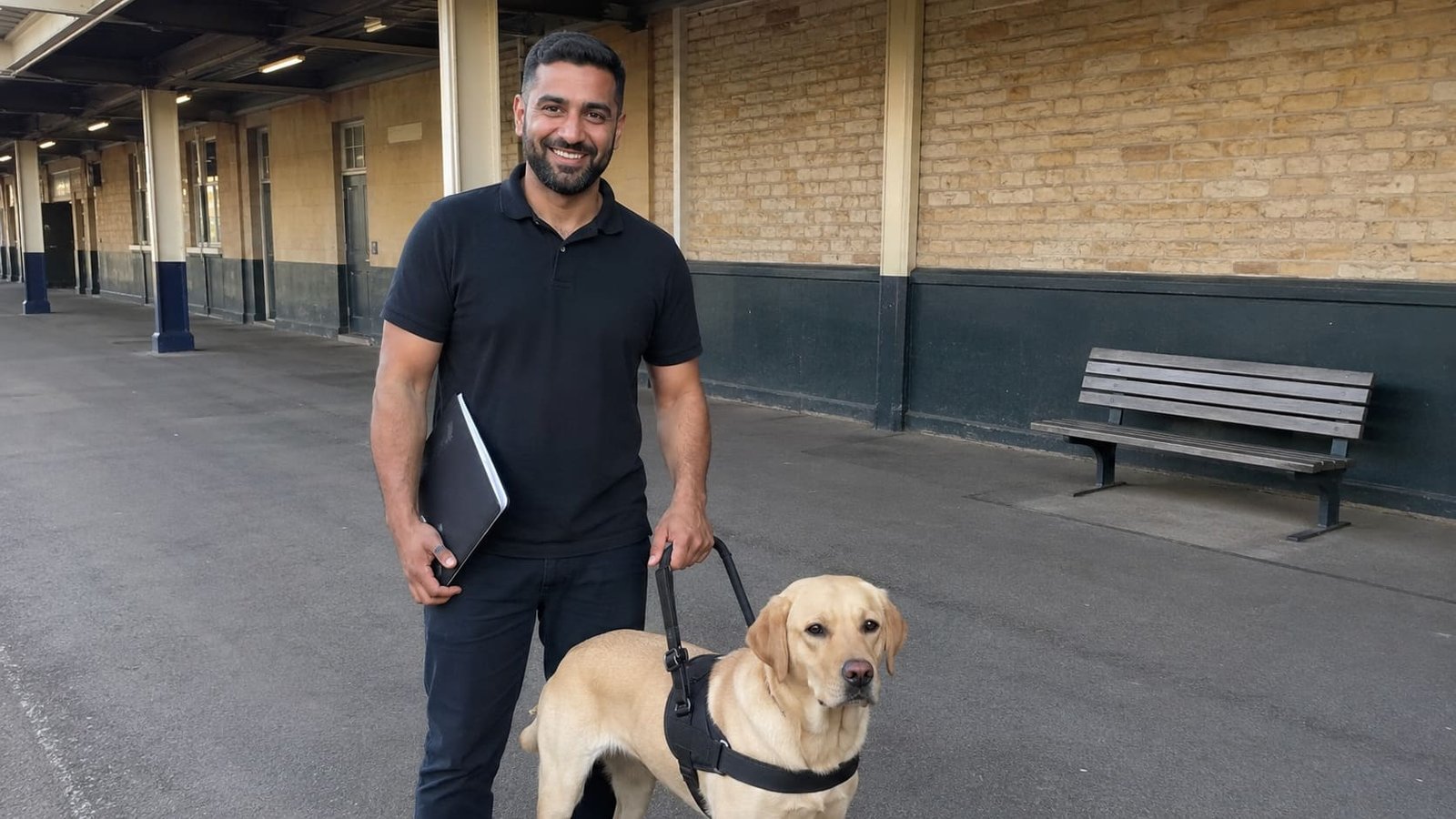
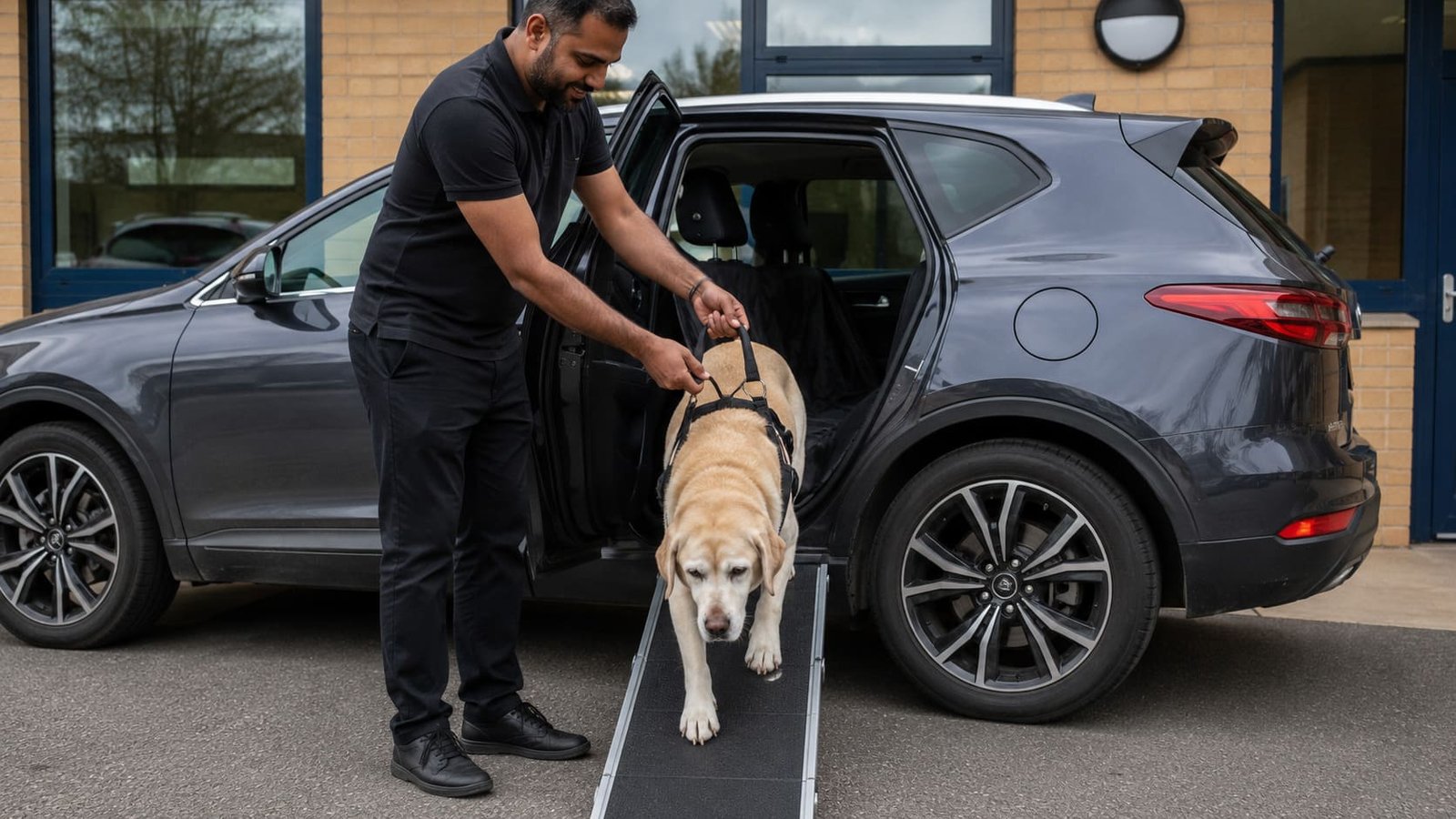
Handler wait with a Labrador at a train station
Avanti West Coast: pet travel rules and realities
Avanti West Coast broadly follows the familiar UK rail approach of allowing dogs and other small pets subject to carriage conditions. Even so, the practical experience can feel more restrictive on busy intercity services, where reserved seating, luggage pressure and crowded aisles leave less margin for disruption.
Where Avanti aligns with general rail rules
Dogs are generally expected to remain under control and off the seats. Staff discretion remains a live issue, especially if a pet affects comfort, cleanliness or safe movement through the carriage.
Where the reality can differ
Longer distance services create a different onboard environment from a short local process. Reserved seating can place passengers close together for extended periods, and a large or unsettled dog may attract attention more quickly than it would on a quieter route. Incidents involving noise, fear in other passengers or obstruction in gangways are likely to be handled by train managers with reference to immediate conditions, not simply the written policy.
Seat reservations may also matter in indirect ways. A booked seat does not create a separate entitlement for a dog to occupy extra room, and standard class can feel especially tight at peak travel times. Anyone reading the policy as blanket permission could be caught out by those practical limits.
On Avanti, published rules and day-of-travel judgement sit close together. That means the question is rarely just whether dogs are allowed, but whether the specific process can accommodate the dog safely and without causing problems for others.
GWR (Great Western Railway): travelling with dogs
Great Western Railway also permits dogs on many services, subject to control, cleanliness and passenger comfort. The broad shape is familiar, but GWR journeys often combine commuter traffic, regional routes and longer leisure travel, so onboard conditions can vary widely within the same operator.
Points commonly associated with GWR travel include:
- Dogs are generally permitted if kept under proper control
- Seating is for passengers, not pets
- Conductors and onboard staff can intervene if an animal causes disturbance
- Space constraints may become more relevant on busy services
- Safety concerns, including blocked aisles or doors, can lead to refusal or removal from the train
GWR does not stand apart because of a radically different published stance. The distinction is usually operational. A lightly loaded regional service may feel straightforward for a settled dog, whereas a crowded peak train from a major station can produce complaints far more quickly. Noise concerns and limited floor room tend to shape how any issue is judged in the moment.
If trouble starts during the process, customer support and train conductors are likely to focus on immediate management of the carriage, including whether the dog can remain without further disruption. That practical layer matters just as much as the written rule.
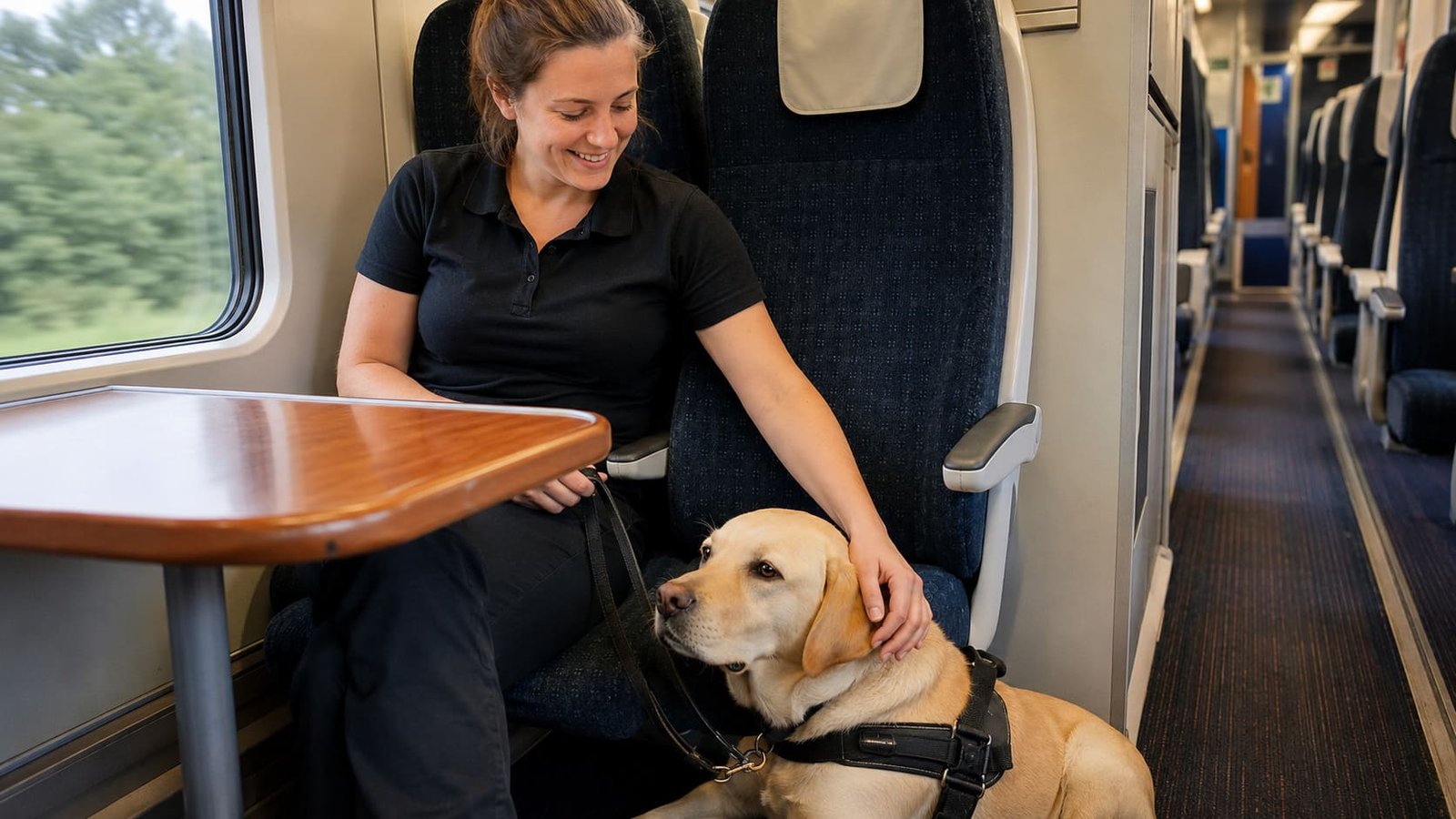
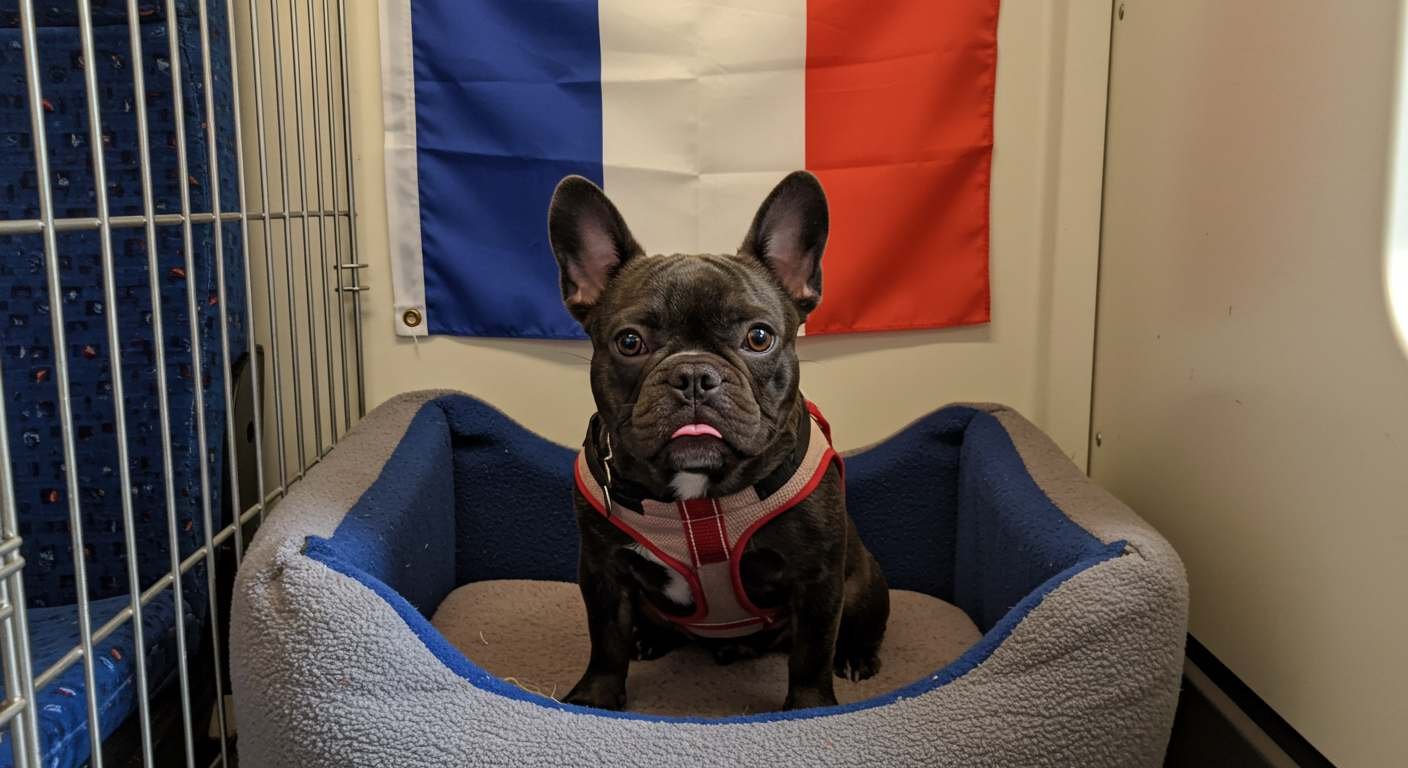
Handler comforts a calm dog during a long-distance train journey.
When pet travel gets complicated: risks, exceptions and escalation points
A simple train process can become complicated very quickly if the dog is elderly, medically unwell, highly anxious or reactive around crowds. Rail policies are written for general conditions, yet real-life travel often turns on individual welfare and operator discretion.
Breed is sometimes raised in these conversations, but the more relevant issue on trains is usually behaviour and control rather than size alone. A small dog in severe distress can create as much difficulty as a larger dog if it is vocal, panicked or unable to settle in a confined public space. Once welfare concerns become visible, the trip stops being a straightforward transport question and starts becoming a judgement call.
Refusal of carriage does not always happen at the platform edge. Sometimes the issue emerges after boarding, once a service becomes busier or the dog reacts badly to noise and movement. In more serious cases involving safety, station staff, train operating companies or British Transport Police may become involved simply because a crowded train leaves little room for error.
For readers dealing with a genuinely complex process, particularly one linked to relocation, connecting travel or compliance pressure, specialist oversight can reduce the risk of a minor issue turning into a missed connection or welfare problem. Tailored Pet Travel is one example of the kind of welfare-led support used in situations where timing, documentation and animal condition all matter at once.
DEFRA sits in the background of many wider pet transport rules, especially where rail travel forms only one part of a longer domestic or international movement. That wider context is easy to miss until a delay, refusal or change of route puts the whole plan under strain.
Preparing for a smooth process: practical considerations for dog owners
Good preparation is less about ticking boxes and more about whether the dog can cope comfortably with the specific service being used. A short off-peak process with plenty of space presents one set of demands. A packed intercity service presents another.
A sensible pre-travel check should cover the points that affect welfare and practical control most directly:
- Confirm that the dog can remain settled on a lead or in a carrier for the expected duration.
- Consider whether the train’s likely noise, crowding and stop-start movement are realistic for that animal.
- Keep any relevant travel documentation accessible if the rail leg connects with wider pet movement requirements.
- Allow for water, comfort breaks and the possibility of delays without overfeeding immediately before departure.
- Think about contingency if boarding is refused or the planned service changes unexpectedly.
Pet welfare guidelines matter here because a dog that is physically allowed on board may still struggle badly with the process itself. Anxiety, overheating, fatigue and sensory overload can all become more obvious in rail travel than owners expect, particularly on long routes with little floor space.
Where trips are linked to relocation, onward crossings or time-sensitive arrangements, structured process planning can make the difference between manageable disruption and a cascade of missed timings. In those circumstances, some owners rely on specialist providers such as Tailored Pet Travel for oversight that keeps welfare and compliance aligned without leaving too much to chance. The central point remains simple: the smoothest rail journeys usually begin long before the train arrives.
Beyond the rules: common misconceptions and forward-looking considerations
One persistent myth says dogs are either fully banned or fully accepted on UK trains. Neither view is accurate. Permission usually sits in the middle, shaped by carriage conditions, staff judgement and the realities of the service at that moment.
A few misconceptions come up again and again:
- “If National Rail allows dogs, every operator must allow them in exactly the same way.”
- “A quiet dog will always be fine, regardless of crowding or route conditions.”
- “Staff can only act if the dog is aggressive.”
- “Assistance dog rules apply to all dogs if the owner has a genuine need to travel.”
Public expectations around animal welfare are shifting, and transport policy may continue to reflect that over time. UK rail operators and the Department for Transport are under steady pressure to balance accessibility, passenger comfort and practical enforcement, especially as more people travel with pets after changes in working and living patterns.
That does not necessarily point to looser rules. In some areas, it may lead to clearer operator guidance, better staff training and firmer enforcement where public space is tight. For dog owners, the most useful mindset is to treat rail travel as condition-based rather than universally guaranteed, because that is the reality that best matches how these journeys are managed in practice.