Why is travelling with snub-nosed dogs so complicated for UK owners?
Flat-faced dog breeds like Pugs, Bulldogs, and Frenchies face unique travel challenges. Their anatomy puts them at higher risk during transport, especially in unfamiliar or stressful environments. Breathing difficulties, heat sensitivity, and strict airline policies all play a role. UK owners considering pet travel must understand these risks and prepare properly.
Here's What We Have Covered In This Article
Why Travelling with Snub-Nosed Dogs Is So Complicated
Common Myths About Travelling with Flat-Faced Dogs
Many owners assume that a short flight or travelling in cooler weather will keep their dog safe. These assumptions can lead to serious consequences. Here are a few common misconceptions:
-
“My dog’s healthy, so travel should be fine.” Even healthy brachycephalic dogs may struggle with BOAS, especially under stress.
-
“A direct flight solves everything.” Direct flights reduce total travel time but do not remove the risks associated with cargo conditions.
-
“If they allow pets, they’ll take my dog.” Breed bans can apply on many pet-friendly routes, so it is always important to check in advance.
Understanding these myths helps owners make informed decisions and avoid unnecessary risks.
Why Do Airlines Place Restrictions on Snub-Nosed Dog Breeds?
Airlines restrict snub-nosed breeds because they are more prone to breathing difficulties and medical emergencies during air travel. Dogs flying in aircraft cargo face increased dangers due to poor airflow and inconsistent temperature control. Organisations such as the International Air Transport Association (IATA) and American Veterinary Medical Association (AVMA) advise owners to carefully consider these risks.
What Is BOAS and How Does It Affect Travel Safety?
Brachycephalic Obstructive Airway Syndrome (BOAS) is a condition that causes narrowed nostrils, an elongated soft palate, and restricted airways. These features can worsen during stressful or hot travel conditions, which makes it difficult for dogs to breathe. Even seemingly minor symptoms at home can become severe in transit.
Why “Pet-Friendly” Flights May Not Be Breed-Friendly
Pet-friendly airlines are not always equipped for flat-faced dogs. Many carriers have rules that exclude brachycephalic breeds from both the cabin and cargo area. Owners should always confirm breed-specific policies before booking.
Pro Tip: Start crate training your flat-faced dog at least four weeks before departure. Gradual exposure reduces anxiety during the journey.
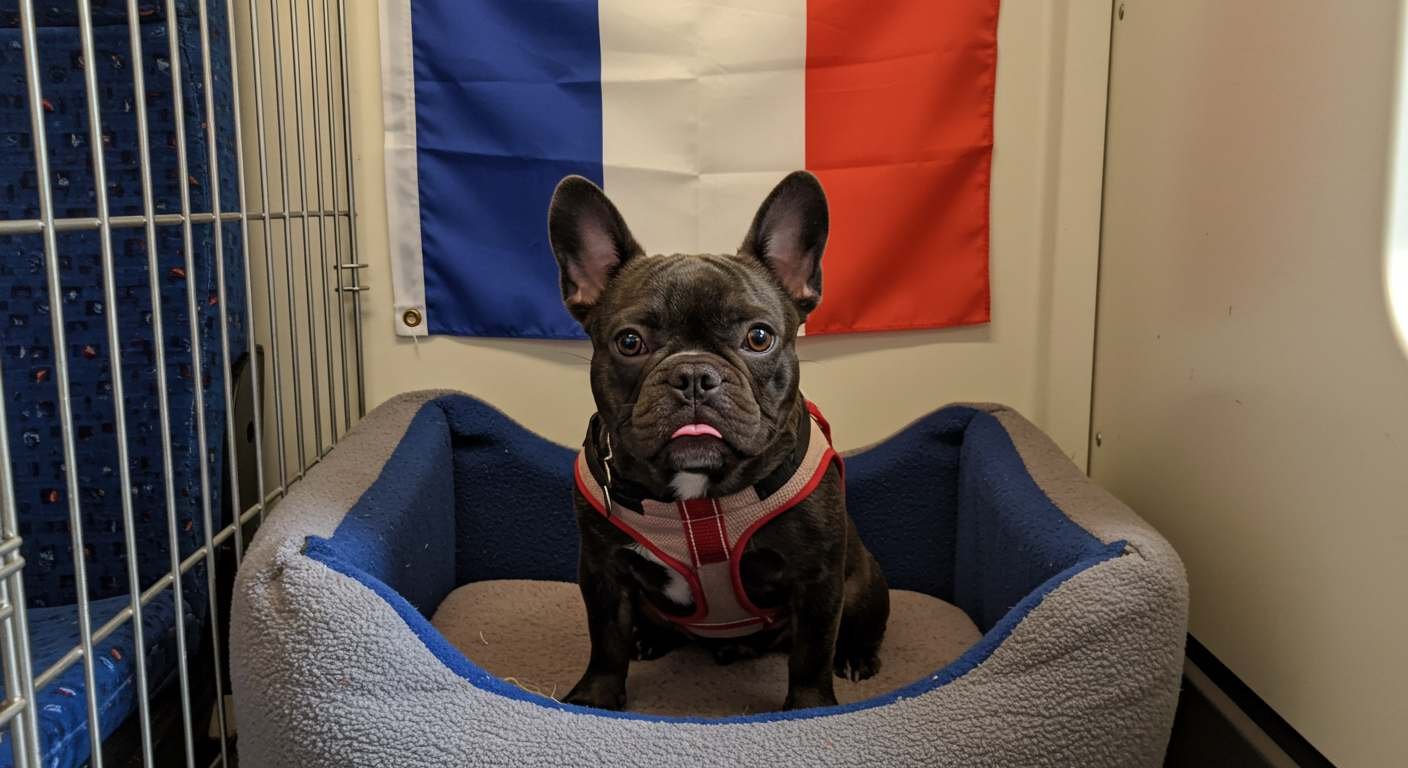
An AI photo of a snub nose French bulldog awaiting UK-France travel
Speak to a Pet Relocation Specialist
Not sure if your dog is fit to fly? Talk to our team for trusted, breed-specific travel advice and planning support.
What UK Owners Must Check Before Booking Pet Travel
What Are the Legal Requirements for Dog Travel from the UK?
Post-Brexit travel requires an Animal Health Certificate (AHC) for each journey to the EU. Pet passports issued in the UK are no longer valid.
AHC and Documentation Checklist:
-
Confirm microchip registration.
-
Ensure rabies vaccination is at least 21 days before travel.
-
Administer tapeworm treatment if required by the destination.
-
Obtain an AHC from a certified vet within 10 days of travel.
Are Your Travel Route and Pet Carrier DEFRA-Approved?
All travel must be arranged through DEFRA-approved routes and companies. These providers meet UK animal welfare standards and ensure that your pet’s journey complies with current regulations.
Could Your Dog’s Breed Be Denied at Booking?
Owners must declare their dog’s breed honestly. Failing to do so can result in refused transport or penalties. It is important to check breed restrictions early in the planning process.
Flying with Snub-Nosed Dogs: Risks, Rules and Airline Bans
Which Airlines Ban or Allow Snub-Nosed Breeds?
Here is how some major airlines treat flat-faced dog breeds:

Pro Tip: Always check the latest airline embargoes before booking. Temperature-based bans can change by season and destination.
Owners should always confirm directly with the airline before booking.
Cabin vs Cargo: Is Flying Safe for Flat-Faced Dogs?
Most UK airlines do not allow dogs in the cabin. Cargo travel remains the primary option, but the lack of ventilation and temperature control makes it risky for brachycephalic breeds.
What Are Airline Heat Embargoes and Seasonal Blackouts?
Many airlines restrict pet transport during warmer months. These embargoes help prevent heatstroke, which snub-nosed dogs are especially prone to experiencing.
What Are the Crate Rules for Flying Brachycephalic Dogs?
Crates must meet IATA Live Animal Regulations. This includes sufficient space for the dog to stand, turn, and lie down, along with multiple ventilation points to ensure proper airflow.
Is Road Travel a Safer Option? Pros, Cons and What to Expect
Road journeys offer a flexible alternative for UK pet owners who are avoiding flights with flat-faced dogs.
What Are the Best Routes and Timelines for Eurotunnel and Ferries?
-
Eurotunnel: The journey from Folkestone to Calais via Eurotunnel Le Shuttle takes around 35 minutes, with pets staying in the vehicle throughout. For owners driving from the UK to France with dogs, the Eurotunnel is one of the safest and fastest options.
-
DFDS Seaways: Offers crossings from Dover to Calais and Newhaven to Dieppe. Some routes provide pet-friendly cabins or allow pets to remain in vehicles. Crossing times range from 90 minutes to 4 hours.
-
Planning Tip: Build in time for customs checks and breaks. Use secure crates or harnesses for longer road journeys.
Should You Use a Professional Pet Transport Company?
Many owners choose expert help. Tailored Pet Travel provides DEFRA-approved, climate-controlled vehicles with trained handlers to ensure that your dog’s journey is smooth and stress-free.
Self-Driving or Hiring Help: Which Is Better for Pet Road Travel?
Self-driving gives owners full control, but it also demands careful planning. Professional transport services handle logistics, paperwork, and welfare checks, which can be a huge relief during complex travel.
What Should Your Road Travel Plan Include?
-
Regular rest stops (every 2–3 hours).
-
Travel documents accessible for checks.
-
Overnight stays at pet-friendly accommodation.
How to Prepare Your Snub-Nosed Dog for a Long Journey
How Do You Crate Train a Snub-Nosed Dog for Travel?
Begin crate training at least four weeks ahead of travel. Let your dog explore the crate gradually using treats, praise, and short practice sessions. Positive associations help reduce anxiety later on.
What Helps Reduce Stress for Flat-Faced Dogs During Trips?
Bring familiar items such as toys or blankets. Cooling mats and natural calming sprays can help. Owners should avoid sedatives unless specifically approved by a vet. These travel tips for flat-faced dogs help reduce the risks linked to brachycephalic travel safety.
What Are the Feeding and Hydration Rules for Travel?
Feed your dog four hours before leaving. Offer water throughout the journey and monitor body temperature, particularly in warmer weather.
Book Expert Pet Transport
Need safe, stress-free travel for your snub-nosed dog? Our licensed handlers and custom routes protect your pet every step of the way.
Your Vet’s Role: Health Clearance and BOAS Considerations
What Does a Vet Assess Before Approving Travel?
Vets examine breathing function, overall health, and look for BOAS symptoms. If necessary, they will issue a fitness-to-fly certificate.
When Is a Dog Not Fit to Travel?
-
Heavy breathing or wheezing at rest.
-
Blue-tinged gums or tongue (cyanosis).
-
Intolerance to mild exercise.
What Veterinary Documents Are Needed for International Travel?
-
Valid AHC.
-
Proof of up-to-date vaccinations.
-
Fitness-to-fly clearance (if required by airline).
If your dog shows any of these signs, reschedule the trip until your vet confirms they are fit to travel.
Essential Travel Checklist for Snub-Nosed Breeds
Prepare everything in advance and double-check your list before departure.
Dog Travel Checklist:
-
Cooling mat or warm blanket (depending on season)
-
Water bottle and spill-proof bowl
-
Secure harness and lead
-
AHC and vaccination documents.
-
Emergency contact details for vets
-
Comfort item from home (toy or blanket)
Where Tailored Pet Travel Can Help (Without the Stress)
Travelling with a snub-nosed dog takes planning and precision. Tailored Pet Travel provides expert support for brachycephalic breeds, offering both road and air logistics. As a trusted dog relocation service, our team understands the unique needs of flat-faced pets. From paperwork and route planning to vehicle safety and comfort, we ensure every detail is handled with care so your pet can travel comfortably – and you can too.