
Can you really take your pet by car from the UK to Europe?
Yes, you absolutely can travel with your pet by car from the UK to Europe, provided you prepare properly. Since Brexit, the process has changed, but thousands of UK pet owners complete this journey every year. With some paperwork, a visit to the vet, and careful planning, your pet can enjoy a comfortable road trip through Europe with you.

Here's What We Have Covered In This Article
1. Can You Really Take Your Pet by Car from the UK to Europe?
Although Brexit brought some changes, it remains entirely legal and practical to drive to Europe with your pet. Many people wrongly believe that pet travel is no longer allowed. That is not the case. The process simply includes a few more steps than before.
People choose to drive with pets for various reasons, such as holidays, pet relocation, or collecting a new companion from abroad. Road trips offer flexibility, reduced stress, and more control over your pet’s experience.
With the right planning, it is a comfortable and rewarding journey for both of you.
Pro Tip: Eurotunnel terminals are often quicker and more pet-friendly than many ferry options.
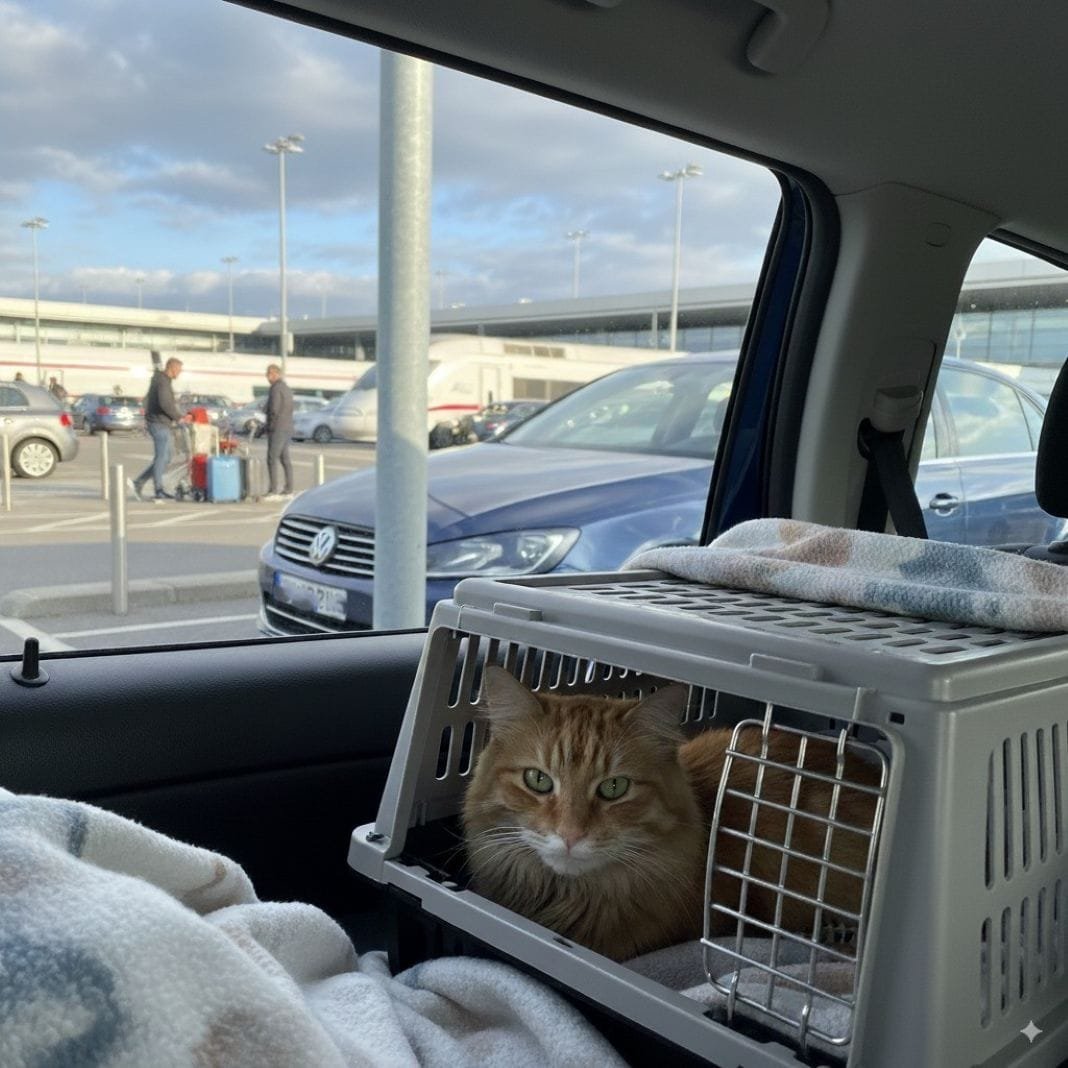
An AI photo of a cat in a travel crate in a eurostar car park waiting for the euro tunnel to be transported
Pet Transport That Goes the Extra Mile
Whether you’re relocating or just exploring Europe, we safely move pets across borders with expert care.
2. Essential Travel Documents and Vet Checks for Your Pet
Travelling from the UK to the EU with a pet requires accurate documentation:
-
Animal Health Certificate (AHC): This document is issued by an Official Veterinarian. It replaces the former EU Pet Passport. The certificate must be completed within 10 days of travel and is valid for one trip only.
-
Microchipping: Your pet must be microchipped before receiving the rabies vaccine. The microchip number is recorded on the AHC.
-
Rabies Vaccination: Your pet must receive this vaccination at least 21 days before travel. It must still be valid on the departure date.
To avoid disruption, book a vet appointment at least four weeks before departure. This gives time to update vaccines and confirm that your vet can issue an AHC.
If the paperwork is missing or incorrect, for instance, if the vaccine has not taken full effect, your pet may be denied entry.
Understanding the current UK to EU pet requirements is essential for avoiding last-minute surprises. Always double-check the rules with your vet or the official DEFRA website.
Pro Tip: Always double-check that your vet is authorised to issue an Animal Health Certificate before booking an appointment.
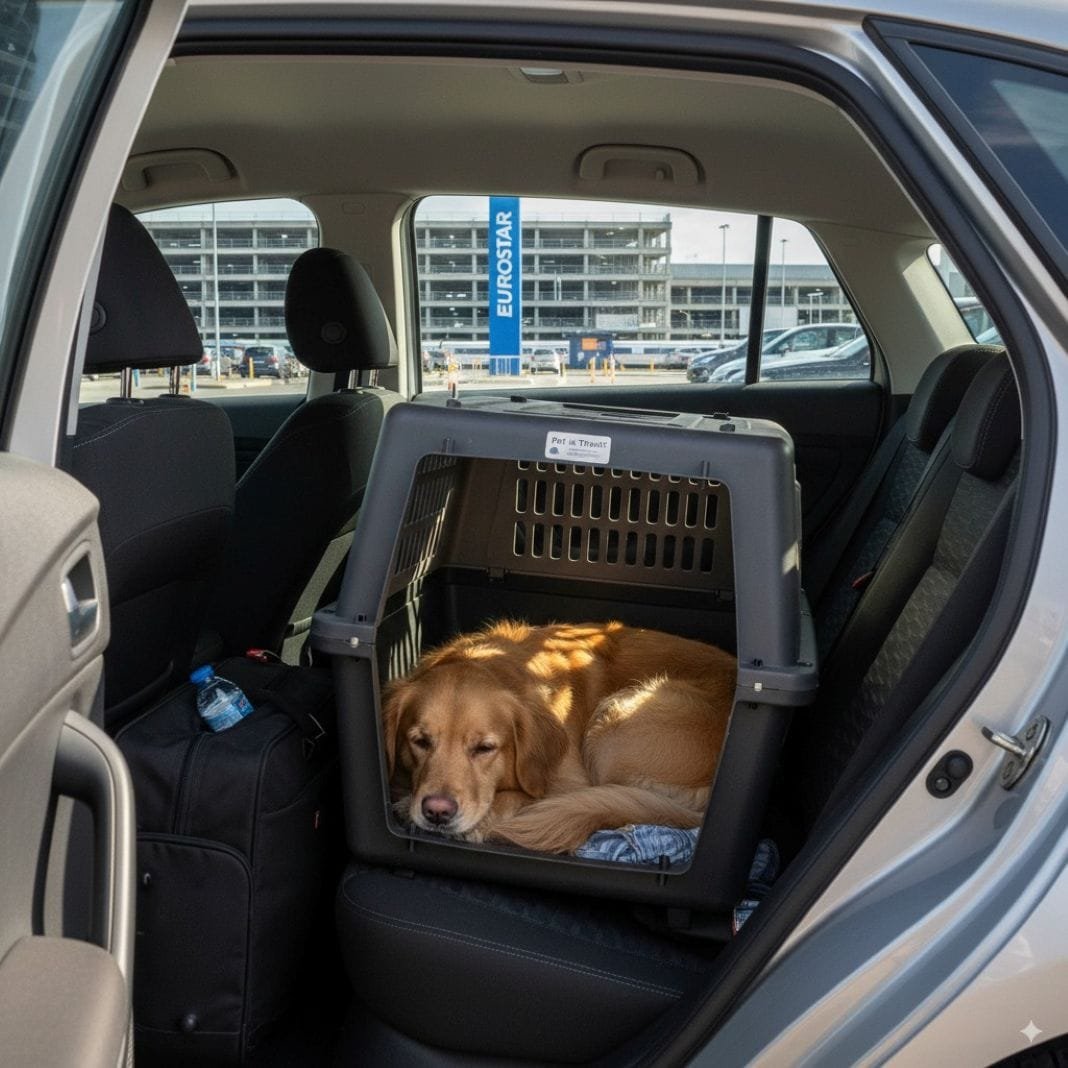
An AI photo of a dog in a travel crate in a eurostar car park waiting for the euro tunnel to be transported
3. Getting Your Car and Pet Ready for the Long Drive
Vehicle Preparation
-
Ensure your car is well-ventilated and the air conditioning functions correctly.
-
Use reflective window shades or covers to manage heat and sunlight.
Restraints and Safety
-
Legal requirements in the UK and EU state that pets must be safely restrained.
-
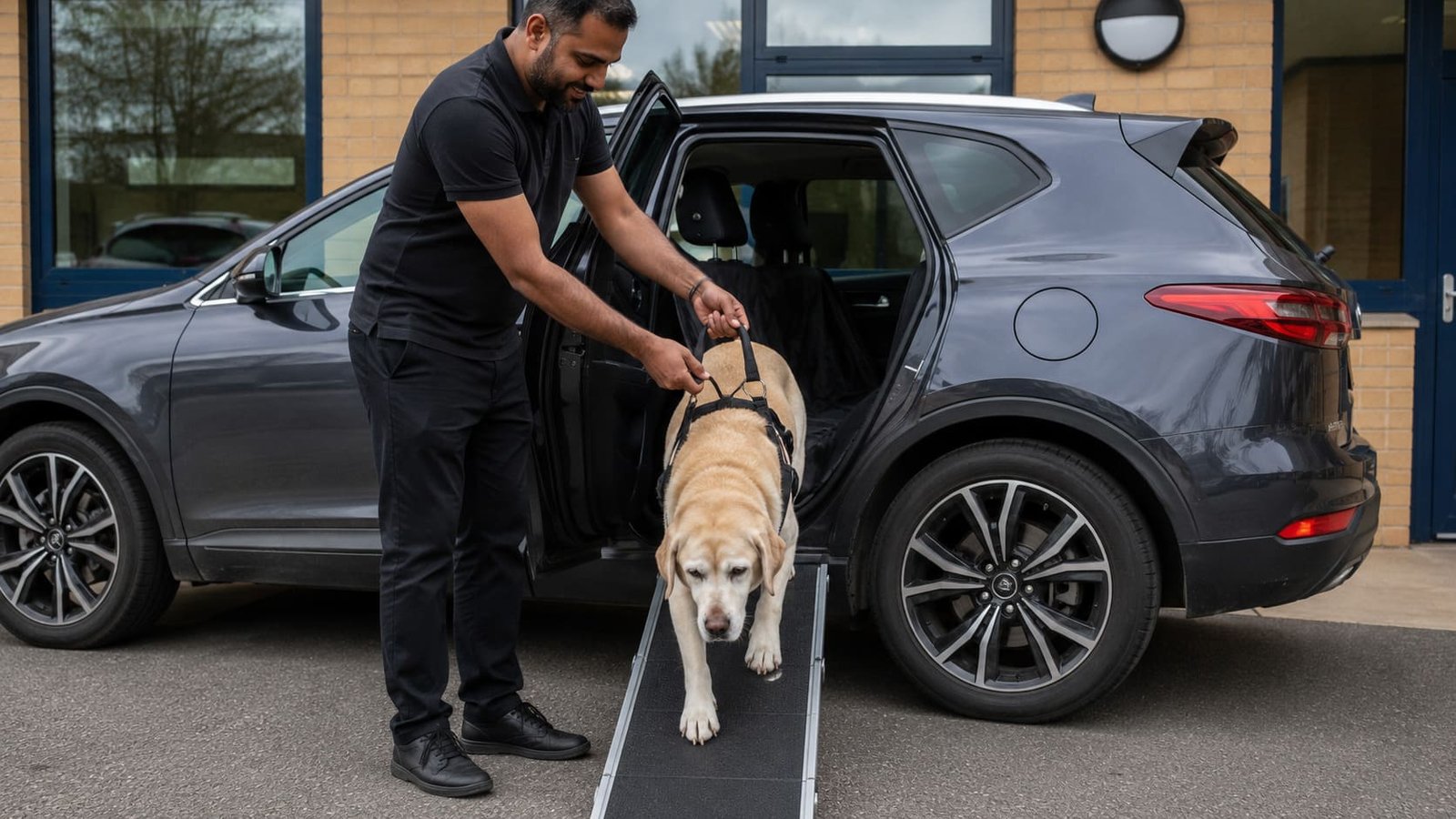
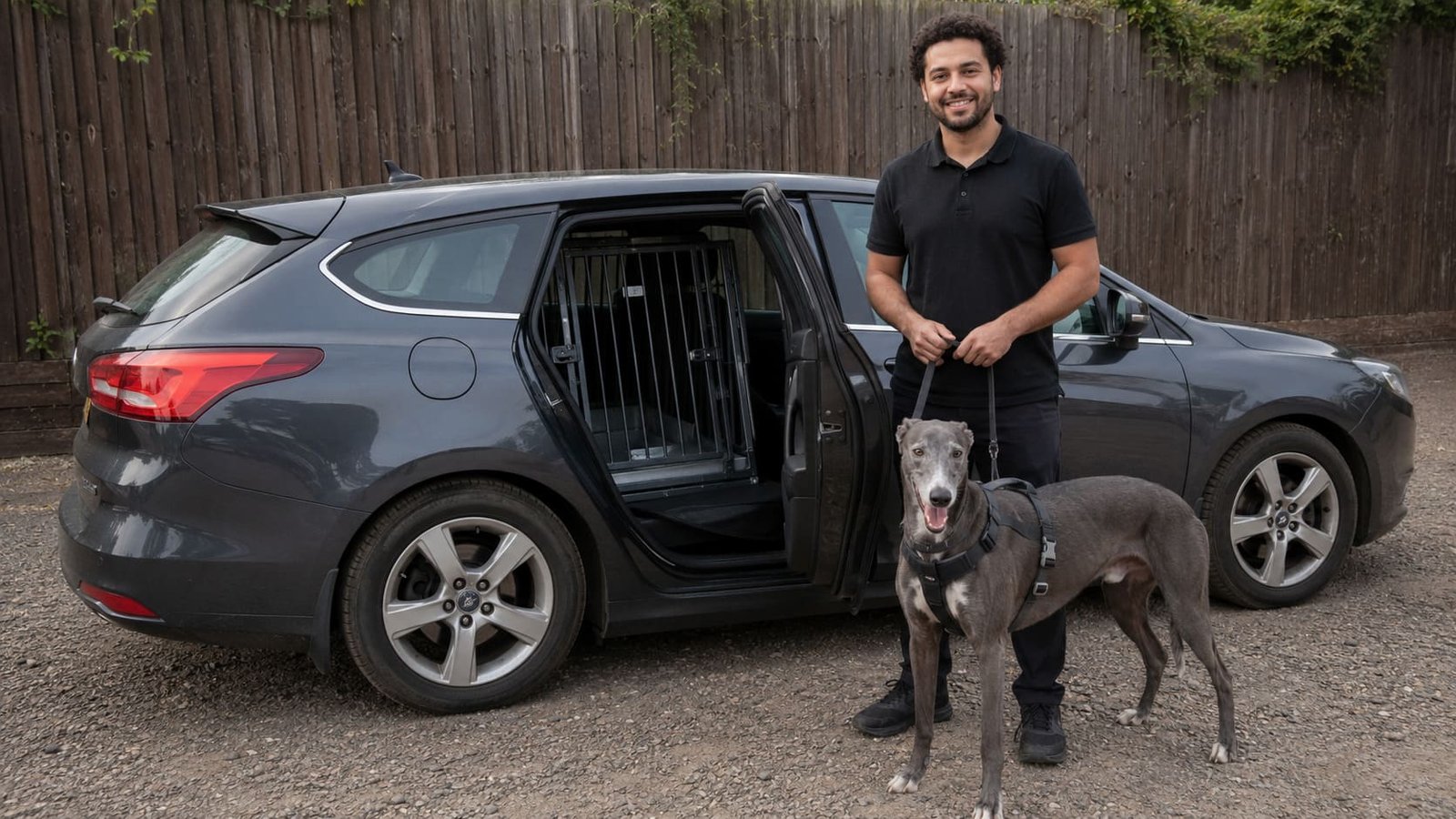
Use harnesses, pet seatbelts, or secure travel crates based on your pet’s needs.
-
Crates can help pets feel secure. Harnesses allow more visibility and interaction.
Comfort Essentials
-
Pack your pet’s favourite blanket or toy to help them relax.
-
Stop every two to three hours for short walks, water, and bathroom breaks.
-
If your pet shows signs of anxiety or motion sickness, consult your vet about calming aids.
Supporting Pets with Travel Anxiety
Anxious pets may pant, whine, pace, or drool during car journeys. You can support them with the following:
-
Adaptil sprays or collars: These mimic natural pheromones and help soothe nervous dogs.
-
Calming supplements: Products such as Zylkene or VetIQ Serene-UM are widely used.
-
Desensitisation techniques: Start with short local drives to build confidence.
-
Vet-prescribed medication: For serious cases, Cerenia or mild sedatives may be appropriate.
Always try new treatments in advance to ensure they work well for your pet.
Common Mistakes to Avoid
-
Booking from an unauthorised port: Not all ferry and tunnel terminals handle pet travel. Always confirm your chosen port is DEFRA-approved.
-
Leaving the AHC to the last minute: The certificate must be issued within 10 days of travel. Appointments may be limited.
-
Rabies vaccine timing: It must be at least 21 days old on the day of travel. There are no exceptions.
-
Forgetting tapeworm treatment: Dogs need treatment before returning to the UK. This must be done by an EU vet.
-
Assuming all vets can issue an AHC: Only Official Veterinarians can do so. Always check in advance.
Need Eurotunnel or Ferry Advice?
We’ll walk you through the approved ports, Pet Reception process and travel tips tailored to your route.
4. How Border Crossings Work When Driving with a Pet
Crossing into Europe with your pet is easy when you are prepared:
- Departure: Check in at the Eurotunnel or ferry terminal as usual. Staff will direct you to the Pet Reception building.
- Pet Reception: Staff will scan your pet’s microchip and inspect the AHC. They will also confirm rabies vaccine dates.
- Vehicle checks: Occasionally, customs officials may inspect your car. This is uncommon but possible.
- Approved entry points: Only certain ports handle pet travel. Use official routes for both outbound and return journeys.
Keep your documents organised and easily accessible to avoid delays.
5. On the Road: Keeping Your Pet Safe, Calm and Comfortable
- Breaks: Plan to stop every few hours so your pet can walk, stretch, and hydrate.
- Meals: Feed light meals during extended stops. Avoid feeding just before driving.
- Water: Keep water available at all times.
- Watch for stress signals: Panting, drooling, or restlessness may indicate discomfort.
- Travelling in heat: In Southern Europe, avoid midday travel. Never leave your pet in a parked car.
Many French “Aire” rest stops offer green space. These are ideal for dog-friendly travel.
6. What to Know Before Returning to the UK with Your Pet
Re-entering the UK with a pet has its own checklist:
- Tapeworm Treatment: This is required for dogs only. It must be administered by an EU vet between 24 and 120 hours before return.
- Approved Entry Terminals: Only use terminals listed as authorised for pet re-entry UK. Refer to the latest DEFRA guidance to ensure your selected port is accepted.
- Plan vet visits abroad early: Make an appointment before leaving the UK to ensure compliance.
Missing any of these steps could lead to border delays or the need for quarantine.
7. Hidden Costs and Pet Travel Insurance Essentials
Beyond the usual travel costs, travelling abroad with a pet can bring unexpected expenses:
- AHC Costs: These typically range from £100 to £300.
- Vaccines and Microchipping: Upfront or renewal costs may apply.
- Gear: This includes crates, harnesses, travel beds, and calming products.
- Pet-Friendly Stays: Many hotels charge extra for pets.
- Insurance: Choose a dog travel insurance policy that includes emergency treatment, cancellations, and lost pet cover.
Vet visits abroad are often expensive. Even basic care can cost over £100.
8. The Ultimate Pet Travel Checklist: Before You Go
Use this checklist to make sure you and your pet are fully prepared for a smooth journey from the UK to Europe and back:
-
Microchip scan and documentation
Ensure your pet’s microchip is functioning and correctly recorded by your vet. -
Rabies vaccination valid and recorded
Verify the vaccine was administered at least 21 days before travel and is listed on your AHC. -
Animal Health Certificate (AHC) issued within 10 days of travel
Only an Official Veterinarian can issue this certificate, which is required for each individual trip. -
Tapeworm treatment booked for return journey (dogs only)
Schedule this between 24 and 120 hours before returning to the UK, and ensure it is recorded in the AHC. -
Contact details for an EU-based vet
Identify a local veterinary clinic near your destination in case you need support while abroad. -
Travel restraint: crate or harness
Make sure your pet is safely secured in your vehicle in accordance with UK and EU laws. -
Essentials packed: food, water, lead, toys, bedding
Bring familiar items to help your pet stay calm, along with enough food and water for the journey. -
First aid kit and calming remedies
Include basic medical supplies and any supplements or sprays your vet recommends for anxiety or motion sickness. -
Insurance documents
Carry your pet insurance details in case of an emergency or vet visit while abroad. -
Confirmed pet-friendly accommodation
Book hotels or stops in advance to avoid last-minute issues, especially in peak travel seasons.
9. Final Thoughts: Making the Journey Stress-Free and Safe
Driving to Europe with your pet is a rewarding experience when planned carefully. While post-Brexit travel requires more attention to detail, it is entirely manageable.
Tailored Pet Travel, a trusted UK pet exporter, has helped hundreds of owners take their pets safely across Europe. We are here to make the journey smoother.
Picture yourself in a French vineyard, your dog happily exploring by your side. That is the freedom of a well-organised pet-friendly road trip.
For expert support with planning, documentation, or logistics, Tailored Pet Travel is here to help.