Why do pet transport quotes vary so much, and how can you compare them effectively?
Pet travel quotes differ because the services involved are rarely identical. Even when the destination appears the same, the process varies based on the pet’s needs, regulatory requirements, timing pressures, and the provider’s approach to welfare, logistics, and compliance.
Here's What We Have Covered In This Article
What’s Actually Included? Understanding the Scope Behind the Quote
Quotes in pet transport rarely explain everything, and the headline figure often conceals meaningful differences between providers.
One company may include documentation preparation, such as Animal Health Certificates or import permits, while another may price documentation as a separate item. Crate hire and drop-off, airport handling, customs clearance, or vet checks may all follow different billing structures depending on who is responsible.
Welfare oversight is another non-standard component. Some providers include live tracking and regular handler reports. Others may use third-party logistics firms that offer no insight once the pet is in transit. Safety and comfort during the process, such as planned rest stops or temperature monitoring, are often missing from cut-price quotes.
Even the term “all-inclusive” can be misleading. A quote may appear full, but if the provider excludes on-the-day care or offers limited support working through border checks, that missing context can result in delays or disruption mid-process.
Understanding quote inclusions is not about line-by-line comparison. It is about anticipating what could go wrong if something has been left out. A cheaper quote may look appealing until it means a missed flight due to incomplete paperwork or additional costs at customs due to an unsuitable crate.
Route, Timing, and Risk: The Hidden Drivers of Cost
Distance is not the only, or even the main, factor that determines pet transport pricing. Cost is shaped by how precisely, safely, and compliantly the process must be managed.
A direct route may be impossible due to breed embargoes or seasonal weather restrictions. Some destinations, particularly in high-temperature regions, may prohibit certain pets from flying in the cargo hold during summer months, which means rerouting or delaying the process. That alone can introduce major shifts in coordination and cost.
Urgent moves, such as last-minute relocations or rebookings after a refused import, require intensive scheduling and quicker document turnarounds. These situations often necessitate out-of-hours vet checks, specialist crate sourcing, or next-available flights, all of which increase cost.
Risk is also a key factor. Pets prone to respiratory issues, anxiety, or age-related sensitivities require slower pacing, hands-on handling, and individual supervision. That risk mitigation has a direct impact on what the provider must do and how they must staff the process.
A short process to Europe may cost more than a longer domestic trip if it involves complex entry conditions, a ferry crossing during restricted hours, or breed-specific handling regulations.
Quotes that reflect these layers of planning are not inflated. They are acknowledging the reality behind risk-managed travel.
Pro Tip: Check whether your quote includes crate delivery and airport handling to prevent last-minute logistical issues.
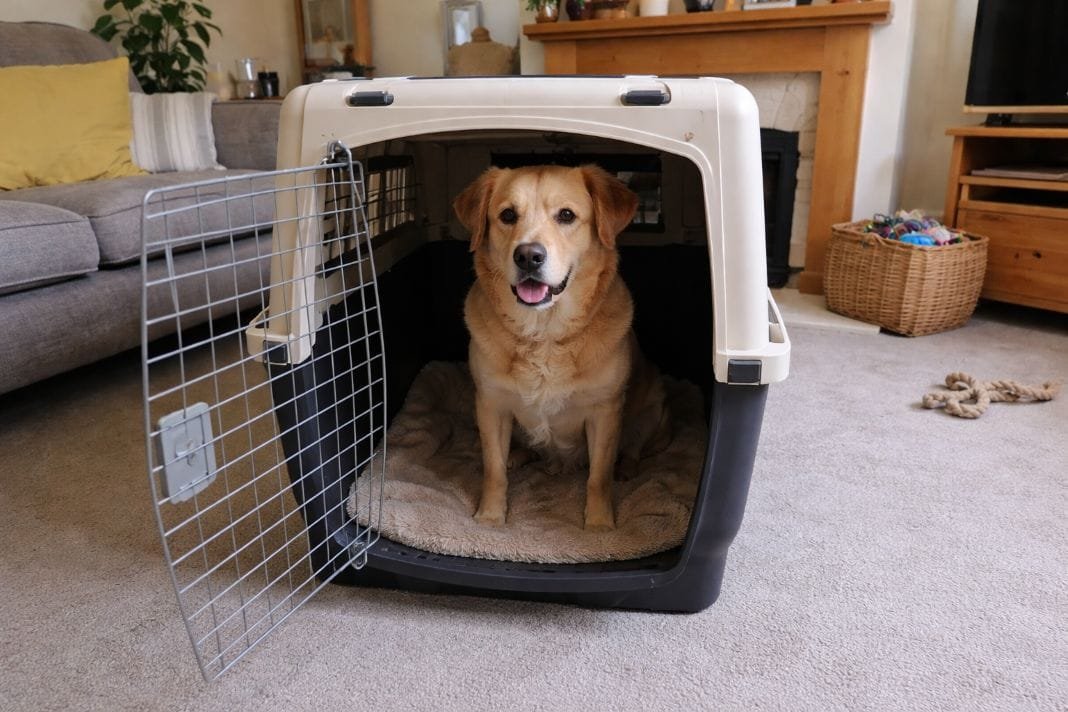
An illustrative image of a dog sitting calmly inside an open pet travel crate in the living room of a typical UK home
Speak with a Welfare-Focused Travel Specialist
Discuss your pet’s specific needs with a team experienced in safe, compliant animal relocation.
Compliance Isn’t Optional: The Cost of Doing It Properly
Unlike other forms of transport, pet relocation is governed by strict legal and regulatory frameworks across every stage of the process. Compliance is not an added extra. It is the safeguard that prevents detention, refusal of entry, or legal penalties.
DEFRA rules in the UK, for example, are clear about transport licensing, vehicle standards, and handler requirements. Airlines follow IATA live animal protocols, which control everything from crate material to feeding intervals. Once across the border, each destination country has its own set of import needs, often involving timed health certificates, vaccination sequences, and customs clearance.
Some pet travel quotes appear lower because compliance steps are omitted, outsourced without oversight, or assumed to be the client’s responsibility. This is where shortcuts become risky. A misdated microchip record, wrong certificate format, or crate non-compliance can stop a process, and no matter how smoothly things have gone to that point.
Professionally managed compliance ensures that documents are complete, but also properly sequenced and vet-endorsed. That level of scrutiny adds cost. It also reduces the likelihood of costly setbacks.
Choosing a provider that takes direct responsibility for meeting legal obligations helps shield the owner and pet from administrative failure. It is not merely a paperwork exercise. It is a protective buffer against outcomes that are, by that point, irreversible.
Animal Welfare Standards: What You’re Really Paying For
Beneath every pet travel quote lies a choice between models of care. Some providers operate on logistics-first frameworks, treating animals as consignments. Others prioritise welfare from planning through to arrival.
Welfare-led transport involves trained animal handlers, dedicated rest protocols, and process plans designed around the pet’s stress levels. These services often include behavioural briefings, individual crate matching, and gentle transitions between stages of the process. The pet is treated less like cargo and more like a passenger with specific needs.
Courier-style models, in contrast, may favour swift consolidation and minimal handling. This can be cheaper, but it often means less flexibility, less oversight, and less responsiveness if the pet becomes distressed or conditions change.
For older animals, those with medical concerns, or pets with anxious temperaments, welfare-first transport can make the difference between a well-managed trip and a physically taxing one. Not every pet needs a specialist service, but those that do will not be served well by a cost-shaving approach.
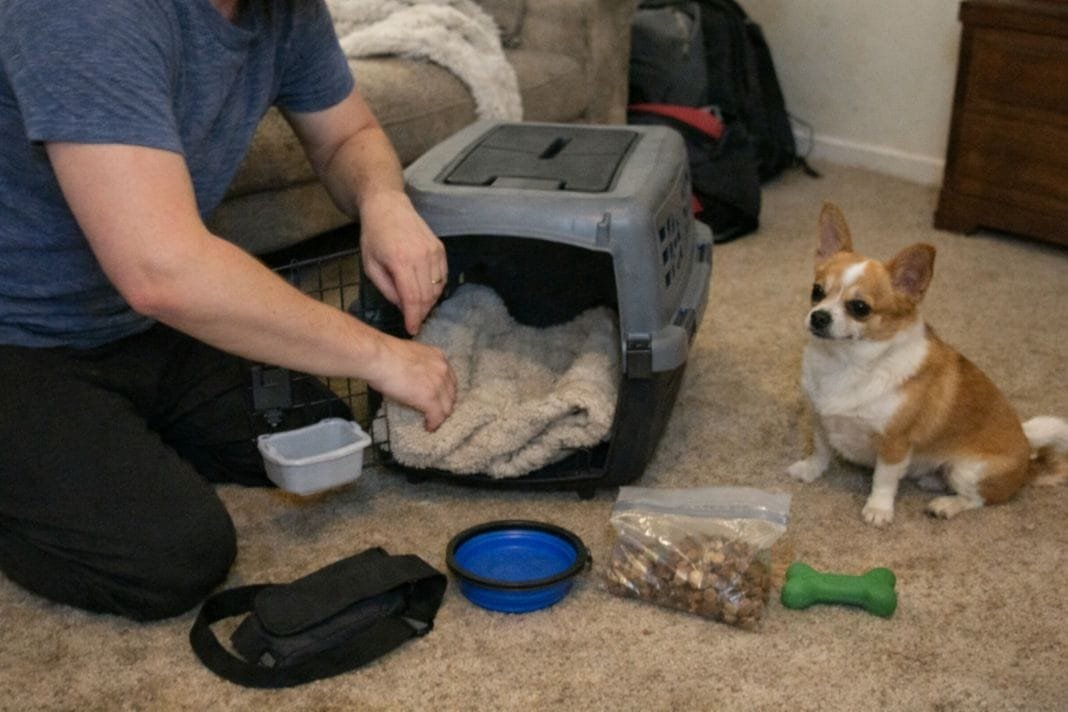
An illustrative image of a person at home preparing a travel crate with a small dog nearby.
Tailored Pet Travel operates with consistent welfare oversight. This includes coordination with vets, timed transport breaks, and trained staff who understand behavioural cues. The slightly higher quote in those cases contains more than logistics. It carries responsibility.
Comparing Quotes: What to Ask, What to Watch For
Looking only at the final price when comparing pet travel quotes can lead to misunderstanding. What appears to be a cost-saving decision may later introduce stress, risk, or cost escalation.
When reviewing quotes, consider the following:
- What is included? Ask specifically about documentation, crate provision, customs handling, vet coordination, and end-to-end transport.
- Who is responsible for compliance? Confirm whether the provider manages this directly or expects the client to arrange certificates independently.
- Is pet welfare considered throughout? Look beyond the route. Ask about rest stops, monitoring, handler qualifications, and contingency planning.
- How reactive is the plan? A vague or oversimplified quote can signal a lack of scenario planning.
- Is there a real contact point during travel? Lack of accountability mid-process is a warning sign, especially during longer or higher-risk moves.
Make comparisons by assessing outcomes, not just inputs. A meaningful quote should convey readiness, not just availability.
When the Process Matters: Choosing Based on More Than Price
Not every process is routine. Moves involving tight timelines, international regulations, or pets with complex needs demand more than a low-cost transport option. They require foresight, control, and expertise.
Mistakes during high-stakes travel are rarely fixable after the fact. Missed import deadlines, incorrect documentation, or mishandled transfers can result in pets being held at borders, or worse, returned or quarantined unexpectedly.
Know What Your Quote Really Includes
Get a transparent cost breakdown, including documentation, crate compliance, and welfare handling at every step.
In many cases, clients contact Tailored Pet Travel after another booking has failed or a provider has withdrawn due to challenge. These are often recoverable situations, but they carry unnecessary stress that might have been avoided with the right support from the outset.
Pro Tip: Always ask for confirmation of who is handling compliance documents to avoid errors at borders.
When choosing a provider, consider what is truly being entrusted. The quote reflects the process price, but the seriousness with which that process will be managed. Where responsibility, care, and compliance are all non-negotiable, expertise is not an expense. It is a form of protection.