Is flying your pet in the cabin safer than using the cargo hold?
Both cabin and cargo travel can be safe for pets, depending on their size, breed, temperament and the airline’s pet policy. Smaller pets are typically eligible for cabin travel, staying under the seat in a secure carrier. Larger animals usually travel in the pressurised cargo hold. With the right crate, health checks and documentation, either route can offer a safe experience. By understanding the specific airline pet travel policies and your pet’s needs, you can confidently plan for travel.
Here's What We Have Covered In This Article
Understanding Your Pet Travel Options
Flying in the Cabin
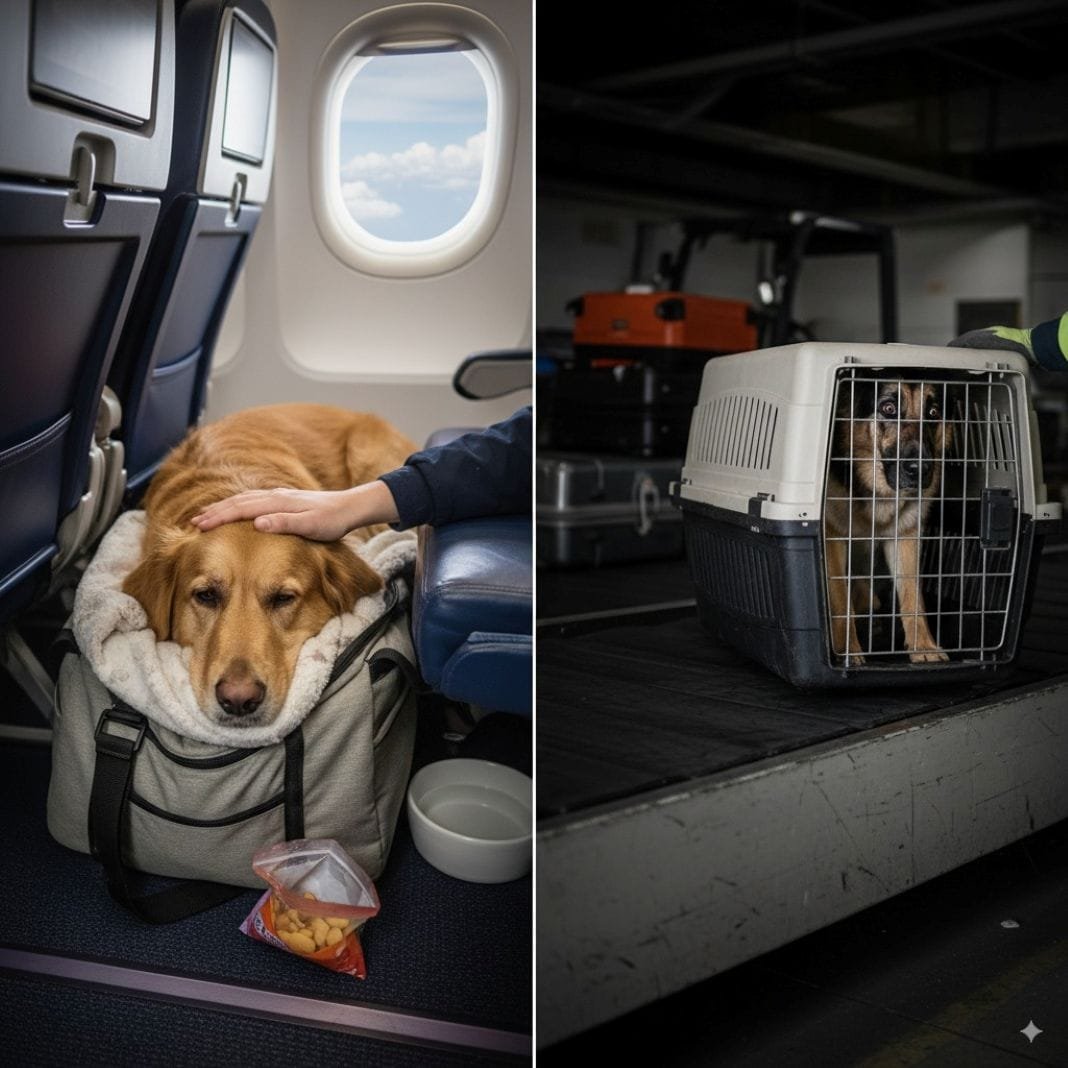
Airlines allow small pets to travel in the cabin if they fit in an airline approved carrier that goes under the seat. The combined weight of the pet and carrier usually must be under eight kilograms.
Cabin travel suits dogs and cats that are crate trained and feel safe close to their owners. It helps reduce pet stress during air travel. However, not every flight allows cabin pets. Some aircraft models and international routes have restrictions.
Things to prepare:
-
Use a soft sided crate that meets airline regulations
-
Include breathable mesh and secure zips
-
Book early as airlines have limited cabin pet spaces
-
Begin crate acclimatisation weeks before travel
Tailored Pet Travel supports owners with in cabin travel advice, crate checks and booking documentation
Pro Tip: Always train your pet in the travel crate at least 2 weeks before the flight.
Need Help Planning Your Pet Friendly Route?
We’ll help you find the right pet stopovers, timings, and stress free travel plans that actually work.
Flying in the Cargo Hold
For pets that are too large for the cabin, cargo hold travel is the alternative. Airlines use a climate controlled, pressurised area designed for live animal transport. These zones meet IATA Live Animal Regulations and follow internationally recognised live animal transport standards.
Preparation helps reduce stress. The key is to familiarise your pet with the crate and ensure they are medically fit to travel.
Recommended steps:
-
Choose a hard plastic crate that meets IATA standards
-
Avoid connecting flights where possible
-
Book direct routes with minimal delays
-
Start crate acclimatisation at least two weeks in advance
Some breeds, especially brachycephalic ones such as French Bulldogs, have higher risk in cargo. Tailored Pet Travel provides advice for breed specific risks, route planning and temperature management.
Pro Tip: Carry printed and digital copies of all paperwork in separate bags for easy access..

Comparing Safety, Comfort and Costs
Cabin vs Cargo: What matters most?
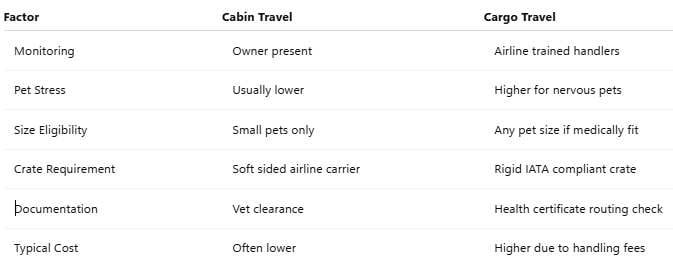
Pets with respiratory conditions, elderly pets or those with chronic anxiety may benefit more from cabin travel if eligible.
Tailored Pet Travel helps owners match the right travel method with their pet’s health, breed and destination. Their team specialises in pet relocation services in the UK and ensures compliance with microchip standards and airline pet policies.
Want to Avoid Pet Travel Mistakes?
Speak to our travel prep team and get everything from pet documents to route tips sorted today.
Expert Advice from Tailored Pet Travel
How can I prepare my pet for air travel?
Training is key. Introduce your pet to the travel crate gradually. Feed inside the crate, play nearby and close the door in short intervals. Building a calm association helps with pet stress reduction and overall comfort.
Ensure your pet has an ISO 11784 or 11785 compliant microchip. Vaccinations including rabies must be current. Relocating pet owners may also need a Transfer of Residence form and a veterinary health certificate from an APHA registered vet.
Dog and Cat Flight Preparation Checklist
-
Confirm microchip meets ISO standard and is readable
-
Administer rabies vaccination at least 21 days before departure
-
Use the correct size travel crate for your pet’s weight and height
-
Book flights with cargo or cabin pet inclusion
-
Vet health certificate and routing documentation
-
Label crate clearly and include absorbent liner and water bowl
Tailored Pet Travel makes this process smoother. They guide you through crate selection, health paperwork, route planning and destination entry rules.
If you are relocating, going on holiday or preparing a family move, Tailored Pet Travel offers a practical step by step pet transport service to make your pet’s journey safe, comfortable and compliant with all current airline and destination requirements.