

Can you still get your pet to Europe this summer if planning has been left too late?
Sometimes yes, but only if the legal, veterinary, and travel requirements still line up in time. Last-minute pet travel to Europe is less about finding a fast booking and more about whether vaccination timing, health certification, route availability, and border compliance can still be met without compromise.
Here's What We Have Covered In This Article
Understanding the Realities of Last-Minute Pet Travel to Europe
A late pet travel plan can feel a bit like arriving at the station with a suitcase packed and no valid ticket in hand. The process might still be possible, but the timetable is no longer the main problem. The real issue is whether the rules have already narrowed the options.
Urgent pet relocation often carries a different kind of pressure from standard travel. Owners are usually balancing family moves, work deadlines, tenancy dates, or a sudden change in circumstances. That pressure is real, yet European Union pet entry rules do not loosen because time is tight.
Several realities tend to surprise people:
- Travel deadlines for pets are often set by vaccination dates, certification windows, and border rules rather than by transport availability.
- DEFRA guidance, veterinary authorities, and UK Border Force processes sit alongside one another, which means that one missing element can affect the whole process.
- A rushed booking does not fix documentation gaps.
- Stress can lead to small errors, such as a name mismatch or date problem, that become serious at the point of entry.
One of the most common misconceptions is that there is always an express route if someone is willing to pay for it. In practice, some parts of pet travel can be coordinated quickly, but fixed legal and welfare requirements cannot simply be sped up. That distinction matters far more than people expect.
Pro Tip: Double check microchip and vaccination records for consistency before visiting the vet for certification.
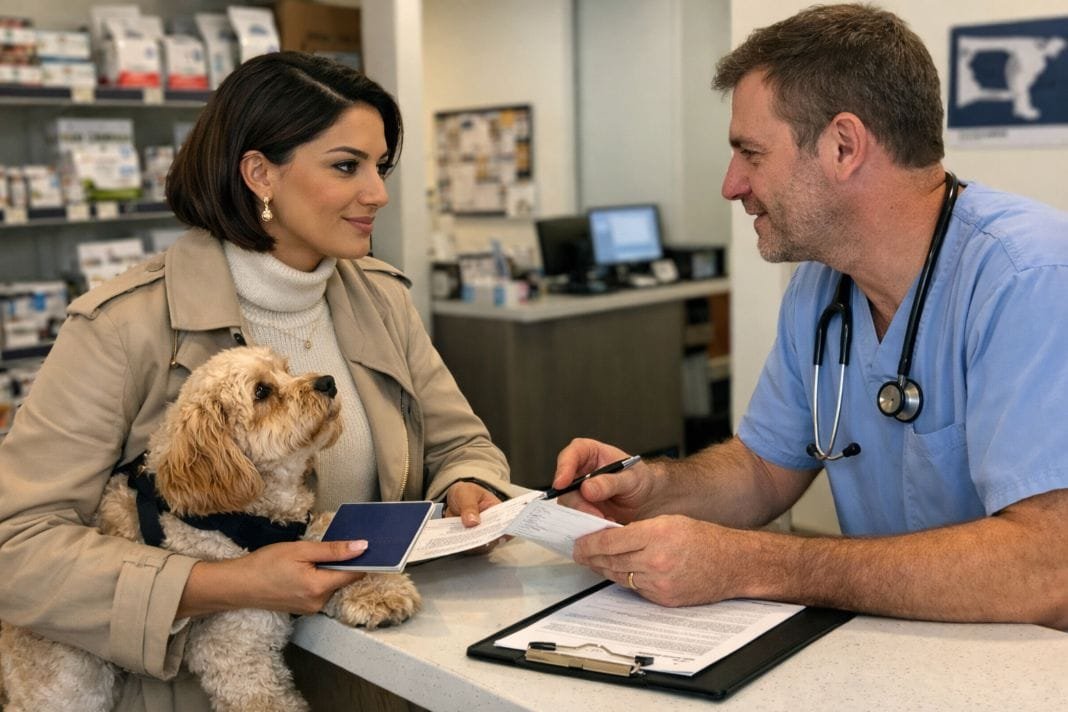
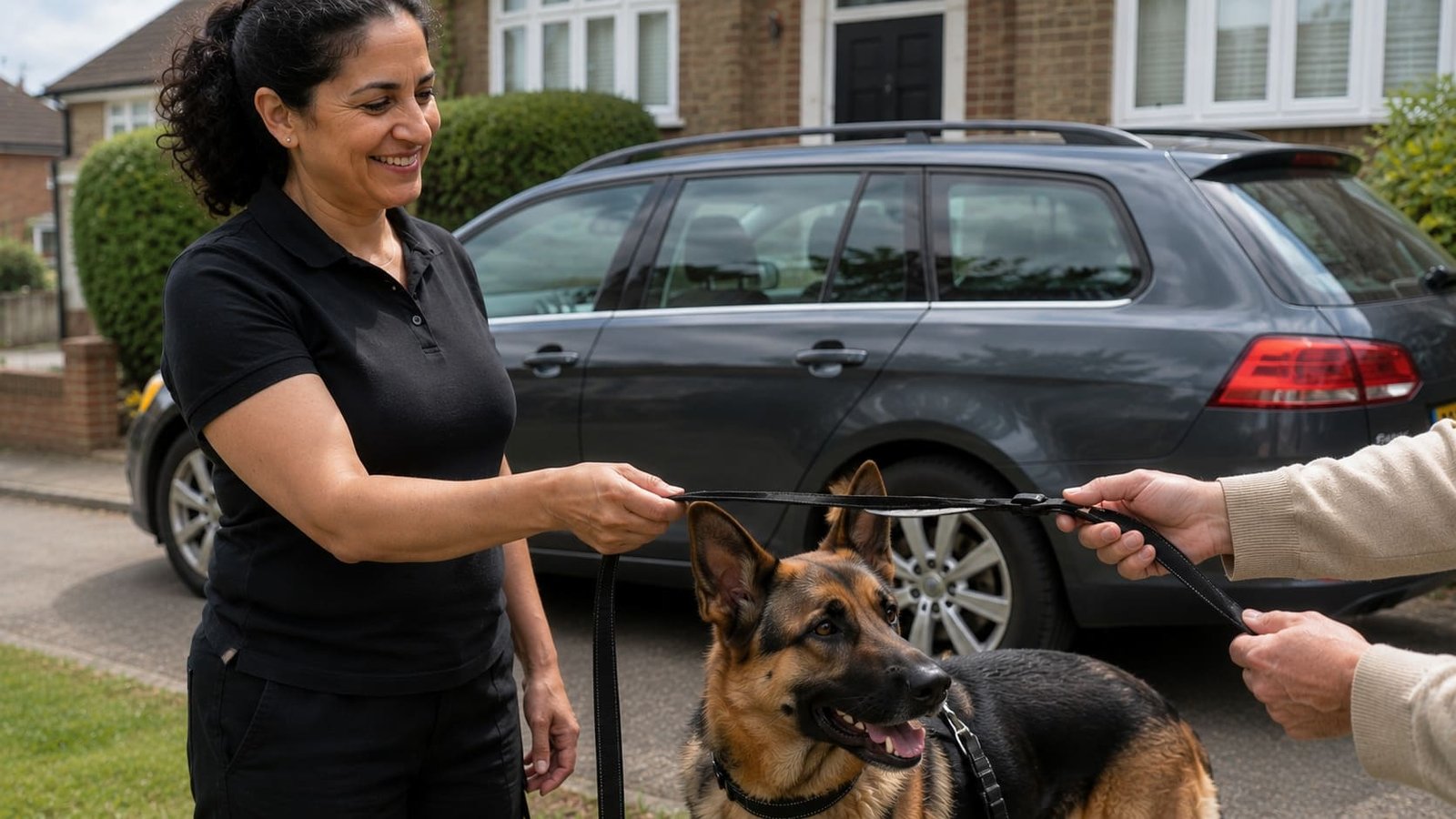
An illustrative image of a dog owner discussing pet travel docs with a vet
Book a Professional Pet Travel Consultation
Get tailored advice for your pet’s journey to Europe, even on a tight schedule. Ensure documentation and logistics match your travel plans.
The Non-Negotiables: What Cannot Be Skipped or Rushed
Some pet travel requirements are fixed, full stop. Convenience does not alter them, and urgency does not remove them.
Rabies vaccination timing
Rabies vaccination is one of the clearest examples. A pet must have the correct vaccination status in place before travel can go ahead under the relevant rules. If that timing has not been met, the problem is not logistical. The problem is legal, and any attempt to travel too soon risks entry refusal.
The Animal Health Certificate
An Animal Health Certificate, often shortened to AHC, is another area where timing matters. It must be completed by an official veterinarian within the permitted window before travel. An AHC is not a flexible admin document that can be issued vaguely in advance or patched together at the last moment if core details are missing.
Welfare and border checks
Even when the paperwork appears complete, welfare remains part of the decision. Border authorities and carriers may look at whether an animal is fit to travel, whether the route is suitable, and whether the arrangements comply with the EU Pet Travel Scheme and any local entry controls. That can affect short-notice journeys in very practical ways, especially in summer heat.
The idea of express documentation often causes wasted time. A certificate can sometimes be arranged promptly if the groundwork has already been done, but no official veterinarian can lawfully invent dates, ignore waiting periods, or smooth over an error that changes the pet’s compliance status.
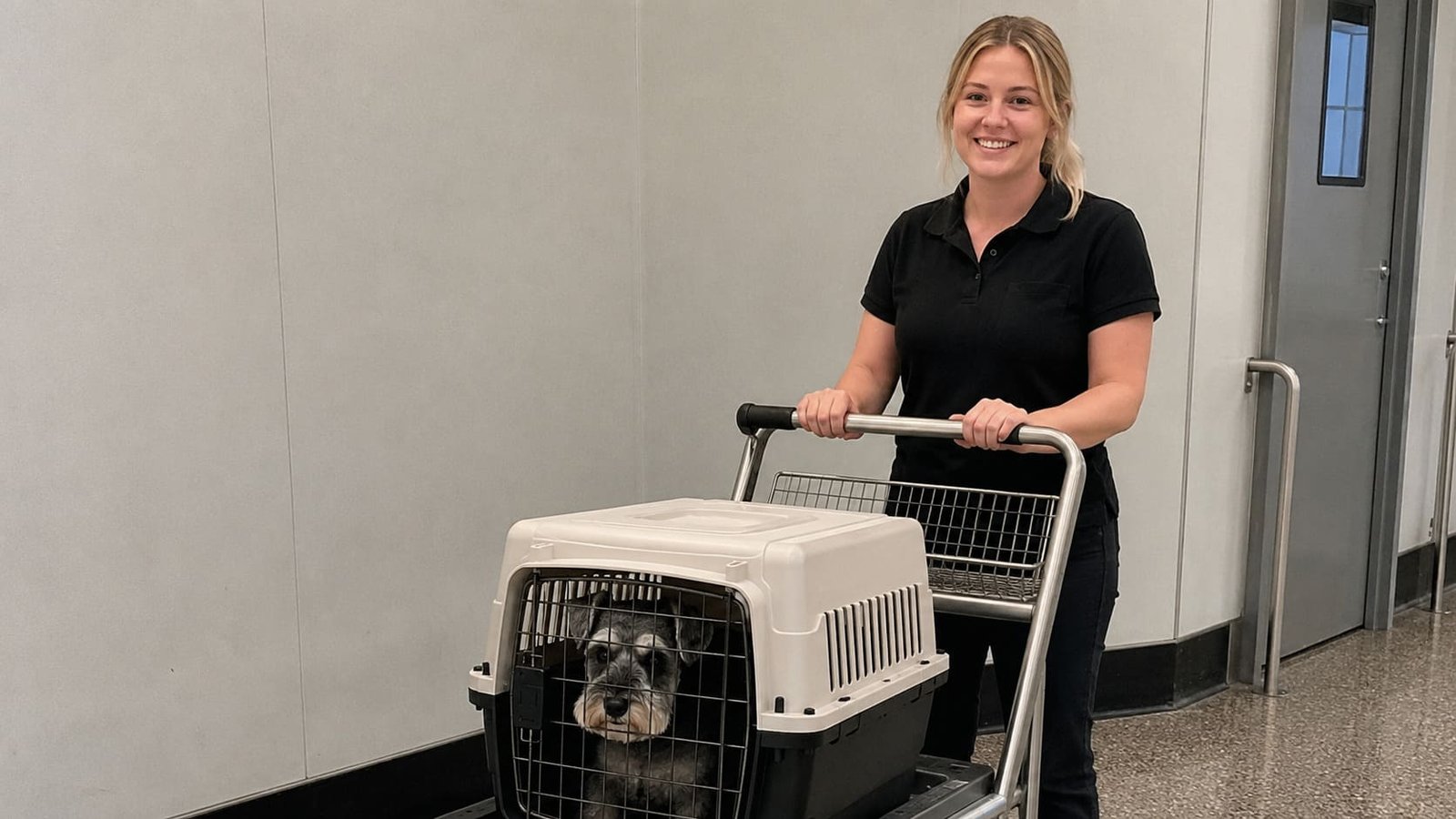
An illustrative image of a lady walking her dog near a ferry terminal sign
What Options Remain When Time Is Short
Once the normal planning window has narrowed, the sensible approach is to look at what remains genuinely viable. Some routes stay open longer than others, but only if the documents and welfare conditions are already in place.
Road travel can offer flexibility because timings, rest stops, and routing may be easier to adjust. Ferry and Eurotunnel crossings can also work well for some urgent pet transport cases, especially where direct control over timing matters. Air travel may still be possible, although it can become more constrained by airline rules, crate requirements, space availability, and IATA-related handling standards.
A quick comparison helps:
- Road and cross-Channel routes may offer more room to adapt timing, provided the pet is compliant and fit to travel.
- Air travel can suit certain journeys, yet short-notice availability is often tighter and paperwork errors become harder to recover from.
- Any route becomes unworkable if the underlying documents are not valid.
At this point, DIY planning starts to carry more risk because each decision affects the next one. A booking that looks available on paper may be useless if the certificate timing, entry rules, or route conditions do not match. In urgent cases, outcome-focused support from specialists, including Tailored Pet Travel, is often less about speed for its own sake and more about choosing a route that still stands up under scrutiny.
Speak to a Certified Pet Relocation Specialist
Discuss your urgent pet travel situation with an experienced adviser who understands European regulations and compliance.
Managing Documentation and Border Compliance Under Pressure
A common urgent-travel scenario starts with a pet that seems almost ready to go. The vaccination is done, the owner has a booking in mind, and someone assumes the paperwork can be completed in a day or two. Then an official veterinarian spots a date issue, a microchip discrepancy, or a document that falls outside the permitted timing window. Suddenly the problem is no longer travel. It is compliance.
Pressure makes ordinary admin mistakes more likely. Border inspection posts and EU entry points do not treat those mistakes as minor if they affect legal eligibility.
Frequent pitfalls include:
- names that do not match across records
- microchip details entered incorrectly
- certificates issued outside the valid timeframe
- assumptions based on old online advice rather than current DEFRA or official veterinary guidance
- route bookings made before the paperwork position is confirmed
An error may lead to delay, refusal, or in some cases quarantine requirements, depending on the destination rules and the nature of the problem. That is why oversight matters so much in urgent cases. A second review of dates, identifiers, and document consistency is often more valuable than shaving a few hours off the travel booking.
Pro Tip: When travel timing is tight, book your route only after confirming every compliance detail is in place.
When Professional Help Becomes the Sensible Option
A clear tipping point arrives when the process matters, the timing is tight, and the consequences of a mistake would be expensive or distressing. At that stage, professional pet travel support becomes a practical decision about risk management.
General couriers and animal welfare specialists do not approach the same situation in the same way. A trained animal handler or pet relocation specialist is looking at fitness to travel, route suitability, regulatory exposure, document timing, and how the pet will cope with the process itself. That is a very different mindset from simply moving cargo from one place to another.
Professional help deserves serious thought when:
- the pet’s travel date is close and the paperwork needs careful coordination
- the route involves multiple stages or border touchpoints
- the animal has age, breed, medical, or behavioural considerations
- a previous booking has failed or been refused
- more than one pet needs to travel together
In those circumstances, firms such as Tailored Pet Travel are typically brought in for control and clarity, not because they can bypass rules. The useful difference lies in reducing avoidable mistakes, protecting welfare, and setting realistic expectations about what can still be achieved this summer.
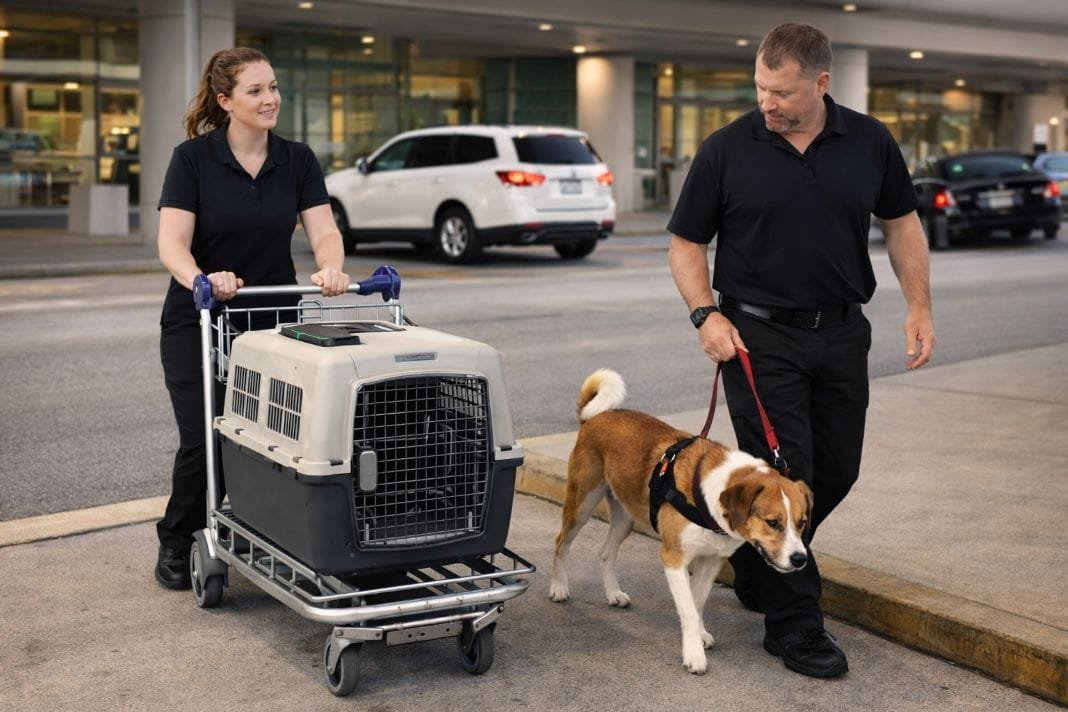
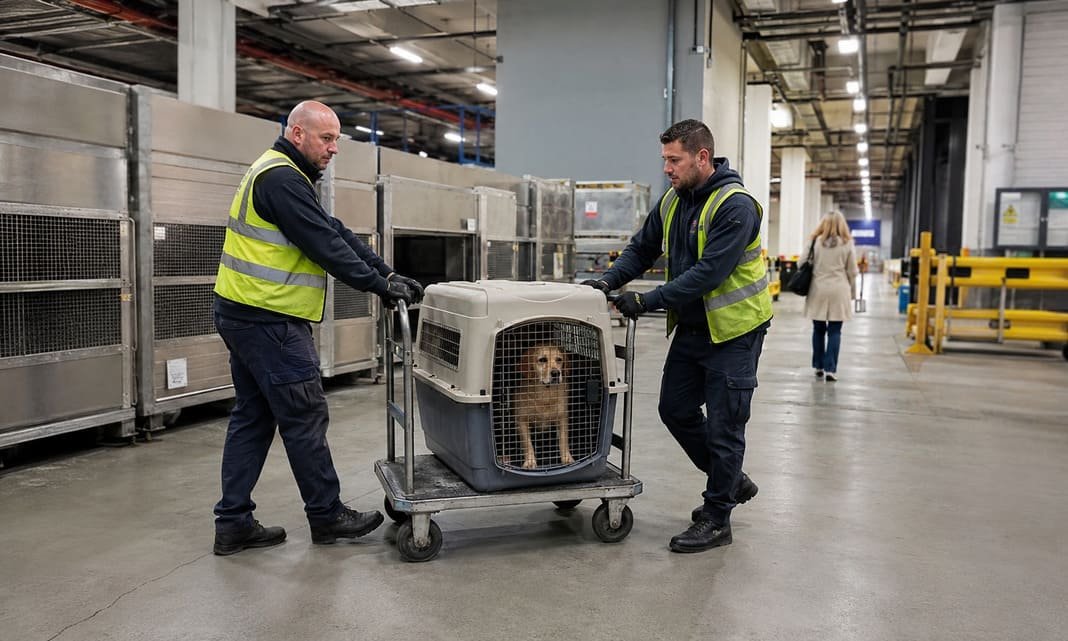
An illustrative image of a pet concierge and pet handler transport service
The Real Risks of Trying to “Make It Work” Yourself
A rushed DIY approach often starts with good intentions. Someone reads pet travel forums, gathers bits of advice from social media groups, and assumes the remaining gaps can be filled as they go. That can work for simple travel planned well in advance. Under time pressure, the margin for error gets much smaller.
Online advice is especially unreliable in urgent cases because pet entry rules depend on timing, destination, document status, and current official guidance. A post written by another owner six months ago may describe a completely different set of facts.
Several risks tend to appear together:
- misinformation from forums or outdated articles
- bookings made in the wrong order
- missed compliance details that only emerge at the border
- higher costs from changes, cancellations, or refused transport
- extra stress for both owner and animal on the day of travel
Financially, a failed attempt can cost far more than the original saving. Emotionally, the effect can be worse. A refused entry, a missed crossing, or a pet left behind because one document does not align with the rest creates exactly the kind of strain most owners were trying to avoid in the first place.
Looking Ahead: What This Summer’s Experience Teaches About Pet Travel Planning
A difficult summer process often changes how owners think about pet travel. The lesson is rarely that the process is impossible. The lesson is that the timing rules, welfare considerations, and border requirements carry more weight than many people realise at the start.
Three points are worth taking forward:
- Pet travel planning should begin with eligibility and timing, not with the transport booking.
- DEFRA guidance, veterinary advice, and destination rules need to align at the same time.
- Early preparation gives more route choice, more flexibility, and a calmer experience for the animal.
Future trips are usually easier when owners leave behind the idea that a pet process can be organised like an ordinary ticket purchase. Europe-bound travel works best when documents, health requirements, and route planning are treated as one connected decision, especially during busy summer periods.