
What happens if your pet’s rabies vaccination expires before travel?
If your pet’s rabies vaccination expires before a process, travel eligibility can be lost immediately. Border authorities, airlines, ferry operators, and veterinary certifiers may treat the vaccination record as no longer valid for that trip, which can lead to refused boarding, delayed departure, document problems, or entry refusal at the destination. In many cases, a new vaccination also restarts a waiting period before travel can go ahead.
Here's What We Have Covered In This Article
Why rabies vaccination expiry matters for pet travel
Rabies vaccination is not treated like a minor admin detail. For pet travel, it sits at the centre of legal compliance, disease control, and document validity.
A collar tag can be replaced and a booking can be moved, but an expired rabies record changes how authorities view the whole process. Under the UK Pet Travel Scheme and comparable rules used elsewhere, the date on the rabies certificate matters because it links your pet’s travel status to a recognised period of protection.
Owners sometimes assume a short gap will be overlooked if the pet has been vaccinated before. That assumption can be costly. Border checks rely on dates, recorded vaccine details, and matching paperwork, not on informal assurances that a booster was only missed by a few days.
DEFRA guidance, EU Pet Passport rules, and standards shaped by organisations such as the World Organisation for Animal Health, often shortened to WOAH, all reflect the same basic principle. Rabies compliance is treated as a public and animal health safeguard, which means that expiry is usually a hard line rather than a flexible one.
Pro Tip: Store digital copies of all pet travel documents and vaccination records in a secure cloud location for quick access.
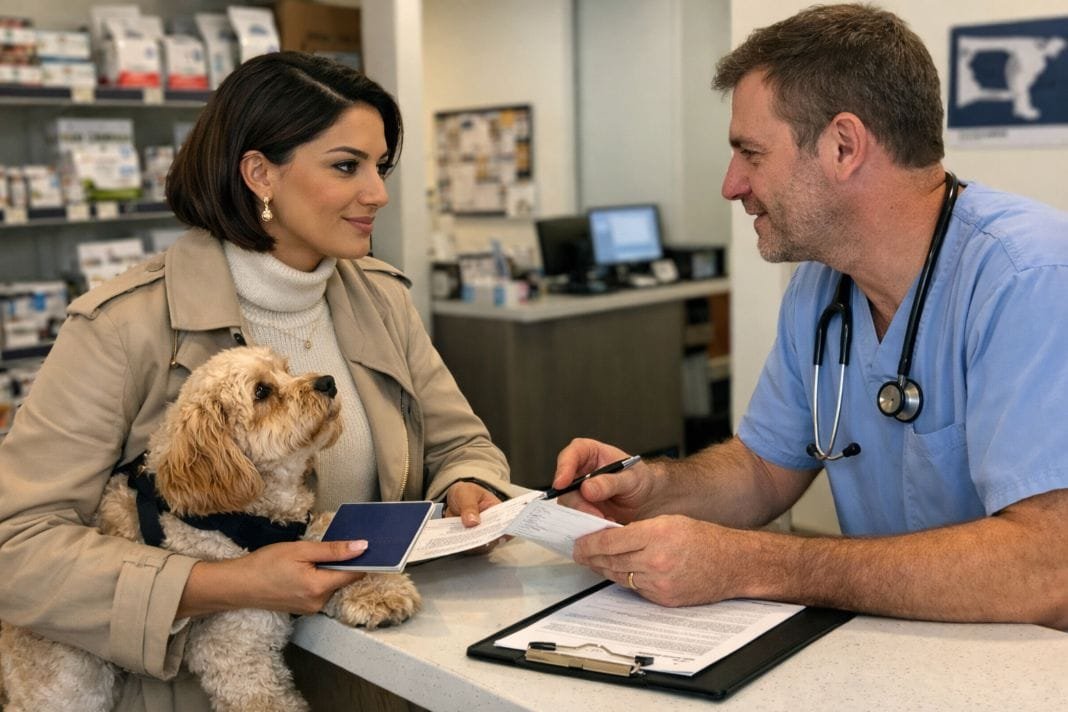
An illustrative image of a dog owner discussing pet travel docs with a vet
Book a Pet Travel Consultation
Our experienced team can review your pet’s documents and ensure you meet all travel requirements.
Immediate consequences of missing the vaccination deadline
Once the vaccination date has passed, the practical impact can be immediate.
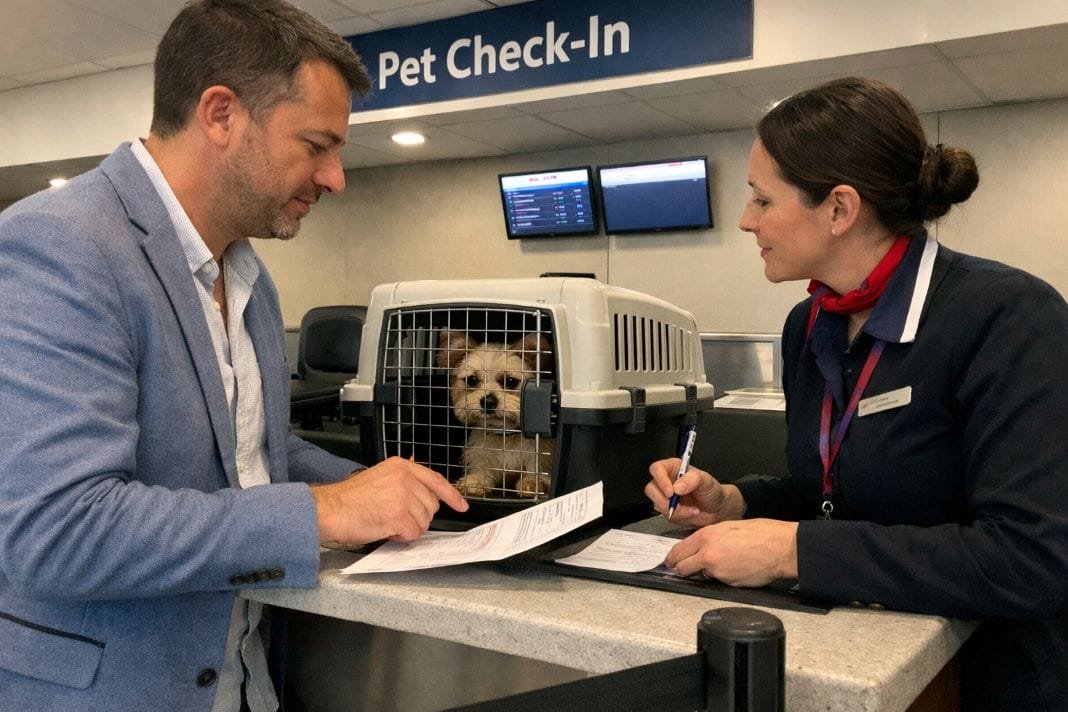
An airline may refuse carriage before your pet even reaches the border. A ferry operator can flag the paperwork at check-in. Animal health authorities at arrival can decide that entry requirements have not been met, even if every other part of the process was arranged correctly.
Common outcomes include:
- refused boarding or refused entry
- a requirement to delay travel until eligibility is restored
- quarantine or official holding, depending on the route and destination
- extra transport and rebooking costs
- added stress for the owner and extra strain on the animal
Consider a fairly ordinary situation. A family has packed, the crate is ready, and the vet paperwork appears complete at a glance. At final review, the rabies booster date is found to have lapsed. That single date can collapse the timetable for the whole move, including flights, pet collection slots, and onward accommodation.
Financial loss is part of the picture, but welfare matters too. A disrupted process can leave a pet spending longer in transit planning, temporary accommodation, or unfamiliar handling arrangements than anyone expected.
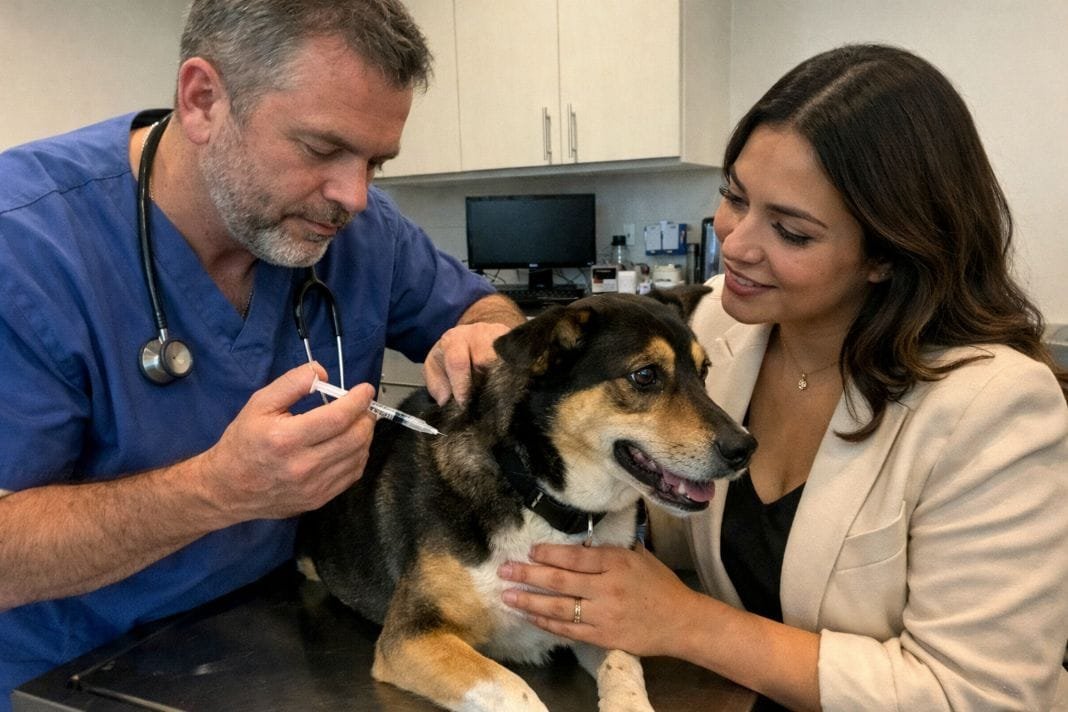
An illustrative image of a veterinarian gently administering a rabies vaccine
How expiry affects documentation and travel eligibility
An expired rabies vaccination often creates a domino effect across the rest of the paperwork. The issue is not limited to the vaccine record itself.
Before expiry, a valid EU Pet Passport or Animal Health Certificate may support travel if the other entry conditions are in order. After expiry, those same documents can stop serving their intended purpose because the rabies element beneath them is no longer current.
Some owners expect a vet to amend the existing paperwork once a booster has been given. In practice, travel eligibility does not usually work like that. If the vaccination history has lapsed in a way that breaks compliance, certain documents cannot simply be refreshed as if nothing happened in between.
Veterinary clinics and official veterinarians have to certify what is valid on the date of issue. They cannot usually bridge a gap that has already happened. That is why a small diary oversight can grow into a document invalidation problem.
For complex routes, timing becomes even tighter. Providers such as Tailored Pet Travel are often brought in when bookings, certificates, and border timing all need to line up again after a lapse has disrupted the original plan.
Plan a Smooth Pet Relocation
Receive tailored advice and support for safe, stress-free pet moves across borders.
Re-vaccination and waiting periods: what to expect
A new rabies vaccination does not always restore travel rights straight away. In many travel contexts, a lapse means the clock starts again from the new vaccination date.
That point catches owners out most often when travel is urgent, such as a relocation for work, a family move, or a time-sensitive return process. The pet may be healthy, the owner may be ready, and the route may be booked, yet the calendar still blocks departure.
A simple timeline makes the issue clearer:
- The previous rabies vaccination expires.
- A new rabies vaccination is given by a veterinary practice.
- A waiting period may apply before travel is permitted, often 21 days depending on the route and rules in force.
- Any related travel paperwork must match the renewed eligibility window.
Backdating is not a recognised fix. Vets, DEFRA-linked guidance, and animal health authorities work from the actual vaccination date recorded in the medical and travel documents.
Country rules can differ, especially outside standard UK and EU movements. Some destinations apply extra import conditions on top of the rabies timing issue. In an urgent case, the difficult reality is often simple: the pet may need to travel later than the owner first planned.
Pro Tip: Always ask your vet to confirm the waiting period for your specific travel route after a new rabies vaccination.
When professional oversight reduces risk
Some trips remain straightforward even after a date scare, particularly if the owner notices the issue early and the process is still some way off. Other cases become far less manageable once expired vaccination, fixed bookings, document timing, and border rules start colliding.
Professional oversight matters most where the margin for error has disappeared. A pet with a complex routing, a household move across borders, or a booking linked to work deadlines leaves very little room for assumptions. In those situations, experienced coordination can reduce the chance of paperwork mismatch, missed timing windows, or welfare compromises during rebooked travel.
Official veterinarians, border authorities, and transport providers each view the process through their own compliance lens. Someone has to hold the whole picture together. Tailored Pet Travel is one example of the kind of specialist support owners turn to when the issue is no longer a routine booking matter but a compliance-sensitive movement with real consequences if anything is off by even a day.
That distinction matters most when the pet cannot simply wait at home for an indefinite period, such as during an international relocation with housing, flights, and arrival dates already set.
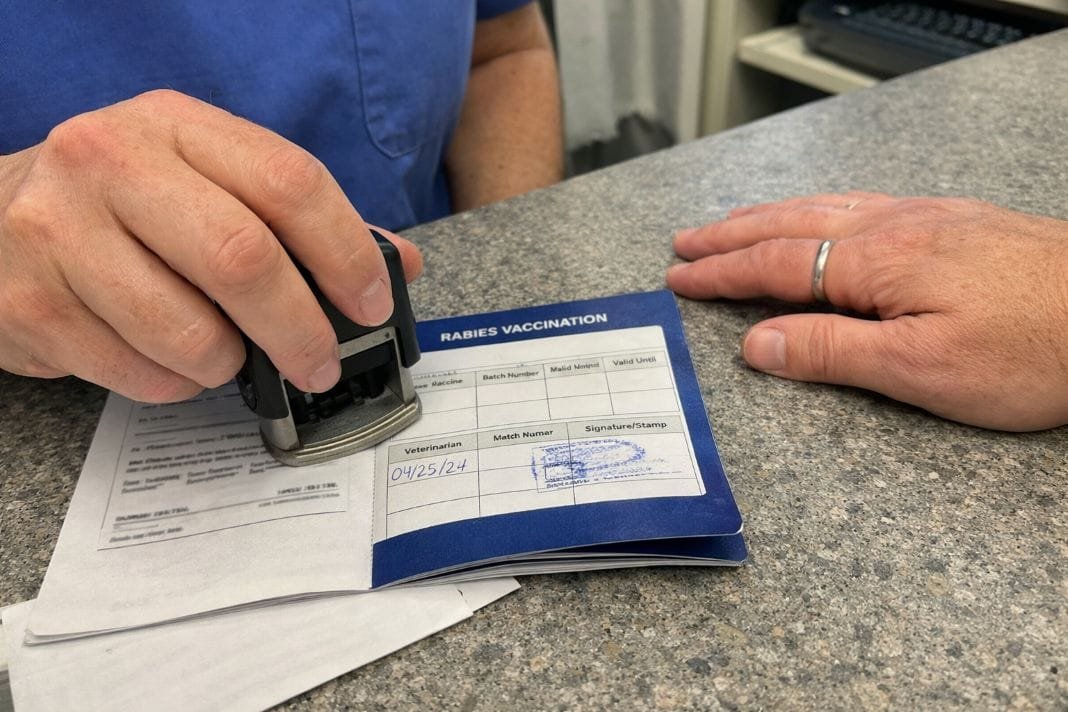
An illustrative image of a vet stamping a new rabies vaccination entry in a pet passport
Common misconceptions about rabies vaccination and pet travel
Outdated advice still circulates widely, and rabies rules are one area where small misunderstandings can create major travel problems.
- Myth: A few days past expiry is usually accepted. Fact: Border and travel checks usually rely on the recorded validity dates, not on informal grace.
- Myth: If the pet had rabies vaccinations for years, one missed booster changes nothing. Fact: A lapse can break the continuous record that supports travel eligibility.
- Myth: Domestic pet movement rules and international pet travel rules are basically the same. Fact: Crossing a border introduces document checks and legal entry conditions that do not apply to ordinary travel within one country.
- Myth: Every destination applies the same rabies timing rules. Fact: Requirements vary, and some countries impose extra conditions beyond the basic vaccination status.
- Myth: A vet can simply amend the passport or certificate once the booster is done. Fact: If eligibility has been lost, documents may need to be reissued on the basis of the new valid timeline, subject to the rules for that route.
One of the most persistent errors is the belief that a valid looking passport page overrides an expired vaccination date. In practice, the dates have to work together, and authorities can focus on that mismatch very quickly.
Looking ahead: staying prepared for future journeys
Rabies vaccination planning works best when it is treated as an ongoing part of travel readiness, not as a last-minute appointment before departure. Even owners who have travelled with pets before can be caught out by an overlooked date, a changed route, or a shift in entry rules.
A few habits make future journeys easier. Keep vaccination records in one place, note the expiry date well in advance, and leave room for the possibility that regulations may change between one trip and the next. Veterinary practices can record clinical dates, but the responsibility for travel timing still sits with the owner.
Forward planning also reduces pressure on the pet. Calm preparation usually means fewer rushed decisions, fewer rebookings, and less chance that a welfare issue will be created by an avoidable paperwork lapse.
The simplest way to think about rabies compliance is this: the vaccination date is part of the process long before the carrier, crate, or route is confirmed.